
Audio adventures for kids are immersive, audio-only stories designed to build vocabulary, spark imagination, and reduce screen time for children aged 4 to 9. Common Sense Media recommends these experiences as a core part of a healthy digital media diet, citing measurable gains in listening comprehension and emotional regulation. Unlike passive screen entertainment, children's audio storytelling pulls young listeners into vivid worlds using only sound, voice, and music. For Wisconsin families looking to fill long car rides, bedtime routines, or quiet afternoons, audio adventures deliver real developmental value while bringing everyone closer together.
1. What are audio adventures for kids and why do they matter?
Audio adventures are structured, narrative-driven audio experiences built specifically for young listeners. They differ from standard audiobooks because they often include original music, layered sound effects, and characters children genuinely care about. The result is a format that holds attention without a screen.
Experts at Common Sense Media highlight a benefit that surprises many caregivers: audio adventures serve as a direct bridge to early independent reading. Children who cannot yet read chapter books can still access sophisticated plots, rich vocabulary, and complex emotions through listening. That exposure prepares them for the transition to print in a way that picture books alone cannot.

Family listening also creates something rare: a shared experience with no device competition. When a story plays through a speaker in the living room or the car, everyone hears the same thing at the same time. That shared moment becomes the starting point for real conversations.
2. What are the best interactive audio adventures for children?
Interactive audio adventures are the fastest-growing format in children's audio storytelling. They use branching narratives, meaning children make choices at key moments that change where the story goes. That sense of agency keeps young listeners far more invested than a linear plot alone.
Interactive episodes typically run 10–25 minutes, which matches the natural attention span of children aged 4 to 9. That length is long enough to build tension and character, but short enough to finish during a school commute across Milwaukee or a drive up to Door County.
The best interactive formats share a few key features:
- Branching choice points that feel meaningful, not arbitrary
- Recurring characters children recognize and root for across episodes
- Original sound design that signals mood without relying on visuals
- Positive resolution patterns that model problem-solving and courage
Modern audio storytelling is evolving toward interactive play where children's choices shape the experience. That shift boosts engagement in a way passive formats simply cannot match.
Pro Tip: Let your child make the story choices out loud. Saying the choice aloud before the story responds builds decision-making confidence and keeps them fully present in the narrative.
3. How do age-specific audio adventures differ for kids ages 4–6 versus 7–9?
Age matters more in audio adventures than most caregivers expect. A story perfectly calibrated for a 5-year-old will bore a confident 8-year-old. The difference lies in plot complexity, vocabulary load, and thematic depth.
Age-appropriate themes directly boost both engagement and developmental benefit. Matching the story to the child's stage is not just about enjoyment. It determines whether the experience builds skills or simply passes time.
| Age group | Story style | Themes | Ideal length |
|---|---|---|---|
| Ages 4–6 | Gentle, nature-based discovery | Friendship, curiosity, calming exploration | 10–15 minutes |
| Ages 7–9 | Complex, character-driven quests | Mystery, courage, morality, fantasy | 15–25 minutes |
For the 4–6 group, the best kid-friendly audio stories use simple sentence structures, warm narrator voices, and familiar settings like forests, farms, or neighborhoods. Repetition and predictable story beats help younger children feel safe inside the narrative.
For ages 7–9, the most effective adventure audio tales introduce moral dilemmas, multi-episode arcs, and characters who fail before they succeed. That complexity mirrors what children encounter socially at school and gives them a low-stakes space to process it.
Pro Tip: If your child asks to replay an episode, that is a strong signal the content is well-matched to their developmental stage. Repetition at this age is comprehension, not boredom.
4. Top 10 audio adventure series for kids that build imagination
The strongest kids adventure audiobooks and podcast series share three qualities: original production value, age-calibrated content, and themes that generate conversation after the episode ends. The list below covers formats suited to different daily moments, from bedtime to long Wisconsin road trips.
-
Personalized superhero podcasts (G45-hero-cast): G45-hero-cast delivers a weekly customized superhero podcast where each child becomes the hero of their own story. Episodes arrive every Sunday to a private feed, making the listening event feel special and anticipated. This format works exceptionally well for ages 4–9 because the child's own name and traits are woven into the plot.
-
Nature-based discovery series: Gentle episodic stories set in forests, rivers, and meadows work best for ages 4–6. Sound design carries the narrative, with bird calls, rustling leaves, and soft music replacing the need for visuals.
-
Mystery quest series: Multi-episode mystery arcs suit ages 7–9 well. Children follow a recurring detective or explorer character across a season-long investigation, building comprehension and prediction skills with each episode.
-
Classic story adaptations: Familiar fairy tales and folk stories retold with updated sound design give younger children the comfort of a known plot while exposing them to richer vocabulary and fuller character development.
-
Science adventure series: Stories built around real-world science concepts, such as space exploration or deep-sea discovery, combine fiction with factual content. They work well for curious 6–9-year-olds who ask a lot of "why" questions.
-
Folklore and mythology retellings: Stories drawn from world mythology introduce children to diverse cultures through narrative. The episodic format keeps each session manageable while building a broader worldview over time.
-
Animal perspective stories: Narratives told from the point of view of animals, whether a wolf navigating a forest or a dolphin exploring an ocean, develop empathy and imaginative flexibility in children aged 4–7.
-
Humor-forward adventure series: Comedy-driven stories with physical humor, wordplay, and absurd situations hold the attention of reluctant listeners. These series work well for children who resist quieter formats.
-
Bedtime audio adventures: Slower-paced stories with calming music and soft narration designed specifically for the transition to sleep. These differ from standard adventure series in pacing and resolution style, always ending on a calm, resolved note.
-
Family listening anthologies: Curated collections of short stories across genres, designed to be played in shared spaces. Each episode stands alone, making them ideal for families with children of different ages listening together.
The best series for car rides tend to run 15–20 minutes and end on a mild cliffhanger. Bedtime formats work best at 10–12 minutes with a clear, peaceful ending. Quiet-time listening suits longer, more complex episodes where a child can sit and focus without distraction.
5. How to integrate audio adventures into daily family routines
Routine is the single most effective tool for building a lasting listening habit. Matching audio length to daily routines like car rides or bedtime transitions creates habitual engagement and supports emotional regulation. A 12-minute episode fits perfectly into the average school drop-off drive across most Wisconsin suburbs.
Practical ways to build audio adventures into your day:
- Morning commute: Queue one episode the night before so it starts the moment everyone buckles in. No searching, no negotiating.
- Bedtime transition: Replace screen time in the final 20 minutes before lights-out with a calm audio story. The absence of blue light supports sleep onset.
- Quiet play time: Play an episode through a shared speaker while children draw, build with blocks, or do puzzles. The story runs in the background and becomes a creative prompt.
- Weekend errands: Longer drives to Madison or Green Bay are ideal for multi-episode arcs that reward sustained listening.
Playing audio adventures through shared speakers rather than headphones encourages pausing, discussion, and bonding. Headphones isolate the experience. A speaker in the kitchen or car makes it communal.
Active listening techniques transform passive consumption into creative engagement. Ask your child to predict what happens next before pressing play. After the episode, ask one open question about a character's choice. Those two habits build comprehension faster than any worksheet.
Pro Tip: Create a simple "listening ritual" before each episode: dim the lights slightly, get comfortable, and take three slow breaths together. That physical cue trains children to shift into focused listening mode within seconds.
Key takeaways
Audio adventures for kids build vocabulary, emotional regulation, and family connection most effectively when the content matches the child's developmental stage and fits naturally into daily routines.
| Point | Details |
|---|---|
| Age-matched content matters | Ages 4–6 need gentle, short stories; ages 7–9 benefit from complex, multi-episode arcs. |
| Interactive formats boost engagement | Branching narratives give children agency, keeping them more invested than passive listening. |
| Shared speakers beat headphones | Playing stories aloud in shared spaces creates conversation and strengthens family bonds. |
| Routine builds the habit | Matching episode length to car rides or bedtime makes listening a natural daily event. |
| Personalized stories hold attention | Content featuring the child's own name and traits, like G45-hero-cast episodes, creates the strongest emotional investment. |
Why I think personalized audio is the future of kids' storytelling
I have spent years watching families try to find audio content that actually holds a child's attention past the first two minutes. The honest truth is that most generic series lose younger kids quickly because the main character feels distant. A child aged 5 does not naturally identify with a fictional hero named someone else, living somewhere else, facing problems that feel abstract.
The shift that changes everything is personalization. When a child hears their own name in the story, when the hero shares their interests and faces challenges that mirror their real life, the listening experience stops being entertainment and becomes something closer to identity formation. That is not a small distinction. Family listening that centers the child in the narrative generates the richest post-episode conversations I have ever seen between parents and kids.
Wisconsin families have a particular advantage here. Long winters, road trips to the Northwoods, and the cultural habit of gathering around shared spaces make audio adventures a natural fit. The format does not require Wi-Fi, a screen, or a specific room. It travels.
My recommendation is to start with one consistent listening slot per day, keep it short, and let the child lead the conversation afterward. The stories that generate the most questions are always the ones worth repeating.
— JG
G45-hero-cast: where your child becomes the hero
Every child deserves a story where they are the main character. G45-hero-cast creates weekly customized superhero podcasts for children aged 4 to 9, delivered every Sunday to a private podcast feed. Each episode is built around your child's name, personality, and the kind of hero they want to be.
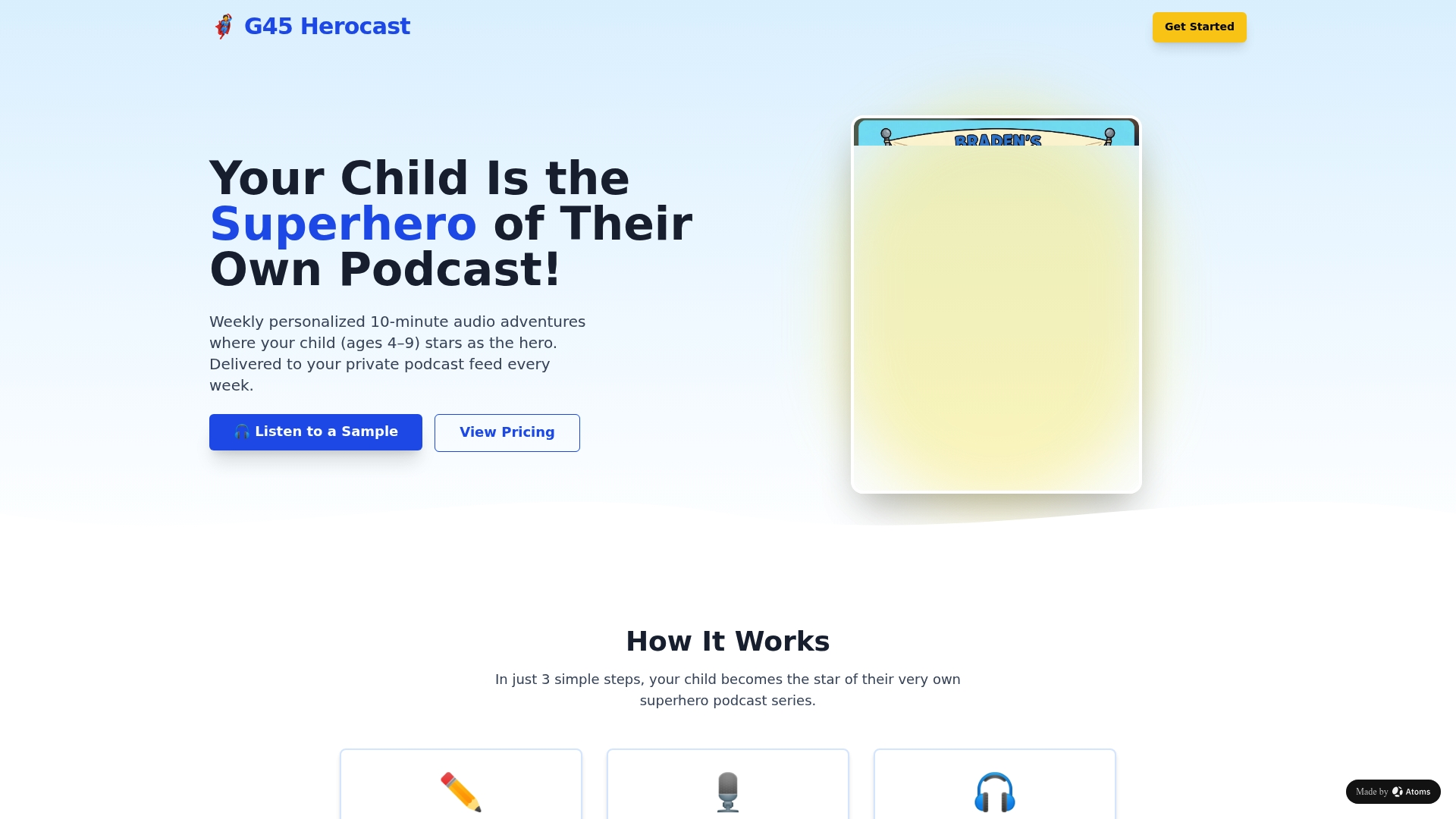
Subscriptions run monthly or annually, and the Sunday delivery creates a weekly ritual that children genuinely look forward to. For Wisconsin families looking for kid-friendly audio stories that go beyond generic content, G45-hero-cast delivers something no off-the-shelf series can: a story your child will ask to hear again because they are in it.
FAQ
What are audio adventures for kids?
Audio adventures for kids are immersive, narrative-driven audio stories designed for children aged 4 to 9. They build vocabulary, listening comprehension, and emotional regulation without requiring a screen.
What age are audio adventures best suited for?
Audio adventures work well from age 4 onward. Younger children aged 4–6 benefit most from short, gentle stories of 10–15 minutes, while children aged 7–9 engage better with longer, more complex episodic formats.
Are interactive audio adventures better than standard ones?
Interactive formats that let children make story choices boost engagement significantly compared to passive listening. They work especially well for children who lose interest in linear narratives.
How long should an audio adventure episode be for young children?
Episodes of 10–25 minutes suit most children aged 4–9. Shorter episodes work best for bedtime, while 20-minute episodes fit car rides and quiet-time listening.
What makes G45-hero-cast different from other kids' audio series?
G45-hero-cast personalizes each episode around the individual child, making them the superhero of their own weekly story. That level of personalization creates stronger emotional investment than any generic series can provide.