
Gender-neutral, non-binary, and queer superhero stories are already here, published by mainstream houses like DC and Macmillan and by independent creators running their own webcomics. This guide gives you a working shortlist across middle-grade books, graphic novels, mainstream comics, and indie titles, sorted roughly by age, plus concrete ways to find more once you've worked through it. Every title below comes with a source you can verify yourself.
TL;DR:
- Mainstream publishers have begun including gender-neutral characters in high-profile superhero stories, with examples like Circuit Breaker and Galaxy highlighting authentic representation.
- Visual motifs such as costumes referencing surgical scars and deliberate storytelling choices emphasize identity as part of a hero's strength rather than a flaw.
- To find more inclusive titles, search publisher event pages, use specific catalog keywords, explore creator sites, and seek recommendations from libraries and comic shops.
- Indie creators often offer faster, more nuanced stories about gender and identity, with independently published webcomics like Transformed! providing accessible options.
- Age-appropriate storytelling prioritizes adventure and layered identity themes, making format considerations crucial for effective representation in all reading levels.
Table of Contents
- Gender-Neutral Superhero Stories Worth Starting With
- How to Find More Gender-Inclusive Superhero Stories
- What Respectful Representation Actually Looks Like
- Why Personalized Audio Extends This Kind of Representation
- Diversity in Superhero Stories Goes Beyond Gender
- How Queer Representation in Superhero Comics Evolved
- What Gender-Inclusive Heroes Change for Readers
- Creators Shaping Gender-Inclusive Superhero Comics
- Choosing the Right Story for Your Reader
- Where to Follow Up on These Recommendations
- An Editorial Take on Discovery Over Debate
- Sources
Gender-Neutral Superhero Stories Worth Starting With
You don't need to dig through back issues or guess which titles handle identity with any care. Here's a working shortlist, organized loosely from younger readers to adult audiences.
-
The Dog Knight (middle-grade, ages 8-12). Frankie, a nonbinary middle schooler, becomes a magical protector in this graphic novel from Macmillan. The identity storyline sits alongside a monster-fighting adventure plot rather than replacing it, which is exactly what makes it work for younger readers who want a hero first and a message second. Find it through Macmillan's own book page, most public libraries, or any bookstore that stocks middle-grade graphic novels.
-
Galaxy: The Prettiest Star (YA graphic novel, ages 13 and up). Writer Jadzia Axelrod centers a trans girl named Taylor who's secretly an alien princess hiding her powers and her identity in small-town Ohio. DC thought enough of the 2022 book to include an abridged version in that year's Free Comic Book Day lineup, distributed alongside two other titles. That's a meaningful signal from a major publisher, not a quiet side release. Axelrod has talked about the book as a transition allegory in interviews, and that intent comes through in the pacing rather than being stated outright. Buy it in bookstores, order through libraries, or check DC's catalog directly.
-
Circuit Breaker (mainstream comics, teen and up). DC introduced Jules Jordain, a he/they transmasculine character, in Lazarus Planet: Dark Fate #1 as part of the broader Lazarus Planet event. The costume design isn't accidental. Circuit Breaker's vest includes a visual nod to top-surgery scars, a detail Them reported on when the character debuted around Valentine's Day. If you want to read this one, look for Lazarus Planet event issues in digital comics apps or ask a comic shop for the specific tie-in.
-
Xanthe (mainstream comics tie-in character). Introduced alongside Circuit Breaker in the same wave of Lazarus Planet storytelling, Xanthe is worth checking out if Circuit Breaker's issue leaves you wanting more from that event's cast. Digital back-issue services are usually the fastest way to track down tie-ins like this once the initial print run sells out.
-
Transformed! (indie webcomic, teen and up). Al Neun's ongoing series follows a trans magical boy protagonist and updates in serialized chapters directly on the creator's own site. Webcomics like this are free to read and don't require a comic shop trip or a library hold, which makes them the lowest-friction way to sample gender-inclusive superhero storytelling before committing to a purchase.
-
Bathroom Bandit (indie comic, teen and up). This 23-page comic from GHBK Comics tackles something most superhero stories skip entirely: the daily friction of finding and using all-gender bathrooms. It's shorter and more contained than the other picks here, closer to a vignette than a full arc, but it addresses a specific inclusive-spaces theme none of the mainstream titles touch directly.
How to Find More Gender-Inclusive Superhero Stories
Once you've worked through the list above, finding the next title is mostly a matter of knowing where to look and what to search.
- Check publisher event pages directly. DC and Marvel post character profiles and creative-team interviews when they launch an inclusive character, the way DC did for Circuit Breaker during Lazarus Planet. These pages usually outlast news coverage.
- Use specific search terms in library and bookstore catalogs. Try "nonbinary superhero," "trans graphic novel," or "LGBTQ+ middle grade graphic novel" instead of broad genre searches, which tend to bury inclusive titles under generic superhero results.
- Browse webcomic platforms and creator sites directly. Many gender-inclusive stories, like Transformed!, live entirely on independent sites rather than in aggregator apps, so a direct search for the creator's name often works better than browsing a platform's front page.
- Watch Kickstarter and Patreon for indie presses. Small LGBTQ+ imprints frequently fund new volumes through crowdfunding before wide release, and backing early often gets you bonus content.
- Ask library staff or comic shop clerks by name, not just genre. Most librarians can place a hold or request an interlibrary loan for a specific title faster than a general catalog search will surface it.
- Read content warnings before handing a book to a younger reader. Even middle-grade titles occasionally include heavier themes in a single subplot, so a two-minute check saves an awkward surprise later.
What Respectful Representation Actually Looks Like
Not every attempt at inclusive storytelling lands the same way, and it helps to know what to look for before you commit to a title.
The strongest gender-inclusive superhero stories tend to share a few narrative habits. Identity often functions as a source of power rather than a liability, found family shows up as a structural element rather than a throwaway line, and when a story deals with transition, it treats it as layered and ongoing instead of a single reveal scene. "Hiding in plain sight" is a common metaphor, too. Taylor's double life as an alien princess in Galaxy works as a stand-in for the exhausting work of concealing your identity in a small town, a parallel Axelrod has discussed openly in interviews.
Visual design carries a lot of this weight, too. Circuit Breaker's vest referencing top-surgery scars is a good example: a costume choice that communicates identity to readers who recognize it without turning the character's body into the plot. Designers call these deliberate costume motifs, and they show up more often in comics with genuine creative input from queer and trans staff.
Watch for the warning signs, too:
- A character's gender or sexuality exists only as a punchline or a one-episode plot device, never mentioned again.
- Pronouns or names shift inconsistently without narrative explanation.
- The character disappears from the story entirely after their introduction issue.
Pro Tip: Read the creator's own interviews or the publisher's blurb before you buy. A writer who talks specifically about why a character matters to them, the way Axelrod does about Galaxy, is usually a better signal of sincerity than marketing copy alone.
Why Personalized Audio Extends This Kind of Representation
Books and comics are the primary discovery format for gender-inclusive superhero stories, but audio has its own role, especially for younger kids who aren't reading independently yet.
G45-hero-cast produces weekly personalized superhero podcasts for children ages 4 to 9, delivered every Sunday to a private podcast feed families can listen to together. The goal behind the format is straightforward: better family quality time and a weekly dose of excitement where a child hears themselves cast as the hero of their own tailored superhero adventure. For families who want something gentler than screen-based content and more personal than a generic kids' podcast, this kind of personalized bedtime audio offers an alternative built specifically around one child's name, interests, and traits, rather than a fixed cast of characters.
Audio personalization works well at bedtime specifically because it lets a story reflect a child gently, without requiring the heavier identity conversations that older readers' comics can handle directly.
| What families get | Why it matters |
|---|---|
| A new episode every Sunday | Builds a predictable weekly ritual |
| Story tailored to the child's name and traits | Makes the child the hero, not a side character |
| Private podcast feed delivery | Simple, screen-free listening at home |
| Sibling and gift plan options | Fits multi-kid households and gifting occasions |
Diversity in Superhero Stories Goes Beyond Gender
Gender identity is one thread in a much larger pattern. The strongest superhero stories treat race, sexuality, and disability as equally real parts of a character's life rather than separate boxes to check.
Marvel's Spiderverse storytelling is a useful example outside the gender-focused titles above. Characters introduced in events like Edge of Spiderverse, including Sun-Spider, bring disabled and otherwise underrepresented life experiences into a franchise built around a familiar premise, showing that diverse casting can happen inside a mainstream event without needing a standalone spinoff. The same logic applies to sexuality and race. A trans character whose story never mentions their racial background, or a queer hero whose sexuality is treated as their only trait, is still an incomplete picture.
Intersectionality matters here specifically because real readers don't experience identity in isolated categories. A Black nonbinary teenager reading The Dog Knight or Galaxy is looking for more than a gender-inclusive plot. They're looking for a character whose full life, family, culture, and community, feels recognizable. Comics that manage this tend to involve creators from those communities in the writing and art, not just as consultants brought in after a script is finished. That's a pattern worth watching for the same way you'd watch for sincere identity storytelling: check who wrote and drew the book, not just what the marketing copy claims.
How Queer Representation in Superhero Comics Evolved
Superhero comics didn't get here quickly. For decades, queer and gender-nonconforming characters existed mostly through subtext, coded villains, or characters whose identities were hinted at but never confirmed on the page, largely because of the Comics Code Authority's restrictions through the mid-20th century.
Visible change started arriving in the 1990s and 2000s with a handful of openly gay or lesbian supporting characters, but explicit trans and nonbinary superhero leads are a much more recent development. DC's introduction of Circuit Breaker during the Lazarus Planet event and Axelrod's Galaxy both arrived within the last several years, and both came with visible publisher backing rather than being buried as one-off tie-ins. The Free Comic Book Day inclusion for Galaxy is a small detail that says a lot: that's a promotional slot publishers use for titles they expect to draw new readers, not a token gesture.
Middle-grade publishing moved even more recently. The Dog Knight represents a newer wave of books willing to put a nonbinary protagonist at the center of a children's graphic novel rather than saving identity stories for teen or adult titles. Indie and webcomic creators, meanwhile, have often moved faster than either mainstream publisher, since a creator like Al Neun can start a series like Transformed! without waiting on an editorial board's approval. That gap between indie speed and mainstream caution is still visible today, even as major publishers close the distance.
What Gender-Inclusive Heroes Change for Readers
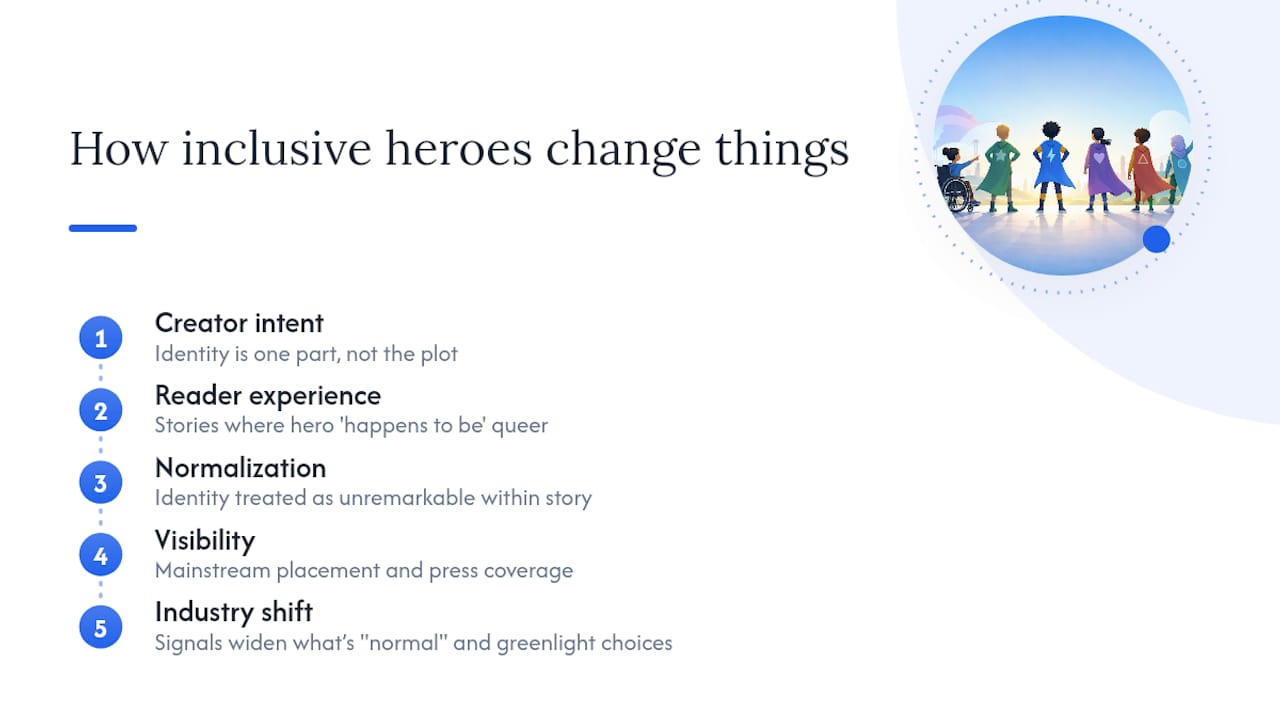
The effect of these stories isn't abstract. Creators involved in inclusive superhero storytelling have talked directly about wanting identity to read as one part of a character's life, not the entire plot, so that young readers can see themselves reflected without feeling reduced to a single trait.
That distinction changes how a reader experiences a book. A trans kid who picks up The Dog Knight isn't handed a lesson about identity. They're handed an adventure story where the hero happens to be nonbinary, which is a very different reading experience than being told directly how to feel about gender. The same logic applies to adult readers navigating Galaxy or Circuit Breaker. Seeing an alien princess or a transmasculine hero solve problems using their powers, not their identity struggles, normalizes queer and trans existence simply by treating it as unremarkable within the story's own logic.
There's a wider social effect, too. Mainstream publisher support, DC's Free Comic Book Day slot for Galaxy, a costume detail like Circuit Breaker's vest making it into entertainment press coverage, signals to a broad readership that these characters aren't niche experiments. They're part of the same universe as Superman and Batman, sold on the same shelves, promoted through the same channels. That visibility shifts what "normal" looks like for readers who've never seen a hero who shares their identity, and it shifts what publishers are willing to greenlight next.
Creators Shaping Gender-Inclusive Superhero Comics
A handful of names show up repeatedly once you start tracing where these stories come from.
Jadzia Axelrod wrote Galaxy: The Prettiest Star and has spoken in interviews about crafting the book as a deliberate allegory for gender transition, with Taylor's double identity as a human teen and alien princess mapping onto the experience of concealing yourself to survive in an unwelcoming place. That intentionality is part of why the book landed a Free Comic Book Day slot rather than staying a niche release.
Al Neun writes and draws Transformed! independently, publishing chapters directly through a personal site rather than going through a traditional publisher. That independence gives Neun full creative control over how the trans magical boy protagonist's story unfolds, chapter by chapter, without an editorial process shaping the pacing.
The creative teams behind Circuit Breaker at DC made a specific choice to encode top-surgery imagery into the character's costume design, a detail confirmed in coverage around the character's debut. That kind of design decision usually requires writers, artists, and editors who understand the reference well enough to render it respectfully rather than decoratively.
Choosing the Right Story for Your Reader
Representation matters most for readers who've rarely, or never, seen a character like themselves solving problems and winning. That's true for kids working out their own identity and for adult readers who grew up without any of these titles on the shelf.
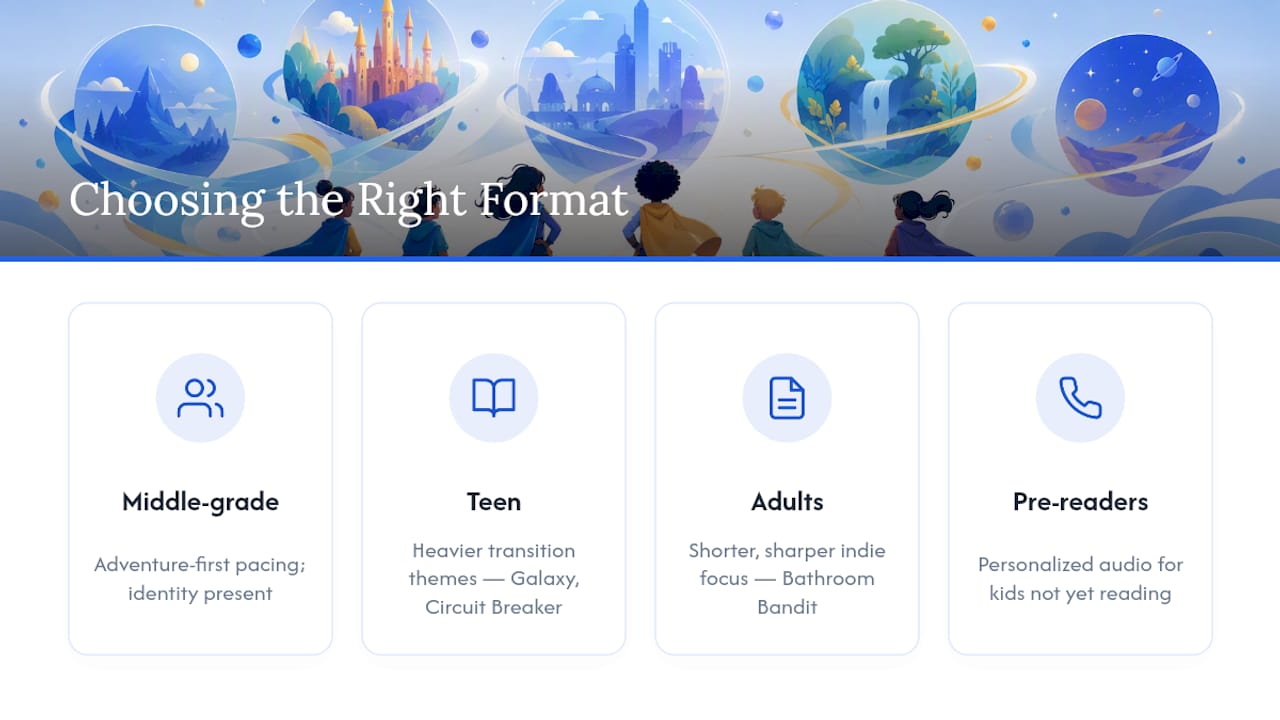
Selecting the right story starts with matching format to the reader, not the message. A middle-grade reader needs adventure-first pacing like The Dog Knight delivers, where identity is present but never the entire plot. A teenager ready for heavier themes can handle Galaxy's transition allegory or Circuit Breaker's more direct trans representation. An adult reader exploring indie work might prefer the shorter, sharper focus of something like Bathroom Bandit, which tackles one specific experience without needing a full arc to build to it.
Age guidance matters more here than in most genre reading, mainly because identity themes can arrive with more emotional weight than a typical action plot. Check a publisher's own age recommendation first, then skim a few pages or a preview chapter before handing a book to a younger reader. For families with kids too young to read independently yet, personalized audio formats offer a gentler on-ramp. A child hearing themselves as the hero of their own story, at an age-appropriate level, gets a version of representation that doesn't require them to process a graphic novel's full narrative complexity.
Where to Follow Up on These Recommendations
The publisher and creator sources behind this list are worth bookmarking directly if you want to track new releases or verify details yourself.
- Galaxy: The Prettiest Star — Wikipedia entry with publication history and Free Comic Book Day details.
- The Dog Knight — Macmillan's official book page with age guidance.
- Circuit Breaker coverage — Them's reporting on the character's debut and design.
- Transformed! — Al Neun's creator site hosting the ongoing webcomic.
- Bathroom Bandit — GHBK Comics' page for the indie comic.
An Editorial Take on Discovery Over Debate
Most coverage of this topic gets stuck arguing whether inclusive superheroes "belong" in mainstream comics, which misses what readers actually need: a usable list and a way to find the next one. The real gap isn't acceptance, it's discoverability. Indie creators like Al Neun are often years ahead of mainstream publishers on nuance and specificity, yet their work rarely surfaces in a basic search the way a DC or Macmillan title does.
If you take one thing from this guide, prioritize matching format to reader readiness over chasing the newest headline-making character. A well-chosen middle-grade book will do more for a young reader than a mature title they're not ready to process. And if your household includes a child too young for any of these formats yet, personalized audio can carry that same spirit of representation into bedtime long before they're reaching for a graphic novel on their own.
— JG
Sources
- Galaxy: The Prettiest Star - Wikipedia
- The Dog Knight — Macmillan
- Transformed! - a trans magical boy comic by Al Neun
- DC Comics’ New Trans Superhero Will Debut on Valentine’s Day — Them
- Bathroom Bandit — GHBK Comics