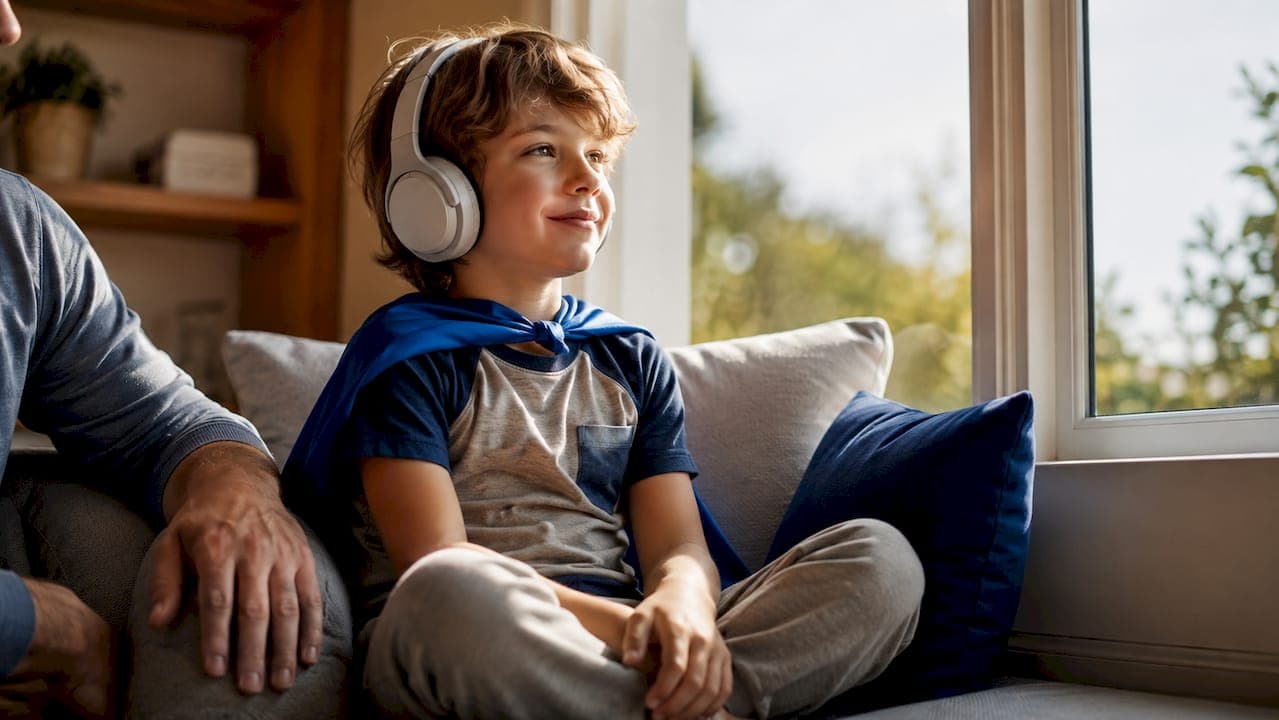
Weekly personalized episodes are short, custom audio adventures that cast your child as the hero, tailored to their name and personality, delivered every week to a private podcast feed. The core benefit is simple: a standing weekly ritual of excitement and shared listening that fits into bedtime, car rides, or Sunday mornings. If you're evaluating whether this is worth the subscription, the checklist and pricing breakdown below will get you there fast.
TL;DR:
- Personalization impacts engagement even with just a child's name and gender, but meaningful content and parental follow-up amplify learning.
- Episodes should be between 8 and 20 minutes, with simple language for younger children and clear resolutions without cliffhangers.
- Weekly delivery builds anticipation and routine, with private podcast feeds ensuring privacy and easy playback on multiple devices.
- Genuinely high-quality episodes feature scripted voices and real actors, not automated text-to-speech, with sample episodes recommended before subscribing.
- Engagement strategies include asking questions before and after listening, using new words in conversation, and establishing a regular storytime ritual.
Table of Contents
- What Do Weekly Personalized Episodes Include, and Why Do They Work for Ages 4 to 9?
- How Does Weekly Delivery and Personalization Actually Work?
- How Do You Choose the Right Weekly Personalized Episodes Subscription?
- How Can Weekly Episodes Boost Learning and Family Time?
- What Should Pricing and Subscription Options Look Like?
- Why We Build Weekly Personalized Superhero Episodes
- Try Superhero Sounds: Your Child's Next Weekly Episode Is Waiting
- Sources
What Do Weekly Personalized Episodes Include, and Why Do They Work for Ages 4 to 9?
A typical episode runs 10 to 20 minutes and follows a familiar shape: your child's hero introduction, a conflict pulled from something they actually care about, and a resolution that wraps up before attention drifts. That structure isn't arbitrary. Kids ages 4 to 9 respond best to stories with a clear beginning, middle, and end, and recurring motifs (a catchphrase, a sidekick, a signature power) give them something to anticipate week to week.
The personalization itself does real work on engagement. Randomized research on personalized fables found that personalizing a story increases children's affective engagement compared to generic versions, and notably, minimal personalization (just a name and gender) was often enough to get that lift. You don't need deep customization to hook a kid. You need the right customization.
What matters more than the tech is what happens around the listening. Audio itself does not teach vocabulary in a vacuum. A lab study on personalized digital books found no consistent vocabulary advantage from personalization alone, but it did find higher self-referencing and more parent-child interaction during shared reading. Translation: the story hooks them, but a parent asking a follow-up question is what turns a fun episode into a learning moment.
Cues to look for when picking episodes:
- Runtime between 8 and 20 minutes, matched to attention span at your child's age
- Simple, declarative language for ages 4 to 6, slightly more complex plotting for ages 7 to 9
- A resolution that lands cleanly, not a cliffhanger that leaves a 5 year old anxious at bedtime
How Does Weekly Delivery and Personalization Actually Work?
The weekly cadence is the whole point, not a scheduling detail. Kids thrive on anticipation and routine, and knowing a new episode drops on a specific day each week gives structure to something that might otherwise be one more streaming option lost in the shuffle.
Here's how the mechanics typically play out for families:
- You submit personalization details once at sign-up, usually your child's name, age, and a few interests or traits.
- The provider builds and delivers a new episode weekly to a private podcast feed, often sent via a link to your email.
- You play it through any standard podcast app on a phone, tablet, or smart speaker, no separate app download required in most cases.
- Siblings or multiple kids typically need separate personalization profiles, and gift subscriptions usually let a grandparent set one up remotely.
Before you hand over any information, check what happens to it. A private feed means the episode isn't publicly searchable, but you should still confirm how long a provider keeps your child's name and details on file, and whether that data is ever shared with third parties.
Pro Tip: Ask for a sample episode before you commit to a full subscription. It's the fastest way to judge voice quality, pacing, and whether the personalization actually feels natural instead of bolted on.
How Do You Choose the Right Weekly Personalized Episodes Subscription?
Not all providers handle personalization or delivery the same way, and the differences show up fast once you're a few weeks in. Use this checklist before you subscribe:
- Personalization depth: does it use just a name, or does it weave in real interests and traits without sounding forced?
- Frequency and length: confirm episodes actually arrive weekly and run long enough to justify the price, but short enough for the age group.
- Production quality: real voice actors and scripted dialogue sound markedly different from generic text-to-speech.
- Sample availability: a provider confident in its product will let you hear one before you pay.
- Delivery method: a private podcast feed beats a clunky app that requires a new login every week.
- Privacy policy clarity: look for plain language about what's collected and how long it's stored.
- Gift and sibling options: check whether gifting or adding a second child is straightforward or requires a whole new account.
- Cancellation and refund terms: these should be stated up front, not buried in a support ticket thread.
Red flags worth walking away from: vague privacy language, robotic voices with no real scripting, billing that isn't clearly monthly or annual, and any provider that won't offer a sample episode. If a company can't show you the product before charging you, that tells you something.
Pro Tip: Start with a single month before committing to an annual plan. One billing cycle is enough to know if your child actually asks for the next episode, which is the only signal that matters.
How Can Weekly Episodes Boost Learning and Family Time?
The story alone gets your child listening. What you do around it determines whether it also builds vocabulary and comprehension. Caregiver involvement reliably amplifies the educational value of audio content, according to American Academy of Pediatrics guidance on audiobooks and audio players.
Three ways to make that happen without turning storytime into a lesson:
- Ask one quick question before pressing play: "What do you think today's problem will be?"
- Follow up with two or three questions after: "What was the trickiest part? What would you have done differently?"
- Use new words from the episode in regular conversation over the next few days to reinforce them naturally.
Beyond the listening itself, build a ritual around it:
- Set a fixed weekly time, Sunday morning coffee or Friday night wind-down, so the episode becomes an anchor point in the week.
- Use car rides for a second listen; repetition helps younger kids catch details they missed the first time.
- Try a "hero of the week" show-and-tell where your child acts out their favorite moment from that episode.
Fit all of this into a broader Family Media Plan so weekly audio complements outdoor play, reading, and screen-free time rather than crowding it out. Pairing story rituals with age-appropriate outdoor activities keeps the week balanced instead of audio-heavy.
What Should Pricing and Subscription Options Look Like?
Most providers structure pricing around three tiers: monthly, a discounted annual plan, and gift subscriptions built for grandparents or extended family. What drives the price difference usually comes down to three things: how deep the personalization goes, the production quality behind the voice acting and sound design, and how often episodes arrive.
Before you subscribe, weigh these:
- Weekly cadence plus real production quality is the baseline value you're paying for, not just novelty.
- Annual plans typically save money if you're confident your child will stay engaged past a couple of months.
- Gift plans should let a grandparent purchase without needing the parent's account credentials.
- Check the fine print on pausing delivery during vacations, refund windows, and exactly how personalization data is handled if you cancel.
A subscription priced fairly but vague on cancellation terms is a worse deal than one that costs slightly more with clear, upfront policies.
Why We Build Weekly Personalized Superhero Episodes
We chose a weekly cadence deliberately. A daily drop turns into background noise; a monthly one loses the thread of who your child even is that week. Weekly hits the sweet spot for anticipation without becoming a chore. We also chose real scripting over automated voice generation because a flat, generic hero doesn't hold a 6 year old's attention the way a scripted one does. Every episode ships to a private feed, never a public one, and our age targeting for 4 to 9 year olds reflects attention span research, not guesswork.
— JG
Try Superhero Sounds: Your Child's Next Weekly Episode Is Waiting
Superhero Sounds is G45-hero-cast's weekly subscription, and it's the straightforward way to give your child a starring role without hunting through providers, comparing voice quality, or guessing at privacy policies. You pick your child's name, age, and a few personality traits at sign-up. Every week, a new scripted episode lands in a private podcast feed sent to your email, playable on any phone, tablet, or smart speaker.
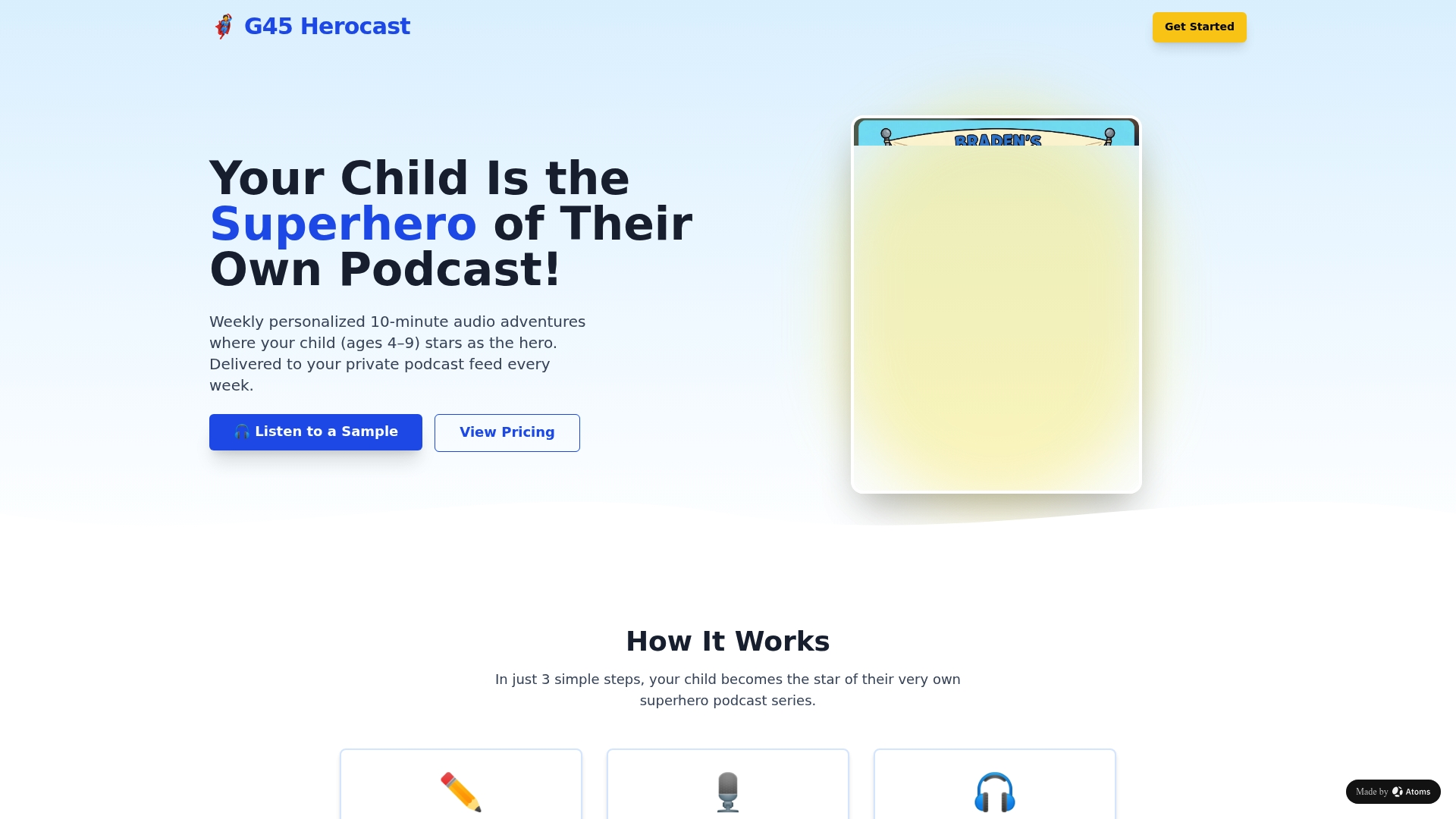
Sibling profiles and gift subscriptions are both built in, so a grandparent can set one up remotely without touching your account, and a second child gets their own hero identity rather than sharing one. Personalization details are collected once at sign-up and used only to build episodes, not shared or resold.
Ready to hear it before you commit? Visit the Superhero Sounds landing page to sample an episode or start a subscription, and see how quickly Sunday becomes the day your child waits for all week.
Sources
- Audiobooks, Audio Players, and Child Development (AAP)
- Effect of personalization in children's fables (F1000Research)
- An empirical investigation of parent-child shared reading of digital personalized books