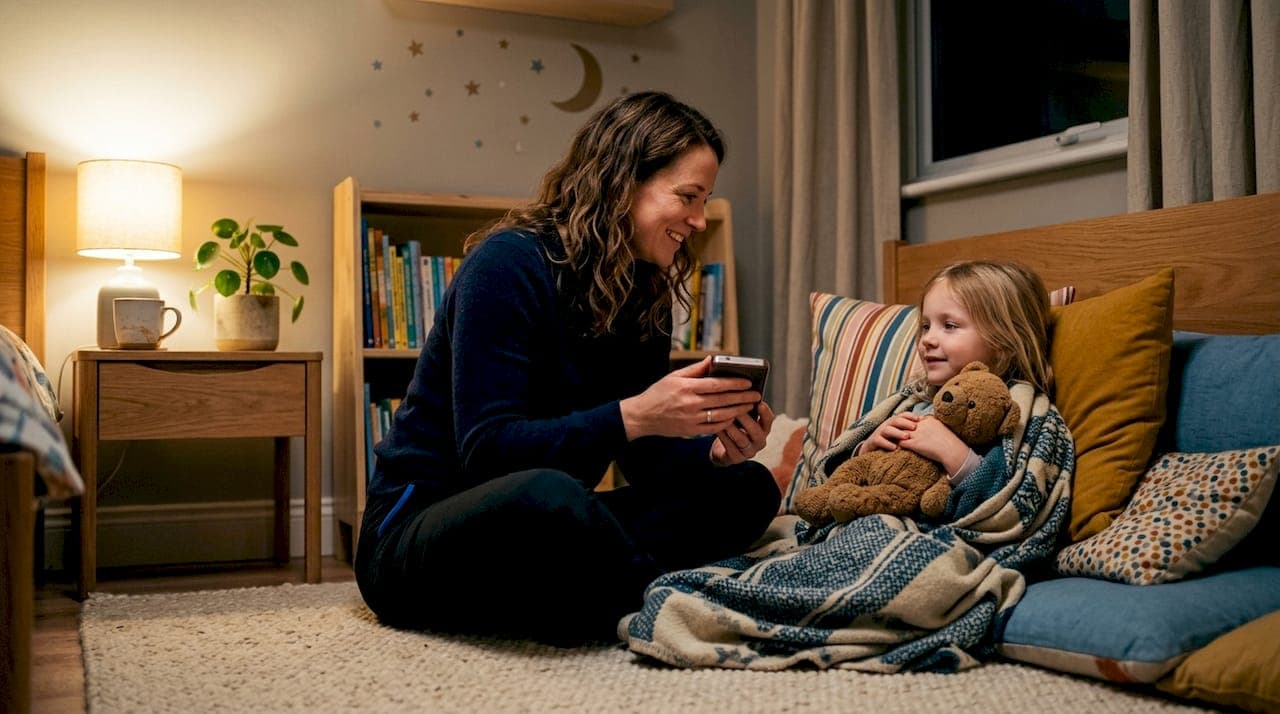
Alternatives to bedtime stories are low-stimulation, engaging activities that support sleep, language development, and emotional regulation for children aged 4–9. Audio stories, gentle movement, and quiet creative play all qualify as effective bedtime alternatives. Research confirms that audio-only content promotes sleep by providing cognitive anchoring without blue light or rapid visual stimulation. The key is matching the activity to your child's energy level and temperament, not forcing a one-size-fits-all routine.
1. Why audio stories are the best alternative to bedtime stories
Audio stories are the single most effective swap for traditional bedtime reading. They keep children mentally engaged while removing the visual stimulation that delays sleep. Personalized audio stories where the child is the hero provide the highest engagement and the smoothest transition to sleep. Children are more likely to accept bedtime when the narrative centers on them, mirroring natural sleep cues.
Audio content also solves the screen problem directly. Blue light from tablets and phones suppresses melatonin and delays sleep onset. An audio story played through a small Bluetooth speaker or a dedicated kids' audio device delivers all the storytelling benefits with none of the screen exposure.
Here is what makes audio stories work at bedtime:
- No visual stimulation. The brain stays calm while the imagination stays active.
- Consistent volume and pacing. Calm narration signals rest time to the nervous system.
- Screen-free by design. No device in hand means no temptation to scroll or tap.
- Repeatable content. Familiar stories lower anxiety and help children settle faster.
- Sleep timer compatible. Most Bluetooth speakers let you set a shutoff time so the audio ends naturally.
Pro Tip: Set the speaker across the room rather than next to the bed. This removes the urge to interact with the device and keeps the audio experience passive and calming.
For Illinois parents looking for curated options, the audio adventures guide covers top picks for ages 4–9 that work well at bedtime.
2. Movement-based storytelling for active children
Active children do not fail at bedtime. They just need a different starting point. Movement-based bedtime alternatives like walking stories, bedtime yoga, and story acting engage the nervous system and then allow it to downshift naturally. Expecting immediate stillness from a high-energy child is less effective than a gradual transition approach.
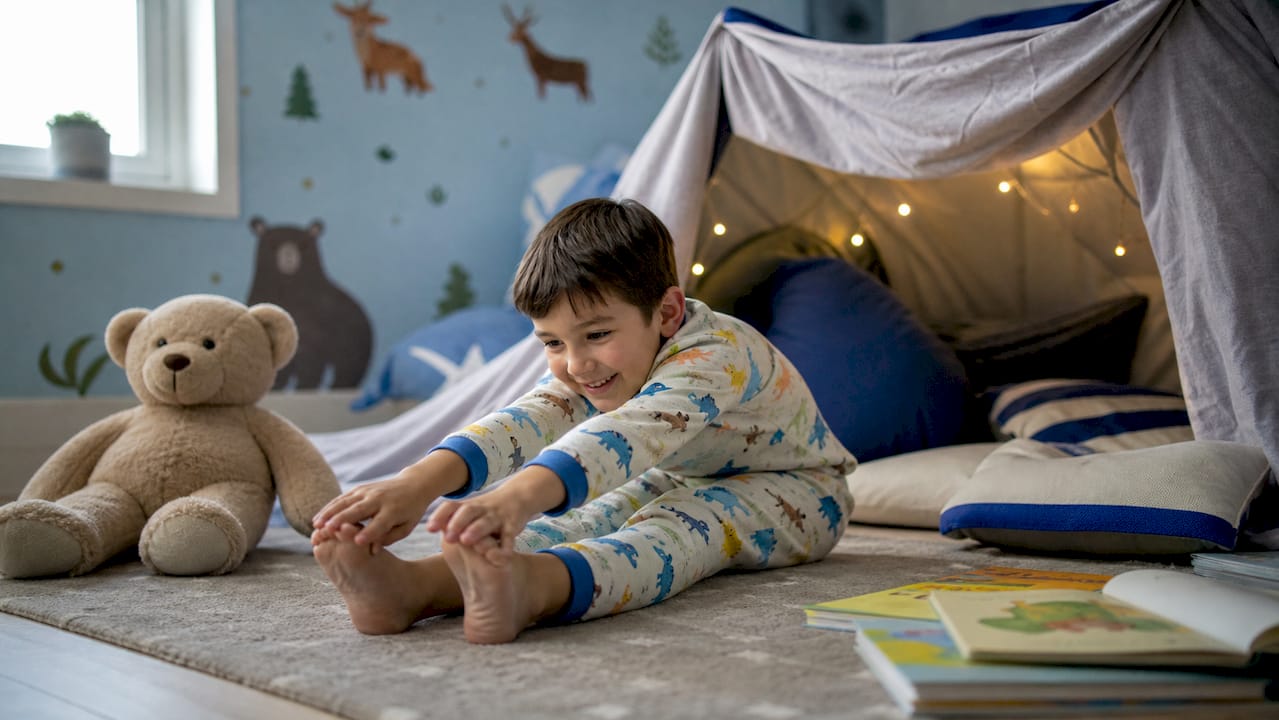
The phased wind-down method works like this: start with physical activity, then move directly into a low-stimulation activity. A five-minute indoor walk where you narrate a story out loud burns off energy and builds narrative engagement at the same time. Story acting, where your child acts out scenes you describe, combines comprehension with movement.
Bedtime yoga is another strong option. Simple poses like child's pose, legs-up-the-wall, and slow cat-cow stretches activate the parasympathetic nervous system. Pair each pose with a story beat to keep attention focused.
- Walking story time. Walk slowly around the house while narrating a calm adventure.
- Story acting. Describe a scene and let your child act it out, then slow the action down gradually.
- Bedtime yoga. Use gentle poses tied to story moments to move from active to still.
- Shadow stories. Use a flashlight against the wall to create characters. This is low-energy but highly engaging.
- Sensory story bins. Fill a small bin with soft textures and objects that match a story theme. Children explore with their hands while you narrate.
Pro Tip: Ask one simple comprehension question mid-story, such as "What do you think happens next?" This keeps engagement high without raising arousal levels.
3. Quiet creative activities that replace reading before bed
Not every child needs movement. Some children wind down best through quiet, hands-on activities that occupy the mind without overstimulating it. Screen-free time is not about silence or boredom. It is about maintaining low arousal while signaling rest time to the brain.
Journaling is one of the most underused bedtime tools for children aged 4–9. A simple gratitude prompt, "Name three good things from today," lowers mental load before sleep. Writing to-do lists reduces sleep latency by an average of 9 minutes through cognitive offloading. For younger children who cannot write yet, drawing their answers works just as well.
Reading fiction reduces physiological stress markers by 68% within 6 minutes, outperforming music and other relaxation methods. Fiction engages the imagination in a way that nonfiction does not, making it more effective for bedtime relaxation.
Other quiet alternatives worth trying:
- Gentle puzzles. A 24-piece puzzle at low light keeps hands busy without raising heart rate.
- Coloring or sketching. Unstructured drawing with soft pencils is calming and screen-free.
- Guided breathing. The 4-7-8 method (inhale 4 counts, hold 7, exhale 8) activates the parasympathetic nervous system and reduces pre-sleep anxiety.
- Warm bath ritual. A 10-minute warm bath lowers core body temperature afterward, which signals sleep readiness.
- Low-stimulation home tasks. Folding a small pile of laundry or setting out clothes for the next day gives children a sense of control and calm purpose.
Pro Tip: Keep a small journal and a set of colored pencils on the nightstand. Having the tools visible removes the friction of starting and makes the habit stick faster.
4. How to choose the right bedtime alternative for your child
The right bedtime alternative depends on three factors: your child's activity level, their attention span, and the sleep challenges you are trying to solve. A child who cannot sit still needs movement first. A child who struggles with anxiety needs breathing or journaling. A child who simply misses the story connection needs audio.
Keeping devices out of the bedroom predicts better sleep outcomes than verbal screen-time enforcement. Physical environment design matters more than willpower. Remove the phone charger from the bedroom, use a warm lamp instead of overhead lighting, and reduce noise with a white noise machine or a fan. These changes make the right behavior the easy behavior.
Stacking rituals is the most reliable method for building a consistent routine. Pair a high-energy activity with a low-stimulation one immediately after. The transition becomes automatic over time.
| Activity | Stimulation level | Best for |
|---|---|---|
| Audio stories | Low | All temperaments |
| Bedtime yoga | Low to medium | Active children |
| Story acting | Medium | High-energy children |
| Journaling or drawing | Low | Anxious or verbal children |
| Guided breathing | Very low | Children with sleep anxiety |
| Gentle puzzles | Low | Focused, quiet children |
| Shadow stories | Low | Creative, imaginative children |
Experiment with two or three options over two weeks before deciding what works. Children need repetition to accept new routines. Gradual iteration beats a complete overnight overhaul every time.
Key takeaways
The most effective alternatives to bedtime stories combine low-stimulation engagement with your child's natural energy level, using audio stories, movement, or quiet creative activities to support sleep and development.
| Point | Details |
|---|---|
| Audio stories lead the way | Screen-free audio with a child as the hero delivers the highest engagement and smoothest sleep transition. |
| Movement before stillness | A phased wind-down starting with physical activity improves sleep readiness for active children. |
| Environment beats willpower | Removing devices from the bedroom works better than enforcing screen-time rules verbally. |
| Quiet activities lower arousal | Journaling, breathing exercises, and gentle puzzles reduce pre-sleep anxiety without screens. |
| Match activity to temperament | Choose based on your child's energy level and sleep challenge, then repeat consistently for two weeks. |
What I have learned from watching bedtime routines actually work
The biggest mistake I see parents make is treating bedtime as a single event rather than a sequence. A child who has been running around until 7:45 PM cannot be expected to lie still and listen to a story at 8:00 PM. The nervous system does not work that way. The parents who get consistent results are the ones who build a 20-minute runway into the routine, not a 5-minute one.
The second thing I have noticed is that personalization changes everything. A generic story about a princess or a dragon gets polite attention. A story where your child is the hero, by name, solving a problem in their own neighborhood, gets full engagement. That difference in buy-in is not small. It is the difference between a child who fights bedtime and one who asks for it.
Illinois families tend to have busy evenings, especially during the school year. Sports, homework, and dinner often push bedtime prep to the last possible moment. The families who build the best routines are the ones who treat the wind-down as non-negotiable, even when it starts late. A shorter version of the routine is always better than skipping it entirely.
One more thing: do not expect the first week to go smoothly. New routines feel awkward before they feel natural. Give any new approach at least 10 consecutive nights before you judge it. Patience is the actual skill here, not the specific activity you choose.
— JG
G45-hero-cast brings personalized audio stories to bedtime
G45-hero-cast creates weekly, customized superhero podcasts for children ages 4–9. Each episode puts your child at the center of the story, by name, as the hero of their own audio adventure. Episodes arrive every Sunday to a private podcast feed delivered to your email, ready for the week ahead.
The format is entirely screen-free, which makes it a natural fit for the bedtime routines covered in this article. Active children get a story that holds their attention. Quiet children get a calm, imaginative experience without a device in their hands. G45-hero-cast offers both monthly and annual subscriptions, making it easy to build the habit without a long commitment. Start your child's superhero audio adventure and give bedtime a new purpose.
FAQ
What are the best alternatives to bedtime stories for active kids?
Movement-based options like walking stories, bedtime yoga, and story acting work best for active children. Follow these with a low-stimulation activity like audio stories to complete the wind-down.
Are audio stories as effective as reading books before bed?
Audio stories provide the same cognitive anchoring as reading without the blue light exposure from screens. Personalized audio content where the child is the hero increases engagement and makes bedtime transitions smoother.
How do I stop my child from needing a screen at bedtime?
Remove devices from the bedroom entirely rather than relying on verbal rules. Physical environment changes, like keeping phones out of the room and using warm lighting, predict better sleep outcomes than willpower-based enforcement.
What bedtime alternatives work for children with sleep anxiety?
Guided breathing exercises like 4-7-8 breathing and simple journaling prompts lower anxiety before sleep. Both require no equipment and have research support for reducing the time it takes children to fall asleep.
How long should a bedtime wind-down routine take for ages 4–9?
A 20-minute wind-down is the most practical target for children aged 4–9. Start with a medium-energy activity, then move to a low-stimulation one like audio stories or breathing exercises to signal sleep time to the brain.