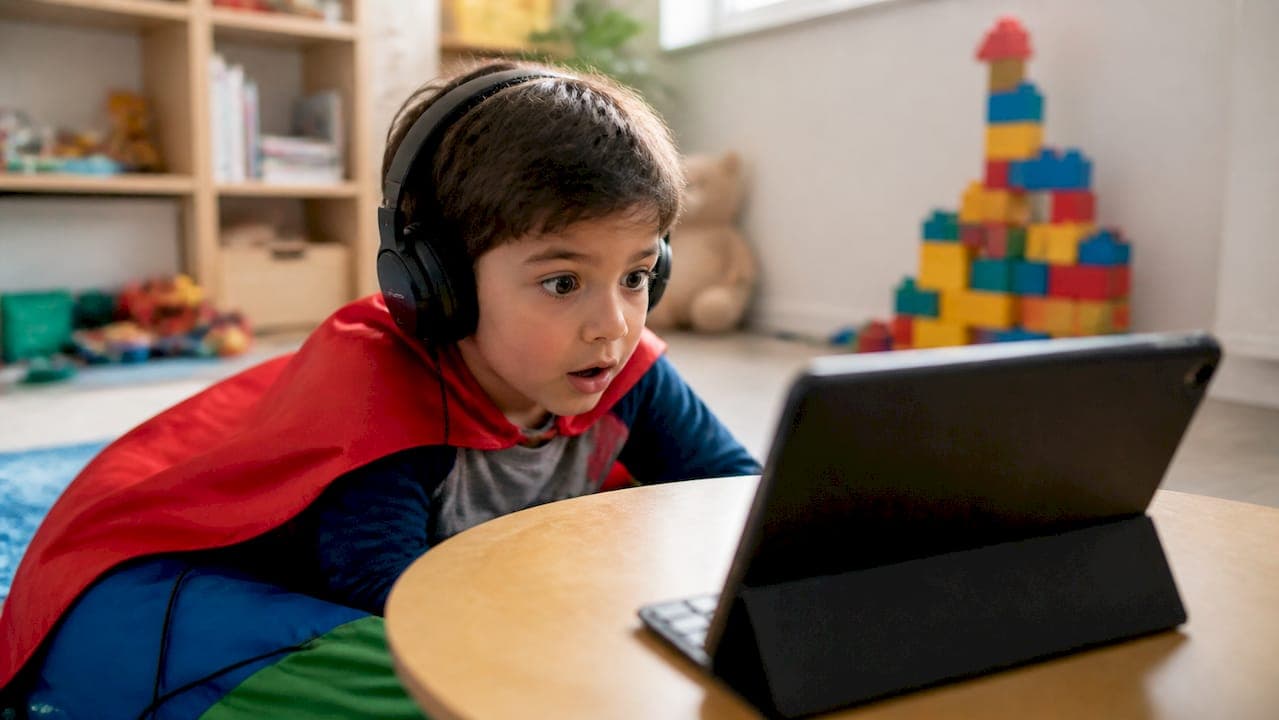
For grabbing and holding a 4 to 9 year old's attention, personalized stories usually win, especially in recurring formats like audio. Generic books still matter for literary range, diverse voices, and prize-winning writing your child won't get any other way. The smartest home libraries use both, and the studies below show exactly where each format earns its keep.
TL;DR:
- Personalized stories with rich customization, including appearance and interests, significantly boost engagement and comprehension, especially for reluctant or diverse children.
- Minimal personalization, such as name-only, offers limited developmental or emotional benefits compared to richer, multimodal formats.
- Recurring, interactive, and audio personalization formats create stronger, longer-lasting reading habits through consistent exposure.
- Cost-effectiveness favors digital or subscription models for ongoing motivation, while printed books are better suited for special milestones or gifts.
- Verify personalization depth, voice talent, data privacy, and format options before purchasing to ensure meaningful engagement and value.
Table of Contents
- Personalized Stories vs. Generic Stories: A Quick Comparison
- What Are the Different Levels of Story Personalization?
- Does Personalization Actually Improve Reading Comprehension?
- Does Personalization Matter More for Some Children Than Others?
- How Much Should You Spend on Personalized Stories?
- How Do You Spot Real Personalization Before You Buy?
- How Does a Weekly Personalized Podcast Put This Research Into Practice?
- A Family's Take on Personalized Audio Stories
- Get Weekly Personalized Superhero Adventures for Your Child
- Sources
Personalized Stories vs. Generic Stories: A Quick Comparison
Matching format to your goal matters more than picking a "winner." Here's how the two stack up.
Personalized stories:
- Higher immediate attention and repeat requests, especially when a child's name and traits appear in the plot
- Comes in tiers: name-only, appearance and family details, interest-driven plots, and interactive audio
- Best for reluctant readers, bedtime routines, milestones, and building a reading habit
- Recurring formats (weekly episodes, subscriptions) reinforce the habit instead of being a one-time novelty
Generic stories:
- Wider range of settings, cultures, and voices than any custom story can offer
- Shared reference points for classroom discussion and sibling group reading
- Access to award-winning authors and illustrators refining craft over decades
- Lower cost per title and easy to borrow from a library
Quick decision rule: pick personalized formats when the goal is motivation, connection, or a milestone gift, and lean on generic favorites when the goal is exposure to new ideas, cultures, and writing styles.
What Are the Different Levels of Story Personalization?
Not all "personalized" products deliver the same value, and the differences matter more than most parents realize before they buy.
Name-only personalization is the weakest tier. A generic template gets a name stamped into a few sentences, but the plot, art, and voice stay identical to every other copy sold. It's a novelty, not a developmental tool, because research on social agency suggests the comprehension benefit comes from a child feeling like an active participant, not just seeing their name on a page.
Richer personalization goes further, and this is where the real engagement gains show up:
- Appearance and identity (skin tone, hair, glasses, family structure)
- Interests woven into the plot itself, not bolted on
- Values or lessons tied to something the child is actually working through
- Multimodal builds that let a parent preview and adjust traits before buying, which research on multimodal personalization links to stronger feelings of ownership
Audio and podcast personalization adds another layer entirely: a voice actor performing the child as the hero, episodic story arcs that reference earlier adventures, and delivery through a private feed instead of a single static file. Studies on interactivity and narrative transportation suggest that combining personalization with ongoing, evolving content produces a bigger effect than either element alone.
Turnaround and price track with depth: name-only products ship instantly and cost little; rich, multimodal, or audio formats take more production time and usually cost more, but only because they buy a genuinely different experience, not a fancier name stamp.
Pro Tip: Before buying any personalized product, ask for a sample. If the preview reads exactly like a generic book with a name swapped in, that's your answer about how deep the personalization actually goes.
Does Personalization Actually Improve Reading Comprehension?
Yes, and the evidence is more specific than "kids like seeing their name." A 2025 study on name-based personalization found that inserting a reader's own name into a text improved both comprehension and transfer in elementary-aged students, compared to identical stories using generic names. The researchers tie this to a mechanism called social agency: when a child recognizes themselves in a story, they process it less like passive content and more like a social interaction they're part of. That shift in processing appears to be what drives better recall.
When a child sees their own name doing the acting in a story, they stop reading it and start participating in it. That shift from spectator to participant is what the comprehension gains seem to trace back to.
A separate line of work on children's fables found something researchers call a threshold effect: even minimal personalization produced a real jump in affective engagement compared to the generic version, and adding more personalization on top of that often didn't move the needle much further. That's genuinely useful news for budget-conscious parents. It means you don't need the most expensive, deeply customized product on the market to see a benefit.
Separately, comparative evaluations of AI-generated narratives found personalized stories scored higher on engagement than generic versions of the same content, and the MIRRORSTORIES corpus work found similar results across engagement and textual variety.
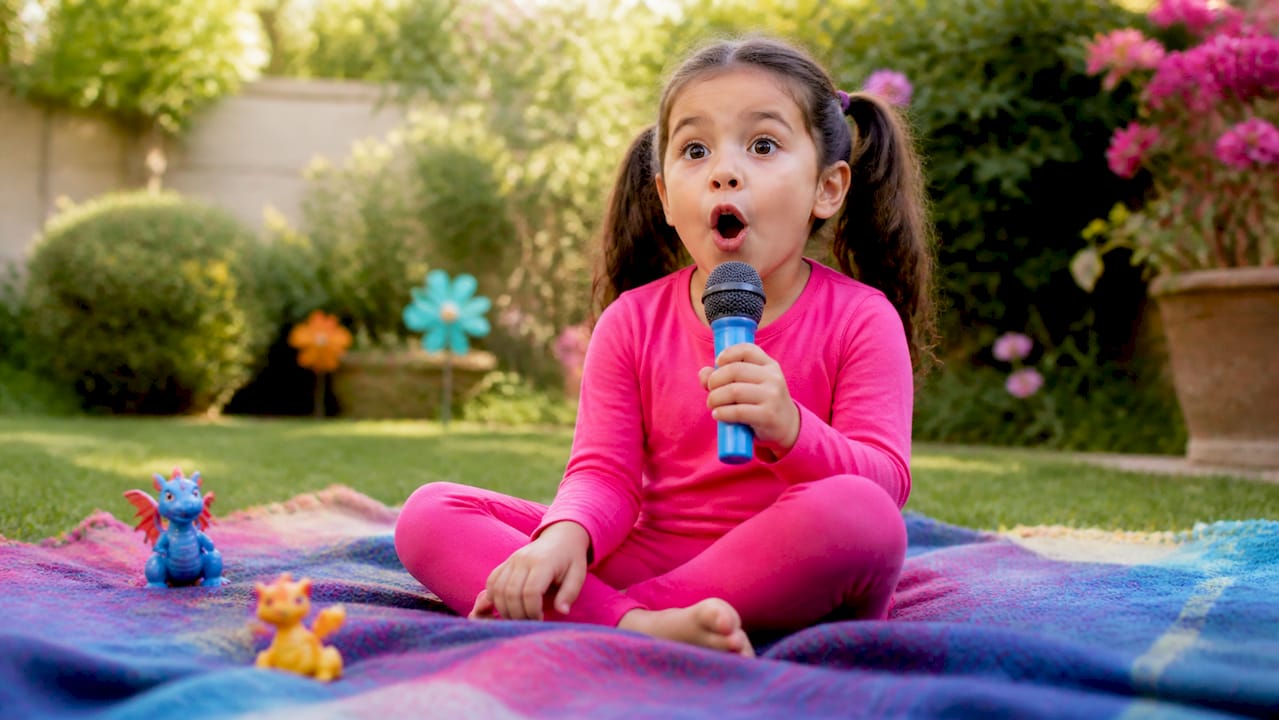
Keep the caveats in mind. Most of these studies work with elementary-school samples over short time frames, and none of them claim personalization replaces the value of broad reading. Treat this as evidence that personalization helps engagement and comprehension, not proof it's the only thing that matters.
Does Personalization Matter More for Some Children Than Others?
It appears to, and this is one of the more overlooked findings in this research area. A 2025 study on shared book reading and involvement found that personalization increased both behavioral and verbal involvement during reading, with larger effects for children of color specifically. That's a meaningful signal for any family whose kids rarely see themselves reflected as the hero of a story on their bookshelf.
Doing this well means going beyond a name swap:
- Let the child's actual skin tone, hair texture, and family structure show up in the story, not a generic default
- Reflect real family configurations (two parents, one parent, grandparents as primary caregivers, blended families) instead of assuming a template
- Avoid tokenizing a trait, like reducing a character to a single stereotype tied to their background
- Offer opt-outs for sensitive identity details a parent may not want featured
The goal isn't to replace a diverse library with stories only about your own child. It's to give kids at least a few stories where they're unmistakably the hero, while still filling shelves with books about lives different from their own.
How Much Should You Spend on Personalized Stories?
Cost and format track together more than most buying guides admit. A single printed personalized book typically runs higher per unit than a paperback off a shelf, and print-on-demand shipping can take one to two weeks, which matters if you're buying for a birthday. Digital and audio subscriptions flip that math: a recurring weekly cost typically lands lower than a comparable stack of printed personalized books, delivers instantly, and doesn't force you to rebuy for each sibling.
Consider format by use case:
- Milestone or gift: a printed personalized keepsake, ordered with buffer time for shipping
- Ongoing motivation: a subscription format that renews the personalization weekly instead of once
- Library supplement: generic favorites borrowed or bought in bulk for cultural breadth
Siblings can share a subscription feed or swap printed keepsakes, and saving digital episodes or scanned book pages preserves them long after a child outgrows the story. Reading motivation guidance backs this mixed approach: use personalization to hook reluctant readers, but keep a varied shelf for range.
How Do You Spot Real Personalization Before You Buy?
Run through this checklist before checking out on any personalized story or podcast:
- What specifically gets personalized? Name only, or name plus appearance, interests, and plot details?
- Who writes or voices it? A named author or narrator, or an anonymous template mill?
- Can you edit it? Some services let you adjust traits after the first draft; others lock you in at checkout.
- What happens to your child's data? Ask directly how personal details are stored and whether they're shared.
- What's the delivery format? A single file, a physical book, or an ongoing feed you can revisit?
Red flags worth walking away from: a name stamped into otherwise identical text, illustrations that look interchangeable across every child, or a vendor that won't offer a preview or sample audio clip before you pay.
Pro Tip: If you want sustained engagement over months, look at subscriptions over one-off purchases. A single personalized book is a nice gift; a recurring format is what actually builds a reading or listening habit.
How Does a Weekly Personalized Podcast Put This Research Into Practice?
A personalized superhero podcast built around a child's name, interests, and age is a practical test case for most of what the studies above describe. Weekly episodes deliver the recurring exposure that amplifies engagement over time, rather than a single novelty that fades after one listen. Audio format supports the kind of narrative transportation that text alone struggles to match, since a performed voice carries tone and pacing a printed page can't.
- Episodes arrive through a private podcast feed, not a one-time download
- Personalization spans name, interests, and traits, not just a name stamp
- Sibling and gift options extend the same model across a family
- Monthly and annual plans support either a short trial or a sustained habit
A Family's Take on Personalized Audio Stories
Families who fold a weekly audio story into a bedtime or car-ride routine tend to see it stick precisely because it's recurring, not a one-time gift that gets forgotten in a drawer. Two things help: keep the listening slot consistent (same time, same routine) and let the child choose which episode to replay on a rough day, as recommended for effective children entertainment at weddings. Repetition, oddly, is part of what makes it work.
— JG
Get Weekly Personalized Superhero Adventures for Your Child
If sustained engagement is the goal, a subscription beats a one-off purchase for the reasons covered above: recurring exposure builds the habit that a single book or episode can't. G45-hero-cast delivers a new personalized superhero episode every week to a private podcast feed, built around your child's name, interests, and age, with sibling options and gift-friendly plans for birthdays or holidays. Monthly and annual subscriptions are both available, so you can start small or commit for the year.
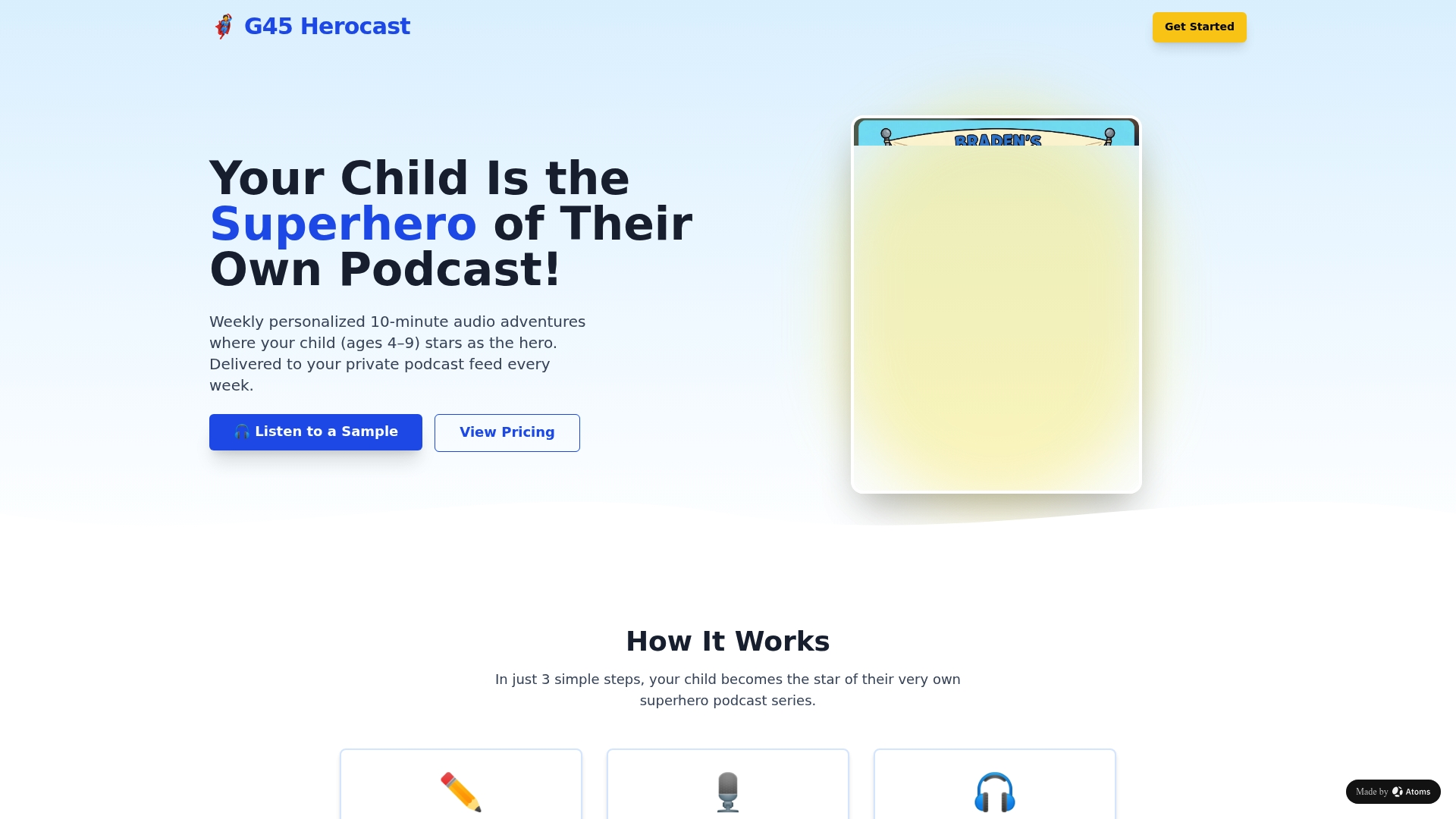
If your child already loves superhero bedtime stories or car-ride audio, this turns that pattern into a weekly ritual instead of a search for the next thing to play. Check plan options and get your child's first episode started at G45-hero-cast.
Sources
- Personalizing text by using readers' names – effects on reading comprehension and social agency (2025)
- Effect of personalization in children's fables (F1000Research, 2026)
- EMNLP 2024 paper (personalization vs generic engagement)