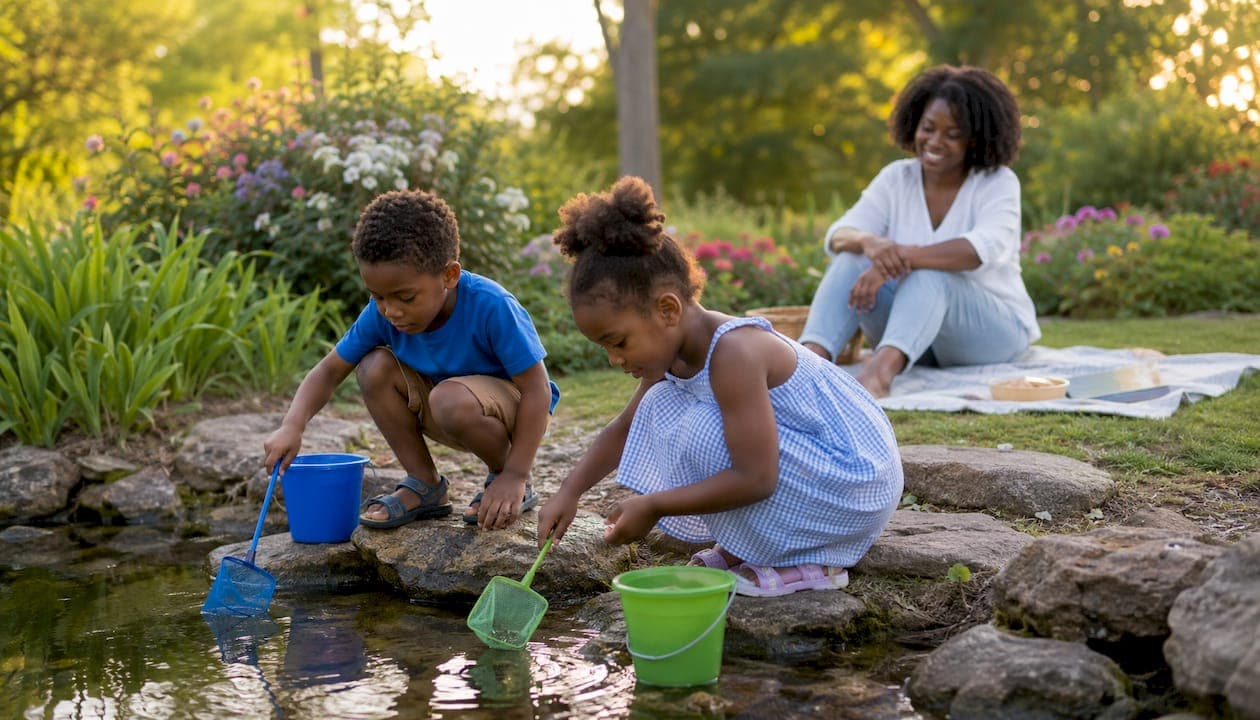
Adventures for 4 year olds are best defined as active, sensory-rich experiences that combine outdoor exploration, simple physical challenges, and unstructured discovery. The American Academy of Pediatrics links regular outdoor play to stronger motor skills, better attention regulation, and improved creativity in preschoolers. Research shows 4-year-olds need 2 to 3 hours of active outdoor play daily to support healthy development. Studies also connect under one hour of daily outdoor time to higher rates of behavioral issues. Michigan's mix of state parks, Great Lakes shorelines, and four-season weather makes it one of the best places in the country to build a rich adventure routine for young children.
1. What adventures for 4 year olds work best outdoors?
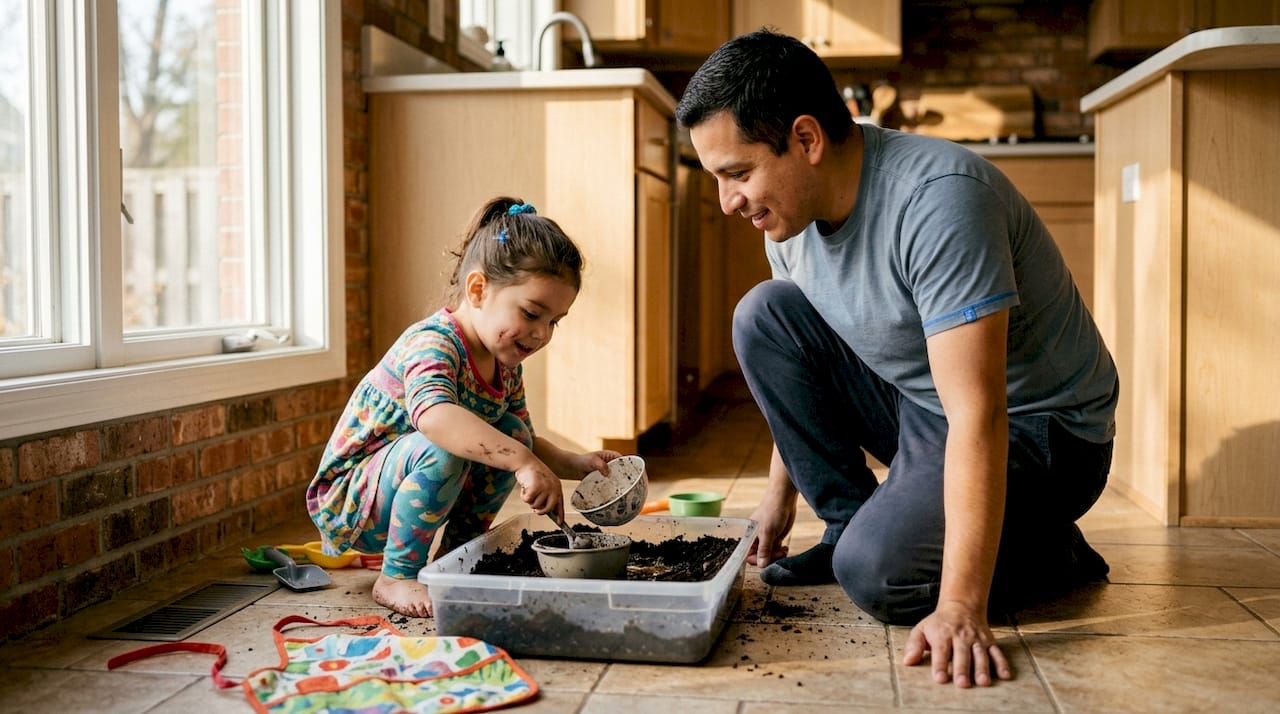
The best outdoor adventures for 4-year-olds combine sensory input, movement, and open-ended exploration. At this age, children learn through touch, sound, and physical engagement far more than through instruction. Simple outdoor interactions like collecting nature items, creating mud kitchens, and tactile play effectively support sensory development and executive function. That means a patch of mud and a set of old cups can deliver more developmental value than a structured class.
Top outdoor adventure categories for this age group include:
- Mud kitchens: Fill a bin with dirt, water, and kitchen tools. Children mix, pour, and create. This builds fine motor skills and imaginative play simultaneously.
- Puddle jumping: Simple, free, and deeply satisfying for 4-year-olds. Waterproof boots are the only equipment needed.
- Nature scavenger hunts: Give your child a short picture list of items to find, like a pinecone, a smooth rock, or a yellow leaf. Michigan trails and neighborhood parks work perfectly for this.
- Balance bike rides: Low, pedal-free bikes let 4-year-olds build coordination and confidence on flat paths.
- Water transfer play: Set out two containers and a cup. Children move water from one to the other. It sounds simple. It holds their attention for a surprisingly long time.
- Obstacle courses: Use logs, stepping stones, or chalk lines in the backyard. Children jump, crawl, and balance their way through.
Unstructured exploratory play is not just fun. It builds executive function, the mental skill set that includes planning, focus, and impulse control. Letting your child lead the direction of play, even briefly, produces stronger engagement than directing every step.
Pro Tip: Rotate between one structured activity and one free-play period during each outing. This keeps energy levels steady and prevents the frustration that comes from too much adult direction.
2. How to plan adventures without over-planning
Over-planning is the most common mistake parents make with preschool adventures. 70% of outdoor play benefit comes from unstructured time, and over-planning reduces engagement. That statistic should change how you think about every outing.
The most effective approach is activity stacking. Stacking shorter play sessions, such as a 20-minute neighborhood walk, one hour at a park, and 40 minutes in the backyard, meets daily outdoor goals better than a single long outing. Fragmented sessions also fit more naturally into a family's schedule and sustain a child's interest across the day.
Here is a simple framework for planning a great adventure day:
- Pick one anchor activity. Choose one main destination or activity, like a trail, a park, or a backyard setup. Keep it simple.
- Pack for weather, not perfection. Michigan weather shifts fast. Layers, waterproof boots, and a change of clothes remove the biggest obstacle to staying outside longer.
- Build in free time. After the anchor activity, step back. Let your child explore without a prompt or a goal.
- Use small motivators. Stickers, themed stamps, or a special snack help children push through longer stretches of activity. These small rewards maintain motivation without creating dependency.
- End before exhaustion. Leaving while your child still has energy means they will want to go again. Ending on a meltdown does the opposite.
Pro Tip: Keep a small "adventure kit" in your car: a magnifying glass, a ziplock bag for nature finds, a stamp card, and a snack. You can turn any unplanned stop into a memorable outing.
3. Creative adventure activity ideas to try this season
The best fun adventures for kids this age require almost no budget and very little setup. Here are ten specific ideas, organized by type, that work well for Michigan families across all four seasons.
| Adventure Type | Physical Effort | Sensory Input | Estimated Cost | Duration |
|---|---|---|---|---|
| Mud kitchen | Low | High | $0 | 30–60 min |
| Nature scavenger hunt | Medium | High | $0 | 45–90 min |
| Balance bike trail ride | High | Medium | $0 (own bike) | 30–45 min |
| Backyard obstacle course | High | Medium | $0 | 20–40 min |
| Water transfer play | Low | High | $0 | 20–45 min |
| Short family hike | Medium | High | $0–$10 | 60–90 min |
| Treasure hunt (local program) | Medium | Medium | Under $20 | 60–120 min |
| Puddle jumping walk | Medium | High | $0 | 20–40 min |
For family hikes, trails of about 3 to 4 km with interactive stations keep 4-year-olds engaged. Experts recommend 10 to 13 themed activity points along a trail. In Michigan, trails at places like Sleeping Bear Dunes National Lakeshore or Pictured Rocks offer natural features that serve as built-in activity stations.
On poor weather days, bring the adventure indoors. Set up a sensory bin with rice or dried beans, build a blanket fort with a "treasure" hidden inside, or create an indoor obstacle course with couch cushions and tape lines on the floor.
For a creative play idea that extends beyond the backyard, audio adventures for kids pair well with physical play. A child who has just finished a nature scavenger hunt is primed to engage with an imaginative audio story that continues the adventure theme.
4. Local venues and programs for Michigan preschoolers
Michigan offers a wide range of accessible venues that support nature explorations for young children without requiring long drives or large budgets. The key is knowing what to look for.
Organized adventure sessions for this age group typically last 1 to 2 hours and include interactive challenges suited to short attention spans. Many programs keep costs under $15 to $20 per child, making them a practical option for regular outings.
Strong venue types to seek out in Michigan include:
- Children's nature centers: Many Michigan counties operate nature centers with guided discovery trails, animal exhibits, and hands-on sensory stations designed for preschoolers.
- State park junior ranger programs: Michigan's Department of Natural Resources offers junior ranger activities at several state parks. These give children a structured goal, like completing a nature checklist, within a free-play environment.
- Community park treasure hunts: Some local parks and recreation departments run seasonal treasure hunt events. These typically include a map, a set of clues, and a small prize at the end.
- Children's museum adventure zones: Michigan has several children's museums with dedicated preschool zones that combine physical play, sensory exploration, and imaginative scenarios.
- Small-group nature camps: Half-day nature camps for ages 3 to 5 are available through many Michigan park systems and community education programs. Group settings build social skills alongside physical ones.
For parents who want to extend the adventure experience at home, best podcasts for preschoolers offer a way to keep imaginative engagement going between outings.
Key takeaways
The most effective adventures for 4-year-olds combine short bursts of outdoor activity, sensory play, and at least 70% unstructured free time to build creativity, motor skills, and resilience.
| Point | Details |
|---|---|
| Daily outdoor time matters | Aim for 2 to 3 hours of active outdoor play, split across multiple shorter sessions. |
| Free play drives development | At least 70% of each adventure should be child-led and unstructured. |
| Simple setups work best | Mud, water, sticks, and rocks deliver strong sensory and motor benefits at zero cost. |
| Small motivators help | Stickers or themed stamps keep 4-year-olds engaged during longer outings. |
| Stack activities across the day | Three short sessions outperform one long outing for both engagement and parental ease. |
Why I stopped trying to make every adventure "educational"
When my kids were around 4, I spent a lot of time building elaborate outdoor setups. Color-coded scavenger hunts. Laminated activity cards. A whole system. What I noticed was that the more I planned, the less they played. They kept looking at me for the next instruction instead of following their own curiosity.
The shift happened when I started treating outdoor time as unscheduled space rather than a lesson. I brought the mud kitchen outside, set it up, and walked away. Within five minutes, they had invented a "restaurant" that served "rock soup" to an imaginary family of beetles. No prompt from me. No educational objective. Just play.
The research backs this up. Over-planning reduces engagement, and the majority of developmental benefit comes from letting children explore freely. That does not mean you do nothing. It means you set the stage and then get out of the way.
The other thing I learned is that repetition matters more than novelty. Parents often feel pressure to find new adventures constantly. But a 4-year-old who visits the same creek every week for a month learns that creek deeply. They notice changes. They develop a relationship with a place. That kind of repeated, low-key nature exploration builds curiosity and resilience in ways that a packed schedule of new activities simply cannot.
Michigan is genuinely one of the best states for this kind of slow, repeated outdoor adventure. You do not need to go far. You need to go often.
— JG
G45-hero-cast: where the adventure keeps going
Physical adventures are powerful. But the story does not have to end when you come inside.

G45-hero-cast creates weekly customized superhero podcasts for children ages 4 to 9. Every Sunday, a new episode lands in a private podcast feed, and your child is the hero of the story. It is a natural extension of the imaginative play that outdoor adventures spark. After a morning of nature scavenger hunts or backyard obstacle courses, settling in to hear their own name in a superhero story keeps the adventure energy alive. G45-hero-cast offers monthly and annual subscriptions, and the superhero audio experience is designed to make every week feel like an event your child looks forward to.
FAQ
How much outdoor time does a 4-year-old need each day?
The recommended amount is 2 to 3 hours of active outdoor play daily. Studies link under one hour of outdoor time to higher rates of behavioral issues in preschoolers.
What are the easiest adventures for 4-year-olds with no budget?
Mud kitchens, puddle jumping, nature scavenger hunts, and backyard obstacle courses all cost nothing and deliver strong sensory and motor benefits.
How long should a planned adventure outing last for a 4-year-old?
Most 4-year-olds engage best in sessions of 1 to 2 hours. Stacking two or three shorter sessions across the day works better than one long outing.
Should I plan every activity during an adventure?
No. Experts recommend keeping at least 70% of outdoor time unstructured. Child-led exploration produces stronger developmental outcomes than adult-directed activities.
What makes a family hike work for a 4-year-old?
Keep the trail to 3 to 4 km and add interactive stops along the way. Themed activity points, like touching different bark textures or listening for birds, hold attention far better than distance-based goals.