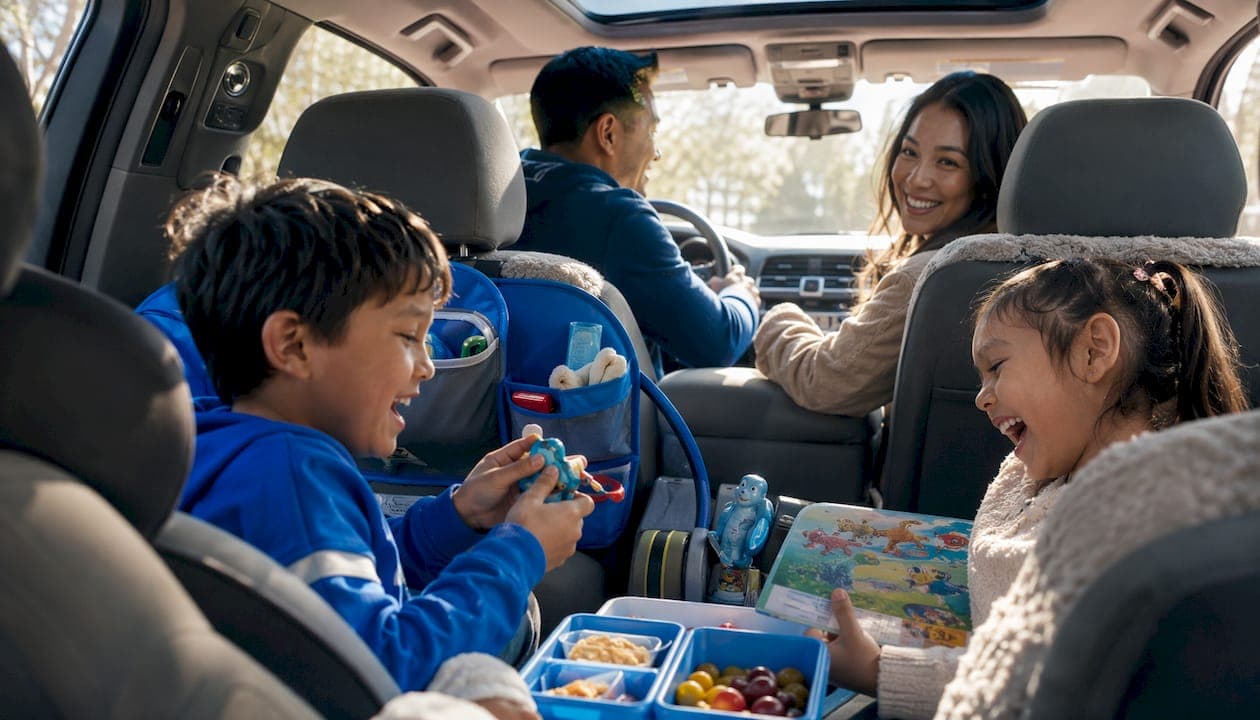
How do you keep kids entertained in the car without screens?
The most effective approach combines rotating activities, planned movement breaks, and age-matched games before boredom ever sets in. Screen-free car rides are genuinely doable, and Florida families making the drive from Tampa to Orlando or up to the Panhandle have plenty of road time to prove it. The key is preparation, not perfection.
Start with these core strategies:
- Rotate activities frequently to match shorter attention spans and keep novelty alive
- Play verbal games like I Spy, 20 Questions, or the Alphabet Game, which need zero supplies and work for most ages
- Pack a small kit with crayons, sticker books, and a magnetic drawing board, kept where kids can reach it themselves
- Plan movement breaks every few hours, lasting several minutes, so kids can shake out restlessness before it turns into a meltdown
- Use sing-alongs to fill stretches between activities, especially with younger children
- Talk through the plan before you leave, so kids know what to expect and aren't blindsided by "no tablets today"
Setting expectations before the trip starts cuts complaints dramatically. A calm, honest conversation at home, not in the driveway, is the difference between a kid who rolls with it and one who spends the first hour negotiating.
What works best for babies, toddlers, and preschoolers?
Younger children need tactile, sensory activities they can reset quickly, because their attention spans are short and their frustration tolerance is lower. The goal is not one long activity but a steady stream of short ones.
- Soft fabric busy boards let toddlers work zippers, velcro, and buttons, building fine motor skills while staying safely occupied; soft and padded toys are the right call since hard plastic items become projectiles in a sudden stop
- Reusable sticker books and Water Wow painting pads are mess-free and endlessly repeatable
- A baking sheet with crayons and paper gives little ones a firm surface for coloring without a tray attached to the car seat, which car seat manufacturers do not approve
- Simple coloring books and chalkboard boxes from local retailers like Fidget Toys Plus offer sensory variety, with quiet fidget items priced from around $7
- I Spy focused on colors and shapes works well for preschoolers who are learning to identify both, and the whole car can play
- Travel journals or drawing on paper bags encourage creativity without requiring reading skills
- Familiar comfort items like a stuffed animal or small blanket reduce anxiety and car sickness, making kids more willing to engage with activities
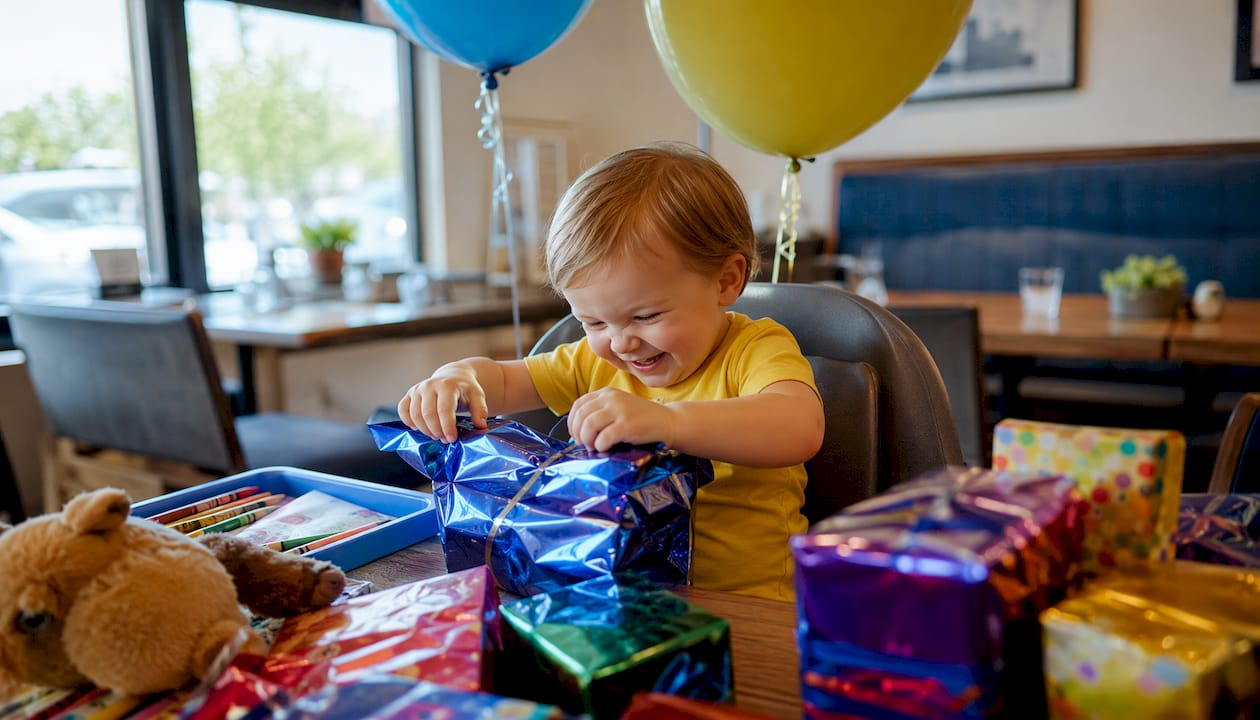
Pro Tip: Wrap a few small, inexpensive toys in wrapping paper and hand one back every hour or two. The unwrapping alone buys you 20 minutes of happy quiet, and the novelty of a "new" toy keeps engagement high.
What activities keep school-aged kids busy on long rides?
Older kids can handle more complexity, but they also get bored faster when an activity stops feeling fresh. Variety and a mild sense of challenge are what hold their attention.
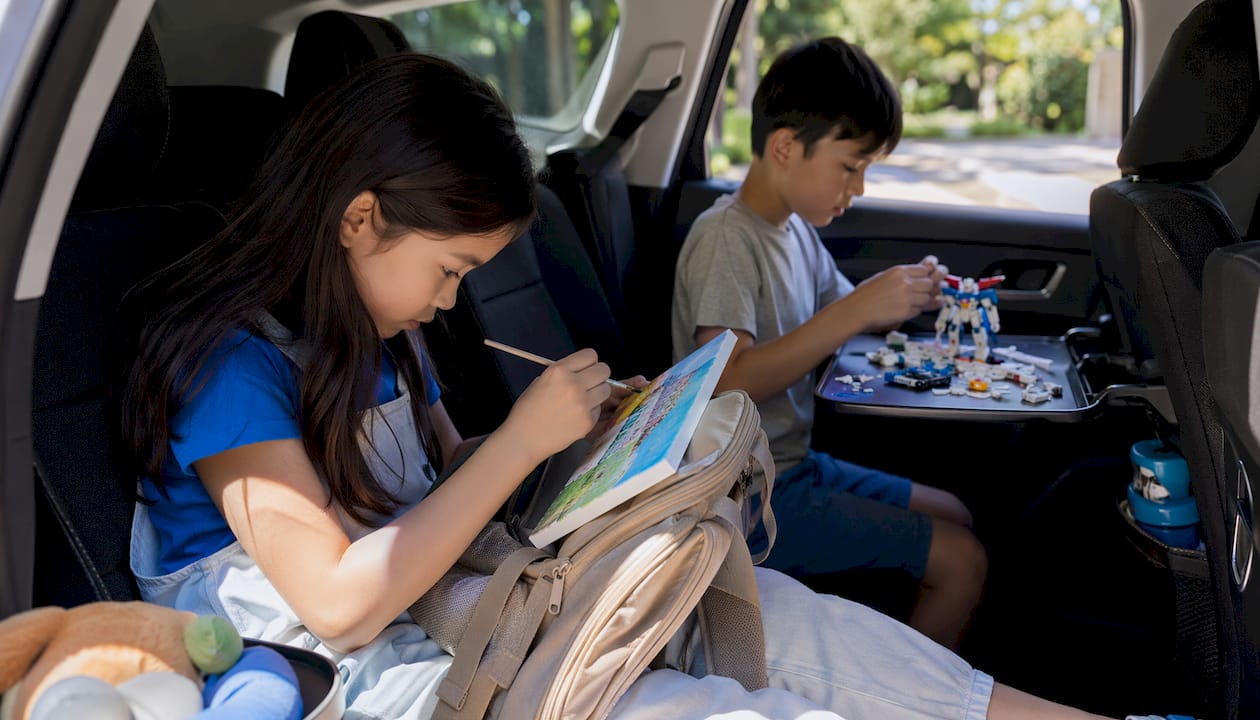
- A 3-ring activity binder filled with coloring pages, scavenger hunts, and card games is one of the most practical tools for this age group; laminate pages in sheet protectors with a dry-erase marker and the whole thing becomes reusable across every trip
- LEGO sets from LEGO® Store Disney Springs travel well in a small zip bag and keep hands and minds occupied for long stretches
- Fidget toys from Fidget Toys Plus, including tangles and squishies, help kids who need sensory input to focus during listening or quiet time
- Journaling and storytelling games, where each person adds one line to a shared story, pull everyone into the same activity without any supplies
- Scavenger hunts and travel bingo add friendly competition, which school-aged kids respond to strongly
- KIDS VIP ride-on cars make rest stops genuinely exciting; premium ride-on vehicles give kids a burst of active play during breaks, burning off the energy that builds up after hours of sitting
- Card games and trivia decks work well for ages 7 and up, especially when you turn them into tournaments with small prizes at the end
Cycling through varied activities prevents the boredom that sets in when one thing runs too long. School-aged children have longer attention spans than toddlers, but they still need a change of pace every hour or so.
General tips that make any road trip smoother
Pacing and variety matter more than any single activity. That holds true whether you're driving with a two-year-old or a ten-year-old, and it applies across the whole trip, not just the first hour.
- Introduce activities one at a time using "surprise bags" rather than dumping everything out at once; novelty is a finite resource, and spacing it out makes each item feel more exciting
- Use a paper map or visual milestone tracker so kids can see progress; visual tracking tools help children feel a sense of control over the trip and reduce the "are we there yet" loop
- Manage hunger proactively with small, frequent snacks like cheese sticks, crackers, and grapes; hunger and sensory overload are leading causes of car meltdowns, and a well-timed snack resets the mood faster than any game
- Pack neck pillows and a favorite stuffed animal for comfort during quiet stretches
- When the car gets loud and tense, lower your voice, switch to soft music, and call a "quiet time" rather than escalating; it works more often than you'd expect
- Plan stops at parks or rest areas with grass, not just gas stations; ten minutes of running around buys another hour of calm in the car
- If you're planning a longer Florida road trip, tools like CampGazer can help you find RV-friendly stops and campgrounds along your route with amenities that make breaks genuinely fun for kids
Pro Tip: Leave early in the morning while kids are still drowsy. Many will fall back asleep for the first stretch, giving you a quiet hour or two before the activities even need to start.
How personalized audio adventures make car rides better for kids
Audio stories reduce screen-related motion sickness and keep kids engaged without requiring them to stare at anything. That alone makes audio one of the strongest tools in a parent's road trip kit, especially for kids who get queasy with books or tablets.
- Personalized stories hold attention longer because children hear their own name, their interests, and their traits woven into the plot; a child who is the hero of the story does not want to miss a single episode
- Audio lets kids look out the window while still being fully absorbed in a narrative, blending relaxation with engagement
- Pausing to ask "what do you think happens next?" turns passive listening into an interactive game the whole car can join
- Shared listening creates conversation that continues long after the episode ends, which is exactly the kind of family connection a long drive can build
- Weekly delivery keeps the excitement going between trips, so kids are already invested in the story before they even buckle up
G45-hero-cast creates personalized superhero podcasts for children ages 4–9, delivered weekly to a private feed. Each episode features the child as the hero, with the story built around their name, age, and interests. Parents and grandparents can subscribe monthly or annually, with options for siblings and gift plans. For a deeper look at what makes audio storytelling work for this age group, the audio adventures guide for ages 4–9 covers the format in detail.
If your child is in the preschool range, the best podcasts for preschoolers guide is a practical starting point for finding the right audio fit before your next drive.
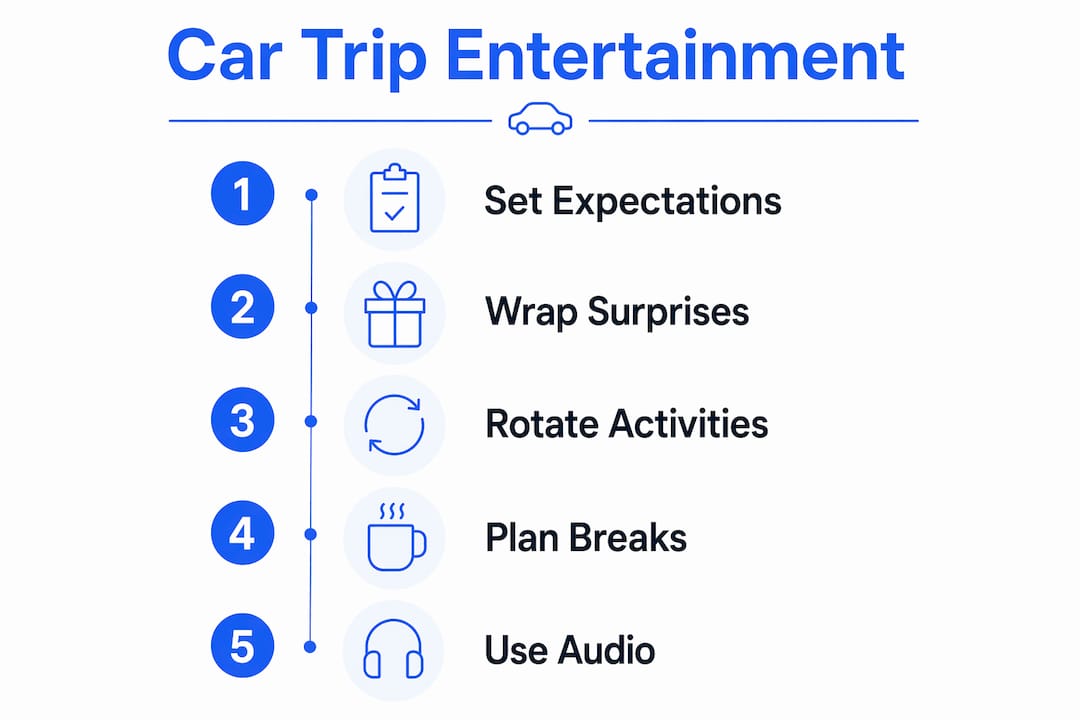
Key Takeaways
Screen-free car entertainment works best when you rotate activities by age, plan movement breaks every 2–3 hours, and introduce new items gradually rather than all at once.
| Point | Details |
|---|---|
| Rotate activities often | Cycling through games, crafts, and audio every 30–60 minutes prevents boredom across all ages. |
| Plan movement breaks | Experts recommend 5–15 minute stops every 2–3 hours to help kids regulate energy and reduce restlessness. |
| Introduce items gradually | Handing out one surprise bag at a time keeps novelty high and extends engagement throughout the trip. |
| Use audio for screen-free calm | Personalized audio stories reduce motion sickness and keep kids absorbed without requiring them to look at a screen. |
| Manage hunger and comfort | Small frequent snacks and familiar comfort items prevent the mood crashes that lead to meltdowns on long rides. |