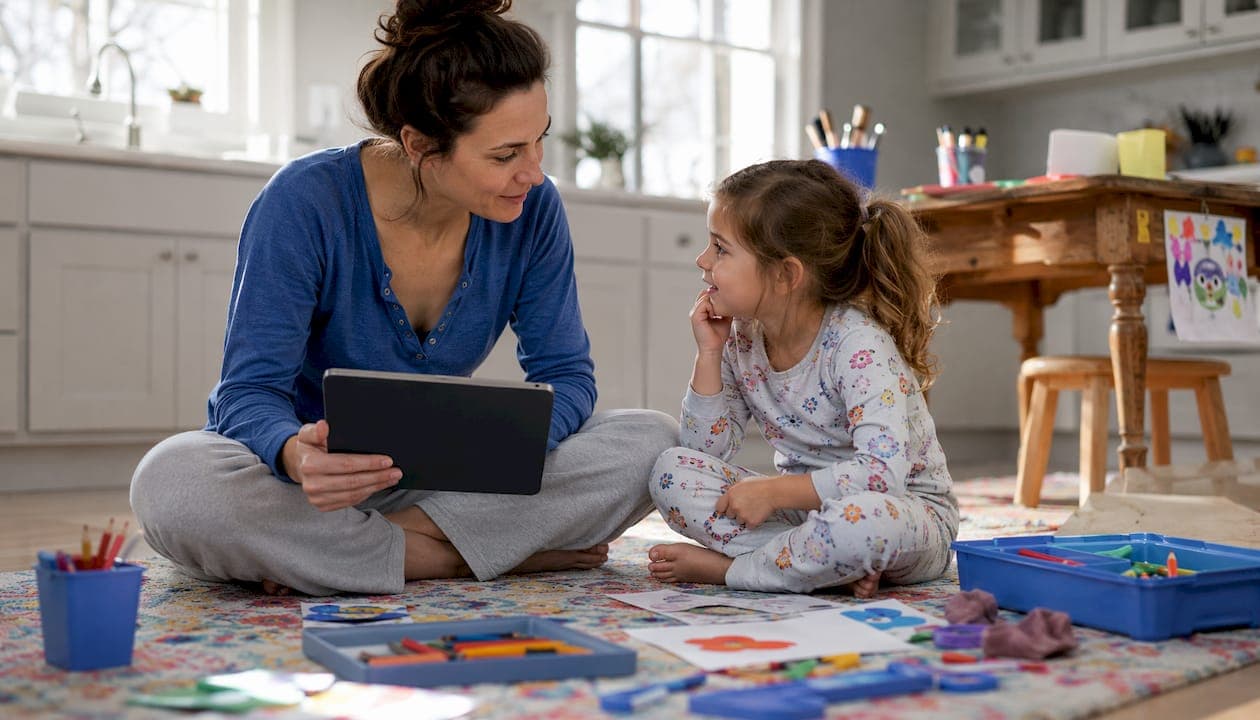
The American Academy of Pediatrics recommends no more than one hour of high-quality, educational screen time per day for children ages 2 through 5. Co-viewing with a parent or caregiver is strongly encouraged, not just as a nice extra, but because watching together and discussing what's on screen is linked to better cognitive development than solo use. Here's what that looks like in practice:
- A daily maximum of high-quality, educational content appropriate for 5-year-olds
- Co-view whenever possible and treat your child as a conversational partner, not a passive viewer
- Tech-free zones in bedrooms and at mealtimes reduce passive, habit-driven screen use
- Quality over quantity: a short, engaging educational program beats an hour of fast-paced videos
- Consistency across caregivers prevents the rules from falling apart the moment grandma visits
Table of Contents
- How to limit screen time for a 5-year-old: step-by-step strategies
- Why screen time affects development and sleep more than you think
- Why personalized audio podcasts are a great screen-free swap
- Try G45-hero-cast: your child becomes the superhero
- Key Takeaways
How to limit screen time for a 5-year-old: step-by-step strategies
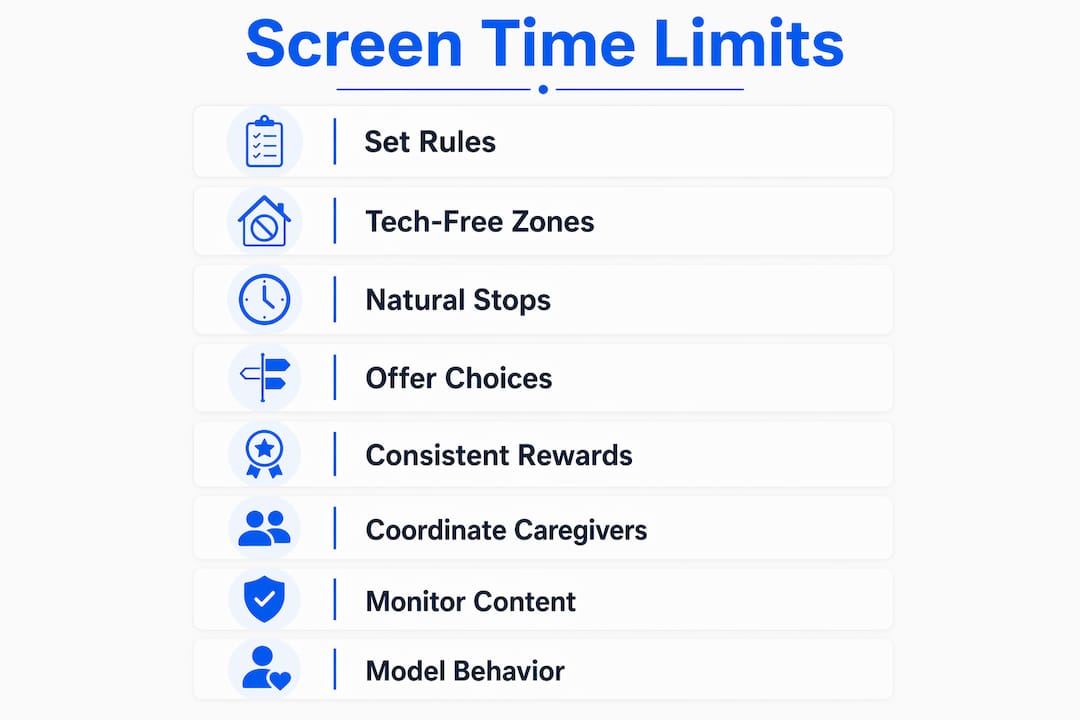
1. Set clear, simple rules your child can actually understand
Five-year-olds do better with concrete rules than abstract ones. "One show after school" lands better than "limited screen time." Post the rules somewhere visible, keep them short, and revisit them every few months as your child grows. Involving children in making the rules increases cooperation significantly.
2. Establish tech-free zones and times
Bedrooms and mealtimes are the two places where tech-free routines make the biggest difference. No screens at the dinner table means more conversation. No screens in the bedroom means better sleep. Start with these two zones before tackling anything else.

3. Use natural stopping points to end screen sessions
Cutting a child off mid-episode is a recipe for a meltdown. Instead, plan transitions around natural breaks: the end of a show, the end of a game level. Give a five-minute warning before the session ends. This one shift alone reduces pushback dramatically.
Pro Tip: Say "You can watch until the episode ends" at the start, not "five more minutes" mid-show. Setting the expectation upfront gives your child a mental finish line.
4. Offer choices within the limits
Giving your child some control over what and when they watch makes them far more likely to accept the limits. "Do you want your show before dinner or after?" keeps the boundary intact while letting them feel heard. Choices within rules also teach kids to manage their own media use over time.
5. Set consistent consequences and small rewards
When screen time rules get broken, the consequence should be predictable and calm, not reactive. Losing tomorrow's screen time is more effective than a heated argument in the moment. On the flip side, a sticker chart or a special activity for a week of following the rules gives your child something to work toward.
6. Coordinate rules across all caregivers
A 5-year-old will absolutely test whether the rules change at grandma's house. Talk to every regular caregiver, including grandparents, babysitters, and after-school helpers, and agree on the same basic limits. The rules don't need to be identical everywhere, but they should be close enough that your child can't play one adult against another.
7. Select and monitor age-appropriate, educational content
Not all screen time is equal. Fast-paced videos with rapid cuts and loud sounds are harder on developing brains than slower, interactive programs. Use parental controls on streaming services and devices to filter content by age. The AAP's family media plan at HealthyChildren.org is a practical tool for mapping out what your child watches and when.
8. Model the behavior you want to see
Children's brains absorb caregiver habits like a sponge. If your phone is always in your hand, your child notices. Parents modeling limited device use is one of the most effective ways to reinforce screen time limits at home, more effective than any app or timer alone.
Why screen time affects development and sleep more than you think
Screen overuse at age 5 crowds out the activities that actually build the brain: physical play, face-to-face conversation, imaginative exploration, and reading. These aren't just nice enrichment activities. They are how children develop emotional regulation, language, and social skills before kindergarten.
Sleep is where the impact gets concrete. Screens before bedtime disrupt melatonin production, making it harder for children to fall asleep and stay asleep. The fix is straightforward: remove all screens from the bedroom and stop screen use 30–60 minutes before bed. Replace that window with a calming routine, reading together, quiet play, or an audio story.
One pattern worth breaking early is using screens to manage tantrums or boredom. It works in the short term, but screens as pacifiers interfere with the emotional regulation skills children need to develop at this age. A child who learns to sit with frustration, with your support, builds a skill that lasts. A child who gets a device every time they're upset learns to expect it.
Professor Danielle Matthews, a psychologist at the University of Sheffield, puts it plainly: treat your child as a conversational partner even during media use, rather than letting the screen do all the talking. That active co-viewing approach turns passive consumption into something genuinely developmental.
Why personalized audio podcasts are a great screen-free swap
Audio storytelling gives children everything screens promise, imagination, excitement, characters they love, without the blue light or passive scrolling. When a child hears their own name as the hero of the story, engagement goes up fast. They're listening actively, picturing the scenes, and often talking about the episode afterward.
Here's why families are making the switch:
- No screen required: audio adventures work during car rides, bedtime wind-down, or quiet time after school
- Personalized stories featuring your child as the superhero create a genuine emotional connection to the content
- Age-appropriate by design: audio adventures for kids ages 4–9 are built around developmental stages, not engagement algorithms
- Fits naturally into tech-free routines: swap the pre-bedtime show for a podcast episode and you've solved two problems at once
- Sparks family conversation: kids want to talk about what happened in their episode, which is exactly the kind of interaction pediatricians recommend
For parents already working to reduce screen time, a weekly audio adventure gives children something to look forward to that doesn't involve a screen at all.
Try G45-hero-cast: your child becomes the superhero
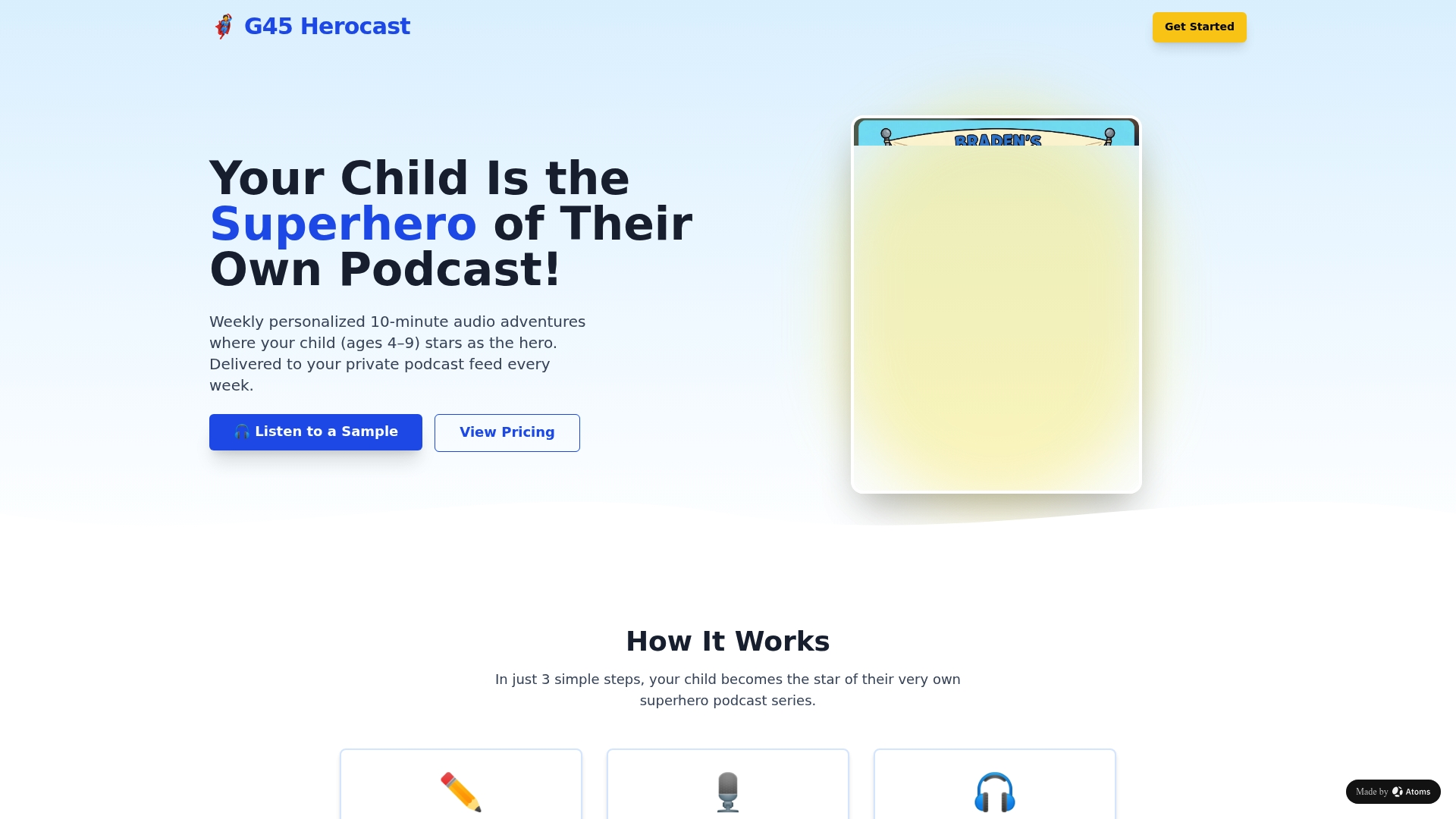
G45-hero-cast creates weekly personalized superhero podcasts for children ages 4–9, delivered every Sunday to a private podcast feed. Each episode features your child by name as the hero of their own adventure, tailored to their age, interests, and personality. It's a screen-free ritual that kids genuinely get excited about, and one that fits directly into the kind of tech-free evening routine pediatricians recommend.
Monthly and annual subscriptions are available, with options for siblings and gift plans. Start your child's superhero audio adventure at G45-hero-cast.
Key Takeaways
Limiting screen time for a 5-year-old to one hour daily of co-viewed, high-quality content, paired with tech-free zones and engaging alternatives, supports healthy development and better sleep.
| Point | Details |
|---|---|
| One hour daily limit | The American Academy of Pediatrics recommends no more than one hour of quality screen time per day for children ages 2–5. |
| Co-view and converse | Watching together and discussing content produces better developmental outcomes than solo screen use. |
| Tech-free bedroom and mealtimes | Removing screens from bedrooms and dinner tables reduces passive use and protects sleep quality. |
| Stop screens 30–60 minutes before bed | Screen exposure before sleep disrupts melatonin and makes it harder for children to fall and stay asleep. |
| Replace screens with audio adventures | Personalized audio stories like G45-hero-cast provide screen-free engagement that supports imagination and family connection. |