
Multi-child personalization means putting two or more kids into a single personalized product, usually a storybook or audio adventure, instead of buying each child a separate item. Shared products work best for family keepsakes, gifts from grandparents, or bedtime routines where the point is togetherness. Separate items or rotating spotlight formats work better when each child needs equal, undivided billing, especially with big age gaps or strong personalities. The right choice comes down to what you're actually trying to create: one shared memory, or several kids each feeling like the main character.
TL;DR:
- Most providers support two to four children in a shared story, with quality often declining or the product splitting into multiple books beyond that range.
- Character representation may vary, with some children serving as main protagonists while others appear as background characters, so confirm how each child will be featured.
- Photos should be clear, front-facing, and individual for each child; group photos can cause features to blend and reduce likeness accuracy.
- Serialized audio stories provide a rotating spotlight that better accommodates large families and keeps the content engaging over time.
- For families with wide age gaps or changing interests, flexible formats like subscription-based stories or podcasts adapt better to evolving preferences than static printed books.
Table of Contents
- What to Expect From Multi-Child Personalized Products
- Photos, Avatars, AI Stories, or Audio: Which Format Fits?
- How to Choose and Order a Fair Multi-Child Product
- Does Personalization Actually Help Siblings Bond?
- Keeping Multiple Kids' Profiles Updated After You Buy
- Matching the Story to Each Child's Actual Interests
- Using Personalized Stories to Support Learning Milestones
- Why I'd Push Parents Toward Serialized Audio for Bigger Families
- Another Route Worth Considering: Weekly Personalized Superhero Podcasts
- Sources
- FAQ
What to Expect From Multi-Child Personalized Products
Most personalized book companies cap how many children can appear in a single story, and that cap shapes everything else about the product. Genie in a Book supports sibling stories for 2, 3, or 4 kids, which lines up with what you'll see across most of the category. A handful of providers stretch to 5, but past that number, quality and page space usually get squeezed, and you'll often be steered toward splitting the order into two books instead.
Character limits and "characters featured" language on a product page don't always mean equal treatment. The most common ordering mistake is assuming that if a listing says it supports four kids, all four get the same narrative weight. In practice, some products make one child the hero and drop siblings in as background characters or name-only cameos, which is fine for some families and a disappointment for others expecting shared billing.
Before you pay, look for these signals on the product page:
- Preview or proof policy: can you see a digital preview or sample spread with your kids' actual names and photos before the order locks in?
- Explicit character-limit statement: does the listing say exactly how many children it supports, not just "great for siblings"?
- Representation language: does it specify whether each child is a protagonist throughout or appears only on select pages?
- Reading-level flexibility: is there an option to select vocabulary or complexity for a spread of ages?
- Photo and fee details: what photo format is required, and is there a per-child or per-photo add-on charge?
Reading level is its own puzzle in a multi-child order. A book written for a 4-year-old and a 9-year-old sibling rarely satisfies both. Some providers let you choose a reading-level tier separately from character count; others write to a single middle-ground level and expect an adult to read aloud regardless of age. If your kids span more than three years apart, this detail matters more than the art style.
On logistics: expect to upload one photo per child (guidance below), pay a modest add-on fee for additional characters beyond the base plan, and wait anywhere from a few days for digital delivery to one to two weeks for printed and shipped copies. Return and edit policies vary widely. Some sellers, especially smaller shops on marketplaces like Etsy, allow a free proof revision before printing; others charge for post-approval changes, so check that before you submit final art.
Photos, Avatars, AI Stories, or Audio: Which Format Fits?
Personalization comes in four broad flavors, and each one trades something for something else.
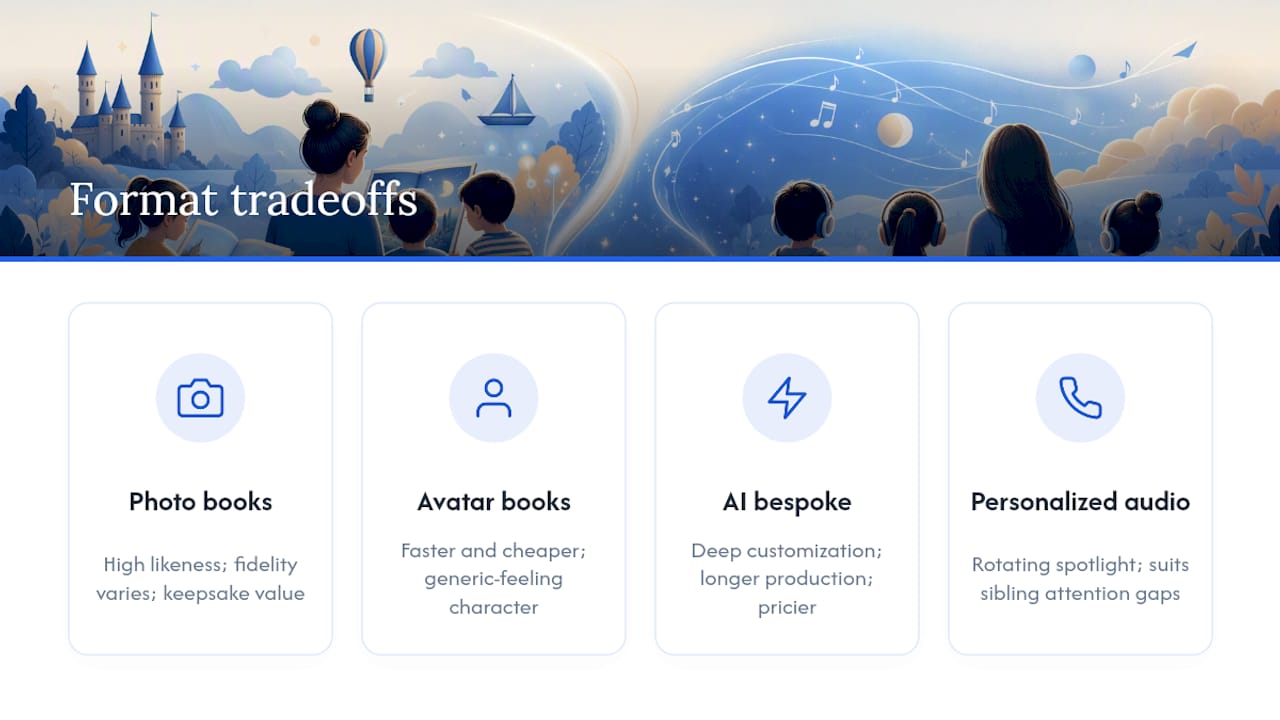
Photo-driven books put your child's actual face on the illustrated character, spread after spread. My Custom Kids Books build its multi-child listings around this exact promise, requiring a clear photo per child so the illustrated likeness actually resembles the kid opening the book. The upside is obvious: grandma recognizes the face on the page. The downside is that photo-to-illustration fidelity varies by artist and platform, and results can look uncanny for some skin tones, hairstyles, or expressions the software wasn't trained well on.
Avatar or template-based personalization skips photo matching and instead lets you pick hair color, skin tone, and outfit from a menu. Companies like Wonderbly built their reputation on this model. It's faster to produce and usually cheaper, but the tradeoff is a generic-feeling character that resembles a category (a brown-haired girl in a cape) rather than your specific kid.
AI-generated bespoke stories go further than either. Instead of dropping a name into a fixed script, services like ToonyStory build new plots and illustrations shaped around the sibling group's photos and traits. MagineBook works in similar territory, generating story content on the fly rather than pulling from a template library. Expect a stronger sense of "this was made for my kids," a longer production window, and a higher price tag.
Personalized audio, like weekly podcast episodes, sidesteps the photo-and-print problem entirely. Instead of squeezing every sibling onto the same page, audio can rotate which child gets the spotlight episode to episode, which solves the equal-representation problem differently than any printed format can.
Pick based on your actual constraint: photo books for likeness and keepsake value, avatars for speed and budget, AI-bespoke for a story genuinely shaped around your kids, and audio when age gaps or rotating attention matter more than a printed object.
How to Choose and Order a Fair Multi-Child Product
Ordering a shared keepsake without a plan is how families end up with one disappointed kid and a returned package. Work through this before you check out:
- Confirm the exact character limit and ask directly, via chat or the FAQ, whether every child listed is a main character or just a name mention.
- Require a preview. If a seller won't show a proof with your actual names and photos before charging your card, treat that as a warning sign, not a formality.
- Follow photo guidance precisely. Submit one clear, front-facing, well-lit photo per child. Twins need separate individual photos, never one group shot, or the software may blend their features.
- Pick a reading-level strategy up front. For wide age gaps, either match the story to the older child's level and plan to read aloud to the younger one, or choose a lower complexity tier and let the older sibling help narrate.
- Check the fine print on fees and timing: per-photo add-on charges, per-extra-character costs, shipping windows, and whether edits after your proof approval cost extra.
- Plan for overflow. If your family has more kids than the product supports, most providers let you order multiple books or bundle combinations at a discount, or you can pick a format like audio that has no fixed page limit at all.
Pro Tip: Screenshot the preview page before you approve it. Sellers occasionally make last-minute production substitutions, and having your approved proof on hand makes any dispute over the final product much faster to resolve.
Does Personalization Actually Help Siblings Bond?
Personalization works best as a conversation starter, not a passive read. Research on shared reading and personalization found that personalized material increases interactive reading behavior, meaning kids and caregivers talk more during the story instead of just moving through pages silently. A separate 2020 study on personalized digital books makes a sharper point: judge a personalized product by the conversations it opens up, not by whether it correctly spells a name.
A 2024 study of nearly 1,000 young adults found that sibling closeness varies enormously by age gap and gender composition, which is exactly why "equal representation" in a shared keepsake matters more for some sibling pairs than others.
In practice, that means building the product into your routine as a prompt: ask "what would you have done in that scene?" or let siblings take turns narrating different characters aloud. For families where the sibling dynamic is genuinely uneven, mixed reading levels, big personality clashes, wide age gaps, separate items or rotating audio spotlight often serve everyone better than forcing one shared script.
Keeping Multiple Kids' Profiles Updated After You Buy
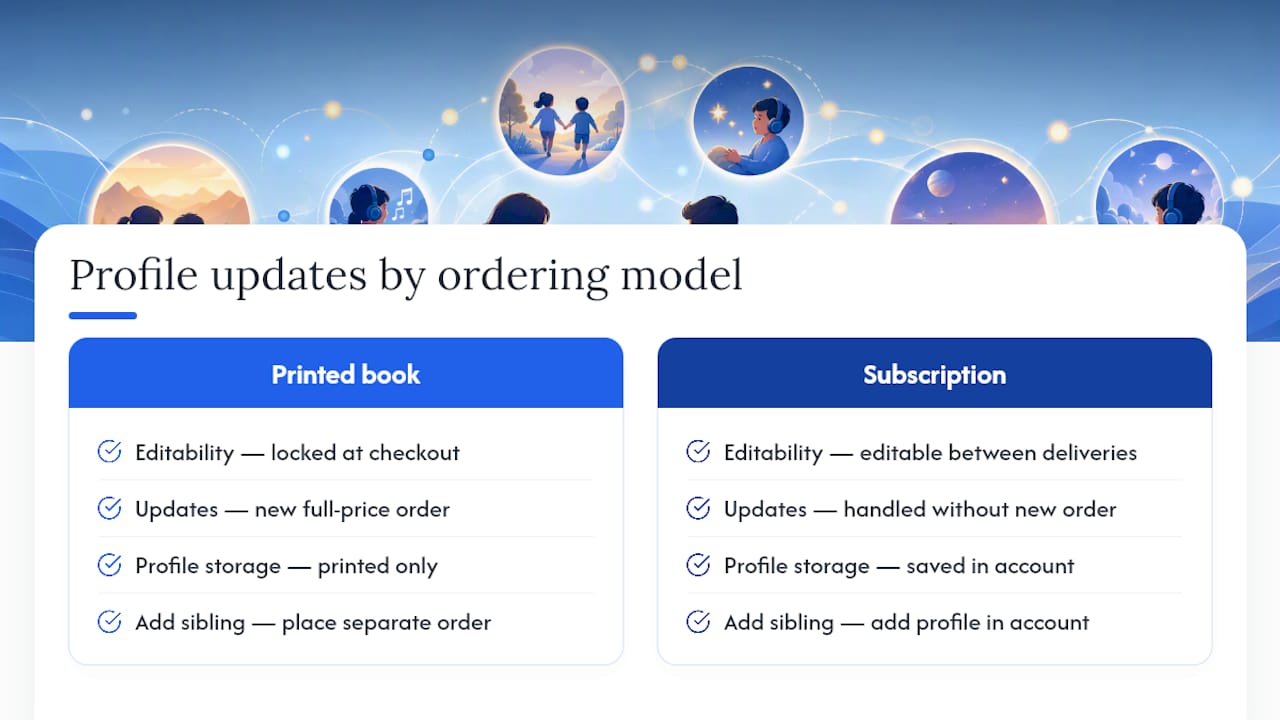
Buying a multi-child personalized product isn't a one-time transaction if your family keeps growing or changing. Kids' interests shift fast between ages 4 and 9. A superhero obsession at 5 can turn into a dinosaur phase by 6, and a static printed book locked in at checkout can't follow that.
This is where the ordering model matters as much as the format. A one-time printed book means any update, a new sibling, a changed nickname, a new favorite animal, requires starting a new order from scratch, usually at full price. Subscription-based or serialized products handle this more gracefully, since profile details like name, age, and interests typically live in an account you can edit between deliveries rather than being locked into a single printed artifact.
If you're managing profiles for more than one child, keep a simple shared note (even just a phone memo) with each kid's current preferred name spelling, favorite colors, pets, and interests. Update it whenever something changes, and update the provider's account to match. For families using a subscription model, check whether the platform lets a parent manage multiple children’s profiles from one login. That single detail saves you from re-entering information every time you want to refresh a detail or add a new episode theme.
Matching the Story to Each Child's Actual Interests
A shared multi-child product runs into a real tension: how do you personalize a single storyline around several kids who like completely different things? The honest answer is that most template-based books solve this poorly. They insert each child's name and maybe a favorite color into a fixed plot that was written before your kids existed, which explains why so many personalized books feel more like a mail-merge than a story built for your family.
Bespoke and AI-generated formats handle this differently. Because the plot and art get built fresh for the sibling group, a provider can weave in one child's love of dinosaurs and another's obsession with soccer inside the same narrative arc, rather than picking one interest and defaulting the rest of the siblings into supporting roles.
Audio formats offer a version of this that print can't match easily: rotating episode themes. One week's episode can lean into a sports-loving kid's interests, the next week's into a sibling's fascination with space, without needing to reprint or reorder anything. That rotation is one of the more underrated advantages of a serialized format over a single static keepsake, especially in households where interests shift month to month.
Using Personalized Stories to Support Learning Milestones
Multi-child personalization can do more than entertain. Age-appropriate personalized stories can reinforce specific developmental milestones when a family chooses reading level and content deliberately rather than just picking whatever character limit fits their sibling count.
For younger kids in the 4 to 6 range, personalized stories work well for reinforcing name recognition, letter sounds, and basic sequencing (what happened first, next, last). For kids closer to 7 to 9, a story can stretch into supporting vocabulary growth, cause-and-effect reasoning, and even early social-emotional skills like sharing credit with a sibling character.
The catch with mixed-age siblings is that a single reading level rarely serves both developmental stages well. This is where the reading-level selection mentioned earlier becomes an educational decision, not just a comfort preference. Choosing a lower complexity tier for a shared bedtime read, then supplementing with a separate, more advanced personalized story for the older child during independent reading time, lets each kid work at their own developmental edge instead of one sibling coasting through material that's either too easy or too hard for their stage.
Why I'd Push Parents Toward Serialized Audio for Bigger Families
Print personalization solves one moment. Serialized audio solves a season of childhood. When a personalized product arrives weekly instead of once, you're not stuck choosing which sibling gets the "main character" slot forever, since the spotlight can rotate episode to episode as new details, like a kid's current obsession or an updated nickname, are far easier to fold into next week's script than into a printed page that's already bound.
That flexibility also happens to make the format screen-free by default, which most parents value more once they've lived with it for a few weeks than they expected to going in. A well-run rotation, alternating whose name and traits headline each episode, respects the same equal-representation research that guides good sibling books. It just does it on a weekly clock instead of a one-time page count.
— JG
Another Route Worth Considering: Weekly Personalized Superhero Podcasts
If the character-limit puzzle and the "who's the real main character" question feel like they're working against your family instead of for it, there's a different route: a weekly personalized superhero podcast instead of a single printed keepsake. Some providers create new audio episodes weekly, each one written around a specific child's details and delivered to a private podcast feed.
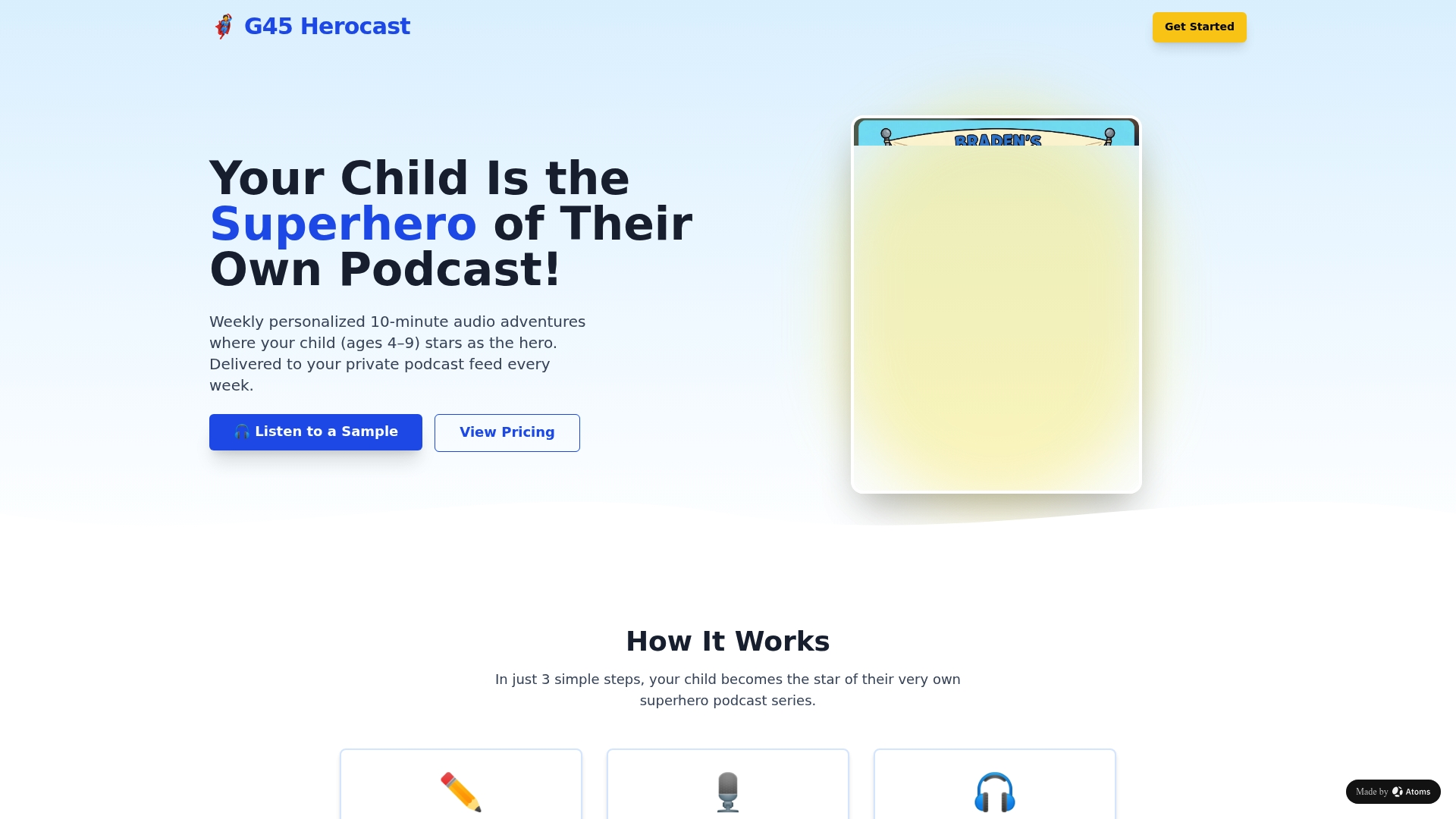
This format solves the multi-child dilemma differently than any book can. Instead of squeezing every sibling onto the same pages and hoping the representation feels fair, you get ongoing episodes where the spotlight can rotate, this week's hero might be your 6-year-old, next week's your 9-year-old, and updates to a character's traits fold into next week's script instead of requiring a whole new print order. It's a genuinely screen-free ritual for families trying to cut down on device time without giving up excitement. Check out our guide on personalized audio stories for more on how serialized formats work, or browse ideas for gifting siblings a shared podcast subscription if you're buying for more than one child at once.
Subscription plans are available, typically featuring weekly personalized episodes delivered to a private feed. Head to G45-hero-cast to see current plan details and get your child's first episode started.
Sources
- Shared-reading and personalization research — Nature Communications (2025)
- Sibling relationship quality — Journal article (2024)
- Personalized digital-book interaction study (2020)
FAQ
Is there a personalized book available for three siblings?
Yes. Several providers, including Genie in a Book, specifically offer sibling books built for 2, 3, or 4 children, with some marketplace sellers on Etsy supporting up to 5. Always confirm the character limit and whether all three kids get protagonist treatment before ordering.
Where can I find personalized books with multiple names?
Look at dedicated sibling-book providers like Genie in a Book, photo-based sellers like My Custom Kids Books, template-style options like Wonderbly, and AI-bespoke services like ToonyStory or MagineBook. Marketplace listings on Etsy also carry many small-batch multi-name options, though quality and preview policies vary widely by seller.
What is the best personalized kids book?
There's no single best option since it depends on whether you want photo likeness, budget-friendly avatars, or a fully bespoke AI-written story. For an ongoing, screen-free alternative rather than a one-time book, a weekly personalized podcast subscription like G45-hero-cast's Bedtime Standard plan offers a different kind of "best," recurring engagement instead of a single static keepsake.
Where can I find children's personalized books with their own pictures?
Photo-driven personalization is the specialty of providers like My Custom Kids Books, which builds books using an actual face photo for each child on every spread. Always check the photo-guidance instructions before uploading, since separate individual photos per child, especially for twins, produce far better likeness results than one group photo.