
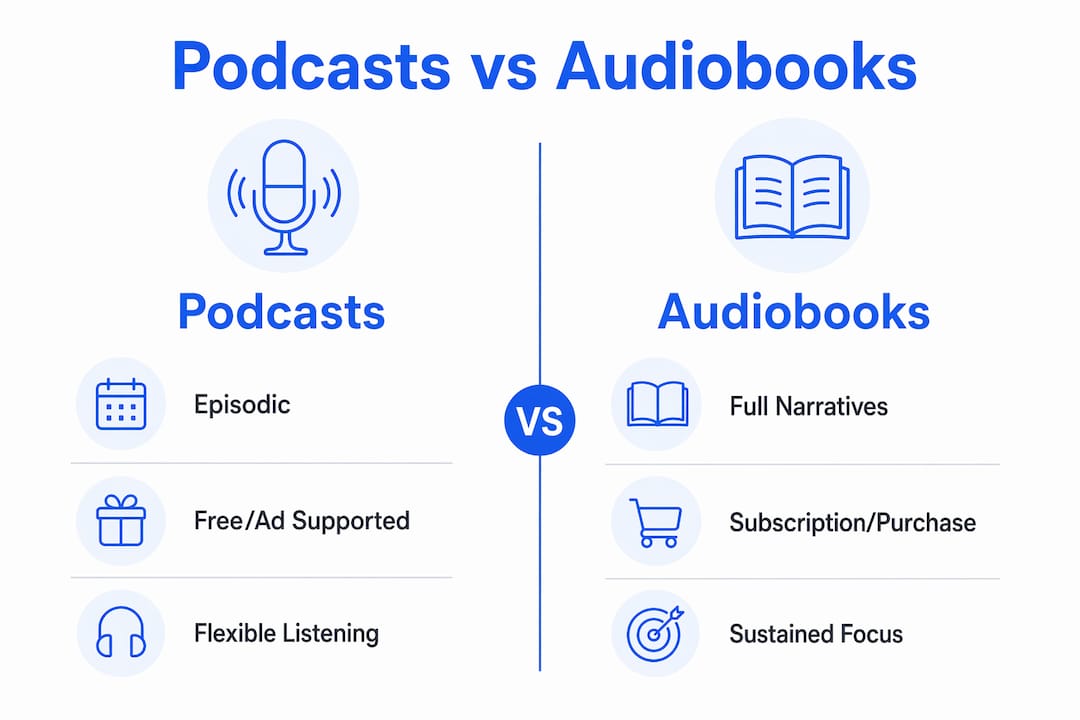
Podcasts are episodic, conversational audio shows released on a recurring schedule, while audiobooks are professionally narrated, complete works designed for linear listening from start to finish. The core difference comes down to structure and intent. Here is a quick breakdown before diving deeper:
- Format: Podcasts release in episodes (typically 30–60 minutes each); audiobooks are single, complete works running 8–12 hours total
- Purpose: Podcasts cover news, interviews, and discussions; audiobooks deliver immersive literary or educational narratives
- Listening context: Podcasts fit short, flexible sessions; audiobooks reward longer, focused attention
- Cost: Most podcasts are free or ad-supported; audiobooks typically require a subscription ($11.99–$14.99/month) or per-title purchase
- Engagement: Podcasts invite casual, multitasking listening; audiobooks pull you into a sustained narrative experience
The boundary between formats is blurring as audio consumption grows, but the differences still shape how you should choose between them.
What is an audiobook?
An audiobook is a professionally narrated recording of a written book, read aloud in full. The narrator, sometimes the author, delivers every chapter in sequence, preserving the structure the writer intended. Production values are consistently high: voice acting, clean editing, and careful mixing are standard, not optional.
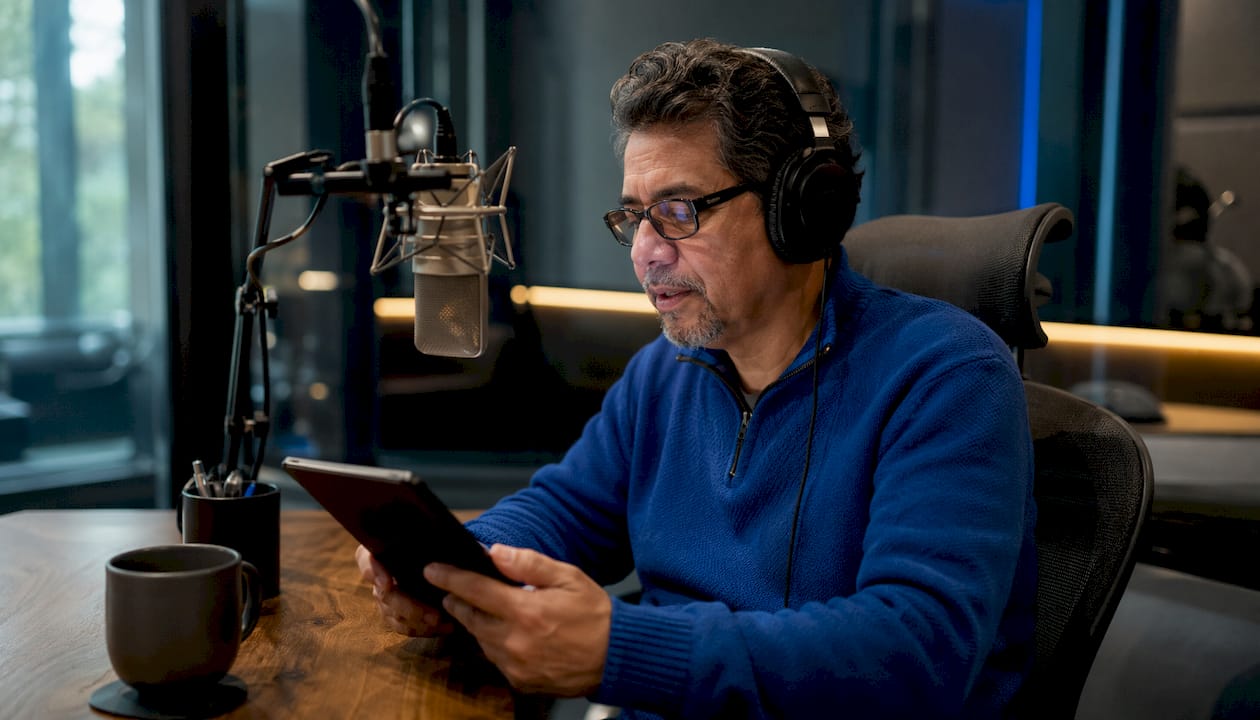
Audiobooks span every genre, from literary fiction and memoirs to business and self-help. A typical nonfiction title runs 8–12 hours; epic fantasy can stretch well past 20. Because the source material went through editing and copyediting before recording, the information density per minute is higher than most podcasts. Every sentence was placed deliberately.
Access usually comes through a subscription service or individual purchase. Library apps like Libby offer free borrowing for cardholders, which lowers the barrier considerably. Listening works best in longer, uninterrupted sessions, a road trip, a quiet evening, or a long flight, where you can sink into the material without losing your place.
What is a podcast?
A podcast is an episodic audio series, released on a regular schedule, built around conversation, interviews, storytelling, or commentary. Most shows drop one episode per week, and the majority of episodes are designed to stand alone so you can jump in anywhere without prior context. Serialized narrative podcasts are the exception.
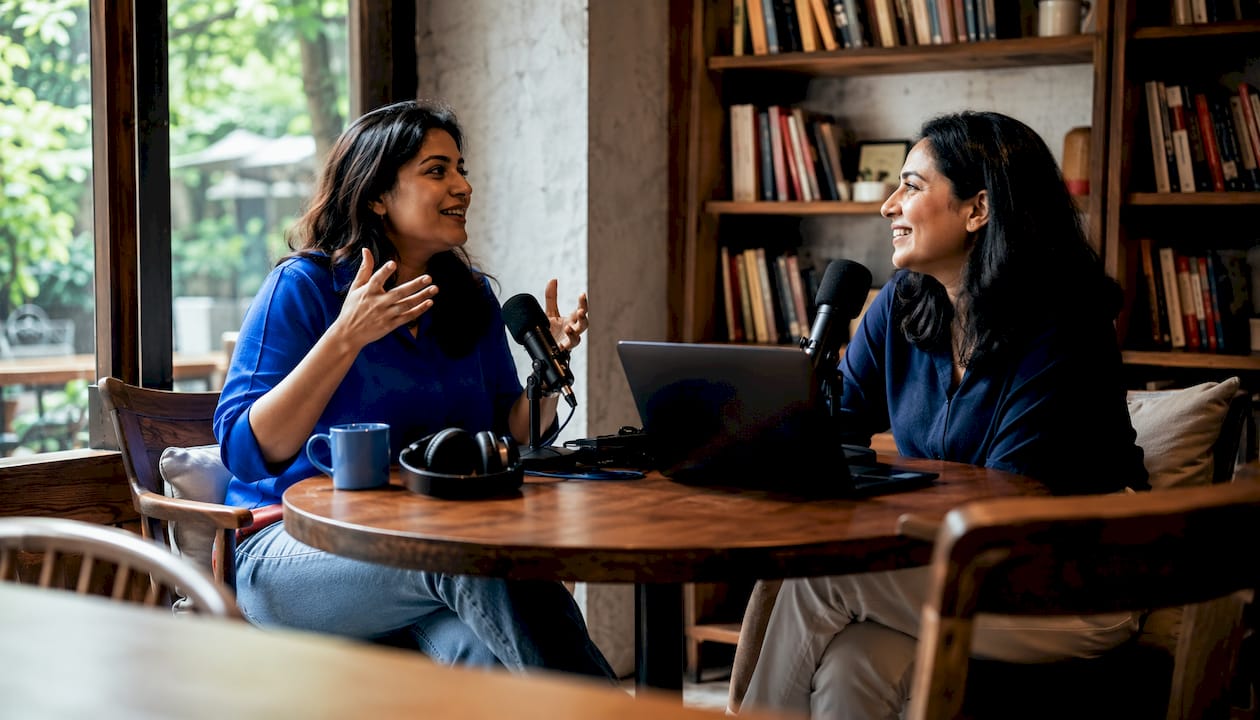
The content range is enormous: true crime, comedy, science, parenting, finance, sports, and everything in between. Production quality varies just as widely, from a host recording in a closet to studio-grade production that rivals any audiobook. That gap has narrowed considerably in recent years as professional audio studios increasingly serve both formats.
Most podcasts are completely free, supported by advertising or voluntary listener donations. Premium tiers exist on some shows, typically $3–8/month for bonus content or ad-free listening, but the core feed is almost always open. According to Edison Research's 2025 data, 70% of Americans have listened to a podcast, reflecting how low the entry barrier really is.
How do podcasts and audiobooks actually differ?
The structural gap between the two formats shapes everything about how you experience them.
| Attribute | Podcasts | Audiobooks |
|---|---|---|
| Format | Episodic, recurring series | Complete narrative arc |
| Typical session length | 30–60 minutes per episode | 8–12 hours total |
| Content style | Discussions, interviews, commentary | Narrated literature, memoirs |
| Primary topics | Current events, varied subjects | Fiction, structured nonfiction |
| Release model | Weekly or bi-weekly episodes | Complete release or chapter-based |
| Audience engagement | Active, participatory listening culture | Immersive, focused experience |
| Cost | Free or ad-supported | $11.99–$14.99/month subscription |
| Production quality | Varies widely | Consistently professional |
Narration style drives the experience more than most listeners realize. Podcast hosts speak conversationally, with natural tangents and repetition that make it easy to follow while multitasking. If you zone out for 30 seconds, you can usually pick up the thread. Audiobook narrators deliver polished, intentional prose with no filler, which rewards full attention but punishes distraction.
A few key distinctions worth keeping in mind:
- Podcasts are timely; audiobooks are timeless. A news podcast updates daily; a book published this year reflects research from two years ago.
- Audiobooks build arguments systematically across chapters; podcasts explore ideas conversationally, sometimes without resolution.
- Listener research consistently shows podcasts integrate into daily routines more easily, while audiobooks require sustained attention over days or weeks.
- Returning to your place in an audiobook after a break takes mental effort; each podcast episode resets your context automatically.
Benefits and challenges of each format
Podcasts offer:
- Free access to thousands of shows across every imaginable topic
- Flexible, bite-sized episodes that fit commutes, workouts, and chores
- Timely content that responds to current events in real time
- A conversational tone that is forgiving when your attention drifts
- Community and listener participation culture around popular shows
Podcasts struggle with:
- Inconsistent quality across independent creators
- Lower information density per minute compared to edited prose
- Fragmented narratives that can feel unresolved or repetitive
Audiobooks offer:
- High production quality with professional narration and editing
- Deep immersion in a complete, structured narrative
- Higher information retention because ideas build systematically across chapters
- The ability to work through your reading list during otherwise unused time
Audiobooks struggle with:
- Higher cost, typically $11.99–$14.99/month for a subscription service
- A significant time commitment, usually 2–4 weeks at two hours of daily listening to finish one title
- Less flexibility; jumping in halfway through a narrative rarely works
Production quality at professional studios now covers both formats, with services like narration casting, directed recording, editing, mixing, and mastering available to creators in either space. The historic quality gap between a polished audiobook and a well-produced podcast has largely closed.
When should you choose podcasts versus audiobooks?
The format you pick should match your listening window, not just your mood.
Reach for a podcast when:
- Your available time comes in 20–40 minute chunks (commutes, gym sessions, errands)
- You want to stay current on a topic as it evolves
- You are exploring a new subject and want low-commitment sampling
- You are multitasking and need a forgiving, conversational format
- You want variety across topics in a single listening session
Reach for an audiobook when:
- You have 60+ minute stretches with minimal interruption
- You want to go deep on a single subject with structured, chapter-by-chapter development
- You are using audio as a reading substitute to work through a book list
- You want a sleep-friendly wind-down with a steady narrator and a sleep timer
- The content you want only exists as a book
Pro Tip: Most regular listeners use both. A 2024 Edison Research report found that 54% of weekly podcast listeners also consume audiobooks regularly. The formats are complementary, not competing. Podcasts for commutes and chores, audiobooks for travel days and quiet evenings.
Mixing both based on context is the most practical approach. Trying to force one format into every situation is where listeners get frustrated.
How children engage differently with podcasts and audiobooks
For kids ages 4–9, the format label matters far less than the listening experience itself. Developmental research shows that engagement for this age group depends more on personalization and active participation than on whether something is called a podcast or an audiobook.
Serialized podcasts built for children tend to win on habit formation. Weekly releases create anticipation, and music, sound effects, and recurring characters give young listeners something to look forward to and talk about. A single audiobook, however well narrated, does not build that same weekly ritual.
- Children respond strongly to hearing their own name, interests, and personality reflected in audio content
- Weekly episode delivery creates a listening habit that a one-time audiobook cannot replicate
- Serialized children's podcasts foster habitual listening better than standalone audiobook titles, according to creators in the space
- Parents often underestimate engagement value, focusing on format name rather than whether the child is genuinely excited
Pro Tip: For toddlers and early elementary kids, start with short-episode serialized podcasts rather than full audiobooks. The episodic rhythm matches their attention span, and the weekly release gives them something to anticipate. Check out audio adventures for kids and best podcasts for preschoolers for age-matched options.
Private podcast subscription feeds offer a recurring engagement advantage over static audiobook distribution, particularly for children's content where emotional connection and anticipation drive retention.
G45-hero-cast turns your child into the hero of their own podcast
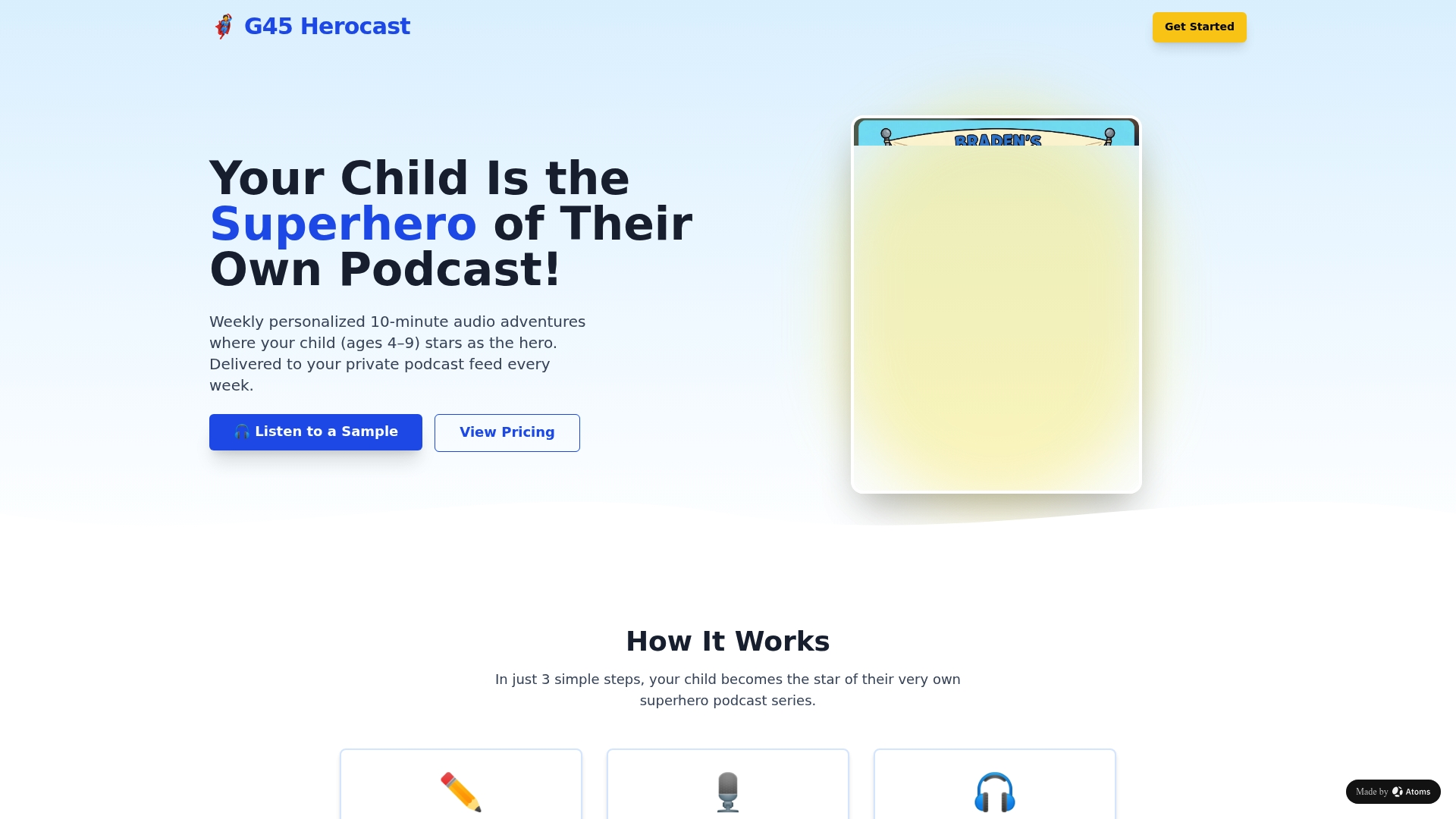
G45-hero-cast creates weekly personalized superhero podcasts for children ages 4–9, delivered every Sunday to a private podcast feed. Each episode features your child as the hero, with the story built around their name, interests, and personality. It is the serialized, habit-forming format that developmental research points to as the most engaging audio experience for this age group, and it arrives automatically, every week, without you having to search for new content.
Monthly and annual subscriptions are available, with options for siblings and gift plans. Start your child's adventure and give them something to look forward to every Sunday morning.
Key Takeaways
Podcasts suit flexible, frequent listening while audiobooks reward sustained focus, and for children ages 4–9, personalized serialized podcasts build stronger listening habits than standalone audiobook titles.
| Point | Details |
|---|---|
| Format defines the experience | Podcasts are episodic (30–60 min each); audiobooks are complete works running 8–12 hours total. |
| Cost gap is real | Most podcasts are free; audiobook subscriptions typically run $11.99–$14.99/month. |
| Match format to your window | Short sessions favor podcasts; 60+ minute stretches are where audiobooks pay off. |
| Children need habit, not format | Serialized weekly podcasts build listening habits in kids ages 4–9 better than one-off audiobooks. |
| Most listeners use both | 54% of weekly podcast listeners also consume audiobooks regularly, using each for different contexts. |