
Weekly personalized superhero podcasts can genuinely support a child's listening comprehension and vocabulary, but only when parents use them as more than background noise. The evidence on name-based personalization and audiobook interventions both point the same direction: a story that features your child by name, paired with a few minutes of simple follow-up talk, does real work. A private-feed subscription like G45-hero-cast makes that routine easy to keep.
TL;DR:
- Personalization with a child's name and one trait significantly increases engagement and social agency, leading to more repetition and vocabulary absorption.
- Scaffolded support during listening, such as brief follow-up conversations, is crucial for improving vocabulary and comprehension, especially for struggling readers.
- Episodes should match a child's age and attention span, with shorter, simpler stories for younger kids and layered plots for older children to maintain comprehension.
- Simple personalization (name plus one trait) is sufficient to boost engagement; more detailed customization offers little additional benefit and complicates privacy management.
- Parental involvement, through brief conversations before and after episodes, enhances vocabulary gains without turning listening into formal homework.
Table of Contents
- How Do Reading Comprehension Podcasts Use Personalization to Boost Engagement?
- What Do Clinical Trials Show About Audiobooks and Comprehension Gains?
- How to Turn a Weekly Superhero Episode Into a Comprehension Lesson
- What Should Parents Expect From a Weekly Personalized Podcast Subscription?
- What Does the Research Actually Say, Studied by Study?
- Where Personalized Podcasts Fall Short (and How to Work Around It)
- How Do You Pick the Right Podcast Beyond the Personalization Itself?
- What's the Best Way for Parents to Stay Involved Without Turning It Into Homework?
- Author Perspective: Why Minimal Personalization Was the Right Call
- Try a Weekly Personalized Superhero Podcast for Your Family
- Sources
How Do Reading Comprehension Podcasts Use Personalization to Boost Engagement?
A child hears their own name inside a superhero adventure, and something shifts. They aren't listening to a story about a hero. They're listening to a story about themselves. That distinction drives the research on personalized narratives, and it's the mechanism behind why these reading comprehension podcasts work differently than a generic audiobook pulled off a shelf.
A 2025 study of 96 elementary students found that inserting a reader's own name into a narrative produced significantly higher text transfer scores and stronger social agency ratings than the same story with a generic character. Social agency, in plain terms, means the child feels like an active participant in the story rather than a passive observer. That feeling of ownership is what keeps a four-year-old asking for the same episode three times in one week.
The engagement effect is real, but it doesn't require heavy customization. A separate randomized study of 222 children found that even minimal personalization, just a name, gender, and age, significantly increased affective engagement compared to non-personalized fables. Adding more personalization details on top of that didn't produce consistent extra gains.
Why does this matter for comprehension specifically? Repetition drives incidental vocabulary learning, and kids naturally repeat what excites them.
- A child who replays an episode because they love hearing their own name absorbs more of the surrounding vocabulary through pure repetition.
- Emotional investment in a character keeps attention on the plot, which is where new words actually live.
- Feeling like "the hero" gives kids a reason to talk about the episode afterward, turning listening into conversation.
That conversation piece is where comprehension gains actually show up, not in the listening itself.
What Do Clinical Trials Show About Audiobooks and Comprehension Gains?
Audiobooks have a research record that predates the current wave of podcast interest, and it's worth taking seriously before assuming any audio story helps a struggling reader.
A randomized controlled trial with 314 third and fourth graders tested two approaches: audiobooks alone, and audiobooks paired with one-on-one adult scaffolding. Both groups showed gains in receptive and expressive vocabulary compared to a control group that got neither. The detail that matters most for parents: poor readers only improved when the audiobook came with scaffolded support. Listening alone wasn't enough for that group.
The scaffold, not the audio, is what rescues struggling readers. That single finding reframes how a podcast should be used at home. It's not a set-and-forget tool.
A related audiobook trial run remotely across the US found the approach was feasible at scale, with scaffolded groups logging more listening time than unscaffolded ones during the study period. That's a useful signal for anyone relying on a weekly episode delivered to a phone or tablet rather than a classroom session.
Two limitations worth flagging honestly:
- These trials studied third and fourth graders in structured sessions, not the full 4 to 9 age range in casual home listening.
- School-based scaffolding involved trained adults; a parent doing five minutes of chat in the car is a lighter version of the same idea, not an exact replica.
The takeaway isn't that podcasts are a substitute for reading instruction. It's that they're a strong supplement when a parent adds a little structure around them.
How to Turn a Weekly Superhero Episode Into a Comprehension Lesson
You don't need a lesson plan. You need about ten minutes, split into three short moments around the episode your child already wants to hear.
- Set context before pressing play (1 to 2 minutes). Ask one question tied to last week's episode, or show a picture and ask what kind of adventure this superhero might have this time.
- Pause once or twice during the episode. Ask what might happen next, or point out one new word right as it comes up. Don't over-interrupt. One pause is often better than three.
- Debrief after listening (5 to 10 minutes). Have your child retell the plot in their own words, draw the scene, act out the hero's big moment, or answer one or two simple questions about what happened and why.
Adjust the routine by age rather than trying to run one script for every kid in the house:
- Ages 4 to 5: Keep prompts short and play-based. A retelling with stuffed animals counts as comprehension work.
- Ages 6 to 7: Ask for a short recall of the plot and talk through one or two new words together.
- Ages 8 to 9: Push toward prediction and inference. Ask why the hero made a certain choice, or what they'd have done differently.
This structure mirrors what researchers found in remote audiobook scaffolding: a few minutes of guided follow-up magnifies the vocabulary and comprehension gains that listening alone leaves on the table.
Pro Tip: You don't need elaborate personalization to get the engagement boost. Research on children's fables found that a name plus one personal trait, a favorite color, a pet, a hobby, drove nearly all the affective engagement benefit, with more detailed customization adding little on top. Keep it simple and spend your energy on the follow-up conversation instead.
What Should Parents Expect From a Weekly Personalized Podcast Subscription?
Episode length should match attention span, not a fixed runtime. Preschoolers (ages 4 to 5) tend to stay locked in for shorter episodes, while kids ages 8 to 9 can comfortably follow a longer, more layered adventure. A good weekly reading comprehension podcast adjusts pacing and vocabulary complexity to the child's age rather than using one script for every listener.
Delivery typically works like this: a new episode lands in a private podcast feed once a week, usually announced by email, so parents subscribe once and the routine runs itself from there. A few practical habits worth building in:
- Use the email account you actually check, since that's where feed links and updates arrive.
- Avoid sharing private feed links publicly, since they're tied to your child's personalized content.
- Check platform settings if you want to restrict who else can access the feed.
Most personalized podcast subscriptions run monthly or annually, and some offer sibling episodes or gift plans for extended family who want to contribute. A Sunday delivery cadence fits naturally into a weekend routine or a Monday morning car ride, giving the week a small ritual kids look forward to.
What Does the Research Actually Say, Studied by Study?
Three separate research threads back the case for weekly personalized superhero episodes, and each one answers a slightly different question.
| Study | Sample | Core finding |
|---|---|---|
| Name-based personalization | 96 elementary students | Personalized narratives produced higher text transfer and social agency than generic stories |
| Audiobook + scaffold RCT | 314 third and fourth graders | Vocabulary gains for all groups; poor readers needed scaffolding to benefit |
| Minimal personalization in fables | 222 children | Name, gender, and age alone raised affective engagement; more detail added little |
Beyond these three, design research on narrative-rich media, including evaluations of children's transmedia properties, suggests that engagement gains hold up best when a story is paired with a short guided activity rather than left as pure passive listening. That lines up with everything above.
None of this evidence says a podcast alone teaches reading. What it says, consistently, is that personalization raises engagement, engagement drives repetition, and repetition plus a small scaffold produces real vocabulary and comprehension movement. Treat the episode as the hook and the five minutes after it as the actual lesson, and the research holds up.
Where Personalized Podcasts Fall Short (and How to Work Around It)
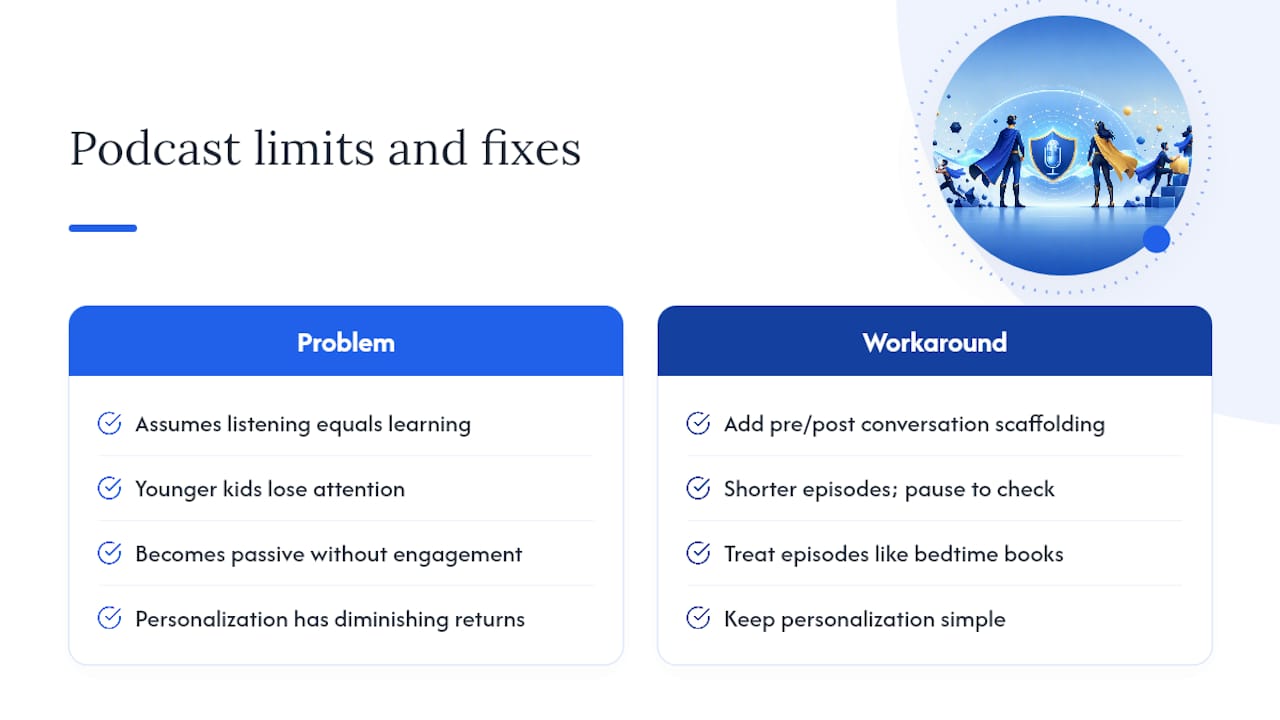
The biggest limitation isn't the format. It's the assumption that listening alone equals learning. The audiobook trial data made that clear: without scaffolding, struggling readers didn't show the same vocabulary gains as their peers. A podcast that plays in the background during a car ride, with no follow-up conversation, is entertainment first and a comprehension tool a distant second.
A second limitation is attention drift with younger kids. A six-year-old who tunes out halfway through an episode isn't absorbing the vocabulary in the back half of the story, no matter how personalized the setup was. Shorter episodes for younger listeners, and a willingness to pause and ask "wait, what just happened?" mid-episode, address this directly.
Screen-free audio has real advantages, but it can also become another passive habit if parents never engage with it. The fix isn't complicated: treat the weekly episode the way you'd treat a bedtime book, with a beginning conversation and an ending conversation, not just a play button.
Finally, personalization has a ceiling. Once a story includes a child's name and one distinguishing trait, additional customization produces diminishing returns on engagement while adding complexity to how personal data gets handled. Parents shouldn't feel like they're missing out by choosing simpler personalization. The research suggests they're not missing much at all.
How Do You Pick the Right Podcast Beyond the Personalization Itself?
Personalization gets a child to press play. Content quality is what keeps the comprehension benefits coming week after week.
Look for age-appropriate complexity first. A five-year-old needs concrete plots with clear cause and effect. A nine-year-old can follow subplots, moral dilemmas, and a wider vocabulary range without losing the thread. A podcast that uses the same script structure across every age group is cutting corners somewhere.
Themes matter almost as much as vocabulary level. Superhero stories work well for this age range because they naturally build in problem-solving, courage, and consequence, themes that give parents an easy on-ramp into discussion questions ("what would you have done?") without forcing the conversation. Avoid content that leans heavily on peril or conflict resolution through fear rather than cleverness, especially for kids on the younger end of the 4 to 9 range.
Check episode pacing too. A story with too many characters or fast scene changes taxes working memory before comprehension even enters the picture. The best episodes for this age group introduce one clear goal, follow a hero through obstacles, and land on a resolution a child can retell in three or four sentences. If your child can summarize the plot unprompted after listening once, the complexity level is probably right.
What's the Best Way for Parents to Stay Involved Without Turning It Into Homework?
Involvement doesn't mean sitting through every episode taking notes. It means showing up for two short windows: right before and right after.
Ask one question before playing the episode. It primes attention and gives your child a reason to listen for something specific. Afterward, ask what happened in their own words rather than quizzing them on details they might not remember. Retelling a story builds comprehension far more than answering "what was the hero's name" ever will.
Watch for the moments your child brings the story into real life on their own, quoting a line, acting out a scene, asking to hear it again. Those unprompted callbacks are a better comprehension signal than any formal check-in, and they're worth encouraging rather than correcting.
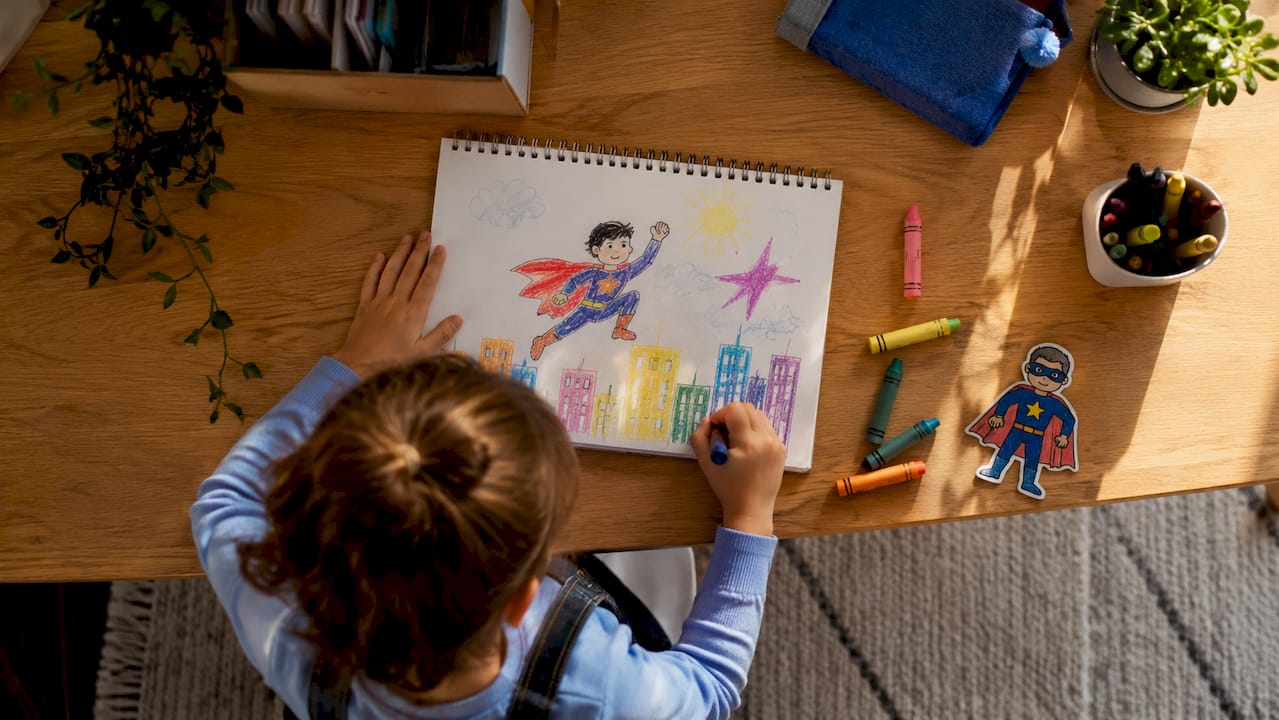
Keep the tone light. If listening time turns into quiz time every single week, motivation drops fast for this age group. Save the deeper discussion questions for kids ages 8 and 9, and let younger listeners lead with play, drawing, or acting out their favorite part.
Author Perspective: Why Minimal Personalization Was the Right Call
The research kept pointing to the same conclusion during development of this format: a name and one trait does most of the work, and piling on more customization mostly adds friction without adding comprehension benefit. That's why episodes stay narratively rich instead of data-hungry. Parents don't need to hand over a profile to get the engagement lift.
On privacy, the same logic applies: less personal data collected means less to protect, and it fits easily into a weekly family routine without extra setup.
— JG
Try a Weekly Personalized Superhero Podcast for Your Family
Some services turn the research above into a weekly custom audio adventure where your child is the hero, tailored to their name, age, and one favorite trait, delivered straight to a private feed on a weekly schedule.
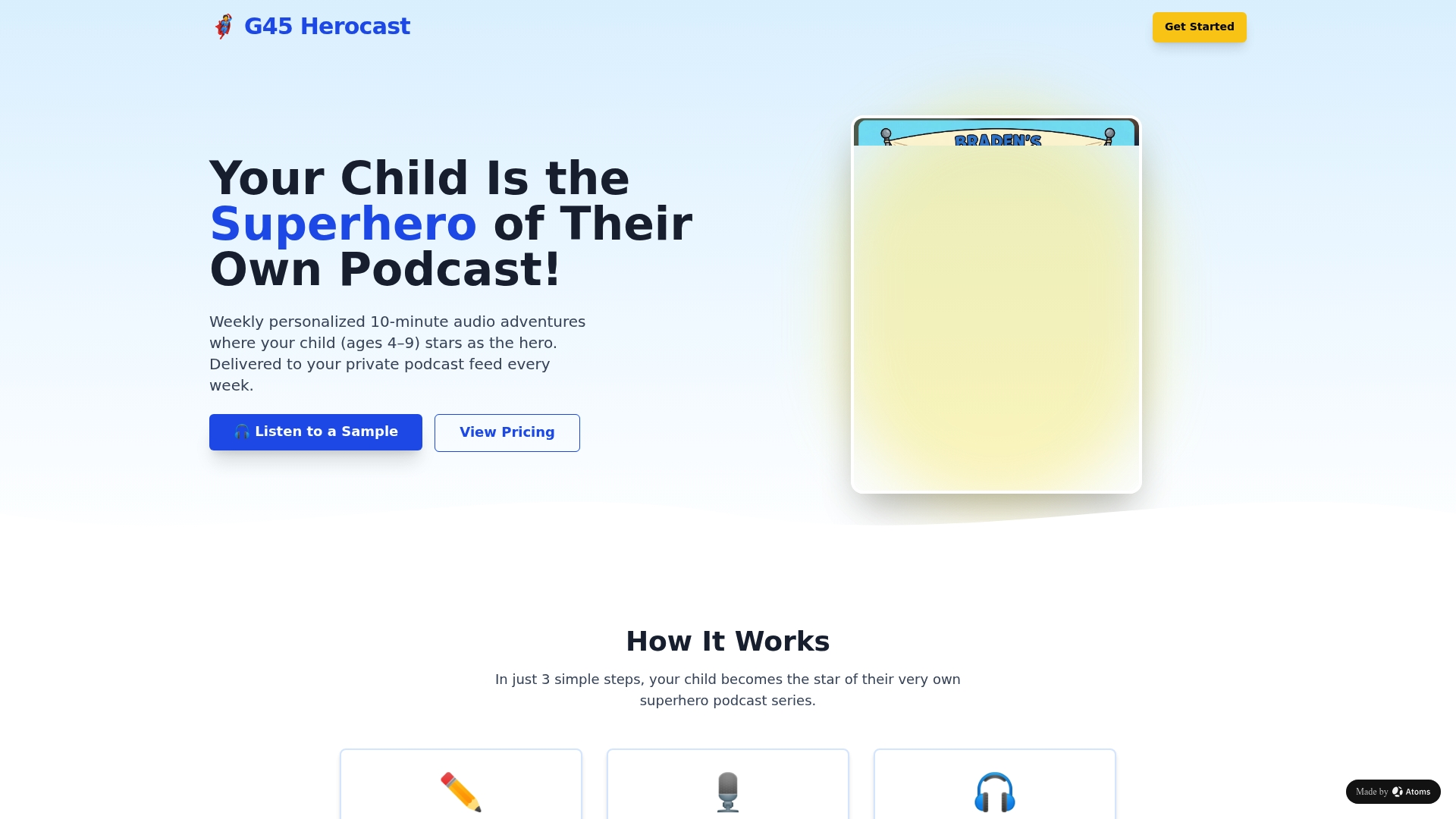
Unlike a generic audiobook subscription or a story app your child scrolls past, this arrives already personalized and ready for the five-minute conversation that makes it stick. Families can add sibling episodes so each child gets their own story, or set up a gift plan for a grandparent who wants to be part of the weekly ritual. Visit the G45-hero-cast landing page to see plans and start your child's first episode this week.
Sources
For deeper detail on the research behind name-based storytelling, see the text transfer and social agency study and the audiobook vocabulary trial. For a broader look at audio formats, this overview of audiobook research covers how listening compares to traditional reading, and G45-hero-cast's own guide on name-based superhero stories walks through the evidence in more depth.