
What actually works to reduce screen time for ADHD kids
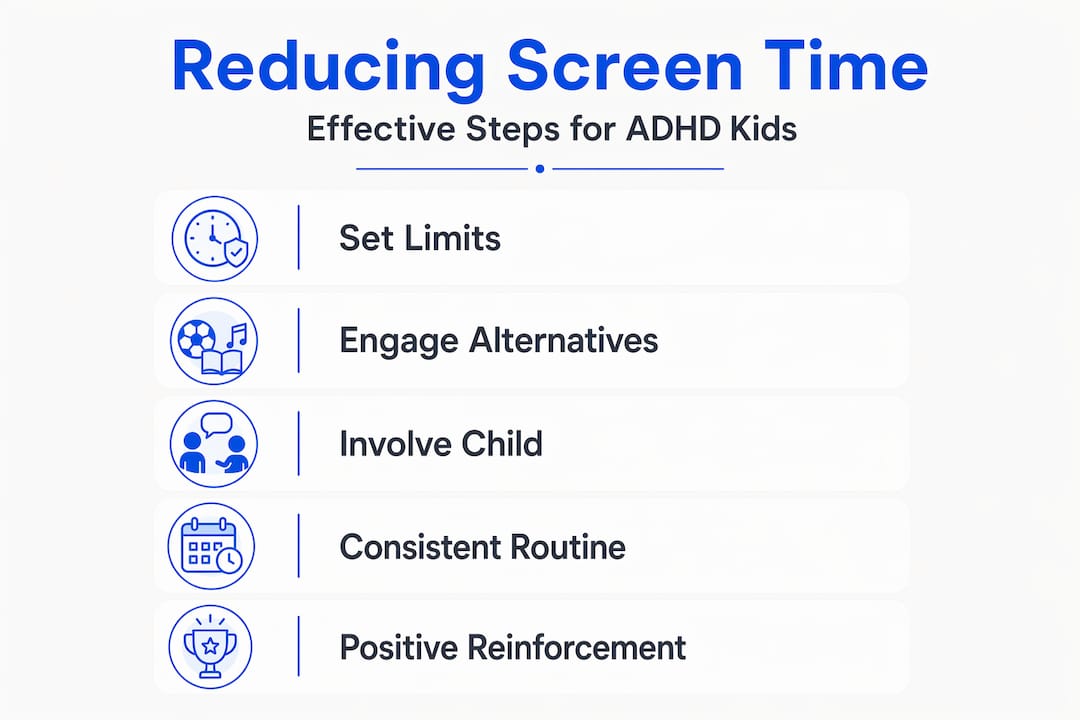
The American Academy of Pediatrics no longer pushes rigid hour-by-hour limits for children with ADHD. Their current guidance focuses on content quality and developmental support, which is a meaningful shift. What works in practice is a combination of clear structure, collaborative rules, and genuinely engaging alternatives that give your child's brain what it's actually looking for.
Here's what that looks like day to day:
- Prioritize content quality over clock-watching. Not all screen time is equal. Educational or social content hits differently than passive scrolling or high-stimulation gaming.
- Build screen-free zones into the home. No devices at the dinner table, none in bedrooms. These boundaries work best when the whole family follows them, not just the kids.
- Remove devices 30–60 minutes before bedtime. Nighttime screen use disrupts sleep, and for ADHD kids, poor sleep directly worsens attention and frustration tolerance the next day.
- Involve your child in setting the rules. When kids help decide the limits, they're far more likely to respect them. Collaboratively setting screen time limits reduces emotional reactivity and the daily argument cycle.
- Use screen time as a reward, not a given. Link bonus screen time to completing homework or chores. The baseline stays consistent; the extras are earned.
- Replace screens with something that actually competes. Physical play, creative projects, and personalized audio adventures all give the ADHD brain stimulation without a screen.
Table of Contents
- How screen time affects the ADHD brain and behavior
- Practical strategies to manage screen time without the daily battle
- Why personalized audio adventures support ADHD kids off screens
- Key takeaways for managing screen time in ADHD children
- What experts recommend for screen time boundaries in ADHD
- G45-hero-cast gives ADHD kids a reason to put the screen down
- Key Takeaways
How screen time affects the ADHD brain and behavior
ADHD brains are wired to seek novelty and stimulation. Screens deliver both, fast and without effort. That's not a discipline problem. It's neurology.
The dopamine hit from screens is intense and immediate for children with ADHD, making it genuinely harder to disengage than it is for neurotypical kids. When you factor in the impact of screens on ADHD brains, the pull makes sense: electronics send steady dopamine doses to the brain's reward center, and short attention spans crave exactly the fast-paced, ever-changing stimulation screens provide.
Many ADHD children also use screens as a self-regulation tool. When they're overwhelmed, bored, or anxious, a screen reduces demand on their nervous system. Removing it without offering something equally regulating doesn't teach balance. It just creates a void, and usually a meltdown.
"We're helping your brain learn balance." That reframe, used by clinicians working with ADHD families, shifts the conversation from punishment to partnership. It's the kind of language that keeps kids engaged in the process rather than resistant to it.
Excessive screen use compounds the problem over time. It can worsen core ADHD symptoms, disrupt sleep, and crowd out the physical activity that actually helps ADHD brains function better. Parental modeling matters too. Children notice when adults are glued to their phones while asking kids to put theirs down. Family-wide rules land better than child-only enforcement.
Practical strategies to manage screen time without the daily battle
Structure helps ADHD kids more than most. The goal isn't to eliminate screens but to make them predictable, bounded, and earned.
- Create a family media plan. Decide together when screens are on, where they're allowed, and what content is acceptable. Write it down. Consistency is the whole point.
- Use natural stopping points, not timers alone. ADHD children struggle with time-blindness. Stopping mid-game feels arbitrary and unfair. Agreeing in advance to stop "after this level" or "when the episode ends" reduces the friction dramatically.
- Frame it as balance, not restriction. Framing screen time reduction as teaching balance rather than labeling screens as harmful keeps kids cooperative. Words like "addictive" or "bad" trigger defensiveness. "Your brain loves this, and we're helping it learn when to stop" lands differently.
- Offer an immediate, enjoyable alternative. The replacement has to be genuinely appealing, not a consolation prize. Personalized audio adventures, outdoor play, or a hands-on project all work when they match your child's interests.
- Use bonus screen time as a motivator. Set a baseline amount that doesn't get taken away, then offer extra time for completing tasks. This approach, recommended by ADHD specialists, gives kids something to work toward without constant negotiation.
- Set a device curfew. Screens off 30–60 minutes before bed, devices charged outside the bedroom. This one change alone improves sleep quality and next-day behavior.
- Align your own habits with the rules. If you're scrolling at dinner, the rules lose credibility fast.
- Use parental controls and apps. Tools that automatically cut Wi-Fi at a set time or block specific apps remove the verbal back-and-forth entirely. Some internet providers include this built in; third-party options are widely available.
- Plan for weekends and school breaks. Unstructured time is where screen habits expand. Have a flexible plan ready, a list of activities your child helped choose, so there's always something to reach for.
Pro Tip: Ask your child to help set the stop point before screen time starts, not after. "When should we stop today, after one episode or two?" gives them ownership and makes the transition smoother.

Why personalized audio adventures support ADHD kids off screens
Replacing screens only works when the replacement actually satisfies what the screen was providing. For ADHD kids, that means stimulation, engagement, and a sense of being the center of the story.
Personalized audio adventures do something generic content can't. When a child hears their own name, their own traits, their own interests woven into a superhero story, the engagement is immediate and personal. There's no visual overload, no algorithm pulling them deeper, and no blue light disrupting sleep. The brain stays active through imagination rather than passive consumption.
Audio stories also support skills ADHD kids often need to build: active listening, patience, and the ability to follow a narrative without constant visual cues. Families who listen together create a shared experience, a ritual that replaces screen time with something that actually connects people in the room.
- Personalized content reduces resistance. A child who stars in their own story doesn't need convincing to listen.
- Audio supports self-regulation. Calm, engaging storytelling can help an overstimulated child decompress without a screen.
- Listening together builds family connection. It's a screen-free ritual that everyone can participate in, including siblings.
- Weekly episodes create anticipation. A new adventure every Sunday gives kids something to look forward to that isn't a device.
Audio adventures for kids that are tailored to a child's name, age, and personality hit differently than generic podcasts. That specificity is what makes them a genuine competitor to screen time, not just a substitute.
Key takeaways for managing screen time in ADHD children
Reducing screen use for ADHD kids works best when structure, collaboration, and engaging alternatives replace both the screen and the function it was serving.
- Focus on content quality and emotional development, not rigid minute-by-minute limits.
- Set consistent family rules: screen-free zones, device curfews 30–60 minutes before bed, and no devices in bedrooms.
- Collaborate with your child on rules and stopping points to reduce conflict and build buy-in.
- Replace screen time with engaging alternatives that genuinely compete, personalized audio adventures, physical activity, and hands-on play.
- Model the behavior you want. Family-wide rules work better than child-only enforcement.
What experts recommend for screen time boundaries in ADHD
The AAP's current guidance moved away from blanket time limits because the evidence for strict hour caps in ADHD outcomes was insufficient. What specialists consistently recommend instead is a structured, family-based approach.
CHADD advises making media a family affair: no phones at dinner, no tablets in bedrooms, devices docked in a common area each evening. They also recommend linking screen access to a daily checklist of chores, homework, and physical activity, so screens become something earned rather than assumed.
Psychologists working with ADHD families consistently emphasize warm, curious communication over punitive framing. Asking "what do you enjoy about this game?" before setting a limit builds trust and gives you information. Demanding the device be put down without context builds resentment. The HealthyChildren.org guidance reinforces that physical movement acts as a brain "on" switch, improving impulse control and memory in ways that directly counter the effects of excessive screen use. Building activity into the post-screen routine isn't optional. It's part of what makes the whole system work.
G45-hero-cast gives ADHD kids a reason to put the screen down
Every strategy in this article depends on one thing: the replacement has to be worth it.
G45-hero-cast creates weekly personalized superhero podcasts for children ages 4–9, delivered every Sunday to a private feed. Each episode features your child as the hero, with their name, interests, and personality built into the story. There's no screen required, no algorithm to fall into, and no passive consumption—just a genuinely exciting audio adventure your child actually looks forward to.
For Wisconsin families working to build healthier screen habits, it's a practical tool that fits directly into the routines this article describes. Use it as the post-screen activity, the bedtime wind-down, or the Sunday ritual that replaces device time with something your whole family can share. Start your child's superhero story with a monthly or annual subscription, and see what happens when screen time has real competition.
Key Takeaways
Replacing screen time for ADHD kids requires engaging alternatives that fulfill the same neurological needs screens do, not just rules that remove them.
| Point | Details |
|---|---|
| Quality over clock-watching | AAP guidance prioritizes content quality and development over strict hourly limits for ADHD children. |
| Device curfew matters | Removing screens before bed improves sleep and next-day attention in ADHD kids. |
| Collaboration reduces conflict | Involving children in setting screen rules and stopping points lowers emotional reactivity significantly. |
| Replacement must compete | Engaging alternatives like personalized audio adventures satisfy the stimulation ADHD brains seek without a screen. |
| G45-hero-cast fits the routine | Weekly personalized superhero podcasts give ADHD kids ages 4–9 a screen-free ritual they genuinely want. |