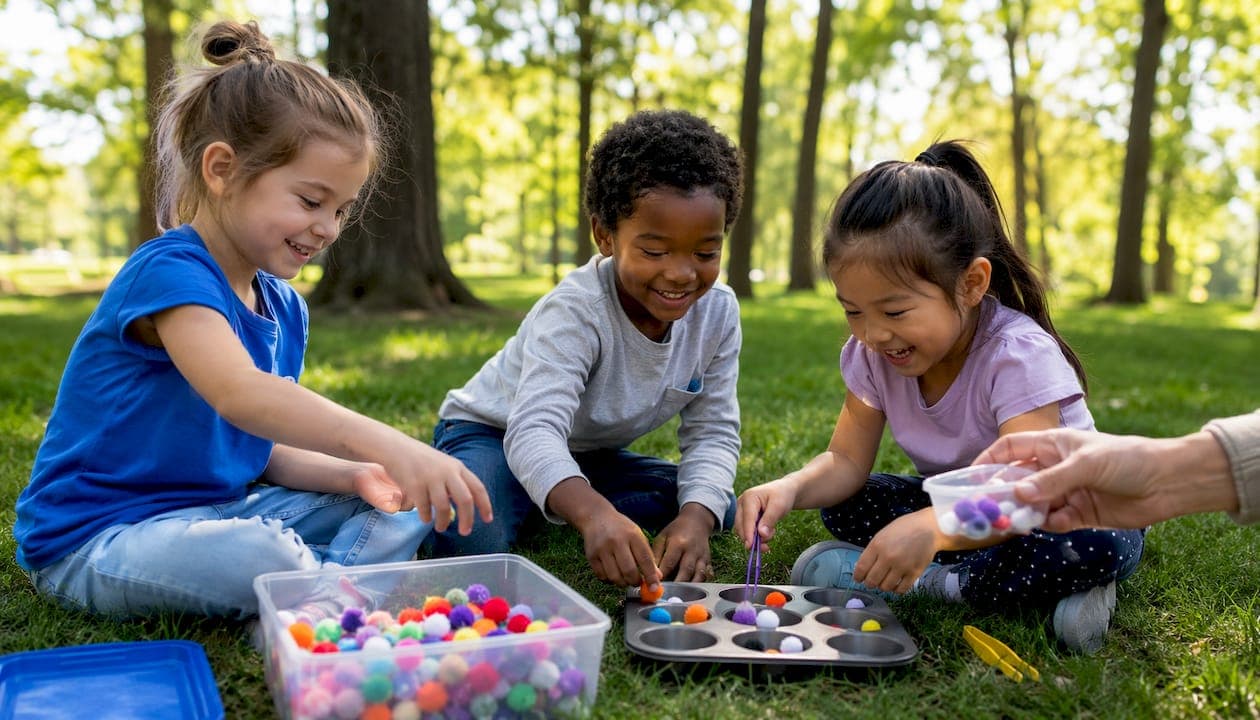
Screen free activities for kids are the most direct path to stronger focus, richer creativity, and calmer behavior in children aged 4 to 9. The American Academy of Pediatrics links excessive screen exposure to attention difficulties and weaker social skills. Parents in Indiana and across the country are pushing back by building daily routines around physical play, creative projects, and audio adventures. The goal is not a total ban on devices. The goal is making the physical world so engaging that kids choose it first.
1. What are the best screen free activities for kids at home using household items?
The most effective low-prep activities use items already in your kitchen or junk drawer. Household objects spark curiosity longer than specialized toys because they feel novel and open-ended. A whisk, a set of keys, or a muffin tin becomes a full play session when presented with intention.
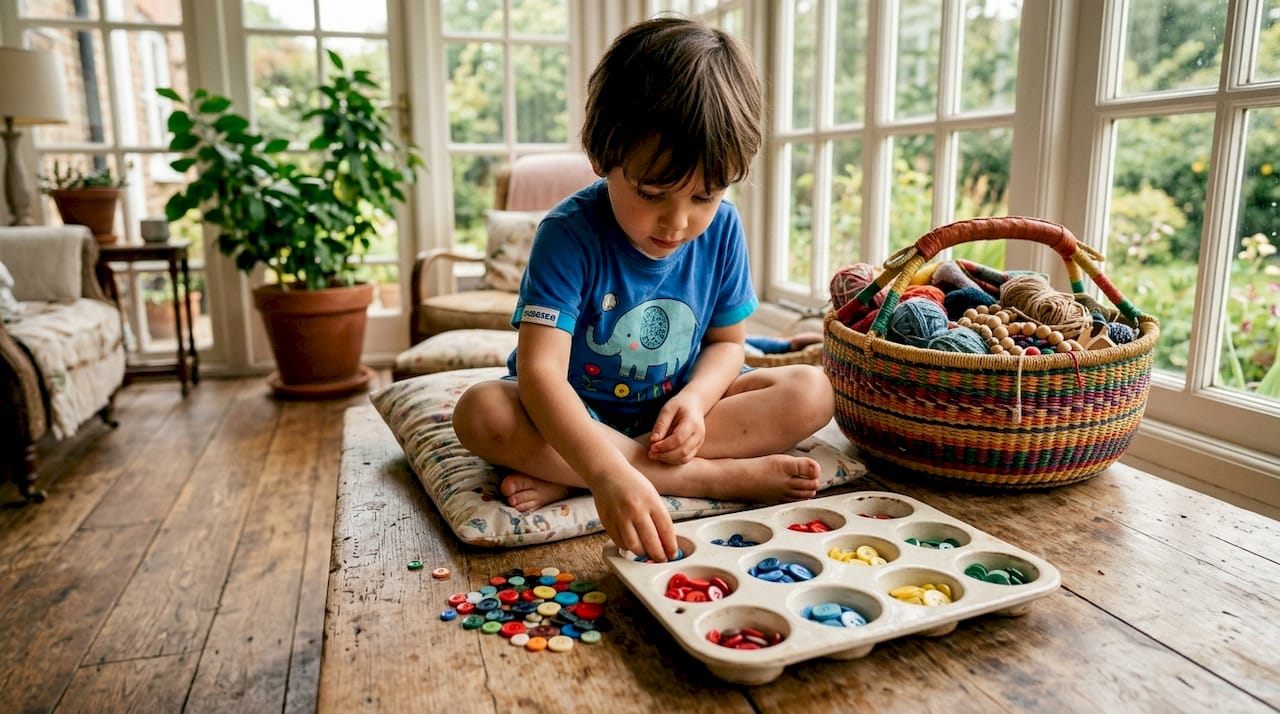
- Muffin tin sorting. Fill a muffin tin with dry beans, pom poms, or small buttons. Kids aged 4 to 6 build early math skills and fine motor control at the same time.
- Tape roads. Use painter's tape to create roads, rivers, or mazes on the floor. Add toy cars or small figurines and the setup runs itself.
- Water washing station. Set a plastic bin on the kitchen floor with a little soapy water. Give kids plastic dishes, toy animals, or cups. This keeps toddlers engaged for 20 to 30 minutes with zero prep cost.
- Sensory bins. Fill a storage container with rice, dried pasta, or kinetic sand. Add measuring cups and small figures. Sensory play builds concentration and calms anxious kids.
Pro Tip: Rotate your household items weekly. The same muffin tin feels brand new when you swap pom poms for pennies. Novelty is the engine of engagement, not new toys.
2. How can families create active play and obstacle courses for screen free fun?
Physical activity is one of the fastest ways to reset a child's mood and attention. Active play improves memory, attention, and reduces depression risk in children. That means a ten-minute dance party before homework is not just fun. It is brain preparation.
- Pillow obstacle course. Stack couch cushions, line up pillows, and set a stuffed animal at the finish line. Time each run with a kitchen timer to add friendly competition.
- Balloon volleyball. Stretch a piece of yarn across the living room and keep a balloon in the air. The rule is simple: no balloon touches the floor. Kids aged 4 to 9 play this for far longer than you expect.
- Dance freeze. Play music and freeze when it stops. This builds listening skills and burns energy at the same time.
- Indoor scavenger hunt. Hide five objects around the house and give kids a hand-drawn map. This works especially well on rainy Indiana afternoons when outdoor play is not possible.
- Simon Says with movement. Classic, zero-prep, and endlessly adaptable. Add animal movements like "Simon says hop like a frog" to keep it fresh for younger kids.
Pro Tip: Give the obstacle course a theme. "Superhero Training Camp" or "Jungle Explorer Mission" doubles the engagement time because kids buy into the story, not just the activity.
3. What are the best quiet and creative screen free activities for kids at home?
Quiet activities fill a different need than active play. They build patience, fine motor skills, and the ability to sit with a task. Window drawing with washable markers and sticker art give kids a creative outlet with almost no mess and no adult supervision required.
- Window markers. Washable window markers turn any glass surface into a canvas. Kids draw, wipe, and start over. Cleanup takes thirty seconds with a damp cloth.
- Sticker art pages. Reusable sticker books let kids build scenes, peel, and rearrange. This supports spatial reasoning and storytelling at the same time.
- Simple cooking projects. Let kids aged 5 and up mix, pour, and decorate. No-bake energy balls or decorating crackers with peanut butter and raisins count as both a creative project and a snack.
- Audio adventures. Listening to a story-driven podcast builds vocabulary and imagination without a screen. G45-hero-cast delivers weekly audio adventures for kids where each child becomes the superhero of their own story. It is screen-free entertainment that holds attention for the full episode.
- Journaling and drawing books. Give kids a blank notebook and a set of colored pencils. Prompt them with one question: "Draw the best day you can imagine." Then step back.
4. Which portable screen free activities work best for travel and public settings?
Travel is where screen-free habits break down fastest. The car ride to Grandma's house in Fort Wayne or the wait at a doctor's office in Indianapolis tests every parent's resolve. Portable screen-free activities must meet three criteria: quiet, low-mess, and minimal adult help required.
| Activity | Age Range | Mess Level | Setup Time |
|---|---|---|---|
| Reusable sticker books | 3–8 | None | Under 1 minute |
| Small card games | 5–9 | None | Under 2 minutes |
| Travel scavenger hunt | 4–9 | None | 5 minutes (prep at home) |
| Magnetic drawing boards | 3–7 | None | Instant |
| Mini activity pads | 4–8 | Low | Instant |
Reusable sticker books and card games engage children aged 2 to 8 for 10 to 20 minutes during travel. That window covers most short trips without a single screen. Attach card games to a carabiner clip on your bag so pieces never scatter across the back seat.
Pro Tip: Pack a "travel activity kit" in a small zippered pouch and keep it in your car permanently. When kids know it exists, they reach for it before asking for a phone.
5. How to set up screen free zones and schedules that actually stick
Screen-free zones work better than total bans. Implementing screen-free zones reduces conflict and builds sustainable habits over time. The dining table, the bedroom, and the car are the three easiest places to start.
- Designate one room as screen-free. The playroom or bedroom works well. Stock it with art supplies, building blocks, and books so the environment does the work.
- Set a screen-free morning window. The first hour after waking is the highest-leverage time. Kids who start the day with physical or creative play are calmer and more focused by mid-morning.
- Use transition activities. Abrupt screen endings cause meltdowns. Give a five-minute warning, then have a specific activity ready to start immediately. The transition activity matters more than the warning itself.
- Try one screen-free day per week. Screen-free days encourage physical and creative growth by removing the option entirely. Saturday mornings work well for most Indiana families with weekend routines already in place.
- Let kids choose from a menu. Offer three options: active, quiet, or creative. A balanced choice menu builds independence and reduces the "I'm bored" complaint because kids feel ownership over the decision.
Key Takeaways
The most effective screen-free play combines low-prep household activities, physical movement, and creative quiet time to build focus, creativity, and emotional regulation in children aged 4 to 9.
| Point | Details |
|---|---|
| Household items outperform toys | Rotate kitchen objects weekly to maintain novelty and extend engagement time. |
| Active play resets the brain | Ten minutes of physical movement improves attention and mood before focused tasks. |
| Quiet activities build patience | Window markers, sticker books, and audio stories develop fine motor skills and imagination. |
| Portable kits prevent screen reliance | A pre-packed travel pouch with sticker books and card games covers most short trips. |
| Zones beat bans | Designating screen-free spaces and offering activity menus reduces conflict and builds lasting habits. |
What I have learned from years of watching kids ditch screens
The biggest mistake parents make is over-preparing. They buy elaborate craft kits, set up Pinterest-worthy sensory tables, and then feel defeated when their child loses interest in four minutes. The activities that hold attention longest are almost always the simplest ones. A cardboard box. A roll of tape. A pile of couch cushions.
The second mistake is treating screen-free time as punishment. Kids pick up on that framing immediately. When you say "no screens" with a sigh, they hear "nothing fun." When you say "superhero training starts now" and point to the obstacle course, they run toward it. Language and energy matter as much as the activity itself.
The third thing I have noticed is that variety is more important than volume. You do not need 150 screen-free activities for kids. You need about a dozen that rotate well. Keep a mental "toolbox" of five active options, five quiet options, and two or three audio-based options like podcasts for preschoolers. Rotate through them and reintroduce old favorites after a few weeks. Kids rediscover them like they are brand new.
The emotional payoff for parents is real too. The afternoons when screens stay off are almost always the ones where you feel most connected to your child by bedtime.
— JG
Superhero sounds: a screen free experience kids look forward to every week
Every Sunday, G45-hero-cast delivers a brand-new, personalized superhero podcast directly to your inbox. Your child aged 4 to 9 becomes the hero of their own audio story, complete with their name woven into the adventure.
It is one of the few screen-free entertainment options that kids genuinely anticipate. No app to open, no video to watch, just pure audio imagination delivered on a schedule. G45-hero-cast offers monthly and annual subscriptions, making it easy to build into your weekly family routine. If you are building a screen-free toolkit for your household, this is the piece that makes Sunday mornings something your child talks about all week.
FAQ
What are the easiest screen free activities for kids at home?
Muffin tin sorting, tape roads on the floor, and sensory bins with dry rice or pasta require zero prep and use items already in your home. These activities keep children aged 4 to 9 engaged for 20 to 30 minutes without any cost.
How do I transition my child off screens without a meltdown?
Give a five-minute warning, then have a specific activity ready to start the moment the screen turns off. Structured, enticing alternatives make the transition smooth because kids move toward something rather than away from something.
Are audio podcasts considered screen free?
Yes. Audio podcasts require no screen, no video, and no visual device interaction. G45-hero-cast delivers personalized superhero audio stories that build vocabulary and imagination while keeping kids fully off screens.
What screen free activities work best during travel?
Reusable sticker books, small card games, magnetic drawing boards, and travel scavenger hunts meet the three travel criteria: quiet, low-mess, and minimal adult help. Keep them in a dedicated travel pouch in your car for instant access.
How many screen free activities do kids actually need?
A rotating set of 10 to 12 activities across active, quiet, and creative categories covers most situations. Novelty comes from rotation and presentation, not from constantly adding new options.