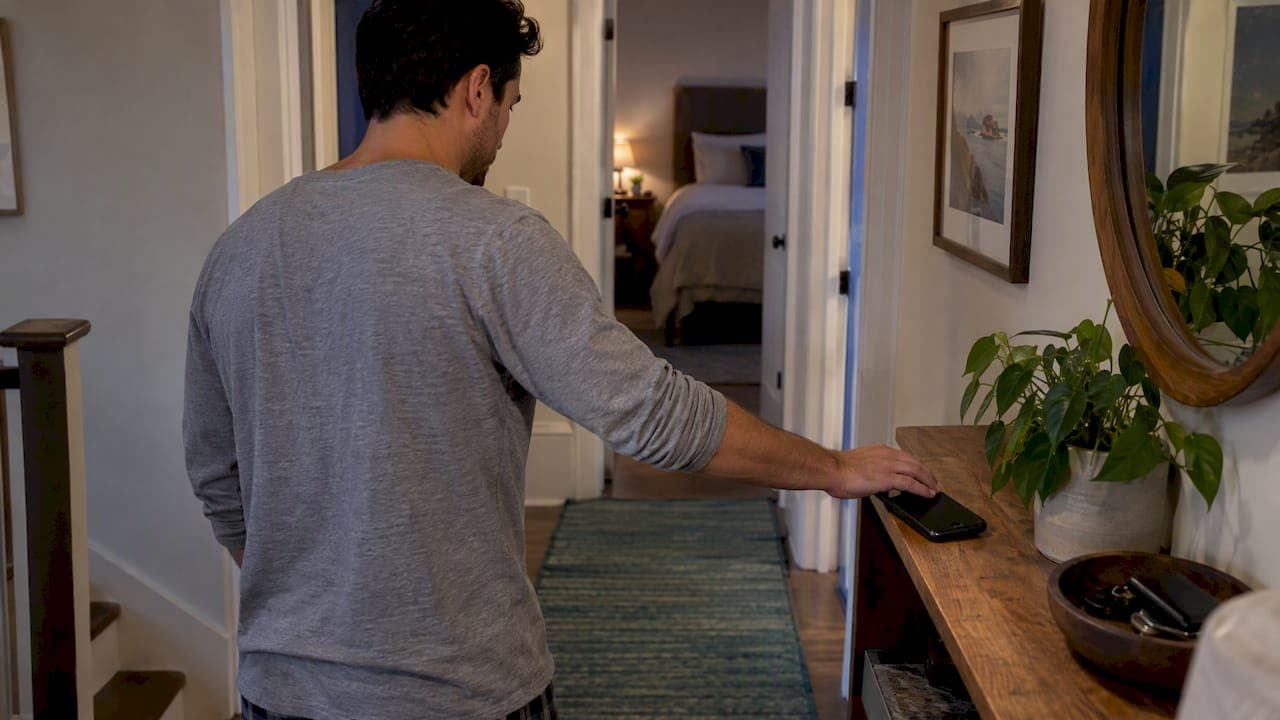
Turn screens off about one hour before bedtime and replace them with a short, predictable sequence: bath, pajamas, a story or audio, lights out. The American Academy of Pediatrics recommends exactly that window, and recent trials back it up. Tonight, pick a screens-off time and one 10-minute audio story or short picture book.
TL;DR:
- Replacing half of preschoolers’ screen time with equal book reading improved several sleep measures, including time to fall asleep and daytime sleepiness.
- Keep devices out of bedrooms; studies link in bed screen use, especially gaming, to later sleep onset and shorter total sleep.
- Use 30 minutes on school nights and 15 to 20 on late nights, keeping the steps in order and the same final phrase.
- Start audio yourself, lock the screen, disable autoplay, and choose one episode or a sleep timer; keep the device outside the bed.
Table of Contents
- 1. Why screens before bed cost kids sleep
- 2. What counts as screen time at night
- 3. Calm screen-free rituals by age
- 4. Copy-ready 30 and 60 minute routines
- 5. A realistic 7-night ramp plan
- 6. How to use audio stories without bringing screens back
- 7. Why rituals matter more than any single activity
- 8. A personalized story as your bedtime story step
- FAQ
- Sources
1. Why screens before bed cost kids sleep
Avoid screens before bedtime and keep digital devices out of children's bedrooms, as described in updated recommendations. The research points the same way. In a toddler trial, removing screens in the hour before bed improved sleep efficiency, as Physician's Weekly reports.
A substitution study found that replacing half of preschoolers' screen time with equal time reading books benefited sleep across several areas, including how long kids took to fall asleep and daytime sleepiness.
The mechanisms are fairly simple. Light from screens can interfere with the body's sleep signals, and exciting content raises alertness. Interactive, action-packed content can raise alertness and make falling asleep harder, while calm passive content earlier in the day may be less disruptive.
2. What counts as screen time at night

Think broadly: TVs, tablets, phones and game consoles all count. A device in the bed is the worst case. A cohort study found that interactive screen use and gaming were linked to later sleep onset and shorter total sleep on nights with in-bed screen use.
A few practical rules make this easier to enforce:
- Ban every device in the final hour, not just the ones that feel "stimulating."
- Choose one household charging spot outside the bedrooms.
- Give countdown warnings before cutoff, such as one earlier and one shortly before.
- Save any calm, passive viewing for earlier in the evening.
3. Calm screen-free rituals by age
Pick two or three from your child's age group and keep them in the same order each night.
Toddlers
- Warm bath: Keep it short and quiet, and dim the lights afterward.
- One short picture book: Let them pick it, and stop at the last page.
- Calm music: Play it at low volume, and end it with the lights.
- Closing phrase: Say the same words every night, like "Sleep tight, see you in the morning."
Preschoolers
- Breathing games: Smell the flower, blow out the candle, and repeat with a parent beside them.
- Flashlight shadow puppets: Keep the activity brief, and have a parent keep the pace slow.
- Choice-based tasks: Offer a choice of pajamas so they feel in control.
- Tidy-up sweep: Collect any stuffed animals and a cup of water before the story.
- Audio story: Parent starts playback, and the child listens in bed.
Early school age (6–9)
- Quiet drawing: Use paper and crayons by lamplight, and keep the activity brief.
- Low-light puzzle: Pick something simple that does not create a "one more piece" fight.
- Gentle stretches: Do slow ones together, since parent involvement keeps them calm.
- Gratitude question: Ask what went well today, and accept short answers.
- Sticker routine chart: Let them place a sticker themselves, then say goodnight.
- Longer audio story or chapter book: Choose a single-episode format that ends on its own.
Consistency matters more than variety. A predictable bedtime routine is associated with better sleep outcomes, according to sleep research. For more story-step ideas beyond books, see our guide to alternatives to bedtime stories for kids.
4. Copy-ready 30 and 60 minute routines
The order matters more than the exact timing. Here is a routine you can copy tonight.
| Time | Step | Why it helps |
|---|---|---|
| At the start | Screens-off warning | Gives the brain a heads-up |
| Next | Tidy-up sweep, water, stuffed-animal check | Answers stall requests in advance |
| 45 minutes before | Warm bath | Signals the day is ending |
| 30 minutes before | Pajamas and teeth | Keeps stimulation low |
| Near bedtime | Picture book or audio story | Calm, imagination-friendly step |
| Just before bed | Hug and closing phrase | Same cue every night |
| — | Lights out | Predictable ending |
For typical school nights, compress this to 30 minutes: warning, quick sweep, pajamas and teeth, one story, closing phrase. On very late nights, run a 15 to 20 minute emergency version: pajamas and teeth, one short story, closing phrase. Keep the same order and the same last words even when you shorten it.
5. A realistic 7-night ramp plan
Changing everything at once invites a fight. Move in steps instead.
- First night: Move your screen cutoff earlier.
- Next: Add an audio story or picture book where the screen used to be.
- Then: Move device charging outside the bedroom.
- After that: Shift screen content earlier in the day.
- Continue: Keep the same sequence and praise consistency.
- Practice: Rehearse the sweep and offer a hug.
- Review: Keep the routine and consider what worked.
Pre-answer stall tactics by building water, a hug and a stuffed-animal check into the sweep. Then try short scripts for pushback:
- "Screens are done for tonight. You can pick the story."
- "Water and hugs are already done, so now it's story time."
- "I hear you. Tomorrow we try again."
For anxious kids, our bedtime scripts and screen-free audio may help.
Pro Tip: Use a sticker chart and offer two choices ("this book or that one?") instead of open-ended questions, so there is less to bargain over.

6. How to use audio stories without bringing screens back
Audio works because it keeps the room dark and the imagination busy. Use it as the final calm step, or as a replacement for a show earlier in the wind-down. Follow this device checklist:
- Start playback yourself, then lock the screen.
- Choose single-episode content that ends, or set a sleep timer.
- Keep the device outside the bed, ideally out of reach.
- Turn off autoplay so nothing new starts on its own.
- Choose calm stories with predictable endings and skip cliffhangers.
Soft background music can also support the story step. Our partner ToylandEU shares a practical guide to music that calms children. For culturally rich quiet stories, try these Caribbean folktale collections. Personalized audio offers another screen-free option, as we explain in our guide to personalized audio stories for kids.
7. Why rituals matter more than any single activity
Most bedtime advice overweights the activity and underweights the pattern. A child does not need a perfect story. They need the same three or four steps in the same order, until the routine itself says "sleep is coming." In our work producing weekly personalized superhero audio for ages 4 to 9, audio offers a screen-free story step. Try a full week and keep only what works.
— JG
8. A personalized story as your bedtime story step
We create weekly personalized superhero podcast episodes for children ages 4 to 9, delivered to a private podcast feed, with your child as the hero. Our plans are Bedtime Standard at 99 USD per month and Grandparent Gift at 999 USD per year.
- You start playback, so you control the story step.
- Each episode is personalized for your child.
- The device stays outside the bed, and the room stays dark.
Try the first episode during your routine: listen together, or start it and leave. Start at our site.
FAQ
What is a good sleep ritual for kids?
A good ritual is a short, predictable sequence done in the same order every night: bath, pajamas, story or audio, closing phrase. Sleep researchers find that consistent routines are associated with better sleep outcomes.
Is it safe for a 3-year-old to use screens before bed?
It is best to avoid screens before bed and keep digital devices out of children's bedrooms, as described in these screen-time recommendations. Swap in a picture book or a calm audio story instead.
How long should a screen-free wind-down last?
For most children, a screen-free wind-down of about 30 minutes is appropriate. Keep the same order each night, and shorten steps rather than skip them on late nights.
What does ADHD look like at bedtime?
Bedtime can bring stalling, restlessness or resistance. Build water, hugs and a stuffed-animal check into a consistent routine so there is less to negotiate, and talk to your pediatrician if sleep problems persist.
Sources
- Health
- Substituting Book Reading for Screen Time Benefits Preschoolers’ Sleep Health: Results from the Ulm SPATZ Health Study - PMC
- Screen Use at Bedtime and Sleep Duration and Quality Among Youths