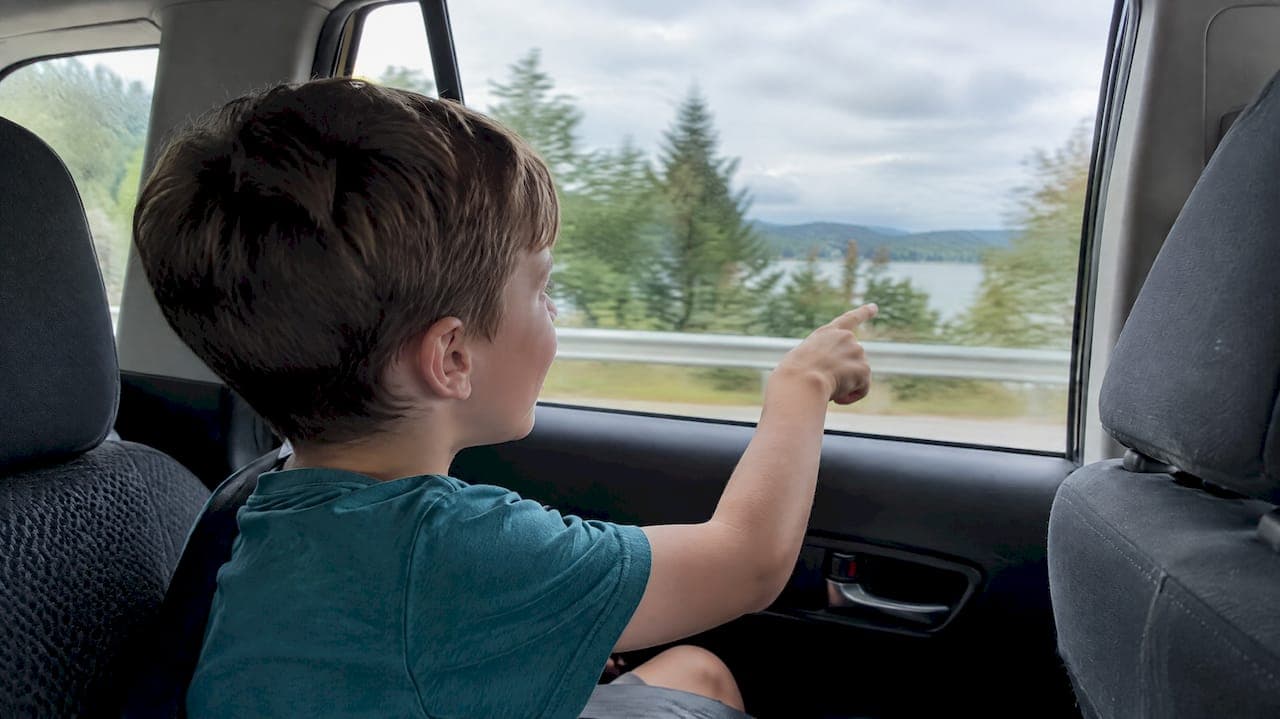
The best car ride activities are screen-free mixes of verbal games, observation games, audio stories or podcasts, and compact tactile kits that fit in a lap. Audio-first choices work especially well because they keep kids entertained without asking them to look down at anything, which lowers motion-sickness risk and holds attention across a wide age range. Below you will find age-group picks, a packing and rotation system, and safety guidance so you can build a trip plan tonight.
TL;DR:
- Rotate hands on activities, audio, and shared games about once an hour; save wrapped surprises and new kits for the back half of long drives.
- Match activities to age: toddlers need soft toys and songs, while older children can handle longer audiobooks, trivia, journals, and scavenger hunts.
- For siblings, choose games that scale by difficulty, split listening and tactile activities into separate zones, and rotate who chooses the next activity.
- When children feel queasy, favor audio and horizon viewing; keep them in the back seat through at least age 12, as NHTSA recommends.
Table of Contents
- 1. Screen-free games and activities you can start right now
- 2. Which activities fit each age group best?
- 3. Why audio-first choices work so well in the car
- 4. How to pack and rotate activities for a long drive
- 5. Motion sickness and car seat safety basics
- 6. Keeping multiple kids of different ages entertained together
- 7. Getting parents and caregivers involved, not just handing out activities
- 8. Matching activities to a short errand run versus a full day on the road
- 9. Bringing superhero themes into the car ride lineup
- 10. Winding down: moving from car ride activities to bedtime
- 11. A simple hourly roadmap for calmer trips
- Make weekly superhero audio part of your road trip rotation
- FAQ
- Sources
1. Screen-free games and activities you can start right now
A good car ride kit mixes verbal games, visual scanning, hands-on crafts, and listening time so no single sense gets overworked. Here is a practical rundown you can pull from immediately, organized by how much setup each one takes.
- I Spy and 20 Questions: Classic verbal games that need zero supplies and work from toddler age through the tween years, with difficulty adjusted by the clues allowed.
- "In My Suitcase" memory game: Each player adds an item and repeats the growing list, building memory skills while keeping the whole car involved for 10 to 15 minutes.
- Never-ending story: One person starts a sentence, the next person adds a line, and the story grows absurdly funny over a few miles.
- ABC spotting: Find letters in order on signs, license plates, or billboards outside the window, a game that naturally slows down once a trip stretches past an hour.
- License plate and state hunt: Kids track which states or provinces they spot, checking them off a printed list for longer highway stretches.
- Color races and count-the-animals: Pick a color or animal and tally sightings, a low-effort game for a 15 to 20 minute stretch.
- Magnetic drawing boards and erasable whiteboards: Mess-free drawing that resets with one swipe, good for a solo 20-minute activity window.
- Water-reveal coloring pads: A water-filled pen reveals hidden colors on special paper, keeping hands busy without markers or crayons rolling under the seat.
- Magnetic tangrams and reusable sticker books: Tactile puzzles that stick to a tray instead of sliding off a lap, suited to a 15 to 30 minute session.
- Small LEGO travel kits or building sets: Contained builds with a tray or box lid keep pieces from scattering across the back seat.
- Audiobooks and serialized kids' podcasts: Long-form listening that can fill 30 minutes to several hours, ideal for highway stretches where visual games lose steam.
- Personalized short audio episodes: Ten to twenty-minute stories built around a specific child work well for shorter trips or as a transition activity between other games.
- Wrapped surprises released at mileage milestones: Small snacks or trinkets wrapped individually and handed out every 30 to 60 minutes keep novelty high without needing new toys for every hour on the road.
Pro Tip: Keep a rotating "surprise bag" in the front seat so you control the pace, pulling out one new item only when energy starts to dip instead of handing everything over at the start.
2. Which activities fit each age group best?
Matching the activity to the developmental stage saves you from packing things that get ignored or cause meltdowns. A few adjustments let one bag of supplies stretch across siblings of different ages.
- Toddlers (1-3): Soft fabric toys, board books, and narrated window-watching ("Look, a red truck!") hold attention in short bursts, paired with simple songs.
- Preschoolers (3-5): Magnetic puzzles, reusable sticker books, and simple counting or ABC games match their growing fine motor skills and love of repetition.
- Early elementary (5-8): Collaborative word games, portable puzzles, audiobooks, and "create-a-story" prompts work well since reading and listening skills are more developed.
- Tweens (9-12+): Trivia games, longer audiobooks, travel journaling, and scavenger-hunt style challenges (find ten state license plates, spot five specific landmarks) suit a longer attention span.
- Cross-age adaptation: A game like 20 Questions scales easily, simplified to yes-or-no animal guesses for a four-year-old and expanded to abstract categories for a ten-year-old playing alongside.
3. Why audio-first choices work so well in the car
Looking down at books, tablets, or screens while a car moves is a well-documented trigger for motion sickness, since the inner ear senses movement the eyes are not confirming, according to the University of Rochester Medical Center. The same source notes that a significant portion of people are highly susceptible to motion sickness, which makes audio-based entertainment a safer default rather than a fallback. Harvard Health adds that focusing on the horizon and sitting where motion is felt least are among the few nonpharmaceutical steps with consistent support, while many over-the-counter remedies show mixed results.
Audio formats differ in how they fit a drive:
- Children's audiobooks run long and work well for extended highway stretches, though younger kids may lose the thread without pictures to anchor the plot.
- Serialized kids' podcasts offer shorter, self-contained episodes that are easier to pause and resume between errand stops.
- Short personalized episodes run ten to twenty minutes, a length suited to shorter trips or as a bridge between other activities.
Downloading episodes before you leave, playing them through the car speakers instead of headphones, and pausing occasionally to talk about the story all help turn passive listening into something closer to shared storytelling. Weekly personalized audio, such as the custom superhero episodes built for kids ages 4 to 9 through G45 Herocast, fits neatly into this rotation as a recurring, screen-free option that refreshes itself every week instead of requiring a new audiobook purchase. For a broader shortlist of age-matched options, see this roundup of audio adventures for ages 4 to 9.
4. How to pack and rotate activities for a long drive
A little prep the night before prevents the "I'm bored" chorus twenty minutes into a long drive.
- Pack one surprise bag per child with a mix of a magnetic board, a reusable sticker kit, and two or three small wrapped items.
- Download audio ahead of time so a weak signal on a rural stretch does not interrupt a podcast or audiobook mid-episode.
- Set a rotation rhythm: roughly one hands-busy activity, one ears-busy audio segment, and one together-game per hour keeps energy balanced.
- Keep a snack pouch within reach so you are not digging through bags at highway speed.
Pro Tip: Wrap small toys or treats individually the night before. Unwrapping something, even a familiar item, makes it feel new again at mile 150.
A longer, step-by-step packing plan for multi-day trips is available in this screen-free road trip guide.
5. Motion sickness and car seat safety basics
Choosing the right activity matters for comfort, but seating and restraint choices matter for safety. A few evidence-backed habits reduce both nausea and risk:
- Favor audio over reading or screen-based games when a child shows any sign of queasiness, since looking down is a primary trigger according to URMC.
- Keep children facing forward with a clear view of the horizon where possible, and take breaks if symptoms appear.
- Use the correct car seat or booster for your child's age and size, installed properly. NHTSA offers a Car Seat Finder tool and installation instructions, and recommends keeping kids in the back seat through at least age 12.
- Check with a pediatrician before using any over-the-counter motion-sickness remedy, since age limits and dosing vary by product.
6. Keeping multiple kids of different ages entertained together
Siblings with a four-year gap rarely want the same activity at the same volume, but a few adjustments let everyone stay occupied without three separate entertainment systems running at once. Choose games that scale by difficulty rather than age, like 20 Questions or a spotting game where younger kids name colors while older ones track specific landmarks.
Audio works particularly well for mixed ages since a story pitched at a middle age range (six to eight, say) tends to hold both a curious four-year-old and a patient ten-year-old, especially when the plot moves quickly. Splitting the car into zones also helps: one child with headphones on an audiobook, another with a tactile kit, and a shared game reserved for when everyone needs to reconnect. Letting an older sibling "read" picture cues aloud for a younger one, or narrate an observation game, turns a babysitting task into a shared activity instead of a source of friction. Rotating who picks the next activity, even among three or four kids, cuts down on arguments over whose turn it is.

7. Getting parents and caregivers involved, not just handing out activities
Car ride entertainment works best when it is not purely a hands-off distraction strategy. Joining in on a round of 20 Questions or the never-ending story game turns a quiet backseat into a shared experience, and kids tend to stay engaged longer when an adult is actually playing rather than just supervising.
Co-listening to an audiobook or podcast and pausing to ask what a child thinks happens next does the same thing for audio time, turning a passive activity into a conversation. Healthychildren specifically recommends this kind of co-viewing and co-playing approach on family trips, treating any screen or audio time as something shared rather than a babysitting tool. Even small gestures, like narrating what you see out the driver's window or letting a child "navigate" with a paper map, bring an adult into the mix without demanding constant attention. The goal is not to entertain kids every mile, but to make sure some portion of the drive feels like time spent together rather than time spent apart in the same vehicle.
8. Matching activities to a short errand run versus a full day on the road
A 20-minute drive to school calls for a different toolkit than a seven-hour trip across state lines. For short rides, one or two quick verbal games (I Spy, a fast round of 20 Questions) or a single short audio segment is usually enough, since there is no need to ration novelty.
Longer drives benefit from the full rotation system: alternating hands-busy, ears-busy, and together activities roughly once an hour, with audiobooks or serialized podcasts reserved for the longest stretches since they can run 30 minutes or more without needing a change. Save the most engaging items, like a new sticker book or a wrapped surprise, for the back half of a long trip when attention naturally dips rather than the first hour when kids are still fresh. Timing bathroom and food stops to coincide with the end of an audio episode also helps avoid an awkward mid-story pause.
9. Bringing superhero themes into the car ride lineup
Kids who already love superhero stories respond well to games and activities built around that same world, which makes the car ride feel like an extension of a favorite universe rather than a separate chore. A simple "name that power" guessing game, where one player describes a superhero's ability and others guess who it is, works like a themed version of 20 Questions. Spotting games adapt too: counting red cars as "villain sightings" or blue trucks as "hero vehicles" gives an ordinary observation game a story hook.
For tactile time, a small set of superhero figures or a sticker book themed around capes and masks keeps the motif going without needing new supplies. Audio ties it together most naturally, and a weekly personalized superhero episode, where a child becomes the hero of their own adventure, gives the same themed engagement in a format that requires no screen and no looking down, which matters most on longer or winding stretches of road.
10. Winding down: moving from car ride activities to bedtime
A drive that ends right before bedtime, whether it is the last leg of a road trip or just a late errand run, works best when the last activity in the car starts easing a child toward sleep rather than ramping energy up. Swapping an active game like 20 Questions for a calmer audiobook or a slower-paced story in the final 20 to 30 minutes signals that the day is winding down.
Dimming interior lights, lowering audio volume slightly, and sticking to a familiar story rather than introducing something new all help with that transition. A short personalized audio episode with a gentle, familiar tone can double as both the last car activity and the first part of a bedtime routine, carrying a child from the back seat into pajamas without an abrupt switch from stimulation to silence. Keeping the same wind-down story or podcast series for several nights in a row, rather than rotating constantly, also builds the kind of predictability that helps kids settle faster once they are actually in bed.

11. A simple hourly roadmap for calmer trips
My own rule of thumb after years of writing about family entertainment: rotate one audio segment, one tactile activity, and one cooperative game every hour rather than letting any single format run too long. Small wrapped surprises and a pre-downloaded audio playlist do more to preserve novelty than buying new toys. The goal is not constant stimulation, it is a predictable rhythm that keeps everyone, including the driver, calmer.
— JG
Make weekly superhero audio part of your road trip rotation
A fresh, personalized superhero episode fits perfectly into the ears-busy slot of your hourly rotation, giving kids something new to listen to every week instead of replaying the same three audiobooks. Weekly episodes mean one less screen request on a long drive and one more story where your own child is the hero.
- A standard plan delivers a new personalized episode to a private podcast feed each week.
- There is also an annual gift option offering the same weekly episodes.
- Download an episode before your next trip so it is ready offline the moment you pull out of the driveway.
Check out Bedtime Standard and Grandparent Gift plans to get a personalized episode ready before your next drive.
FAQ
What are fun things to do on car rides?
The most engaging options mix verbal games like I Spy or 20 Questions, observation games like spotting license plates, tactile kits like magnetic drawing boards, and audio stories or podcasts. Rotating between these keeps kids from getting bored of any single format on a longer drive.
What to do when you are bored in a long car ride?
Switching to a new activity type, rather than more of the same, usually resets boredom fastest, such as moving from a quiet tactile activity to an audiobook or a group game. Saving a few surprises for the later, slower stretch of a long trip also helps combat the mid-drive lull.
What are some good games for car rides?
Classic no-supply games like 20 Questions, the never-ending story, and ABC spotting work across most ages with no prep needed. For longer drives, HealthyChildren.org suggests alternating game types rather than sticking with one for the whole trip.
What to do on a 7 hour car ride?
Plan a rotation of hands-busy, ears-busy, and together activities roughly once an hour, with longer audiobooks or serialized podcasts reserved for the longest stretches since they require no visual focus. Packing a surprise bag per child and spacing out small treats or new items across the drive helps maintain novelty over several hours.
Can personalized audio stories help with motion sickness on road trips?
Audio-based entertainment avoids the need to look down at a book or screen, which is a known trigger for motion sickness according to URMC. Personalized weekly episodes, like those built for kids ages 4 to 9 through G45 Herocast, offer the same screen-free listening benefit while adding a storyline built around the child.
Sources
- University of Rochester Medical Center (URMC) — Motion sickness (emesis)
- Healthychildren
- Harvard Health — Remedies for motion sickness: what works
- NHTSA — Car seats and booster seats