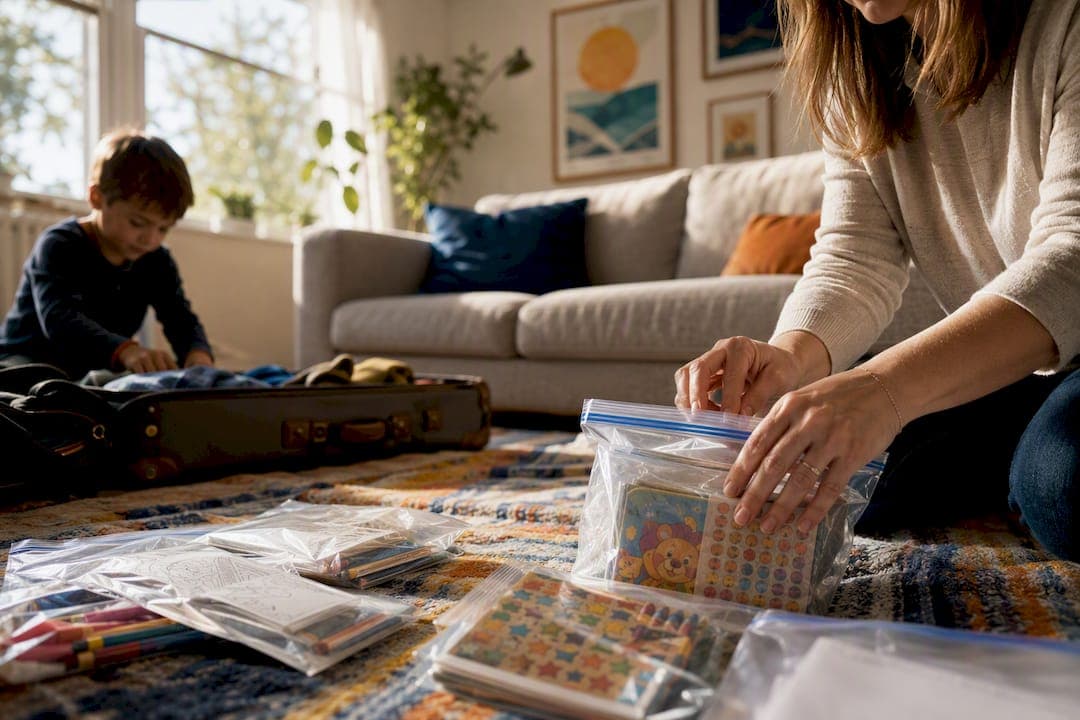
A screen-free road trip works best when you rotate short, novel activities across five categories and save one surprise item for the hard window. That means mixing observation games, audio stories, and sticker books instead of leaning on any single distraction to carry the whole drive.
Here's the fast version before you dig into the details:
- Pack 6 to 8 activity items total, no more. Too many choices creates decision paralysis, not engagement.
- Use an audio anchor (a podcast or audiobook) during motion-sickness-prone stretches or afternoon energy crashes.
- Build in movement breaks every couple of hours, not just when the tank hits empty.
- Watch for small parts and choking hazards with kids under 4, and keep a wipeable surface or tray handy for anything with markers, water, or stickers.
The rest of this guide breaks down exactly which activities to pack, when to use them, and how to build a rotation that survives a six-hour drive without a single meltdown.
Key Takeaways
A successful screen-free road trip depends on rotating five activity categories on a set rhythm and saving one audio or novelty surprise for the hardest stretch of the drive.
| Point | Details |
|---|---|
| Rotate, don't repeat | Switch categories (sensory, creative, observation, audio, quiet) the moment one activity stops holding attention. |
| Pack light, pack smart | Stick to 6 to 8 items total using the three-bag system: gate bag, activity binder, and one surprise item. |
| Use audio for hard stretches | Deploy a podcast or audiobook during motion-sickness windows or afternoon energy crashes, since it asks nothing of tired eyes. |
| Plan meals with the rotation | Time snacks and meal stops around energy dips, not just hunger, to keep behavior steady. |
| Try personalized audio | G45-hero-cast delivers weekly personalized superhero podcasts for ages 4 to 9, built to anchor a 20 to 45 minute audio window with your child as the hero. |
Table of Contents
- Screen Free Road Trip Activities Sorted by Category
- Which Screen-Free Activities Fit Each Age Group
- An Hour-by-Hour Plan and a 15-Minute Packing Checklist
- Why Audio Belongs at the Center of Your Screen-Free Plan
- Classic Car Games That Use the Scenery Around You
- Where This Advice Comes From
- What to Pack for a Screen-Free Drive
- Managing Expectations Without a Screen to Fall Back On
- Planning Meals and Snacks Around the Rotation
- Handling Delays and Boredom Without Reaching for a Screen
- Why the Rotation Beats the Toy Bag Every Time
- Let a Personalized Audio Story Anchor Your Next Drive
- Sources
Screen Free Road Trip Activities Sorted by Category
Rotating through categories works because your child's attention doesn't fail from boredom alone. It fails from doing the same type of thing too long. Switching from a quiet activity to an active one, or from visual to audio, resets attention in a way that adding more of the same toy never does. Grouping activities into sensory, creative, observation, audio, and quiet buckets and rotating them cuts down on the mental fatigue that leads to backseat boredom and fighting.
Observation games work anywhere there's a window, and they cost you nothing.
- Window scavenger hunt. Give kids a short list (a red barn, a water tower, a cow) to spot along the route. Runs 10 to 20 minutes and needs zero prep beyond a printed list or a few words scribbled on paper.
- License plate bingo. Kids mark off states as they spot them on other cars. Works for 20 to 30 minutes on highway stretches with heavier traffic, less well on rural back roads.
- Landmark bingo. Similar setup, but themed around gas stations, fast food signs, or farm animals. Good filler for younger kids who can't read yet, since you can use pictures instead of words.
Audio is the single best tool for stretches where kids are tired, carsick, or just done with visual stimulation. Short podcast episodes, serialized audio adventures, and audiobooks work well for 20 to 45 minute windows, and because there's nothing to look at, they're far friendlier to motion-sensitive stomachs than any screen. A one-device audio setup outperforms visual entertainment specifically because it doesn't ask the eyes to track anything while the body is bouncing around in a moving vehicle.
Creative activities need a little more setup but pay off in long stretches of quiet focus.
- Sticker books let kids build scenes without you managing loose stickers rolling under the seat.
- Water-reveal coloring pads use a special pen that "paints" color onto pre-printed pages with plain water, so there's no marker bleed onto car seats or clothes.
- Magnetic drawing boards (the kind with a stylus and tiny magnetic beads) contain their own mess entirely, which makes them close to ideal for a moving car.
Hands-on options like coloring pages and sticker books consistently rank among the most-recommended screen-free travel tools, and testers at outlets like Wirecutter point specifically to magnetic boards and water-reveal pads as the low-mess, high-engagement standouts in this category.
Sensory activities matter more than most parents expect, especially for kids who fidget or get overstimulated on long drives.
- Sealed texture bags (rice, beans, or hair gel in a zip-top bag, taped shut) give something to squeeze without any spill risk.
- Pipe cleaners or WikkiStix let kids bend and build shapes, and they stick to car windows or seatback trays.
- Small tactile toys work fine for kids over 3, but skip anything under two inches for children who still put things in their mouths.
Quiet and rest activities matter just as much as active ones. A travel journal, a page of reusable stickers to arrange into a scene, or a short read-aloud chapter gives kids permission to just sit without needing to perform engagement.
Family games round out the list and cost nothing to pack.
- The alphabet game. Spot something starting with each letter, in order, using road signs and passing scenery. Cooperative variation: the whole car works as a team instead of racing each other.
- 20 Questions. Classic guessing game, no materials needed, scales from age 5 up to teenagers.
- Story chain. One person starts a sentence, the next person adds a line, and the story builds around the car. Give older kids a genre prompt (mystery, superhero, silly) to keep it moving.
Which Screen-Free Activities Fit Each Age Group
Not every activity on that list works for every kid, and matching the activity to the age band saves you from packing things that get tossed aside after two minutes.
Infants and toddlers (0 to 2): Keep it simple and keep loose parts out of reach entirely.
- Lap songs and finger plays work even from the front seat, sung backward over your shoulder.
- Board books with thick pages survive being dropped, chewed, and thrown.
- Fabric sensory books with different textures sewn in hold attention without any choking risk.
- Short audio lullabies or gentle stories in 5 to 10 minute bursts match a toddler's attention span better than anything longer.
Preschool (ages 3 to 5): This age can handle a bit more complexity, but still needs low-mess, forgiving materials.
- Reusable sticker pads (the kind that peel off and restick) prevent the running-out-of-stickers meltdown.
- Water-reveal coloring pads run 15 to 25 minutes of solid focus.
- Magnetic drawing boards are close to indestructible and travel-proof.
- Simple scavenger hunts using pictures instead of words work well once a child can point and name objects.
Early elementary (ages 6 to 9): Kids this age can sustain longer, more independent activities.
- Travel journals with a few guided prompts ("draw something you saw today") give structure without forcing writing.
- Simple origami models, like a folded paper airplane or a clothespin-built model plane, work well as a supervised 20 to 30 minute project for this age range.
- Longer audiobooks or multi-episode audio adventures can run 45 minutes or more without losing them.
- Map-based landmark challenges (find three state capitals, count bridges) work because this age group can read and track information over time.
Pro Tip: Match the activity's mess level to your car's upholstery tolerance, not just the child's age. A four-year-old who can technically use markers still shouldn't, if you're driving a light-colored interior on a six-hour trip.
An Hour-by-Hour Plan and a 15-Minute Packing Checklist
A rotation only works if it's sequenced, not just packed. Here's a rhythm that holds up on drives in the four to six hour range, adjustable up or down.
- Settle (hours 0 to 2). Start with something calm: observation games or a sticker book while everyone adjusts to being in the car. Save the audio anchor for later.
- Midpoint (hours 2 to 3). Switch categories. If you started visual, go sensory or creative now. This is a good window for a magnetic drawing board or texture bags.
- Audio window (hours 3 to 4). Energy usually dips here, and this is exactly when a podcast or audiobook earns its keep. It asks nothing of tired eyes and works well through a headphone splitter if siblings want to listen together.
- Quiet and rest (hours 4 to 5). Travel journals, a read-aloud chapter, or letting a napper actually nap.
- Reset. Whenever attention collapses regardless of the hour, stop and take a movement break rather than pushing another activity.
The three-bag packing system keeps this rotation from turning into a rummage session at 65 miles per hour:
- The gate bag holds whatever gets used in the first hour, sitting within arm's reach of the car seat.
- The activity binder bag carries the bulk of the rotation, organized by category, staying in the trunk or far seat until needed.
- The "just-in-case" bag holds exactly one surprise item, saved specifically for the hard window near the end of the drive.
That third bag matters more than it sounds like it should. Releasing one novelty item at a time, rather than dumping a full toy bag on a child at once, reliably buys more calm minutes per item packed than handing over everything up front.
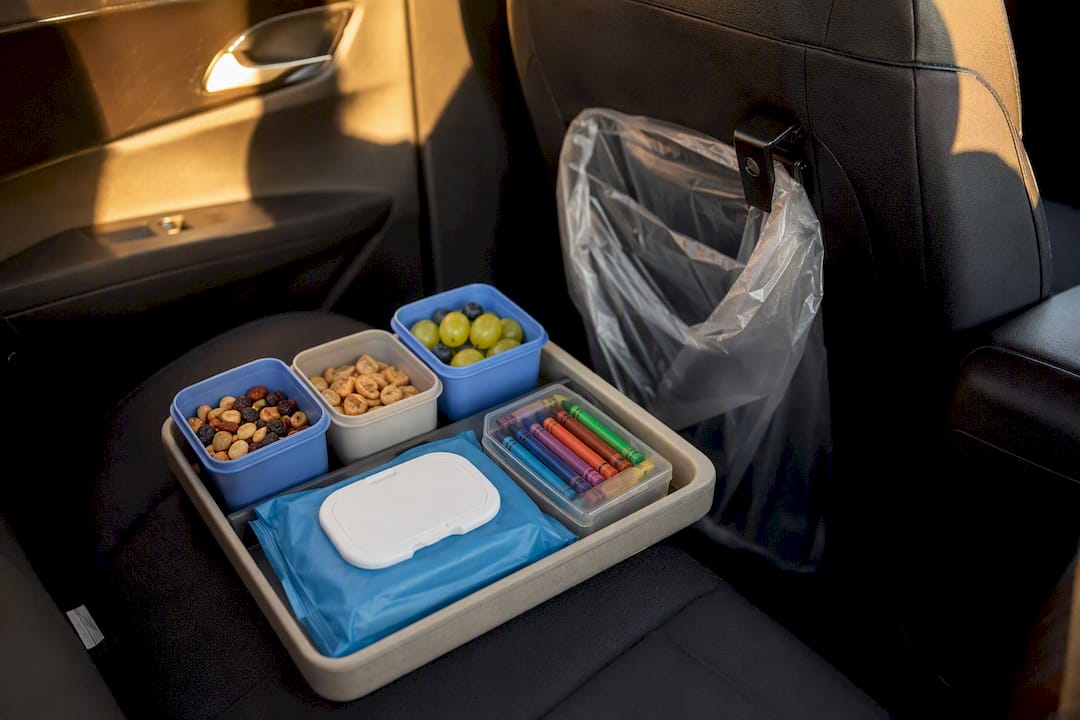
15-minute packing checklist: zip-top bags (for texture activities and stray small pieces), a rimmed tray or lap desk (contains stickers and drawing supplies), wipes, a snack container with a lid, two or three crayons or a single washable marker, and the one surprise item sealed away until it's needed.
Why Audio Belongs at the Center of Your Screen-Free Plan
Audio does something no coloring pad or scavenger hunt can: it entertains without asking a single thing from tired eyes. That makes it the natural go-to during motion-sickness-prone stretches, right after a big meal, or during that late-afternoon energy crash every parent recognizes. A one-device audio setup for long stretches tends to hold attention longer than a rotating pile of toys, partly because there's nothing to drop or lose.
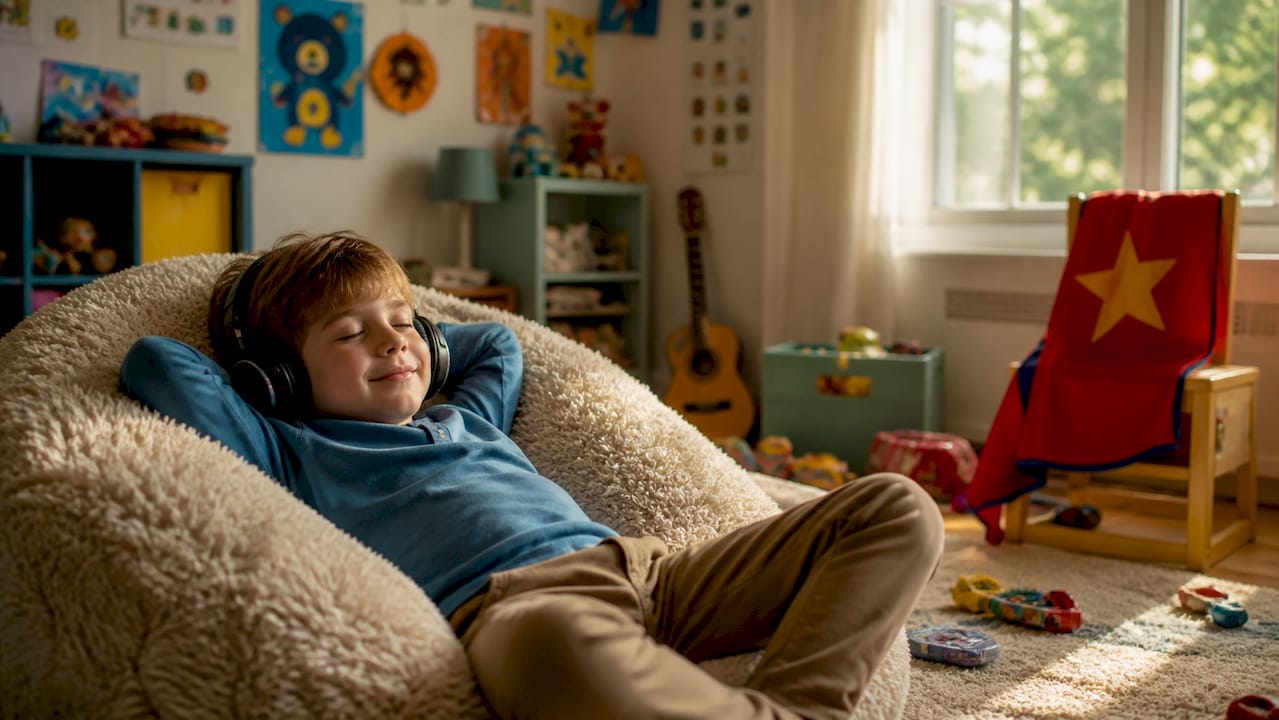
The logistics are simple. Download episodes before you leave, since cell coverage disappears fast on rural highways. A cheap headphone splitter lets two kids share one device without a fight over whose turn it is. Prop the phone or tablet somewhere the driver doesn't have to think about it again.
Format matters too. Short serialized episodes in the 15 to 25 minute range suit younger kids with shorter attention spans, while longer audiobooks work better for kids 7 and up who can track a plot across chapters. Making a child the actual protagonist of the story tends to pull in even reluctant listeners, which is the whole idea behind G45-hero-cast's personalized superhero episodes, where a child hears their own name written into the adventure. For a 90-minute stretch through nothing but farmland, that kind of personalized, serialized audio adventure can outlast three other activities combined.
Pro Tip: Test any new audio episode at home first. A story that's too scary or too babyish for your child's mood is worse than silence, and you won't know until you've heard a few minutes of it.
Classic Car Games That Use the Scenery Around You
These cost nothing, need no supplies, and work in almost any car:
- The alphabet game: find something starting with each letter in order. Cooperative twist: the whole car works together instead of competing.
- Story chain: one person starts a sentence, everyone adds a line in turn. Give older kids a genre (mystery, superhero) to keep momentum going.
- License plate challenge: count different states, or turn it into a color-spotting game for kids too young to read.
- Travel bingo: printable cards work well, and you can make your own with pictures for younger riders or words for older ones.
One rule matters more than any of these games: nothing that requires the driver to look, point, or search. Keep the driver's role limited to occasionally confirming a guess, nothing more.
Where This Advice Comes From
G45-hero-cast builds weekly personalized superhero podcasts for kids ages 4 to 9, which means thinking about long stretches of a child's attention is the entire job, not a side note. Every episode is written to be the child's own adventure, with their name and interests worked into the story, because that's what turns passive listening into the kind of engagement a coloring book can't always match.
Personalized audio increases engagement by making a child the actual protagonist of their own story, rather than a passive observer of someone else's.
That insight, backed by family travel research, is the whole reason audio deserves a bigger role in your rotation than it usually gets. A family running a three-hour highway leg with a cranky preschooler in the back seat has a very different experience with a 20-minute personalized episode playing than with silence, or with a general audiobook that never mentions their kid by name.
What to Pack for a Screen-Free Drive
The goal of any packing list isn't volume. It's picking a small set of items that each buy real minutes of calm without weighing down the trunk or creating a cleanup disaster at 70 miles per hour.
Start with the basics that cover every category: a sticker book or two, a water-reveal coloring pad, a magnetic drawing board, one sealed texture bag, a travel journal, and a printed bingo or scavenger hunt sheet. That's six items, which sits right in the sweet spot before choice turns into chaos.
Add the logistics layer around those items: a rimmed tray that keeps small pieces from disappearing into the seat cracks, a pack of wipes, a small trash bag clipped to a seatback, and a snack container that seals tight enough to survive being kicked. None of this is exciting, but it's the difference between a smooth drive and a sticky one.
Then set aside the audio device, fully charged, with episodes downloaded before you leave the driveway. Cell service drops out on rural stretches exactly when you need it most, so downloading ahead isn't optional if you're relying on a podcast or audiobook to get through hour three.
Finally, seal away one surprise item, unlabeled, saved for the point in the drive when everyone's patience runs thinnest. Resist the urge to let kids see it early. The surprise itself is doing half the work.
Managing Expectations Without a Screen to Fall Back On
Kids who are used to a tablet on car rides will test the new plan, and that's normal, not a sign it's failing. Set expectations before you leave the driveway, not after the first meltdown starts. A short conversation the night before, walking through what the drive will look like hour by hour, does more than any activity you pack.
Give kids some choice within the plan rather than a strict script. Let them pick which of two activities comes first, or which color sticker pad they want. Choice inside a structure feels different than a rule handed down from the front seat, and it cuts down on resistance.
Expect some boredom, and don't rush to fix it instantly. A few minutes of "I'm bored" isn't an emergency. It's often the gap right before a kid settles into people-watching out the window or starts talking to a sibling, both of which count as a screen-free win even though they don't look like an activity.
Keep transitions predictable. Announcing "we're switching to the audio story now" gives a child a mental heads-up, the same way a countdown works better than an abrupt stop. Kids handle change better when they can see it coming, even by thirty seconds.
Planning Meals and Snacks Around the Rotation
Food timing affects behavior as much as any activity does, so treat snack planning as part of the entertainment plan, not a separate errand. A hungry kid won't engage with a sticker book no matter how good it is.
Pack snacks that require no plates, no heating, and minimal mess: pouches, dry cereal in small containers, cut fruit in a sealed cup, crackers, and a water bottle with a straw lid that won't spill if it tips over. Rotate snack timing with activity timing, offering food right before the audio window or right after a movement break, since eating tends to calm kids down and pairs well with a quieter activity that follows.
Save one slightly more exciting snack, something not offered at home, for the same "hard window" where you'd deploy the surprise activity item. A new snack and a new toy landing at the same low-energy stretch of the drive does more work together than either does alone.
Plan an actual meal stop rather than eating every meal in the car. A sit-down break, even a short one, gives kids a chance to move, use a real bathroom, and reset before the next stretch. Building meal stops into your hour-by-hour plan, rather than treating them as interruptions, keeps the whole day feeling intentional instead of improvised.
Handling Delays and Boredom Without Reaching for a Screen
Every road trip runs into something unplanned: traffic, a closed rest stop, a missed exit that adds forty-five minutes. The instinct to hand over a tablet during those stretches is strong, but a delay is exactly when your rotation plan proves its worth.
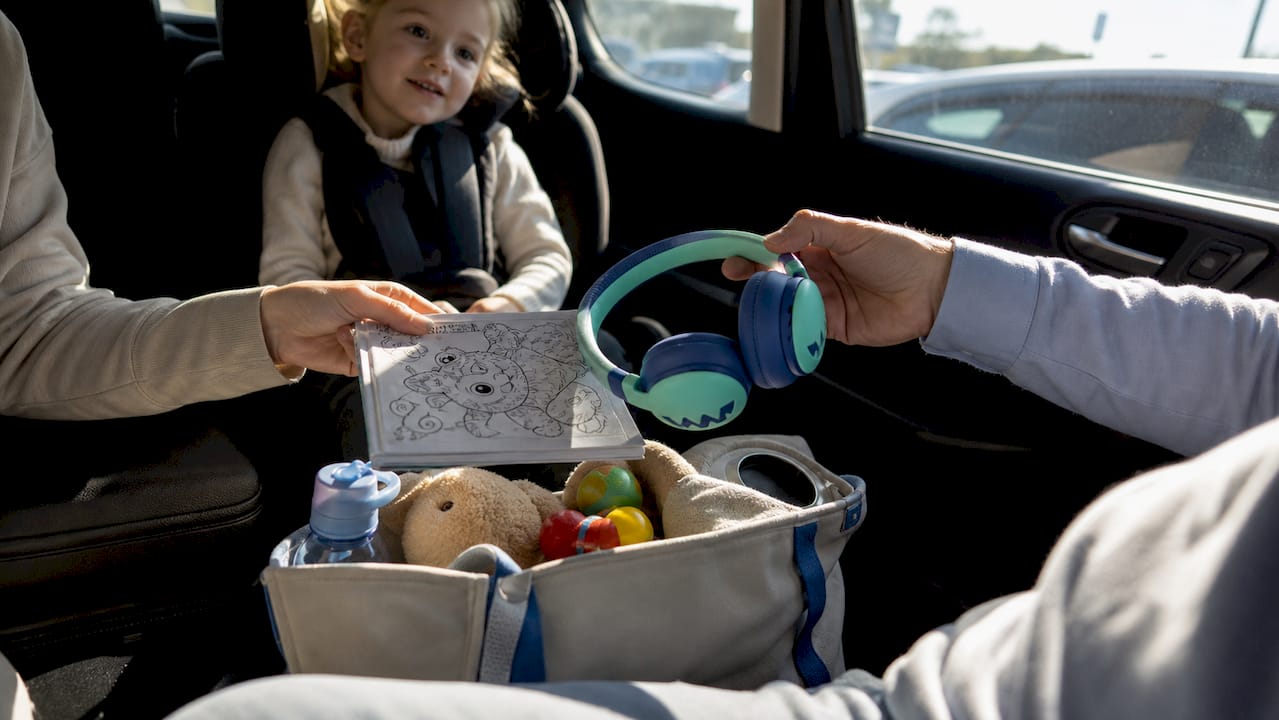
Treat an unexpected delay as a cue to switch categories immediately rather than repeating what just failed. If a coloring pad stopped holding attention right as traffic backed up, don't offer another quiet activity. Jump to audio, or to a family game that gets everyone talking instead of staring at brake lights.
Keep a mental note of which activities you haven't used yet. Delays are the moment to deploy something fresh, even if it wasn't scheduled for that hour. The order of the rotation matters less than parents think. What matters is always having a next thing ready.
If boredom hits and nothing in the bag is landing, don't force it. A few unstructured minutes of staring out the window, humming, or fidgeting with a seatbelt clip isn't a crisis. Kids need some downtime that isn't filled by an adult-assigned activity, and pushing too hard to fill every silent moment can backfire into more resistance, not less.
Why the Rotation Beats the Toy Bag Every Time
Most road trip advice treats screen-free travel as a packing problem: buy more stuff, fill the back seat, hope something sticks. That's backward. The families who get through long drives without a meltdown aren't the ones with the biggest activity haul. They're the ones who sequence a handful of items deliberately and know when to switch.
The conventional wisdom oversells variety and undersells timing. A magnetic drawing board and a scavenger hunt sheet will fail just as fast as a screen if you deploy them at the wrong hour, in the wrong order, back to back with the same category. What actually works is treating boredom as information, not a failure. When one activity stops landing, that's the signal to change category, not to offer a second version of the same thing.
Audio gets underrated in this conversation because it doesn't look like "doing" anything. But asking nothing of tired eyes during hour three of a drive is exactly the point. If you take one thing from this guide, make it the rotation itself, not any single item in the bag.
— JG
Let a Personalized Audio Story Anchor Your Next Drive
G45-hero-cast turns the audio window into something a tablet never could. Instead of a generic podcast, your child hears their own name, age, and interests written into a superhero adventure built specifically for them, which is exactly the kind of engagement a one-device audio setup works best with on long stretches.
A new episode lands in a private podcast feed every Sunday, so families always have something fresh loaded before the next trip, no last-minute scrambling for downloads. The subscription runs monthly or annually, and it covers sibling options and gift plans for grandparents who want in on the fun too. For a family with two kids trading off headphones through a three-hour drive, that's a rotation built in from the start. Start a subscription and queue up your child's first personalized episode before your next drive.
Sources
- Screen-Free Road Trip Secrets for Families
- 18 Screen-Free Road Trip Activities for Kids (2026) | Age-by-Age Guide
- Screen-Free Flight Entertainment for Kids, by Age
- 16 Activities for Younger Kids That Make Screen-Free Travel Possible | Reviews by Wirecutter
- Make a Model Airplane from a Clothespin