
Try a 10-minute interactive audio mission or a 6-minute serialized story first. Both formats reliably pull 4 to 9 year olds out of a boredom slump because they give kids a job to do, not just something to hear. A short guided relaxation works well for restlessness or a meltdown, though not specifically for boredom. Play one episode now and see which format grabs your child.
TL;DR:
- Interactive audio missions lasting around 20 to 25 minutes are most effective for burning off restless energy after school.
- Serialized stories of 6 to 10 minutes are ideal for car rides or short attention spans, ending on cliffhangers to encourage daily listening.
- Personalized audio shows that include a child's name and interests significantly increase engagement and sustained attention.
- Short guided relaxations of 5 to 8 minutes are best for calming down after meltdowns or before quiet activities.
- Active listening activities like sound scavenger hunts or call-and-response games transform passive audio into movement and social play.
Table of Contents
- Boredom Busters Kids Audio Formats That Actually Hold Attention
- How to Pick Age-Appropriate Audio for Ages 4 to 9
- Turning Passive Listening Into Active Play
- 10-Minute Scripts You Can Run Right Now
- Why Personalized Audio Changes the Engagement Math
- A Weekly Audio Adventure Built Around Your Kid
- Sources
- FAQ
Boredom Busters Kids Audio Formats That Actually Hold Attention
Not all kids' audio is built the same, and the format matters more than the story itself. Some shows ask kids to just sit and listen. Others ask them to jump, whisper, guess, or build something. The second kind is what actually breaks a boredom spiral, because it gives a restless kid a physical or mental task to latch onto.
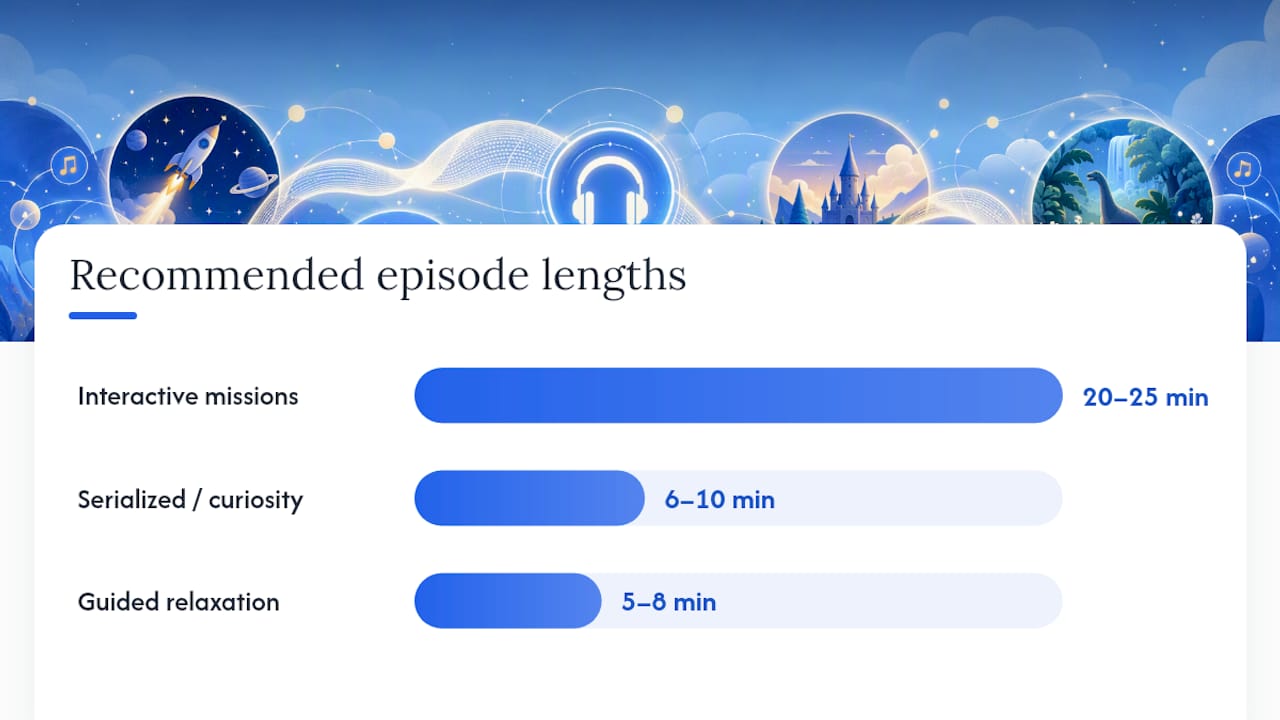
Interactive audio adventures work by turning the listener into a participant instead of a bystander. A mission-style episode might ask a child to army-crawl under a "laser grid," count to ten before a "villain" notices them, or shout a code word to unlock the next scene. Because there's an actual mission to complete, kids tend to stay locked in for the full run, and movement-based activity breaks like these are shown to keep children physically engaged throughout. These missions typically run for a duration long enough to burn energy without dragging into overstimulation.
Short serialized stories hit a different sweet spot. Episodes of several minutes fit the attention span of this age group in a single sitting, and cliffhanger endings make kids want to come back tomorrow instead of asking for five more episodes today. That daily anticipation is often more valuable than one long binge. Curated short-story collections built around five-minute episodes grouped by theme show how effective brevity can be for younger listeners specifically.
Educational curiosity shows trade plot for questions. A good one poses something like "why does thunder come after lightning" and lets the answer unfold as a mini-investigation. These work best as car conversation starters. Pause the episode, ask your child to guess before the host answers, and you've turned passive listening into a guessing game.
Guided relaxations solve a different problem entirely. Parenting educator Maggie Dent has pointed out that building an imaginary calm world, like walking through a quiet forest or floating on a cloud, can help kids shift out of boredom, anxiety, or anger rather than just distracting them from it. These run shorter, usually five to eight minutes, and work best right before quiet time or after a meltdown, not as general entertainment.
Audio play activities round out the list. Call-and-response segments and homemade sound-effect games build a skill most parents don't think about: auditory and phonological sensitivity, supporting attention span and turn-taking well beyond the activity itself.
Here's how the formats map to what's actually happening in your house:
- Restless energy after school: interactive mission, roughly 20 to 25 minutes
- Bored in the car: serialized story or curiosity show, 6 to 10 minutes per episode
- Winding down before bed or after a tantrum: guided relaxation, 5 to 8 minutes
- Rainy afternoon with nothing to do: audio play or sound-effect game, open-ended
How to Pick Age-Appropriate Audio for Ages 4 to 9
Length should track both age and context, not just age alone. A 4 year old in a car seat can handle a shorter episode than a 9 year old settled in for quiet time. As a rough guide, listening experts recommend 10 to 15 minutes for younger kids and 15 to 20 for older ones, using a simple "listen twice, respond once" approach to build sustained attention.
Before you hit play on anything new, run through this quick check:
- Tone. Is it playful and warm, or does it lean dark or sarcastic in a way that goes over a young kid's head?
- Pacing. Fast-cut, high-energy shows suit car rides; slower pacing suits calm-down time.
- Intensity. Suspense that delights a 9 year old can genuinely scare a sensitive 5 year old. Preview anything billed as "mystery" or "adventure" before it becomes a bedtime staple.
- Ads and language. Check for ad breaks mid-episode and confirm the vocabulary matches your child's level.
For logistics, screen-free podcast guides generally recommend downloading episodes ahead of road trips or flights, since spotty signal kills momentum fast. A private podcast feed, the kind used for personalized kids' shows, solves this cleanly because episodes land automatically and stay available offline once downloaded.
Pro Tip: Preview the first two minutes of any new serialized story before your child hears it. That's usually enough to catch a tone or intensity mismatch before it turns into a bedtime problem.
Turning Passive Listening Into Active Play
Audio doesn't have to mean sitting still. A few small tweaks turn a podcast into a physical or social activity, and kids this age genuinely prefer moving while they listen.
Movement prompts are the easiest entry point. Pick a mission-style episode, clear a small stretch of floor, and let the audio call the moves: crawl, freeze, tiptoe, jump. Keep the space free of furniture corners and rugs that slide, since kids get absorbed fast and stop watching where they're going.
Sound scavenger hunts turn your house into a listening obstacle course. Set the scene ("find three things that make a metal sound"), give your child a basket, and let them wander room to room hunting for matches. Scavenger hunt structures built for young listeners work best with a grown-up nearby for stairs or kitchen areas, but otherwise need very little setup.

Call-and-response segments build listening skills disguised as a game. Repeat-after-me chants and echo games strengthen the kind of auditory sensitivity that helps kids track sounds, take turns, and stay tuned in during regular conversation, not just during the episode.
Audio-led craft sessions work when an episode walks a child through building something step by step. Pair this with a simple art or craft kit so the hands-on part is ready to go the moment the episode gives instructions.
Pro Tip: Give your child a "mission object," a flashlight, a cape, a wooden spoon microphone, before pressing play on an interactive adventure. The prop alone gets them into character faster than any instructions you could give.
10-Minute Scripts You Can Run Right Now
These need almost no setup. Pick one based on your child's mood and go.
- The 10-minute mission. Clear floor space, hand them a flashlight, play a mission-style episode, and let the audio direct the movement.
- The 6-minute mystery starter. Play the first episode of a serialized mystery in the car and stop right at the cliffhanger. Ask them to guess the ending before episode two.
- The 5-minute calm-down image. Dim the lights, have them lie down, and play a short guided relaxation after a meltdown or before nap time.
- The sound scavenger hunt. Give them a basket and a list of three sounds to find around the house while an audio prompt guides the pace.
- Listen-and-draw. Play any short story and hand over crayons; have them draw one scene when it ends.
- The car-ride ritual. Reserve one specific show for car rides only, so the podcast becomes something your child associates with that time rather than a generic filler.
Downloaded episodes or a private feed make every one of these easier, since you're not relying on a signal or scrambling for something new mid-meltdown.
Why Personalized Audio Changes the Engagement Math
Most kids' audio asks a child to imagine themselves in someone else's story. Personalized audio flips that, and the difference in attention is noticeable almost immediately. When a script uses a child's actual name, references something they genuinely care about, like dinosaurs, soccer, or their little sister, and casts them as the hero solving the problem, the listening shifts from passive to personal.
Some companies build weekly custom superhero podcasts around exactly that idea: a child becomes the hero of their own audio adventure, tailored to their name, age, and interests, delivered regularly. The pattern worth trusting isn't hype. It's simple: kids pay closer attention to stories where they're the main character.
— JG
A Weekly Audio Adventure Built Around Your Kid
Most boredom busters ask a parent to hunt for the right episode every single time. Some personalized superhero podcasts remove that step entirely by delivering new episodes to a private podcast feed regularly, already tailored to a child's name, age, and interests, so there's no scrambling for content on a rainy afternoon.
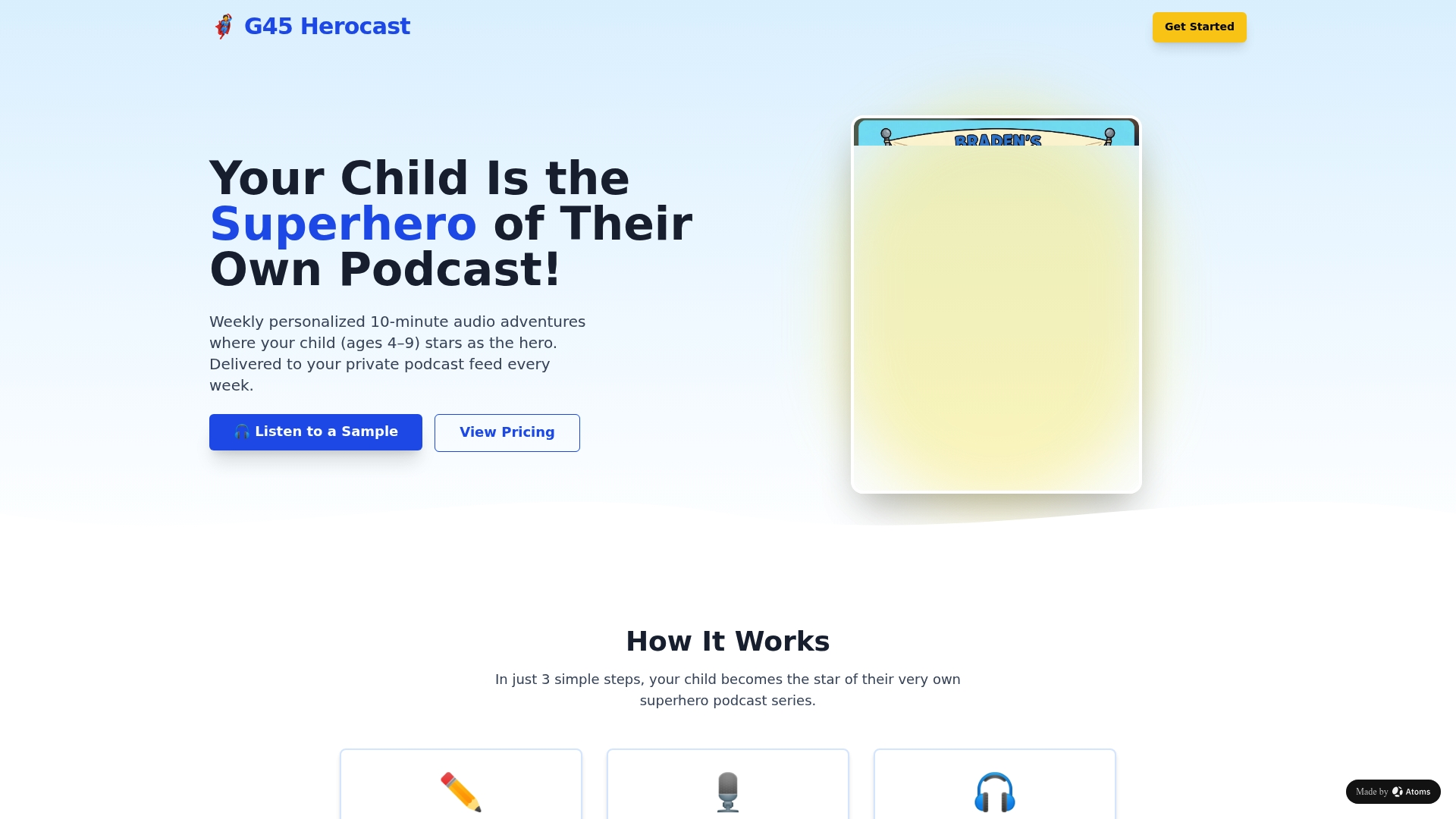
This fits parents who want a screen-free surprise waiting regularly rather than another app to manage, and it works well as a gift subscription option for grandparents. Siblings can each get their own hero storyline to avoid sharing one feed. If your family leans on interactive missions or serialized stories already, hearing your own child's name inside that format is the natural next step. Check plans and gift options on the G45-hero-cast landing page to see this week's episode setup for your child's age group.
Sources
- Fun physical activity breaks for kids — Pittsburgh Public Schools
- Sound play at home — TRRC, University of Tennessee
- BBC Teach: Online audio stories for children — school radio
- Screen-Free Summer Podcasts: Audio adventures for road trips, rainy days, and boredom busters — Screenwise
FAQ
How Long Should Kids' Audio Episodes Be?
For ages 4 to 9, aim for 10 to 15 minutes for younger kids and 15 to 25 minutes for older ones, depending on whether it's an interactive mission or a calmer story format.
What's the Best Audio for a Car Ride?
Short serialized stories or curiosity shows in the 6 to 10 minute range work best, since they fit shorter trips and end on a cliffhanger that keeps kids asking for "one more."
Can Audio Really Replace Screen Time for Boredom?
Yes, for many kids. Interactive missions and imagination-led stories give a child something active to do with their attention, which screens rarely require.
Is Personalized Audio Like G45-hero-cast Good for Younger Kids?
It fits the 4 to 9 age range well, since episodes are built around the child's own name, age, and interests, which tends to hold attention longer than generic stories.
How Do I Make Sure an Episode Isn't Too Intense for My Child?
Preview the first few minutes yourself, and watch specifically for suspense pacing and sound effects that build tension, since those elements affect sensitive kids more than plot content does.