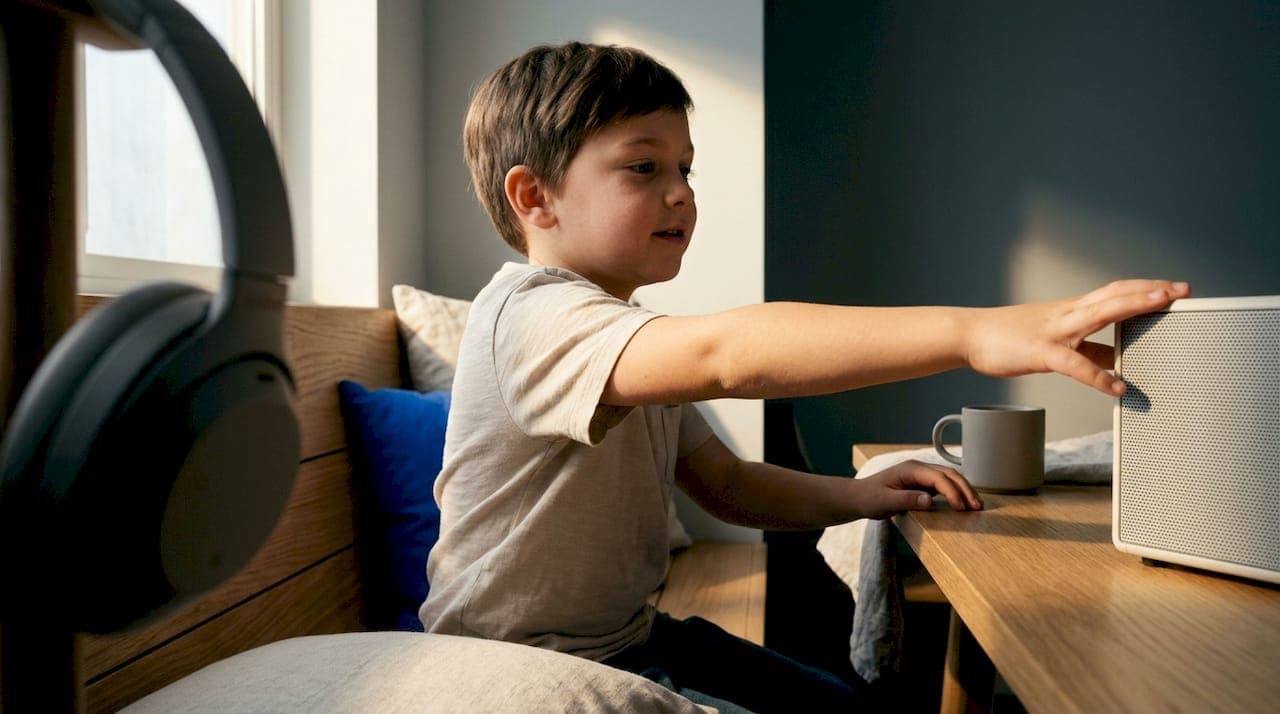
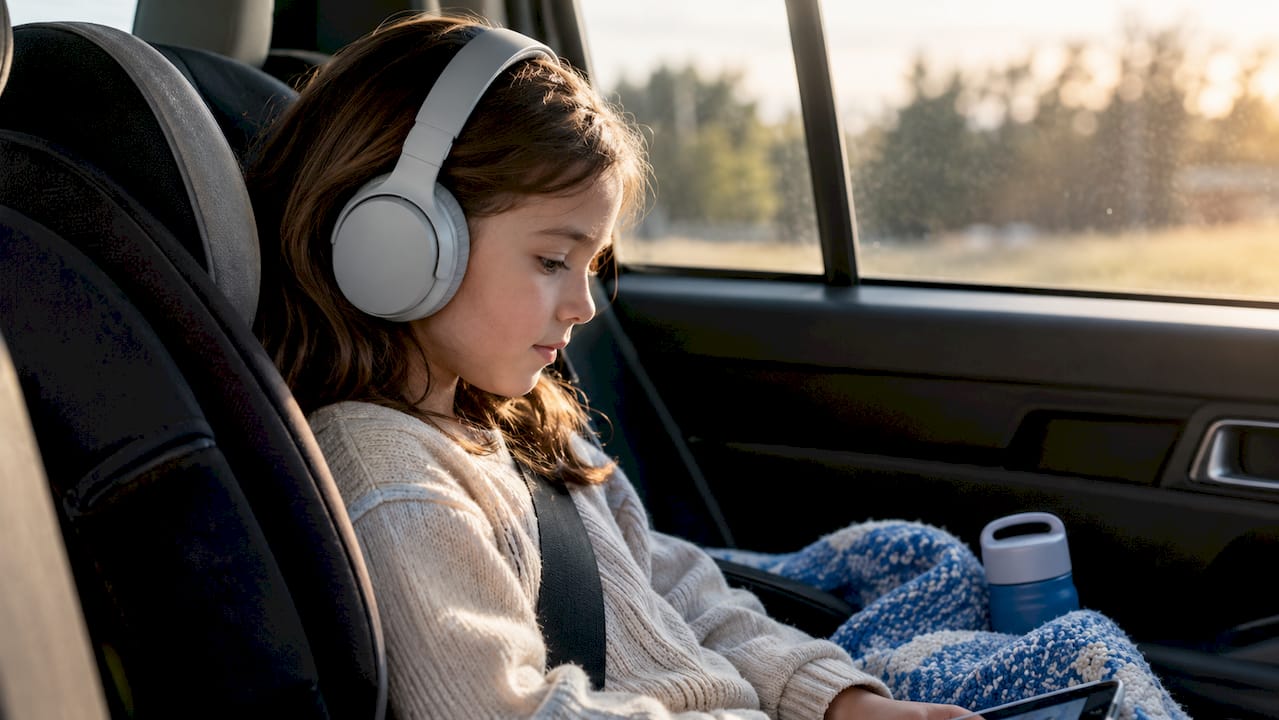
Choose headphones for private, focused listening like travel or schoolwork, but cap the volume and the clock. Choose speakers for bedtime, playtime, and any stretch where several kids are listening together, since shared audio naturally stays quieter and shorter. The rule that actually protects hearing isn't the device at all. It's volume multiplied by time multiplied by frequency of exposure, so a "safe" pair of headphones cranked too loud for too long still does damage.
TL;DR:
- Headphones should be used for private, focused listening with volume caps and limited session times to prevent hearing damage.
- Speakers are more suitable for shared listening during bedtime, playtime, and long stretches, as they limit exposure and are more durable.
- Most pediatric guidelines recommend keeping listening sessions under an hour and setting device volume caps at 85 decibels to reduce long-term hearing risks.
- Over-ear headphones with hardware volume limits and active noise cancellation help lower the need to increase volume excessively and are safer for kids.
- Combining shared speaker use with hardware-capped headphones based on activity and age helps balance safety, focus, and social interaction.
Table of Contents
- Headphones vs. Speakers for Kids: Matching the Device to the Moment
- What the Hearing-Safety Numbers Actually Say
- Choosing the Right Device by Age and Situation
- Daily Habits and the Controls Already on Your Phone
- Why Mixing Speakers and Headphones Beats Picking One
- A Screen-Free Way to Fill Your Family's Speaker Time
- Where These Safety Numbers Come From
- Sources
- FAQ
Headphones vs. Speakers for Kids: Matching the Device to the Moment
Headphones win on portability and focus. A kid doing a math worksheet during a video call, or riding three hours in a car seat, needs sound that doesn't leak into everyone else's afternoon. That isolation is also the catch: nobody hears how loud it's gotten except the kid wearing them, and small ears plus ill-fitting cushions often mean the volume creeps up without anyone noticing.
Speakers flip that trade-off. They spread sound across a room instead of concentrating it against an eardrum, which is part of why they suit bedtime stories, shared podcasts, and low-volume background listening for long stretches. Headphones create a more immersive, private soundstage, while speakers open things up for group listening, and that difference in soundstage is exactly why families end up needing both.
Here's how the trade-offs actually break down for common scenarios:
- Travel and long car rides: headphones for solo focus, wired if the trip is long enough to worry about battery life.
- Bedtime and wind-down: speakers at low volume, since nobody has to sleep in earbuds.
- Remote learning or video calls: headphones with a hardware volume cap, not a phone turned up to full blast.
- Free play and sibling time: speakers, because shared listening builds language and turn-taking in a way solo headphone use can't.
- Sensory sensitivity or noisy households: headphones with noise cancellation, used in short, supervised sessions.
Durability tips the scale toward speakers for younger kids too. A speaker survives being dropped, sat on, or left in a backpack far better than a headphone hinge does. For families juggling multiple children, that durability difference shows up in the return-and-replace pile faster than most parents expect.
What the Hearing-Safety Numbers Actually Say
The World Health Organization sets the practical ceiling: children should avoid sustained exposure above roughly 75 decibels and keep peak exposure under about 85 decibels. Most kid-marketed headphones now build to that 85 dB hardware cap for a reason. It's the number regulators and manufacturers have settled on as a reasonable line between "normal listening" and "risk of noise-induced hearing loss."
The number that matters most isn't decibels alone. It's decibels times minutes times how often it happens. A headphone capped at 85 dB used for six straight hours a day still adds up to meaningful exposure, according to pediatric guidance on noise-induced hearing loss.
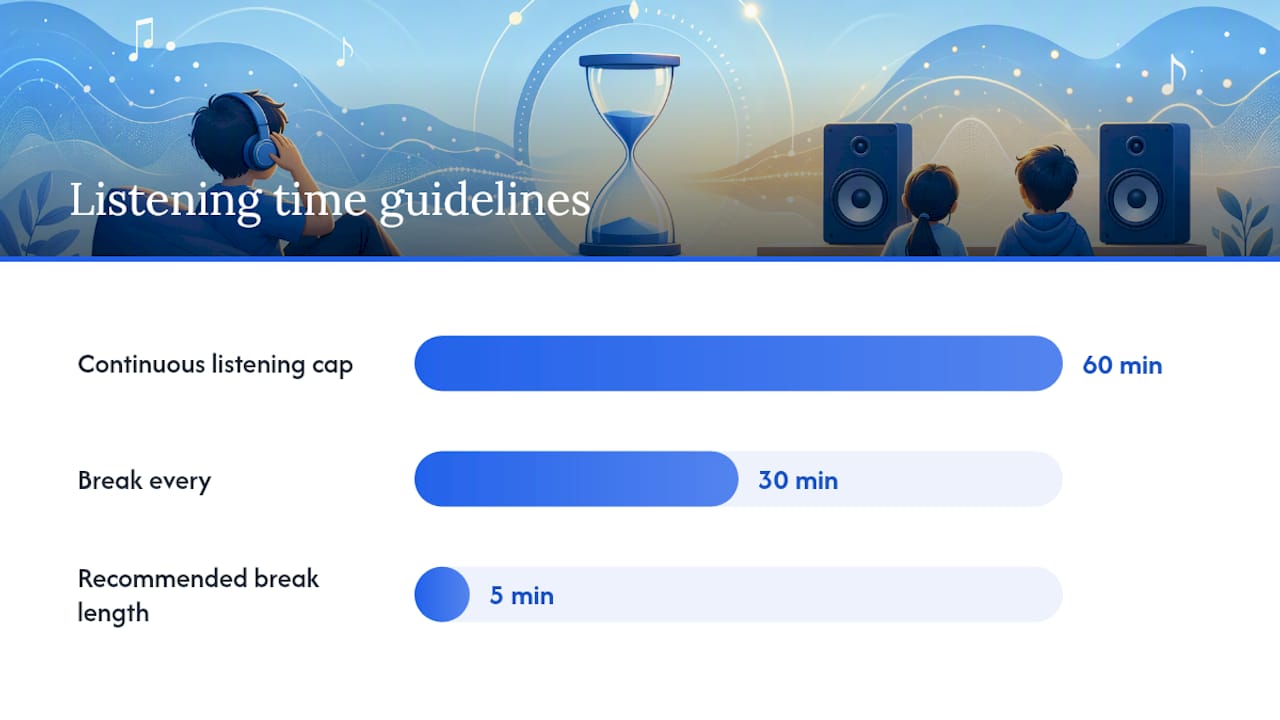
Pediatric guidance frames it the same way: volume, duration, and frequency together determine long-term risk, which means a device that looks safe on the spec sheet can still cause harm if a kid never takes it off. This is why most pediatric audiologists talk in session lengths, not just decibel numbers. A common rule of thumb is to keep continuous listening sessions to about an hour, followed by a real break where ears get quiet, rather than assuming a capped device is a set-it-and-forget-it solution.
Three features materially cut the risk:
- Hardware volume caps that physically limit output, not a software slider that a curious kid can override.
- Over-ear design over earbuds for younger children, since it sits away from the ear canal and tends to be more comfortable for longer wear.
- Active noise cancellation, which matters more than people assume. When a device blocks outside noise, kids don't feel the urge to crank the volume to compete with it, turning ANC into a genuine protective feature rather than a nice-to-have extra.
Choosing the Right Device by Age and Situation
Buying decisions get easier once you stop thinking "which brand" and start thinking "which age and which use case." Here's a practical breakdown:
- Toddlers (0 to 3): stick with simple, durable speakers for shared listening. Avoid earbuds entirely at this age. Ears are still developing, and toddlers can't reliably tell you if something feels too loud or hurts.
- Preschool (3 to 6): kid-sized over-ear speakers or headphones with a hardware volume cap and dead-simple controls. This is not the age for a device with a companion app or a software dial a four-year-old can max out in ten seconds.
- School-age (6 to 9): over-ear headphones with a stated hardware cap, ideally with a wired option for travel days when battery life doesn't matter and a paired-down design matters more.
- Older kids (10 and up): start introducing more choice, including earbuds, but only alongside real parental controls and an actual conversation about safe volume habits, not just a device handed over cold.
Whatever the age, verify the claim before you buy. "Kid-safe" on a box means nothing without a number attached. Look for an explicit decibel spec, like "limits output to 85 dB," or a reference to the EN50332-1 standard rather than trusting marketing language alone. Check the return policy too. A cap that's advertised but not enforced in hardware is the single most common way "safe" headphones turn out not to be.
Daily Habits and the Controls Already on Your Phone
Good habits do more heavy lifting than any single piece of hardware. A few rules cover most of what matters: cap continuous listening at about 60 minutes for younger kids, build in a five-minute break every 30 minutes during longer sessions, and keep headphones off entirely at bedtime, since a speaker at low volume does that job with none of the fit or pressure issues.
- Turn on iOS Headphone Safety (Settings > Sound & Haptics) to get real alerts when volume creeps into risky territory.
- Enable Android's Digital Wellbeing volume monitoring for the same kind of passive check.
- Set the device's default volume lower before handing it over, so the starting point is already conservative.
- Preload a playlist or podcast feed ahead of time instead of letting a kid browse and crank volume out of boredom.
- Supervise earbud fit and shared speaker levels directly. A quick check-in beats a settings menu every time.
Pro Tip: Pair strategies instead of picking one. Use speakers during shared, low-distraction time, then switch to hardware-capped headphones for individual schoolwork, and keep the switch consistent so kids learn which device goes with which activity.
Watch for warning signs that go beyond routine habits: persistent ear pain, a kid struggling to hear you in a noisy room, or signs of language delay that don't track with age. Those call for a conversation with a pediatrician, not just a volume adjustment.
Why Mixing Speakers and Headphones Beats Picking One
The debate over headphones versus speakers misses the more useful question, which is when each one belongs in a family's routine. Speakers protect the shared moments, dinner table music, bedtime stories, a sibling dance party, where kids read each other's reactions and build language together. Headphones protect focus, the fifteen minutes of quiet a kid needs for schoolwork or a long car ride. Neither one replaces the other, and treating this as a single either-or purchase decision misses how differently families actually use audio throughout a day.
Screen-free, personalized audio stories fit naturally into that mix. A story delivered through a speaker at bedtime does something a tablet never will: it occupies a kid's imagination without a screen fighting for their eyes too. Audiobooks and listening formats carry real developmental value that's easy to overlook when screens dominate the conversation about kids' media. Producing personalized audio adventures for kids has made one thing obvious: the format matters less than the habit you build around it.
— JG
A Screen-Free Way to Fill Your Family's Speaker Time
Once you've settled on speakers for bedtime and shared listening, the next question is what actually plays through them. A provider creates weekly personalized superhero podcasts for kids, where each child becomes the hero of their own audio adventure, delivered to a private podcast feed.
It works with either device, depending on the moment. Play it through a speaker for a shared bedtime wind-down, since low volume and a whole room hearing it together is exactly the setup pediatric guidance favors. Or let an older kid listen privately through hardware-capped headphones during a long car ride, following the same 60-minute and break guidance covered above. Each episode uses the child's name, interests, and age, offering a screen-free alternative to handing over a tablet, with options to set up multiple heroes at a time. Check available plans and start a subscription at Superhero Sounds. Check available plans and start a subscription at Superhero Sounds.
Where These Safety Numbers Come From
Parents who want to check these thresholds directly, rather than take a blog's word for it, have a short list worth bookmarking:
- World Health Organization noise and hearing guidance for the 75 dB sustained and 85 dB peak thresholds.
- Tom's Guide's interview with a hearing expert on practical parental controls.
This article is general information, not a substitute for advice from a qualified doctor. Consult a qualified healthcare professional about your own circumstances before acting on anything here.
Sources
- World Health Organization (WHO) - noise and hearing loss guidance
- Tom's Guide — I spoke to a hearing expert to find out the best ways to protect your kids' hearing
- HowToGeek — Headphones vs Speakers: How to Choose the Right Option for You
FAQ
At What Age Can Kids Start Using Headphones?
Most pediatric audiologists suggest waiting until at least age 3 for any headphone use, and holding off on earbuds specifically until around age 6, favoring over-ear speakers or headphones with hardware volume caps before that.
What Is the 60-Minute Rule for Headphones?
It's a common guideline suggesting kids keep continuous headphone sessions to around 60 minutes, followed by a break, since duration matters as much as volume in determining hearing risk.
Is It Better to Have Speakers or Headphones for Kids?
Neither is universally better. Speakers suit shared, lower-volume listening like bedtime stories, while headphones suit private, focused tasks like schoolwork or travel, provided they carry a hardware volume cap.
Do Kids With ADHD Need Headphones?
Some kids with attention differences benefit from noise-canceling headphones to reduce distraction, since ANC can lower the urge to raise volume in noisy settings, but this depends on the individual child and is worth discussing with a pediatrician.