
For kids ages 4 to 6, look for episodes running 5 to 10 minutes. For ages 7 to 8, 10 to 15 minutes hits the mark, and by age 9, many children handle 15 to 20 minutes or more, especially for immersive stories. Right now, if you're loading up a podcast for a 15 minute car ride, pick something in the 7 to 10 minute range so the story wraps before you've parked.
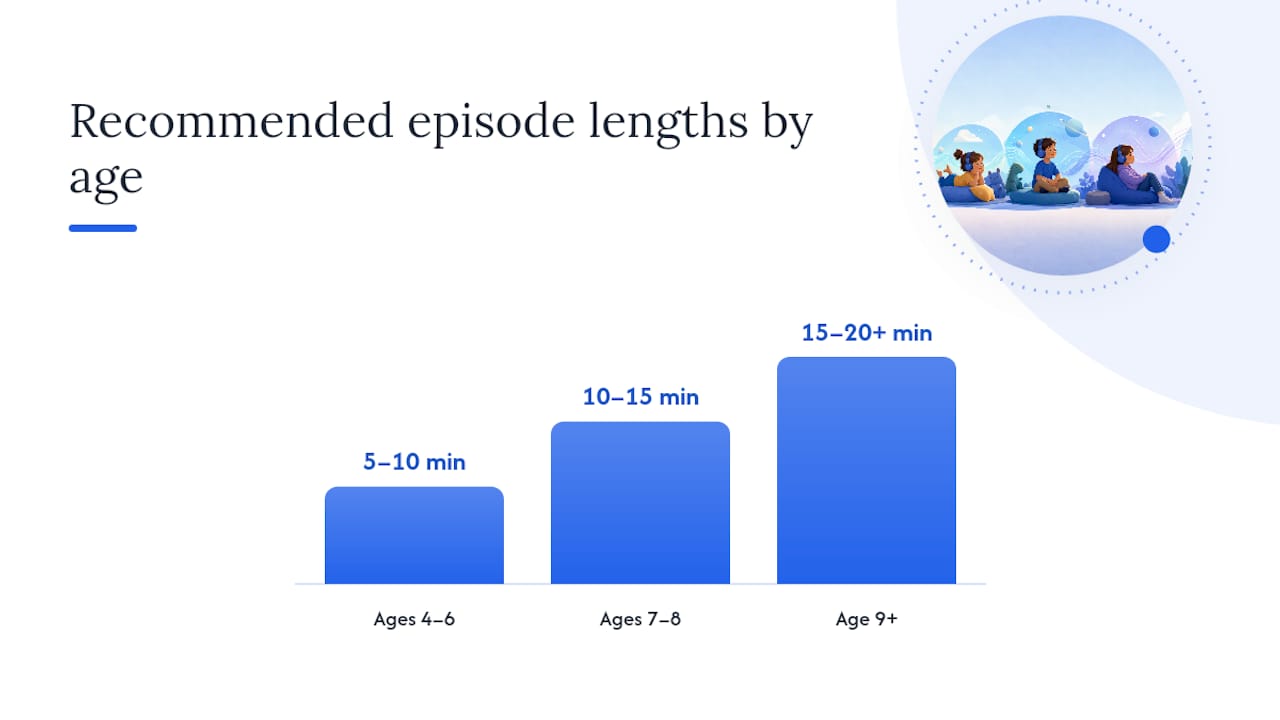
These ranges come from parent-reported preferences in a large ERIC-funded listening study, echoed by the Kids Listen survey work on Medium, which pegs 15 to 20 minutes as a common "sweet spot" once kids get a bit older. G45-hero-cast builds its weekly personalized episodes around exactly this logic, matching runtime to a child's age and attention span rather than forcing every kid into the same format.
Three quick starting points:
- Ages 4 to 6: 5 to 10 minutes, simple plots, one clear resolution.
- Ages 7 to 8: 10 to 15 minutes, a bit more plot complexity.
- Age 9 and up: 15 to 20+ minutes, especially for rich, narrative storytelling.
Key Takeaways
Episode length works best when matched to both a child's age and the listening context, not to age alone.
| Point | Details |
|---|---|
| Age sets the baseline | Aim for 5 to 10 minutes (ages 4 to 6), 10 to 15 minutes (ages 7 to 8), and 15 to 20+ minutes (age 9 and up). |
| Context adjusts the pick | Car rides and errands favor shorter, stackable episodes; quiet time allows longer, immersive stories. |
| Completion matters | Episodes with a clear ending give kids a sense of finishing something, which helps routines like bedtime. |
| Watch for behavioral signals | Fidgeting or repeated disengagement means shorten; questions about plot and requests for "one more" mean try longer. |
| G45-hero-cast matches length to the child | Weekly personalized superhero episodes are built around each child's age and attention span, not a fixed runtime. |
Table of Contents
- What's the Best Kids Podcast Episode Time by Age?
- Why Does Episode Length Affect How Well Kids Engage?
- How Do You Choose the Right Episode Length?
- What Are Some Practical Tips for Using Podcasts in Daily Routines?
- When Can Kids Handle Longer Podcast Episodes?
- Which Kids' Podcasts Match Which Episode Lengths?
- Does Testing Episode Length Actually Change What Your Kids Listen To?
- Try a Podcast Sized for Your Child, Not a Generic Age Bracket
- Where This Guidance Comes From
- Frequently Asked Questions
- Sources
What's the Best Kids Podcast Episode Time by Age?
Age drives the baseline, but context decides the final call. A 6 year old on a quiet Saturday morning can often sit through more than a 6 year old squirming in a car seat after school.
A few rules of thumb make this easier to apply on the fly:
- Stack two or three short episodes back to back for road trips longer than 20 minutes.
- Save longer, story-rich episodes for quiet, low-distraction settings like bedtime or rainy afternoons.
- If your child is already restless before the podcast starts, go shorter than the age band suggests, not longer.
Parents matching podcasts to a 5 year old's day often lean on resources like this guide to preschool podcast picks for length-appropriate options at that age.
Why Does Episode Length Affect How Well Kids Engage?
Length shapes three things at once: how long attention actually holds, whether the episode fits the activity around it, and whether the story gives your child a real sense of finishing something. Get any one of those wrong and the episode feels too long even if the runtime is technically "age-appropriate."
Attention span is the obvious piece. A 5 year old's ability to track a plot for 8 minutes doesn't automatically stretch to 20. But context matters just as much. The ERIC study found many families didn't finish every episode they started, not because the content was bad, but because life interrupted, which is exactly why shorter, self-contained episodes travel better through a normal day.
Parent-reported sweet spots: parents of 4 to 6 year olds preferred episodes around 5 to 10 minutes, while parents of 7 to 8 year olds preferred 10 to 15 minutes, according to the ERIC report.
The completion piece is underrated. A tidy ending in 10 minutes gives a child a small win they can carry into the next transition, whether that's leaving the car or falling asleep. A story that gets interrupted mid-arc doesn't offer that same payoff.
How Do You Choose the Right Episode Length?
Start with age, then adjust for the moment. This isn't a one-size answer, and it shouldn't be.
- Pick the age band first. Use the 5 to 10, 10 to 15, or 15 to 20+ minute ranges above as your starting point.
- Check the time you actually have. A 12-minute drive doesn't need an 18-minute episode; round down.
- Read your child's recent mood. If they've been fidgety all day, shorten your pick regardless of age.
- Match content type to context. Fact-based shows work well in short bursts; narrative stories reward longer, quieter stretches.
- Look for interactive prompts. Episodes with sing-alongs or direct questions tend to hold attention past the runtime on the label.
Quick checklist before you hit play:
- How much time do I actually have?
- Has my child been attentive or restless today?
- Is this a story or a fact show?
- Does it include interactive moments?
Pro Tip: Run a two-week experiment. Week one, play only short episodes (under 10 minutes). Week two, try a couple of longer, immersive ones. Track requests for "one more episode," fidgeting, and how often your child re-listens. That's your real answer, not a chart.
What Are Some Practical Tips for Using Podcasts in Daily Routines?
Length isn't the only lever you have. How you use episodes matters just as much as which ones you pick.
Stacking short episodes works well for anything longer than a quick errand. Three 8 minute episodes cover a 25-minute drive better than one awkwardly long single story. Going the other direction, you can split a 20-minute episode into two sittings, bedtime and the next morning's breakfast, if your child needs the plot but not in one dose.
Here's a simple setup routine:
- Pre-listen for about a minute to check tone before playing anything new for your child.
- Build a short playlist of three or four episodes so you're not scrambling mid-drive.
- Set expectations out loud ("we're listening to one story before bed tonight") so the ending feels intentional, not abrupt.
Interactive segments help too. A quick "what do you think happens next?" before hitting play, or a sing-along prompt mid-episode, resets attention without adding runtime. Families using podcasts as part of their evening wind-down routine often report the same pattern: shorter, complete stories fit drop-off and bedtime better than open-ended ones.
Pro Tip: Turn a single short episode into a "finish line" moment. One complete 10-minute story at bedtime, framed as tonight's one adventure, tends to land better than an open-ended playlist your child never quite finishes.
When Can Kids Handle Longer Podcast Episodes?
Some kids are ready for more runtime well before the "typical" age guideline catches up. Watch for the signs instead of guessing.
Positive signals include your child asking questions about the plot afterward, staying seated and quiet through the whole episode, or asking to play "just one more." Negative signals are just as clear: fidgeting halfway through, repeatedly asking to skip or turn it off, or constant requests to change the volume.
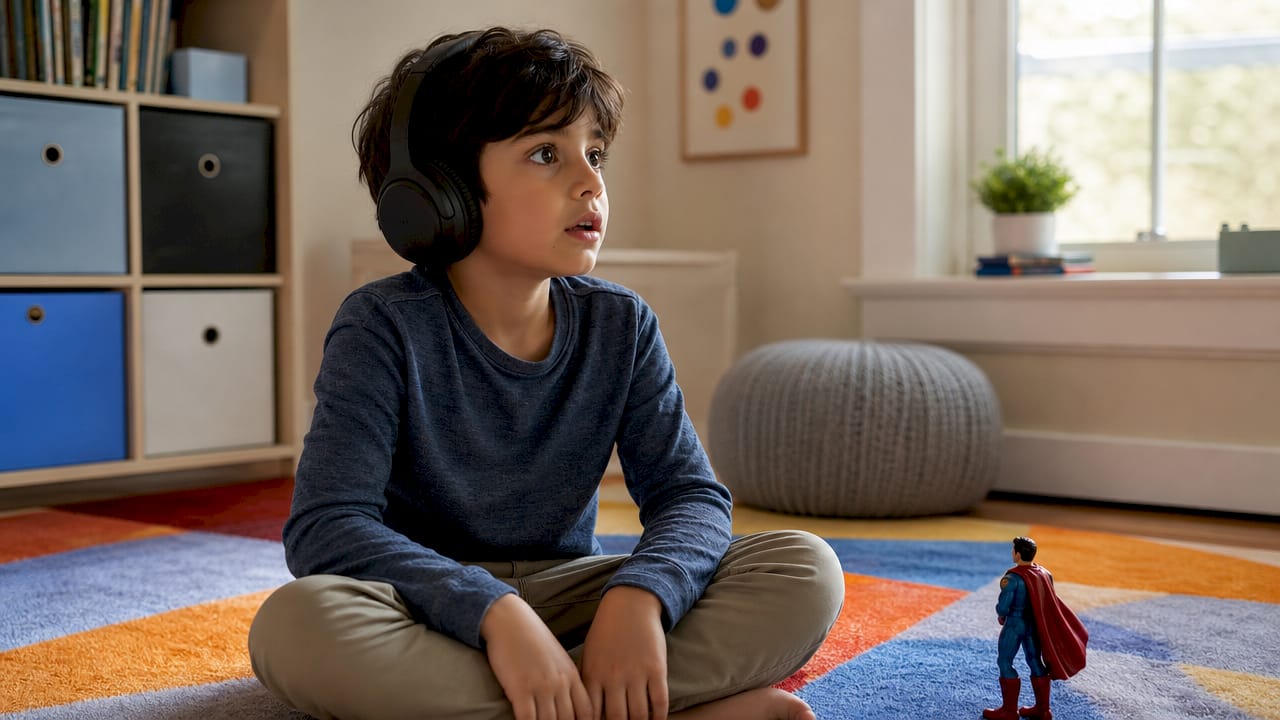
Try this experiment: play a 15 to 20 minute episode during quiet time for three days running and note the reaction each time. If your child stays engaged across all three, you've likely got room to lengthen your regular picks, especially for immersive, well-produced storytelling, which tends to sustain attention longer than fact-heavy formats.
Increase length gradually rather than jumping straight from 10 to 25 minutes. Story-driven shows generally stretch further than quiz or fact formats, since kids get carried by the plot instead of tracking discrete pieces of information.
Which Kids' Podcasts Match Which Episode Lengths?
Real shows make this concrete. Here's how episode length maps to actual titles parents already reach for:
- Six Minutes — a short serialized story, roughly 6 minutes per episode; ideal for quick car rides or a bedtime warm-up.
- Little Stories for Tiny People — short, gentle narratives well suited to toddlers and younger preschoolers winding down.
- Molly of Denali — around 10 minutes, a solid match for the 4 to 6 age band during errands or short drives.
- Circle Round — folk tales running roughly 15 to 20 minutes, good for quiet afternoons once a child can sit through a fuller arc.
- Stories Podcast — episodes in the 15 to 30 minute range, best saved for bedtime or calm weekend listening.
- Brains On! — fact-driven science content around 30 minutes, better suited to kids closer to 9 who can track longer explanations.
For the far ends of the spectrum, ParentMap's roundup documents shows spanning from 4 minute bite-size segments up to full 60-minute formats, while WIRED's list shows both short-story and long-form serials thriving depending on the listener. Parents shopping for older kids often check a dedicated guide for ages 8 to 10 since attention spans shift noticeably by that age.
| Podcast | Typical Length | Best Use |
|---|---|---|
| Six Minutes | ~6 minutes | Quick car rides, bedtime starter |
| Little Stories for Tiny People | Short (under 10 min) | Toddlers, wind-down time |
| Molly of Denali | ~10 minutes | Errands, short drives, ages 4 to 6 |
| Circle Round | ~15 to 20 minutes | Quiet afternoons, ages 7 to 8 |
| Stories Podcast | ~15 to 30 minutes | Bedtime, calm weekend listening |
| Brains On! | ~30 minutes | Fact-based content, age 9 and up |
Does Testing Episode Length Actually Change What Your Kids Listen To?
I ran the two-week experiment myself with two kids, ages 5 and 8. The 5 year old lost interest past the 10-minute mark almost every time, no matter the content. The 8 year old sat through a 22-minute immersive story twice without asking to skip ahead once. Designing personalized episodes at G45-hero-cast made this pattern obvious early: age gives you a starting range, but the actual child tells you the rest.
Try a Podcast Sized for Your Child, Not a Generic Age Bracket
Guessing at episode length gets old fast, especially when a 10-minute show bores your 9 year old but a 20-minute one loses your 5 year old halfway through. G45-hero-cast builds weekly personalized superhero podcasts sized to your child's actual age and attention span, not a generic bracket pulled from an app store description.
Every episode stars your child by name, delivered privately every Sunday, so there's no scrolling through a catalog trying to guess what fits. A few things worth knowing:
- Weekly delivery straight to a private podcast feed, so new content shows up automatically.
- Monthly or annual subscription plans, with sibling and gift options for grandparents or family.
- Episodes built around your child's interests and traits, not a one-size age category.
If you're tired of testing runtimes on shows that were never built for your kid specifically, start a subscription at G45-hero-cast and let the first Sunday episode do the testing for you.
Where This Guidance Comes From
- The ERIC-funded listening study provides the parent-reported age preferences behind the recommended ranges.
- ParentMap's podcast roundup offers curated show examples across the full length spectrum.
- The Riverside production guide explains how storytelling quality extends comfortable listening time.
- WIRED's kids podcast list rounds out examples across short and long formats.
- Kids Listen's writeup on Medium offers practical design guidance, including the 15 to 20 minute sweet spot.
Frequently Asked Questions
What is the ideal podcast duration for kids ages 4 to 6? Somewhere between 5 and 10 minutes works best for most kids in this age range, particularly for car rides or quick play breaks where attention resets often.
How long should children's podcast episodes be for 8 and 9 year olds? Kids around 8 or 9 often handle 15 to 20 minutes comfortably, especially with immersive, story-driven content rather than fact-heavy formats.
What are some short kids podcast suggestions for a quick car ride? Six Minutes and Little Stories for Tiny People both run under 10 minutes, making them easy to stack for short trips or errands.
How do I know if my child can handle a longer episode? Try a 15 to 20 minute episode during quiet time for a few days. If your child stays engaged and asks questions about the plot, they're likely ready for longer formats.
Does episode length matter more than content quality? Not exactly. A well-produced, immersive story can hold attention well past the typical age-based length, while a poorly paced short episode can still lose a child's interest.
Sources
- Listen to This! (ERIC report)
- The Best Podcasts for Kids | ParentMap
- How long should a podcast be? (Riverside blog)
- 14 Best Podcasts for Kids (WIRED)
- 6 tips to start a great podcast for kids (Kids Listen on Medium)