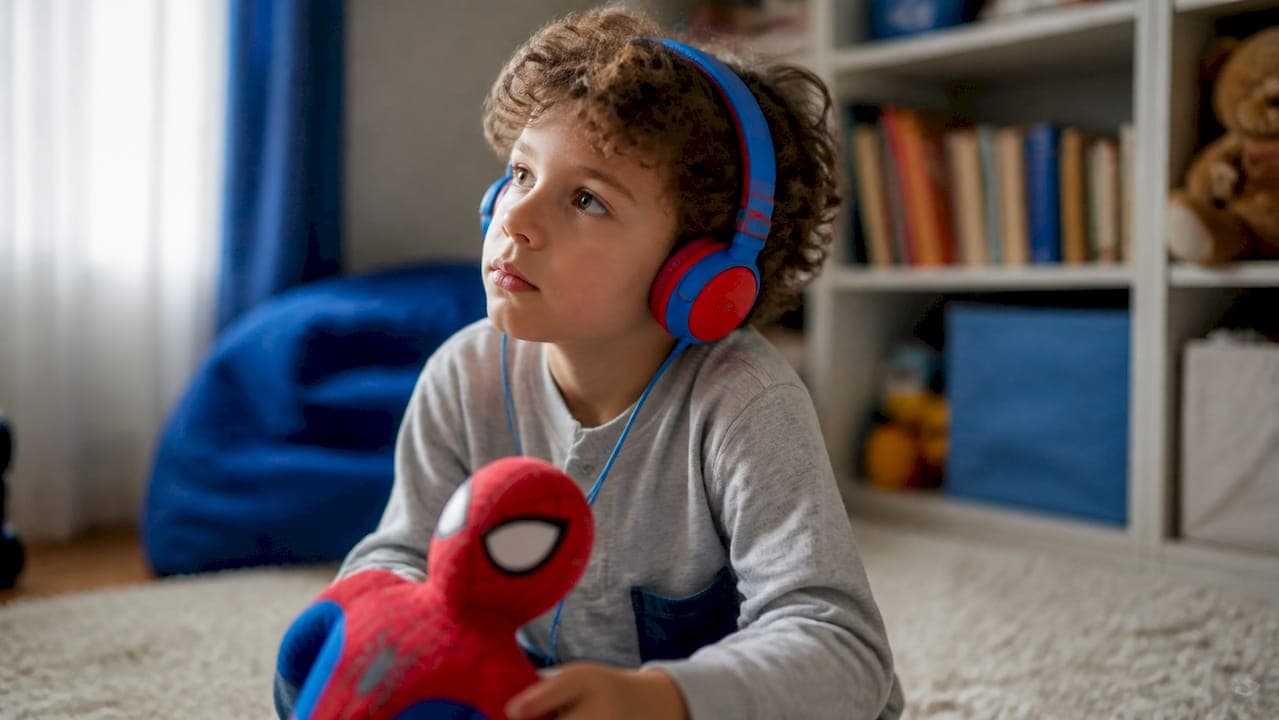
For most families with children ages 4–9, a weekly personalized superhero podcast subscription is one of the smartest screen-free storytelling investments you can make right now. Here's why that verdict holds up:
- Research-backed cognitive gains. Audio-only stories build voluntary imagination and sustained attention because children must construct mental images without visual prompts — a skill videos simply don't train.
- Developmental fit for ages 4–9. Personalized audio lets children access vocabulary and narrative structures above their independent reading level, supporting comprehension and oral fluency without the decoding burden.
- Practical, zero-friction delivery. Episodes arrive weekly to a private podcast feed — no app store, no screen time, no setup beyond a phone or smart speaker.
The rest of this guide explains what to look for, what to expect, and how to get the most out of every episode.
Key Takeaways
A weekly personalized superhero podcast subscription is a research-backed, screen-free storytelling format that builds attention, vocabulary, and parent-child bonding for children ages 4–9.
| Point | Details |
|---|---|
| Verdict for parents | Weekly personalized superhero podcasts are a high-value, screen-free choice for ages 4–9. |
| Top cognitive benefits | Audio-only stories build voluntary imagination, vocabulary, and sustained attention without a screen. |
| Listening together matters | Parental scaffolding deepens engagement and is linked to stronger neural connectivity and later reading skills. |
| Before you buy | Confirm the subscription offers a free sample, a clear privacy policy, and genuine name-and-interest personalization. |
| Recommended option | G45-hero-cast delivers weekly personalized superhero episodes via private podcast feed, with monthly, annual, and gift plans. |
Table of Contents
- What are podcasts vs story apps for kids, exactly?
- Why research backs audio stories for young children
- How to choose a personalized podcast subscription
- What you can realistically expect after subscribing
- How to scaffold listening so every episode does more
- Why we build weekly superhero episodes the way we do
- G45-hero-cast delivers exactly this, every week
- Sources
What are podcasts vs story apps for kids, exactly?
A weekly personalized superhero podcast subscription is not a general podcast app or a story-app game. It's a professionally produced audio series where your child is the named hero of every episode, with the story customized to their name, age, and interests. Each week, a new adventure arrives via a private podcast feed linked to your email. You play it on any podcast-compatible device — a phone, a tablet in audio-only mode, an Alexa, or a Bluetooth speaker.
This is different from generic storytelling apps, which offer a library of pre-recorded tales with no personalization, or interactive story apps that require a screen and tap-based choices. A personalized podcast subscription is closer to a custom audiobook series delivered on a schedule, with the child cast as the protagonist every single time.
Most subscriptions cover ages 4–9, offer sibling add-ons so multiple children get their own starring role, and come in monthly or annual billing plans. Gift options are common, making these subscriptions a practical choice for grandparents who want to give something memorable rather than another toy.
Why research backs audio stories for young children
The evidence for this format is specific and worth knowing before you spend a dollar.
- Attention and imagination. Audio-only storytelling forces children to build mental pictures without visual scaffolding. Research summarized by The Conversation shows this trains voluntary imagination and produces longer attention spans compared to video.
- Vocabulary and language. A randomized intervention with 138 students found measurable gains in semantic and grammatical skills from listening to tailored audio stories, pointing to real incidental vocabulary acquisition through audio exposure alone.
- Neural connectivity. A 2025 fMRI study found stronger connectivity across attention, executive function, and sensory networks during parental storytelling, with those patterns linked to later reading ability.
- Bonding and conversation. The Joan Ganz Cooney Center reports that children's engagement with audio deepens when parents listen alongside and use scaffolding prompts, turning each episode into a gateway for screen-free conversation.
Stat to know: The 2025 fMRI study tied parental storytelling to stronger neural connectivity across attention and executive function networks and linked that connectivity to later reading-related abilities.
The practical takeaway: a personalized podcast episode isn't passive entertainment. Listened to together, it's a weekly literacy and bonding session.
How to choose a personalized podcast subscription
Not every subscription delivers the same level of personalization or the same production quality. Use this checklist before you buy.
| What to check | What good looks like | Red flag |
|---|---|---|
| Degree of personalization | Child's name, age, and interests woven into the story | Generic "insert name here" template with no real customization |
| Delivery method | Private podcast feed sent to your email | Requires a proprietary app download with no standard feed |
| Episode cadence and length | Weekly episodes, 10–20 minutes each | Irregular drops or episodes under 5 minutes |
| Sibling and gift options | Separate personalized feeds per child; gift plan available | Single-child only, no gifting path |
| Privacy and safety | Clear privacy policy, no child data sold, COPPA-aware | Vague or missing privacy policy |
| Sample episode | Free sample or preview before purchase | No sample available anywhere |
| US availability and support | US-based or clearly US-available, responsive support | No support contact listed |
Questions worth asking before checkout: Does each episode use my child's actual name throughout, or just in the intro? How long after I submit details does the first episode arrive? Can I cancel before the next billing cycle?
Trust signals that matter: published research citations, a stated age range, a clear production process, and a blog that shows genuine category expertise. G45-hero-cast, for example, publishes comparisons of personalized audio options and curated picks for preschoolers, which signals real investment in the category beyond just selling subscriptions.
What you can realistically expect after subscribing
Cadence and length. Weekly episodes typically run 10–20 minutes, long enough to hold a child's attention through a full story arc without overstaying it.
Start-to-first-episode timeline. Most providers need 2–5 business days after you submit your child's details to produce and deliver the first episode. The more specific your customization inputs, the better the story fits your child.
Pricing and billing. Monthly plans offer flexibility; annual plans usually cost less per episode. Expect monthly plans in the range of $10–$20 and annual plans that reduce the per-episode cost meaningfully. Always check whether the annual plan auto-renews.
- Gift subscriptions typically come as a set number of weeks or months, with no auto-renewal.
- Sibling add-ons let each child get a fully separate, personalized feed rather than sharing one story.
- Cancellation policies vary: look for month-to-month plans that let you cancel before the next billing date with no penalty.
Pro Tip: Before gifting an annual plan, check whether the provider offers a sample episode. Hearing one episode first tells you far more about production quality than any description can.
How to scaffold listening so every episode does more
The research is clear: parental involvement multiplies the developmental return. Here's a simple before/during/after framework.
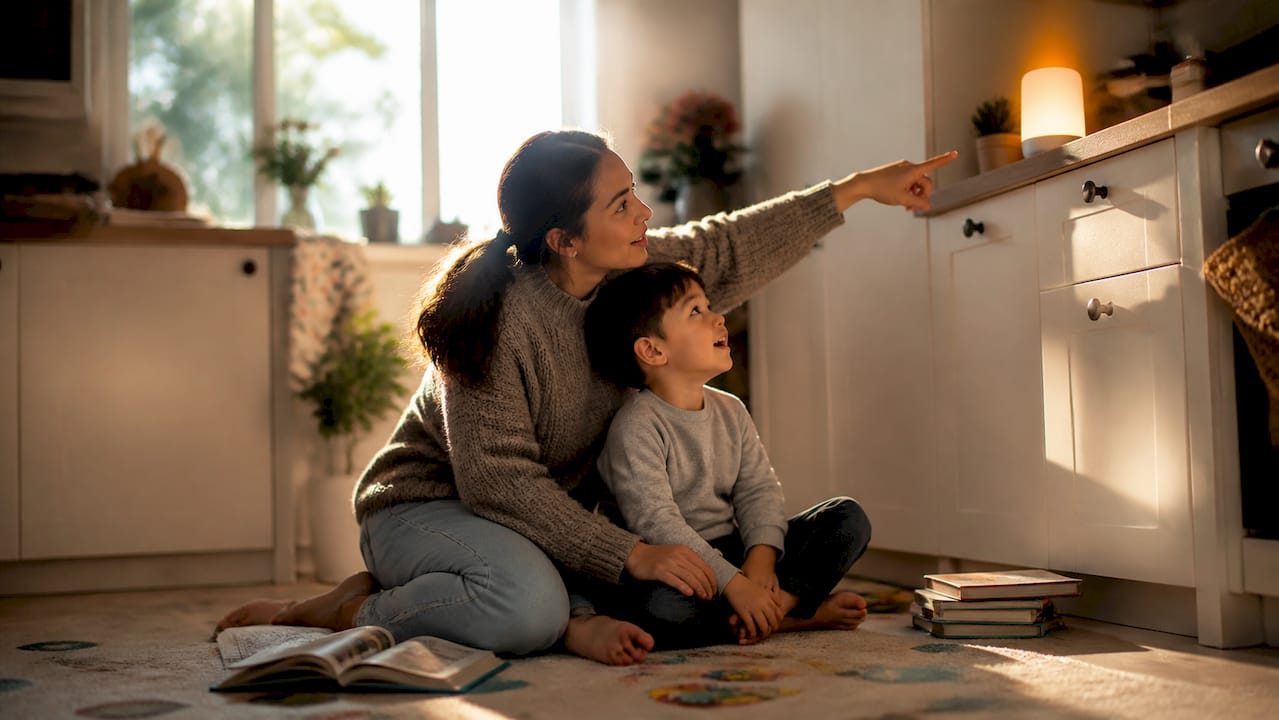
Before the episode: Tell your child, "Your superhero mission is starting — listen for the clue in the middle." Priming attention with a specific listening goal sharpens focus.
During: Sit together for at least the first few minutes. A short "what do you think happens next?" pause mid-episode is enough to activate prediction skills without breaking the story.
After: Three prompts that actually work:
- "What was the hardest part of your mission today?"
- "If you could change one thing about what happened, what would it be?"
- "What superpower did you use — and do you have that power in real life?"
These aren't quiz questions. They're conversation starters that extend the bonding and language benefits the Joan Ganz Cooney Center identifies in joint media engagement. Pair the listening session with a screen-free follow-up activity — drawing the superhero, acting out a scene, or building the "mission location" with blocks — and the episode becomes a 30-minute family experience, not a 15-minute audio file.
Why we build weekly superhero episodes the way we do
Every design choice at G45-hero-cast starts from one question: what makes a child feel genuinely seen? The answer turned out to be simple. When a child hears their own name as the hero, hears their interests woven into the plot, and hears a story built around their age and personality, they don't just listen. They lean in.
Episodes are delivered to a private podcast feed, not a walled-garden app, because parents shouldn't need to manage yet another platform. The feed works on whatever device your family already uses. Production quality and privacy are non-negotiable: no child data is shared or sold.
Sample episodes are available so you can hear the format before committing to a subscription.
G45-hero-cast delivers exactly this, every week
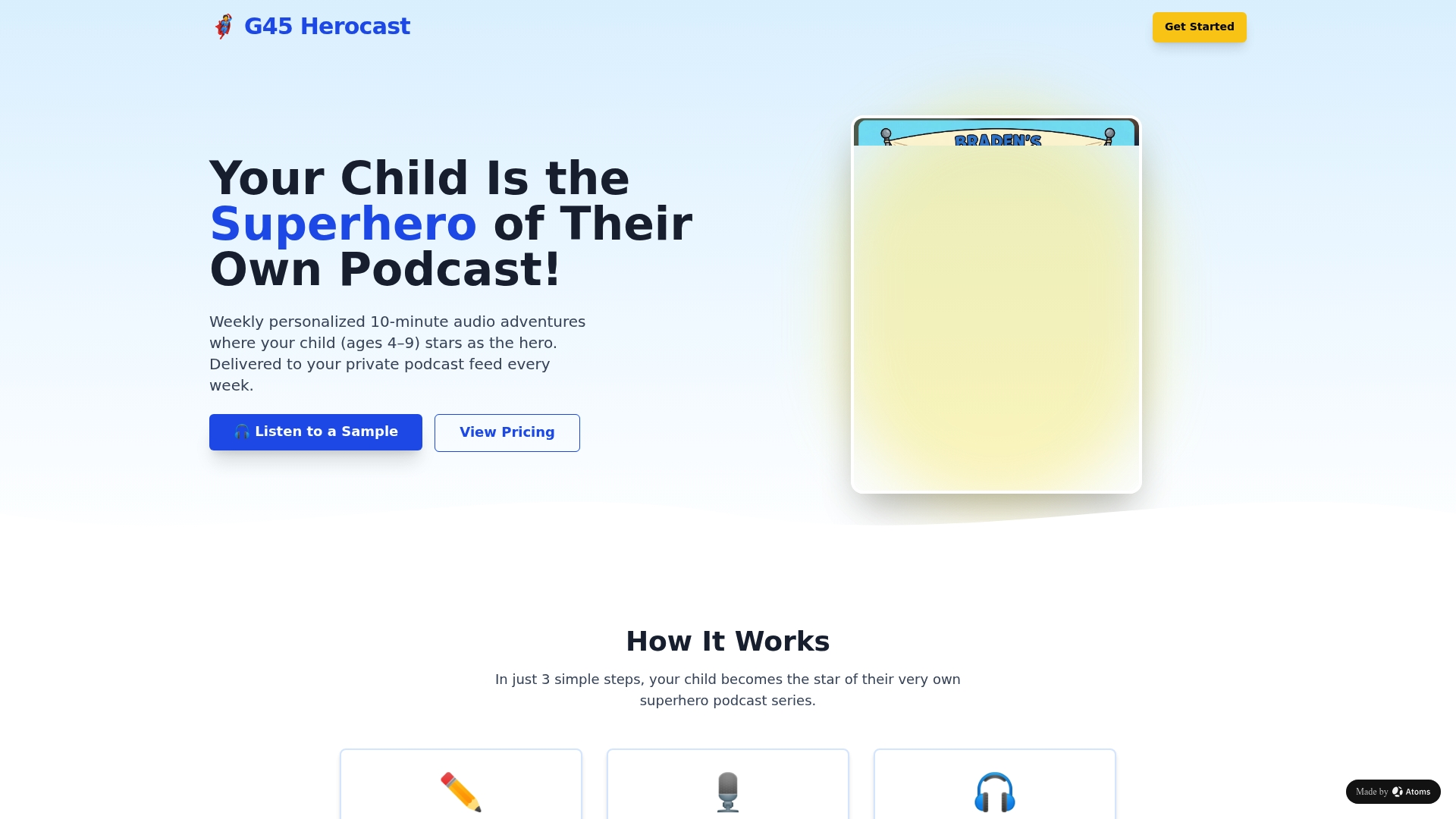
G45-hero-cast creates weekly personalized superhero podcast episodes for children ages 4–9, with each story built around your child's name, interests, and age. Episodes arrive every Sunday to a private podcast feed at the email you provide. No new app. No screen required. Monthly and annual subscriptions are available, along with gift plans and sibling options so every child in the family gets their own adventure.
The production is research-informed, privacy-conscious, and built for joint listening. You can explore sample episodes and subscription options at Superhero Sounds and hear the format before you decide. For grandparents looking for a gift that keeps arriving, the gift subscription plan is the cleanest option on the page.
Sources
- “A Beautiful Interaction”: How Children’s Podcasts Support Joint Media Engagement – Joan Ganz Cooney Center
- Want to spur your child’s intellectual development? Use audiobooks instead of videos - The Conversation
- Listen and learn: How audiobooks can support literacy development - Reading Partners
- Engagement of networks related to attention, executive function, and sensory processing during parental vs experimenter story-listening: an fMRI study | Pediatric Research
- Incidental vocabulary acquisition from listening to stories: a comparison between read-aloud and free storytelling approaches. Educational Psychology.