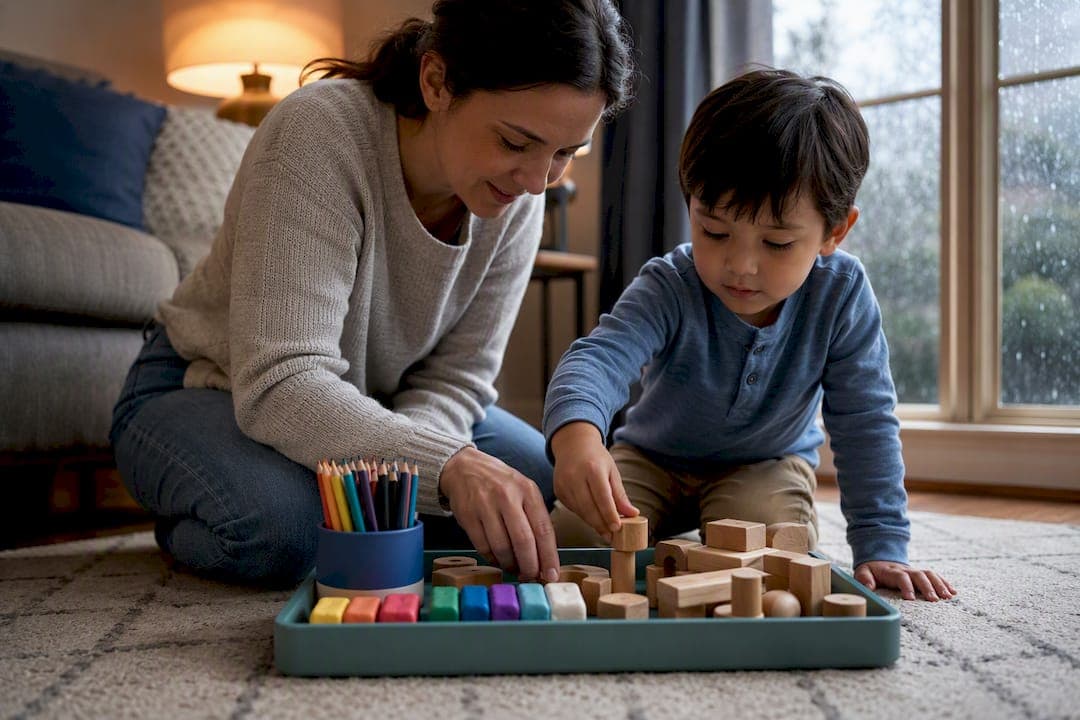
When rain traps the kids inside, mix one 7 to 10 minute movement burst, one hands-on project, and one independent bin activity. That combination covers the three things kids need on a screen-free rainy day: burned-off energy, focused creation, and solo play that doesn't require you. Skip the improvising. Build a blanket fort, run a scavenger hunt, or squeeze in a quick movement break, and pick one before the whining starts.
TL;DR:
- Most indoor activities should match the child's energy level and attention span, with toddlers needing short, low-mess options and elementary kids capable of longer, focused projects.
- Having a prepared activity bin with essentials like craft supplies, scavenger clues, or sensory items prevents time-consuming improvisation and encourages independence.
- Short movement bursts of 7 to 10 minutes, such as balloon volleyball or animal walks, effectively burn off accumulated energy and improve mood during rainy days.
- Creative projects that result in something tangible, like watercolor art or a cardboard fort, keep kids engaged longer and can be repurposed for ongoing play or gifts.
- Incorporating simple, quick-to-setup activities like scavenger hunts, sensory bins, or building challenges ensures kids stay occupied for 45 minutes or more without relying on screens.
Table of Contents
- The Screen-Free Rainy Day Shortlist: 8 Activities You Can Start in Five Minutes
- Matching Screen-Free Activities to Age and Energy Level
- Building a Rainy Day Toolkit You Actually Reach For
- Quick Movement Breaks That Burn Off Rainy Day Energy
- Creative Projects and Crafts That Keep Kids Busy Longer
- Sensory Bins and Simple Science Experiments for Rainy Days
- How to Run an Indoor Scavenger Hunt That Actually Works
- Low-Prep Ideas for Toddlers on a Screen-Free Day
- Cleanup and Safety Reminders for Rainy Day Play
- Why a Little Planning Beats a Lot of Screen Time
- A Screen-Free Option for the Quiet Parts of the Day
- Sources
- FAQ
The Screen-Free Rainy Day Shortlist: 8 Activities You Can Start in Five Minutes
You don't need a plan to fill an entire afternoon. You need one activity that starts fast and buys you twenty minutes of peace while you figure out the rest of the day. These eight are the ones that consistently work across ages, because they need almost nothing beyond what's already in your living room.
- Blanket fort plus reading or a puppet show. Drape a sheet over two chairs, toss in flashlights and a stack of books, and the fort does the entertaining for you.
- Indoor scavenger hunt with printable clues. A themed hunt with simple rhyming clues can hold attention for a long stretch, which the next section breaks down step by step in this Christmas in NYC with Kids: The Ultimate Family Guide.
- Tape-town floor roads. Painter's tape on the floor turns a hallway into a road system for cars, action figures, or a walking obstacle course.
- A 7 to 10 minute movement burst. Balloon volleyball, animal walks, or hallway sock-skating burn off the wiggles fast.
- Sensory bin or water play in a plastic tub. Rice, dry beans, or a shallow tub of water with cups and funnels buys real independent time.
- Card game, board game, or puzzle rotation. Keep three age-appropriate options on hand so nobody argues about what to play.
- Cardboard box building. One large box becomes a car, a rocket, or a puppet stage with a marker and some imagination.
- "Invitation to play" from a prepped bin. Set out three or four items with no instructions. Kids will build the game themselves.
Rotate through these based on mood. A high-energy morning calls for the movement burst first. A sluggish, gray afternoon might start with the fort and a book.
Matching Screen-Free Activities to Age and Energy Level
The right rainy day activity depends less on what's fun and more on what a specific child can actually sustain. A three-year-old and an eight-year-old need different structures, and a wired kid needs something different from a tired one.
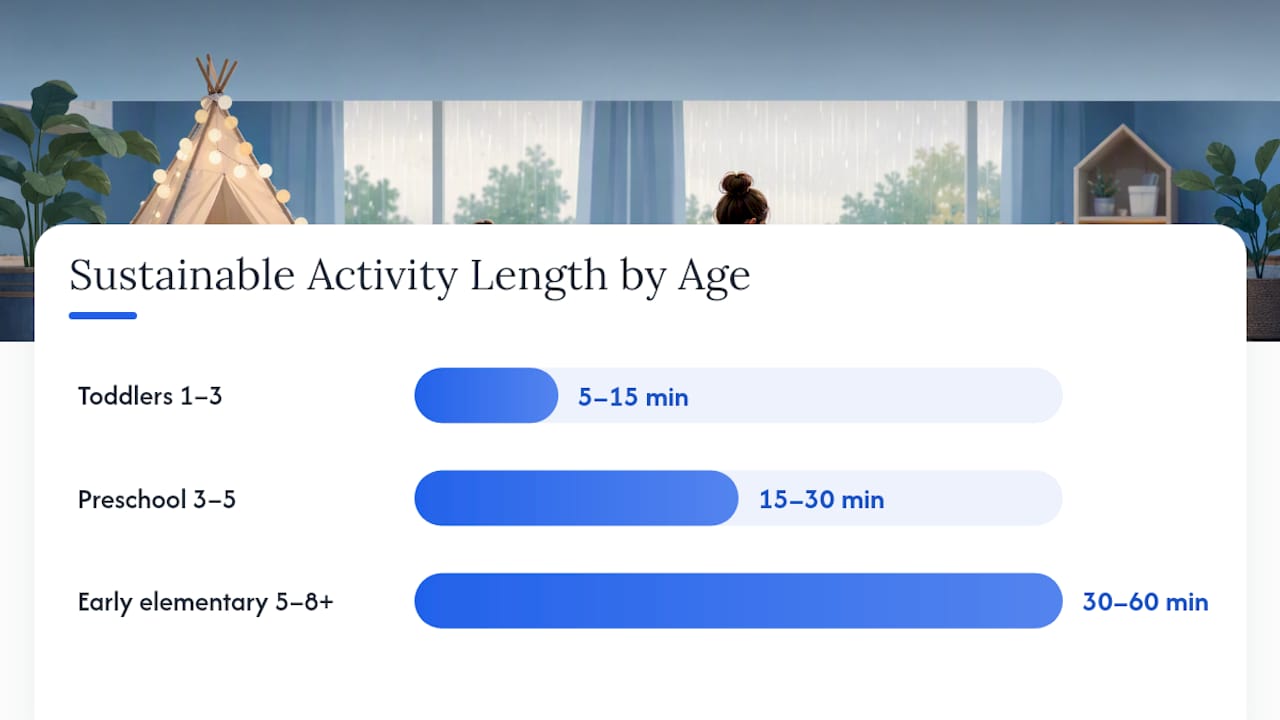
Toddlers (ages 1 to 3): Keep these low-mess and short, since attention spans run five to fifteen minutes.
- Stacking soft blocks and knocking them down (low energy, 5 to 10 minutes)
- Water-in-a-bowl pouring with plastic cups (low energy, 10 minutes)
- Painter's-tape paths to walk or crawl along (high energy, 10 minutes)
- Board books read aloud with sound effects (low energy, 10 to 15 minutes)
- Sock-sliding across a hard floor (high energy, 5 to 10 minutes)
- Nesting cups and containers (low energy, 10 minutes)
Preschoolers (ages 3 to 5): Add simple rules and open-ended extensions, since attention holds 15 to 30 minutes now.
- Puppet shows from paper bags (low energy, extends with a "sequel" show)
- Obstacle course through the living room (high energy, add a timer for round two)
- Watercolor painting at the kitchen table (low energy, extends into greeting cards)
- Freeze dance with music breaks (high energy, scale by adding animal moves)
- Simple scavenger hunts with picture clues (mixed energy, extends with a second round)
- Playdough with cookie cutters (low energy, extends with a "shop" pretend game)
Early elementary (ages 5 to 8+): These can run 30 to 60 minutes with a real challenge attached.
- Marble run building from cardboard tubes (low energy, high focus)
- Themed scavenger hunts with written clues (mixed energy, extends into a story)
- LEGO or block building challenges with a time limit (low energy)
- Balloon volleyball tournaments with sibling teams (high energy)
- Cardboard fort or store construction (low energy, extends over two days)
- Science experiments like oobleck or sink-or-float testing (low energy, high curiosity)
Building a Rainy Day Toolkit You Actually Reach For
A dedicated bin or shelf of pre-set activities cuts out the moment where you're standing in the kitchen improvising while two kids argue. Prepared systems like this reduce the need for parents to invent something on the spot, according to the Children & Nature Network. Kids also learn faster than you'd expect that "go pick something from the bin" means the boredom complaints stop.
- Stock the essentials. Playdough, painter's tape, printable scavenger hunt clue cards, washable markers, a handful of small prizes, and a shallow tray for water or sensory play.
- Pack by age, not by whim. A toddler bin looks different from an early elementary bin. Keep separate containers if you have kids spanning several years.
- Rotate every few weeks. Swap in new clue cards or craft supplies so the bin doesn't go stale. Durable, tool-free supplies hold up best to this kind of rotation, according to Community Playthings.
- Train the routine. Choose one activity, set a timer, finish it, reset the space. Repetition is what makes this work on the fifth rainy day of the month, not just the first.
Pro Tip: Keep the bin somewhere your child can reach without asking. Independence is the whole point.
Quick Movement Breaks That Burn Off Rainy Day Energy
Physical activity guidelines from the CDC point to short bursts of movement as a real way to supplement a child's daily activity, not just a way to kill time. A 7 to 10 minute burst several times a day adds up fast, and it's often the missing piece when a rainy day starts falling apart by 2 p.m.
- Hallway sock-skating (clear the path first)
- Balloon volleyball over a string or couch back
- Animal walks: bear crawl, crab walk, frog jump relay
- Tape-line balance beam walking
- Freeze dance with sudden stops
- Indoor bowling with water bottles and a soft ball
- Simon Says with big physical moves
- Pillow obstacle course crawl-through
Set a timer for 7 to 10 minutes so the burst stays a burst. Clear breakable items and check the floor for socks or rugs that could cause a slip before anyone starts sliding around.
Creative Projects and Crafts That Keep Kids Busy Longer
The projects that hold attention longest are usually the ones that end with something a kid gets to keep, wear, or play with afterward. That's the difference between a craft that gets ten minutes and one that gets an hour.
- Watercolor pages. Set out paper, a cup of water, and a basic paint set; almost no prep, almost no cleanup.
- Collage stations. Old magazines, scissors, and glue sticks turn into art in minutes.
- Stamp painting. Cut potatoes or sponges into shapes for a mess-contained printing activity.
- Cardboard forts. A few boxes and packing tape become a structure that survives for days.
- LEGO building challenges. Give a theme ("build something that floats") instead of open-ended free play for longer focus.
- Marble runs. Paper towel tubes taped to a wall or door create a genuinely engineering-minded challenge.
Turn finished crafts into something with a second life. A collage becomes a birthday card. A cardboard fort becomes the stage for the puppet show from earlier in the day.
Pro Tip: Keep a "finished projects" shelf so kids see their work pile up over the season instead of getting tossed the same day.
Sensory Bins and Simple Science Experiments for Rainy Days
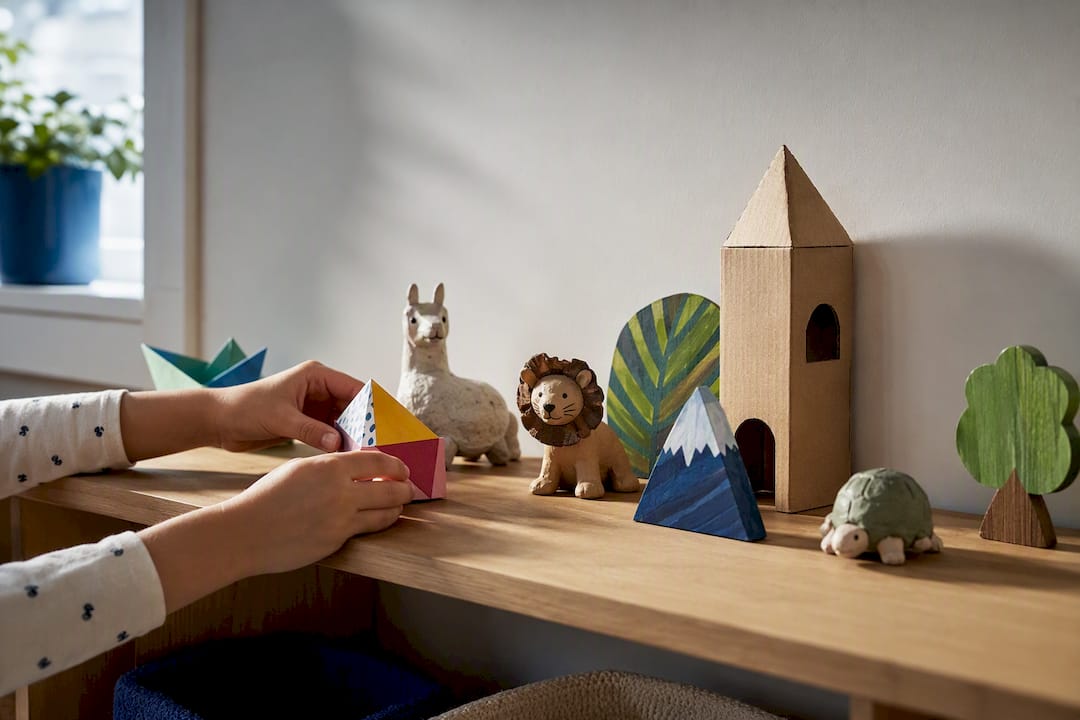
Sensory play and basic experiments teach real scientific thinking, and they're some of the messiest but most memorable rainy day activities on this list. Keep a towel nearby and swap edible ingredients in for younger kids who still put things in their mouths.
- Playdough. Flour, salt, water, oil, and food coloring, mixed and kneaded for a few minutes.
- Oobleck. Cornstarch and water in roughly a two-to-one ratio makes a substance that acts solid and liquid at once.
- Sink or float. Fill a tub with water and test household objects, having your child guess before each drop.
- Tray volcano. Baking soda and vinegar in a small cup, set inside a tray to contain the fizzing overflow.
Turn each one into a mini report: predict what will happen, run the test, then draw the result. National Park Service resources like the Junior Ranger program offer printable formats you can borrow for this same predict-test-draw structure. Supervise closely with anything involving small pieces or liquids near younger kids.
How to Run an Indoor Scavenger Hunt That Actually Works
Scavenger hunts hold attention because they stack three things kids naturally want: movement, a puzzle to solve, and control over how they solve it. Themed printable kits can realistically keep kids engaged for 45 to 90 minutes, and setup only takes 10 to 20 minutes.
- Pick a theme (superheroes, animals, colors, a favorite book).
- Write or print 8 to 10 clues that scale to your child's reading level.
- Hide items or clue cards around one or two rooms, not the whole house.
- Set clear boundaries: which rooms are in play, which are off limits.
- Explain the rules once, then start a timer.
- Let kids search independently before offering hints.
- End with a small prize: a sticker, a snack, or first pick of the next activity.
Example clues by age: toddlers get picture clues taped to the target object; preschoolers get one-line rhymes ("I'm soft and you sleep with me at night"); early elementary gets riddles that require reading two or three sentences. Keep valuables and breakables out of hunt zones, and always know exactly where each hidden item is before you start.
Low-Prep Ideas for Toddlers on a Screen-Free Day
Toddlers don't need elaborate setups. They need short, safe, repeatable rounds that don't demand much from you between them.
- Water-in-a-bowl pouring with plastic cups and a towel underneath
- Stacking soft blocks, then knocking them down (they'll ask for this on repeat)
- Painter's-tape paths across the floor to walk, crawl, or drive a toy along
Chain three or four of these into 10 to 15 minute rounds with a short reset in between. A simple rhythm of one activity, a timer, then a reset helps younger kids finish tasks and cooperate instead of melting down when it's time to switch. Watch closely for small parts, especially with anything under three years old, and never leave a toddler alone near a water bowl.
Cleanup and Safety Reminders for Rainy Day Play
Cleanup dread is what makes parents dread rainy days in the first place, so keep the script simple and consistent.
- Set a timer and announce it: "Five minutes, then cleanup starts."
- Assign one small job per kid: "You get the blocks, you get the crayons."
- Do a final sweep together for stray pieces on the floor.
Pro Tip: Use a tray under sensory bins and washable markers over permanent ones; both cut your actual cleanup time in half.
Watch for a few real red flags: small parts within reach of toddlers, wet floors near tubs or water play, and choking hazards like beads or small craft pieces left within a toddler's grasp. Stop any activity immediately if you spot one of these, no matter how good the play is going.
Why a Little Planning Beats a Lot of Screen Time
Planning ahead isn't about controlling every minute of a rainy day. It's about removing the moment where boredom turns into conflict because nobody had a next step ready. The families who handle these days best aren't the ones with the most toys. They're the ones with a system, even a rough one, that a tired kid can use without asking for help.
That's the same instinct behind what G45-hero-cast builds every week: a screen-free option that requires zero setup and still feels like something made just for that child. Try one idea from this list on your next rainy day, and notice which part of the formula, the movement, the project, or the independent bin, actually holds.
— JG
A Screen-Free Option for the Quiet Parts of the Day
Not every rainy day minute needs building or running around. Fort time, wind-down time, and the last hour before dinner call for something calmer, and that's exactly where G45-hero-cast fits without pulling anyone toward a screen.
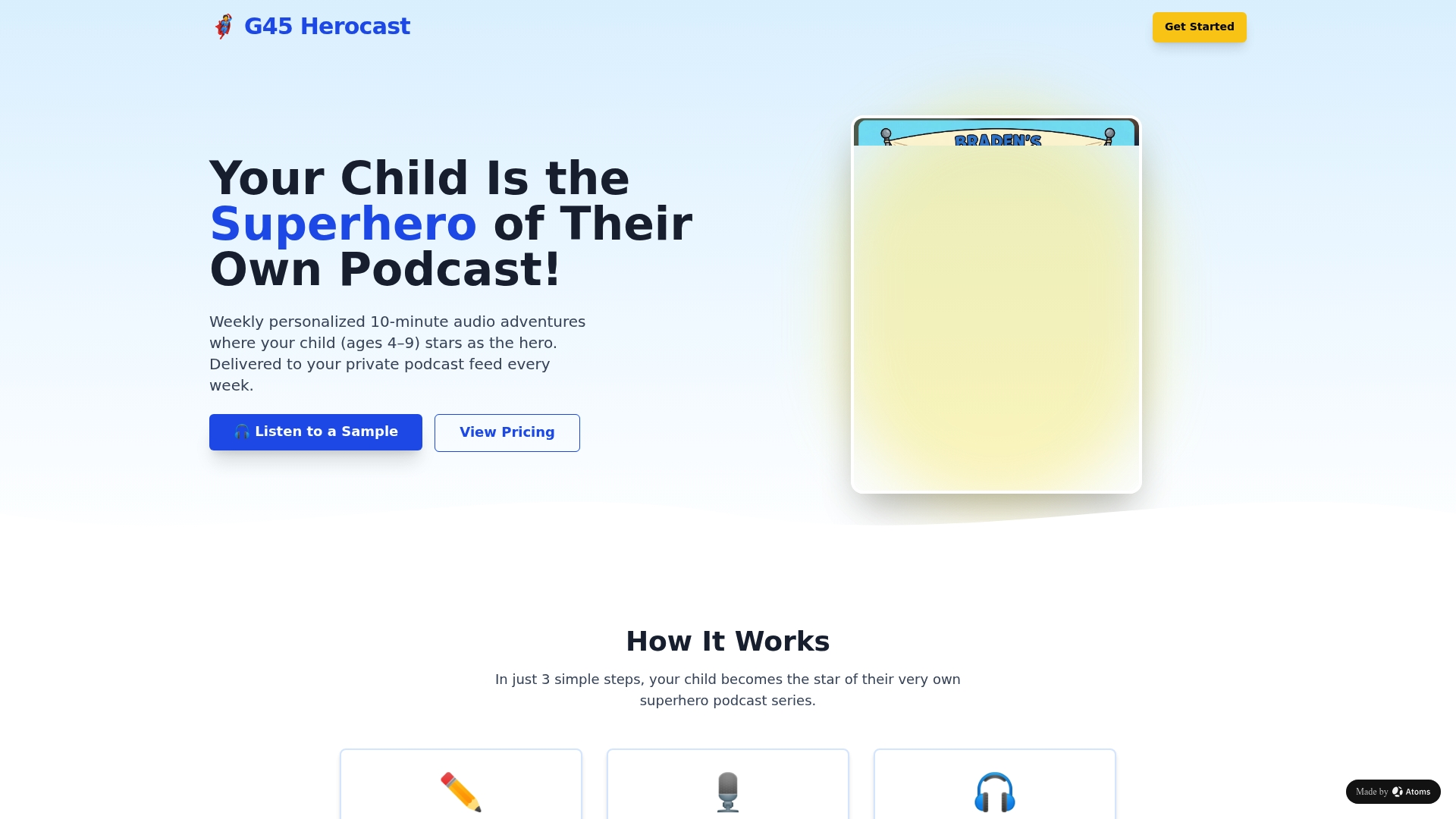
G45-hero-cast delivers a weekly customized superhero podcast, personalized to a child's name, interests, and age, straight to a private podcast feed every Sunday. Each episode casts your child ages 4 to 9 as the hero of their own audio adventure, which makes it a natural fit for quiet fort reading time, a calm-down window after a wild movement burst, or the last stretch before bedtime when everyone's done with crafts but not ready for the day to end. It pairs well with the hands-on ideas above rather than replacing them; use the bin and scavenger hunt for the active hours, and let the personalized episode carry the quiet ones. The Bedtime Standard plan runs $99 per month, and the Grandparent Gift plan runs $999 per year for family members who want to send something a kid will actually look forward to every week. Check current availability and start your child's own superhero story at G45-hero-cast.
Sources
Physical activity guidance came from the CDC. Scavenger hunt timing and setup came from Riddlelicious. Boredom-buster and toolkit research came from the Children & Nature Network, and cleanup routine guidance came from The Slow Childhood.
- Physical activity guidelines for children — CDC
- Rainy Day Scavenger Hunt: 50 Indoor Ideas — Riddlelicious
- In Defense of Boredom — Children & Nature Network
- 25 Screen-Free Activities for Rainy Days — The Slow Childhood
FAQ
What can kids do for fun without screens?
The most reliable options mix movement, hands-on projects, and independent play: a blanket fort, an indoor scavenger hunt, a sensory bin, or a quick craft. Keeping a stocked rainy-day toolkit on hand makes it easy to pick something in seconds instead of starting from scratch.
What can you do on a rainy day for free?
Blanket forts, tape-town roads, scavenger hunts with homemade clues, and sensory bins using rice or water all cost close to nothing. Most of the supplies, tape, paper, old boxes, are already sitting in a junk drawer or recycling bin.
What are some screen-free things to try on a no-screen day?
Rotate through a movement burst, a creative project like watercolor painting or a marble run, and an independent activity like a sensory bin or puzzle. A starter plan that assigns one activity per energy level makes a full no-screen day much easier to sustain.
How long will an indoor scavenger hunt actually hold my kid's attention?
Themed hunts with printable clue kits can run 45 to 90 minutes, especially when clues are scaled to reading level. Setup only takes about 10 to 20 minutes, which makes it one of the best time investments on a rainy afternoon.
What is a good screen-free option for quiet time on a rainy day?
Reading aloud, puzzles, and storytelling all work well for winding down. A personalized audio episode from G45-hero-cast is another option built specifically for calm, screen-free listening during fort time or before bed.