
Protect the first 15 to 30 minutes after wake-up as a screen-free window, and you cut the single biggest source of morning meltdowns before they start. That short window gives kids' nervous systems a chance to wake up gradually instead of getting hit with fast-cutting videos before their eyes have adjusted to daylight. A 15-minute no-phone rule paired with water and natural light improves alertness and breaks the reflex to check a phone the second eyes open.
Three swaps make this stick starting tonight:
- Charge the phone outside the bedroom and swap in a $10 analog alarm clock.
- Set a glass of water on the nightstand and open the blinds the moment feet hit the floor.
- Have a morning bin or a short audio story ready to play the instant kids arrive in the kitchen.
Sesame Workshop's guidance on transition moments points to short, repeated audio cues as one of the most reliable ways to ease kids into a new part of the day. A weekly personalized episode from something like G45-hero-cast can fill that exact slot: press play, and the story becomes the ritual instead of the tablet.
Key Takeaways
A screen-free morning routine works when a short protected window, a repeatable low-prep activity, and a night-before setup replace the automatic reach for a phone or tablet.
| Point | Details |
|---|---|
| Pick a realistic window | Start with 15 minutes, grow to 30, and treat 60 as an aspirational weekend stretch goal. |
| Remove the trigger, not just willpower | Charge phones outside the bedroom and use an analog alarm to make the screen-free choice the default. |
| Rotate low-prep replacements | Morning bins, audio stories, and quiet sensory play fill the gap without adding prep time. |
| Anchor audio to one transition | Tie a story to a specific moment, like "after teeth," rather than scattering rituals across the morning. |
| Run a two-week test | Track how mornings feel over 14 days, and restart after a slip instead of abandoning the routine. |
Table of Contents
- Picking a screen-free morning routine window that actually fits your family
- Replacement activities that keep mornings calm without a screen
- Age-specific morning routine templates you can copy tonight
- Setting up the night before so mornings run themselves
- What to do when the screen-free morning falls apart
- Why audio anchors and repeated rituals work so well
- Handling the social pressure around a screen-free morning
- The calm a screen-free morning actually creates
- Weaning off screens gradually if mornings currently start with a tablet
- Bring the ritual home with G45-hero-cast
- Resources for building a screen-free morning routine
- What actually matters in a screen-free morning routine
- Frequently asked questions about screen-free morning routines
- Sources
Picking a screen-free morning routine window that actually fits your family
Not every family needs an hour of quiet analog time to start the day right. The window matters more than its length, and picking the wrong one for your household is the quickest way to abandon the whole idea by day three.
Fifteen minutes works as a starter window for families deep in a screen habit. It is short enough that nobody feels deprived, and it is exactly the length backed by the no-phone-for-15-minutes research, which pairs that short window with water and light exposure.
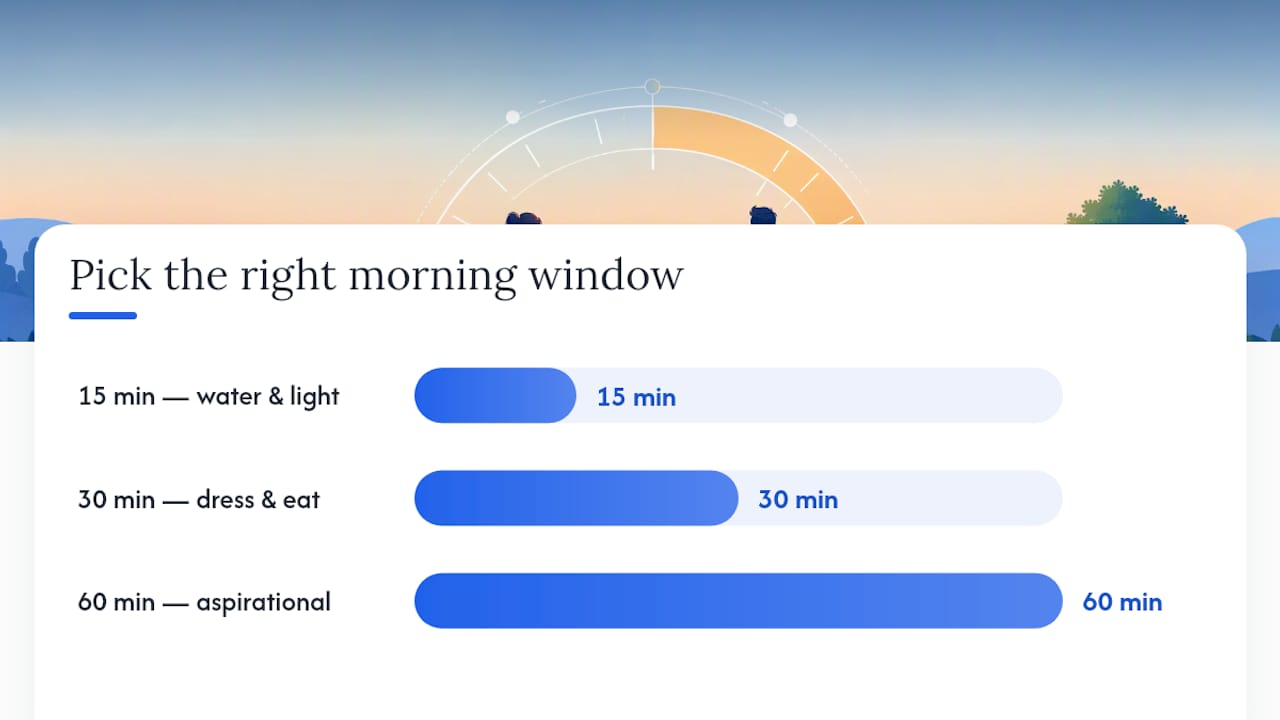
Thirty minutes is the practical goal for most households once 15 becomes routine. It's long enough to cover getting dressed, eating breakfast, and one calm activity without feeling like a marathon.
Sixty minutes is aspirational, useful mainly for weekends or for parents who work from home and control the morning schedule more tightly.
The mechanics behind why this works come down to friction and defaults. A phone on the nightstand is a zero-friction default; a phone charging in the kitchen is not. Set these rules before bed:
- Phone charges in the kitchen, not the bedroom.
- Do Not Disturb runs from bedtime until your target wake-plus-window time.
- The first screen anyone touches is not a phone or tablet.
Pro Tip: Pick your window based on your worst morning, not your best one. If Tuesdays are always chaos, build the routine to survive Tuesday, and the calm days take care of themselves.
Replacement activities that keep mornings calm without a screen
A screen-free morning falls apart without something else to fill the vacuum. Kids don't do well with unstructured "just wait" time, so the goal is a rotating menu of low-prep activities that feel novel enough to hold attention for 15 to 30 minutes.
- Morning bins. Fill a shoebox or drawer with two to three open-ended items, rotated weekly. Morning bin routines work because novelty, not complexity, drives engagement. Think magnet tiles, a puzzle, playdough, or a sticker sheet.
- Audio stories. A short story playing during breakfast or while getting dressed anchors attention without a screen. Personalized audio, like a weekly episode from G45-hero-cast, adds a layer of excitement that a generic podcast can't match since the child hears their own name in the adventure. Our guide to personalized audio stories covers how to weave this into a routine that repeats daily.
- Books and quiet play. Board books for toddlers, chapter-book chunks for early readers, or a five-minute sensory bin (dry rice, water beads, shaving cream on a tray).
Low-prep breakfast and quiet-play ideas that keep the calm going:
- Pre-portioned cereal or waffle stations kids can serve themselves.
- A "listening breakfast" where an audio story plays through the meal.
- A stretch or dance break between getting dressed and eating.
- Screen-free sensory toys from a rotating bin, which a partner roundup of screen-free toy ideas breaks down well.
Rotate items every one to two weeks. The bin loses its magic fast if the same puzzle sits there for a month.
Age-specific morning routine templates you can copy tonight
Different ages need different pacing. A toddler and a second-grader do not respond to the same script, and forcing one template on both ages is where most screen-free attempts fall apart.
Ages 2 to 4 (10 to 15 minutes): One audio cue plus one bin item plus a short parent script. Say, "After we get dressed, we'll listen to your story while we eat." Play a two- to five-minute story. Set out one bin item, nothing more; toddlers get overwhelmed by choice.
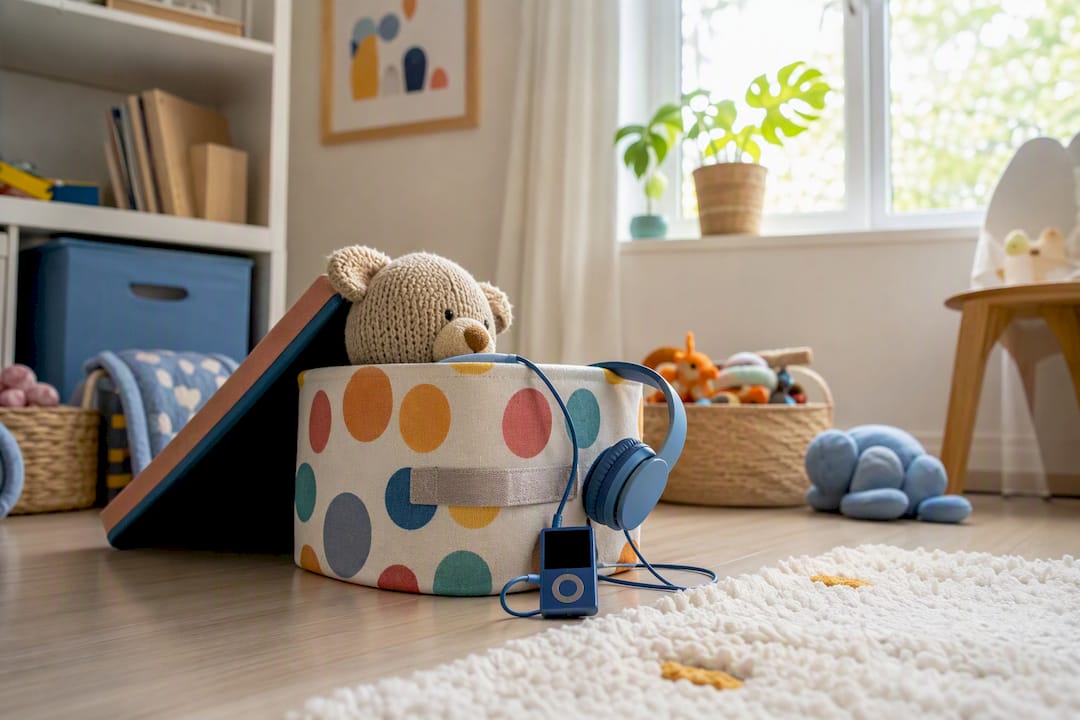
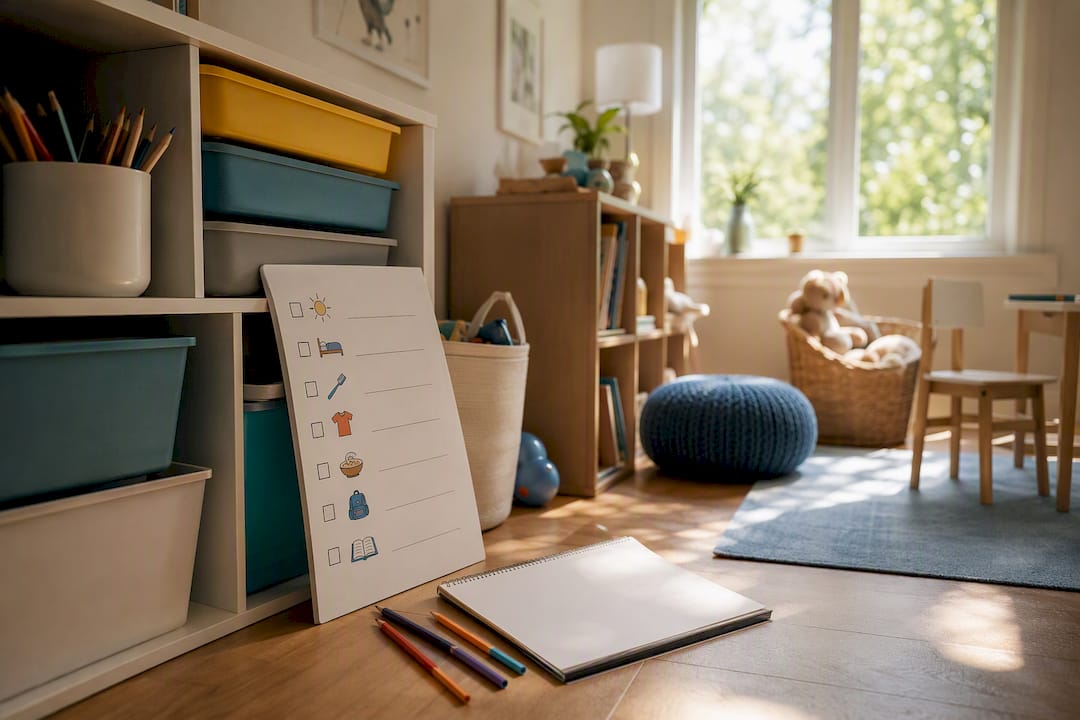
Ages 4 to 5 (15 to 30 minutes): A simple picture checklist (get dressed, brush teeth, eat, shoes) paired with a rotated bin and one small responsibility, like setting their own napkin at breakfast. This is the sweet spot for a personalized audio episode tied to the "after teeth" transition, echoing the Sesame Workshop advice on anchoring audio to a specific moment.
Ages 6 to 8 (20 to 30 minutes): More independence: a written checklist, a five-minute reading chunk, or a creative prompt (draw a superhero costume, write one sentence in a journal). Kids this age can start and finish tasks without a parent standing over them, which frees up the adult morning too.
Setting up the night before so mornings run themselves
The best screen-free morning routine gets built the night before, not at 6:45 AM when everyone is rushed and cranky.
- Build a landing pad. Set a glass of water, a journal, and the analog alarm on the nightstand so the first thing in reach isn't a phone.
- Stage everything visual. Lay out clothes, breakfast dishes, and tomorrow's morning-bin item before bed.
- Set tech defaults as a backup. Schedule Bedtime Focus mode or grayscale display on your own phone as friction insurance, in case willpower fails at 6 AM.
Pro Tip: Put the bin item where the child will trip over it, literally. A puzzle on the kitchen table beats one hidden in a closet every time.
Removing the phone from the bedroom entirely is still the single highest-leverage change most families can make. It swaps willpower for a physical barrier, which is a much more reliable strategy at 6 AM.
What to do when the screen-free morning falls apart
Run this as a 14-day experiment rather than a permanent overhaul. Two weeks is long enough to notice whether mornings feel calmer, which matters more than tracking exact minutes screen-free.
- If you slip and someone grabs a tablet, restart the sequence the next morning instead of scrapping the whole plan.
- Keep a five-minute micro-routine ready for genuinely rushed mornings: water, shoes, out the door, audio story in the car instead of at home.
- Align with a co-parent or caregiver on the same three rules (phone location, wake window, go-to bin item) so the routine doesn't reset every time a schedule changes.
One slip is a data point, not a failure. The families who stick with this treat a bad Tuesday as information about what needs adjusting, not proof the whole idea doesn't work.
Why audio anchors and repeated rituals work so well
Short, repeated audio moments tied to a specific transition point help children feel safe and ease anxiety around change. The mechanism is not novelty. It's predictability.
That's the core insight behind Sesame Workshop's guidance on transition audio: kids don't need a new story every day so much as a reliable cue that tells their brain what happens next.
Anchoring works best tied to one clear moment rather than scattered through the morning:
- "After teeth, we press play" beats "sometime during breakfast, maybe."
- One ritual per transition, not three competing options.
- Repetition across weeks builds the sense of security that a single great morning never will.
A weekly personalized episode, like the one G45-hero-cast delivers every Sunday to a private podcast feed, works within this exact structure: same time, same format, new adventure, so the ritual stays fresh without losing its predictability.
Handling the social pressure around a screen-free morning
Other parents, grandparents, and even your own group chat will have opinions about a screen-free morning routine, especially if a phone or tablet has been the easy babysitter for years. The pushback tends to come from two directions: people who think it's unnecessary, and people who worry it will make mornings harder for everyone involved.
Set expectations with caregivers explicitly rather than assuming they'll follow your lead. If a grandparent handles drop-off two mornings a week, hand them the same three rules: phone stays out of the bedroom, water and light first, bin or audio story second. Written down on a sticky note on the fridge works better than a verbal explanation that gets forgotten by 7 AM.
Work calls and early emails are the trickiest pressure point for parents themselves. If your job expects you reachable at 6:30 AM, that's a real constraint, not a failure of willpower. The fix isn't eliminating your own screen time entirely; it's keeping your phone out of your child's sightline during the window that matters for them. Answer the email in another room. Kids notice a parent's face lit up by a screen far more than they notice the parent being briefly unavailable.
Expect some friction the first week from anyone used to screens filling morning gaps. That friction fades faster than most parents expect once the bin and audio routine become familiar enough to run without oversight.
The calm a screen-free morning actually creates
A screen-free morning changes the emotional tone of the whole day, not just the first half hour. Kids who go from sleep straight into a video tend to have a harder time transitioning to anything that requires patience afterward, whether that's getting dressed or sitting still at breakfast. Removing that jump smooths out everything downstream.

Protecting the first 20 to 30 minutes as an analog window gives kids time to wake up at their own pace rather than getting an artificial jolt of stimulation before their nervous systems have settled. Parents report fewer power struggles over getting dressed and less resistance at the breakfast table once a predictable, screen-free sequence replaces the scramble for the remote or tablet.
For parents, the benefit runs both directions. Mornings without a screen-battle mean less yelling, less negotiating, and more of the small connective moments, like a shared joke over cereal, that don't happen when everyone's staring at separate screens. That's worth more to the overall mood of a household than any single productivity gain.
The predictability itself does real emotional work. A child who knows exactly what happens after teeth-brushing (the story plays, then breakfast) doesn't need to negotiate or test boundaries the way they might with an open-ended "what do you want to do" morning. Structure, even loose structure, reduces the anxiety of uncertainty for a four-year-old just as much as it does for an adult facing a chaotic to-do list.
Weaning off screens gradually if mornings currently start with a tablet
Going cold turkey on a well-established screen habit rarely works, and it tends to produce the exact meltdown you're trying to avoid. A gradual approach holds up better over two to three weeks.
Start by simply delaying screen access by 15 minutes rather than removing it outright. Water, light, and one bin item come first; the tablet or TV comes after, if a child still wants it. This week is about proving the first 15 minutes can happen without a fight, not eliminating screens entirely.
In week two, extend the delay to 30 minutes and add the audio story or a second bin rotation to fill the gap more fully. Most families find that by the time 30 minutes passes, the original pull toward the screen has faded because something else has already captured attention.
By week three, some families phase out the morning screen altogether; others keep a short, later screen slot as a deliberate choice rather than a default. Either outcome is fine. The goal was never a screen ban. It was breaking the automatic, first-thing-in-the-morning reach for a device, and a gradual delay accomplishes that without the standoff a hard cutoff usually creates.
Track how mornings feel during this transition rather than counting screen-free days on a calendar. If day 12 feels calmer than day one, the approach is working, even if a screen still shows up occasionally on a rough morning.
Bring the ritual home with G45-hero-cast
Once the bin is stocked and the alarm clock is on the nightstand, the piece parents ask about most is what to actually play during that quiet stretch. G45-hero-cast builds a weekly personalized superhero podcast for kids ages 4 to 9, with each episode starring the child by name, built around their interests and quirks, and delivered every Sunday to a private podcast feed the family can access from any device.
That weekly delivery is what makes it useful as a morning anchor rather than a novelty. Kids know a new adventure is waiting, which gives "after teeth, press play" real staying power week over week instead of fading after the first few tries. Families managing siblings can add multiple kids to one subscription, and gift plans work well for grandparents who want to be part of the routine from a distance. Explore the personalized superhero podcast subscription to see how a single weekly episode can anchor mornings for the whole school year.
Resources for building a screen-free morning routine
- Sesame Workshop's transition and drop-off guidance for audio-based transition cues.
- Morning bin ideas from Oh Hey Let's Play for low-prep, age-appropriate activity rotation.
- The no-phone-for-15-minutes habit breakdown for the behavioral case behind the starter window.
- Related reading: best podcasts for preschoolers and podcasts vs. TV for kids.
What actually matters in a screen-free morning routine
Most advice on this topic focuses on willpower: try harder, resist the phone, be a more disciplined parent. That framing misses the point entirely. The families who succeed aren't more disciplined; they've just made the screen-free choice the easier one, by moving the phone out of reach and staging something more interesting than a lock screen.
The conventional advice also overindexes on the length of the window. Sixty minutes of analog calm sounds impressive on a parenting blog, but it's not what most weekday mornings can survive. Fifteen honest minutes, repeated daily, beats sixty aspirational minutes attempted twice a month and abandoned.
If you take one thing from this, prioritize the anchor over the activity. A single predictable audio cue tied to one moment in the routine, whether that's a personalized episode or a simple song, does more for a child's sense of security than any elaborate bin setup. Get that anchor right first. Everything else is decoration.
Frequently asked questions about screen-free morning routines
How long should a screen-free morning routine last? Fifteen minutes works as a starting point, and 30 minutes is a realistic goal for most families once the habit settles in. Longer stretches work well on weekends but rarely hold up on a rushed school-day schedule.
What can replace screen time in the morning for toddlers? A single open-ended toy from a rotated morning bin, paired with a short two- to five-minute audio story, covers most of the gap for toddlers ages 2 to 4 without overwhelming them with choices.
How do I stop my child from asking for a tablet first thing in the morning? Remove the tablet from the wake-up sequence entirely by staging a competing activity, like a bin item or audio story, before the child is even out of bed. A device that's never offered doesn't get requested nearly as often.
What if my family already relies on morning screen time? Transition gradually over two to three weeks by delaying screen access 15 minutes at a time rather than cutting it cold. Add a bin or audio ritual to each new delay so the gap doesn't feel empty.
Does a screen-free morning routine actually reduce stress? Parents and kids both report calmer mornings once a predictable, screen-free sequence replaces the scramble over a device, largely because the routine removes negotiation and gives the child's nervous system time to wake up gradually.
Sources
- Transition Time: Drop-off — Sesame Workshop
- No phone for 15 minutes: The morning habit that stuck — PADEZHNOV
- The First 30 Minutes: Building a Tech-Free Morning Ritual — URBAN NEST
- Screen-Free Morning Routine with Morning Bins — Oh Hey Let's Play