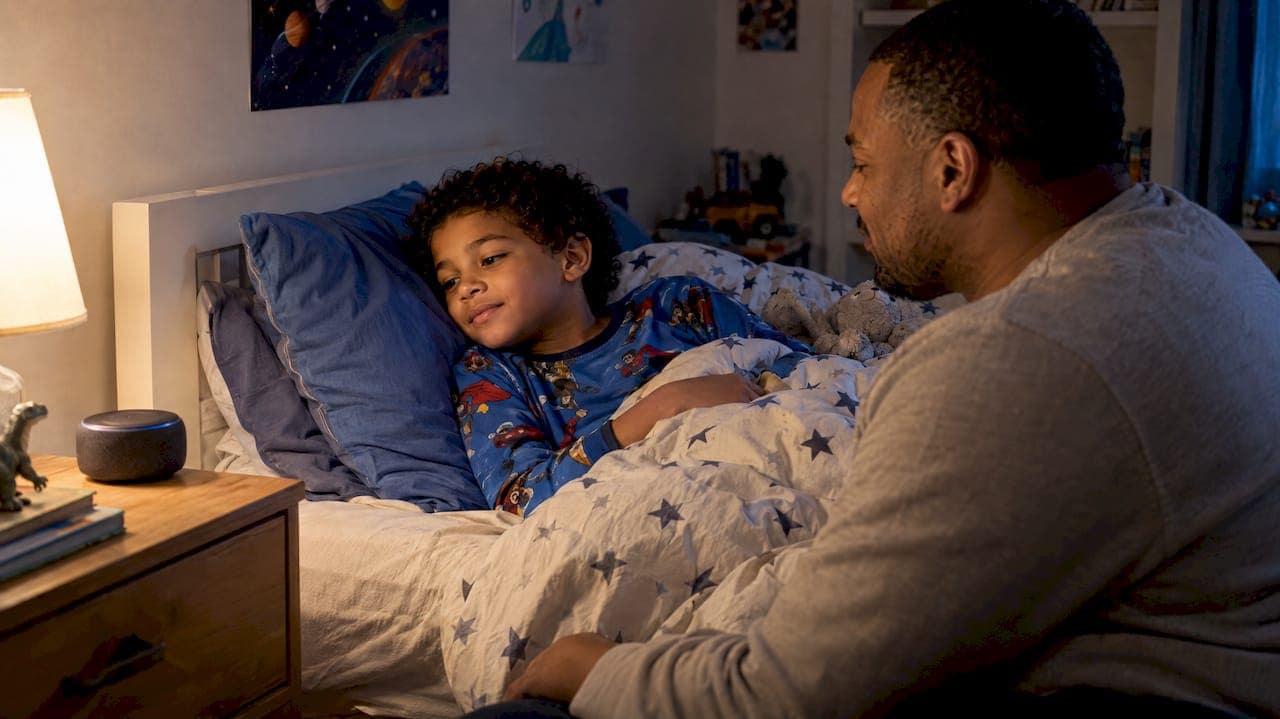
Weekly personalized superhero audio-story podcasts cast a child as the hero of their own adventure, delivered on a set schedule for kids ages 4 to 9. They boost listening engagement because the child hears their own name and details woven into the plot, and they give families a screen-free ritual that fits into bedtime, car rides, or quiet afternoons. We build exactly this kind of weekly episode.
TL;DR:
- A randomized study of 96 elementary school readers found that using a child’s name improved transfer of story learning, likely through stronger emotional connection.
- Children get more from personalized stories when parents listen alongside them, ask a question before playback, and discuss what the hero might have done.
- For siblings with different ages, choose separate episodes when pacing or vocabulary would not fit both; younger siblings may enjoy listening together.
- Before subscribing, check how deeply interests are woven into plots, episode length, privacy practices, sample availability, and whether sibling or gift options fit.
- The Bedtime Standard plan delivers one child’s episodes weekly, while the Grandparent Gift plan is an annual redeemable subscription, with new episodes arriving Sundays.
Table of Contents
- Benefits of personalized audio stories for kids ages 4 to 9
- Why personalization using a child's name and details matters
- How to use weekly superhero episodes to build listening skills
- What to expect from a weekly personalized-story subscription
- A personalized podcast is worth the routine, not just the novelty
- G45 Hero Cast: Bedtime Standard and Grandparent Gift plans
- FAQ
- Sources
Benefits of personalized audio stories for kids ages 4 to 9
Audio asks a child to build the picture in their own head instead of receiving one ready-made. That active visualization strengthens voluntary imagination and attention in ways passive video does not, according to The Conversation. Listening also exposes kids to richer vocabulary and sentence structure than they typically produce themselves, and it models fluent reading, a point Scholastic makes in its guidance for parents on literacy and audio.
One of the most effective levers for comprehension is listening together rather than alone. The American Academy of Pediatrics notes that audiobooks work best as a shared, intentional activity, with parents asking questions rather than treating listening as a solo screen replacement.
A few concrete benefits stack up when episodes are personalized and used regularly:
- Attention gets a workout. Building mental images from sound alone exercises focus more than watching a finished scene.
- Vocabulary grows passively. Stories introduce words and phrasing beyond a child's everyday speech.
- Evenings get calmer. Audio gives families a screen-free wind-down option that still feels exciting.
- Emotional stakes rise. Hearing their own name as the hero makes a child invest in what happens next.
Why personalization using a child's name and details matters
A 2025 study published in Springer tested elementary-age readers on personalized versus generic narratives. The randomized study, with 96 participants, found that personalizing text with the reader's own name significantly improved transfer performance, meaning kids applied what they learned from the story more successfully than those who read a generic version.
The researchers point to social agency as the mechanism: seeing yourself as a character in the narrative deepens emotional connection, and that connection is what carries the learning forward rather than the novelty of hearing your name alone.
Translated to audio, the same logic applies and arguably strengthens further, since voice and sound carry emotional weight that text cannot:
- Personalization beats novelty. The Springer study found it produced measurable gains in transfer, not just momentary delight.
- Details matter beyond the name. Working a child's favorite animal or hobby into the plot deepens identification further.
- Hearing it spoken adds weight. A narrator saying a child's name aloud lands differently than seeing it printed on a page.
How to use weekly superhero episodes to build listening skills
Treat the weekly episode as a routine anchor rather than a one-off treat. Routines are what make any new habit stick, and audio stories are no exception.
- Pick one or two fixed slots. Bedtime wind-down and car rides to school both work well because attention is already lower-stimulation and ears are free.
- Ask a question before pressing play. Try "What do you think our hero will face this week?" to prime attention from the first line.
- Pause once mid-episode. A simple "What just happened?" check keeps comprehension active instead of passive.
- Ask an open question afterward. "What would you have done if you were the hero?" extends the story into the child's own reasoning.
- Add a two-minute follow-up activity. Acting out the hero's big moment or drawing the villain turns listening into a small shared project.
For siblings, let each child have their own episode when ages differ enough that pacing or vocabulary would otherwise mismatch, and consider a shared listen for younger pairs who enjoy the same story together. Our alternatives to bedtime stories guide covers more ways to rotate formats across the week, and our boredom-busting audio scripts offer short follow-up activities if you want more than the act-out game above.
Pro Tip: Keep your follow-up question the same each week ("What would you have done?") so it becomes a predictable ritual the child looks forward to, not a quiz.

What to expect from a weekly personalized-story subscription
Most personalized audio subscriptions work the same basic way: you provide the child's name and a few details once, then new episodes land automatically on a private podcast feed every week without further input. That private feed, rather than a public podcast app listing, is what keeps episodes exclusive to your family.
Before subscribing, a few questions are worth asking any provider:
- How deep does personalization go? A name swap is different from weaving in a child's real interests, hobbies, or even a pet's name.
- How long are episodes? Ages 4 to 9 span a wide attention range, so length should flex with age.
- What's the privacy policy? Ask how a child's name and details are stored and whether they're ever shared.
- Can you hear a sample first? Audio quality and narration style vary widely between services.
- Are sibling or gift options available? Families with more than one child, or grandparents buying for a grandchild, need flexible plans.
A good fit for this age range combines real narrative depth with age-appropriate pacing, content that stays family-safe throughout, and a feel that the story was actually built around this child rather than lightly edited from a template.
A personalized podcast is worth the routine, not just the novelty
The appeal of a superhero story with your child's name in it wears off fast if that's the only trick. What keeps families coming back week after week is the routine itself: a predictable slot, a predictable question, a few minutes of shared attention that the rest of the day rarely allows.
The research backing personalization is still young, but the direction is consistent: personalization paired with parental engagement outperforms either one alone. Skipping the "what did you think?" question after an episode leaves most of the value on the table. The format only works as well as the five minutes a parent puts into it before and after.
— JG
G45 Hero Cast: Bedtime Standard and Grandparent Gift plans
We build a brand-new superhero episode for your child every week, written around their name, age, and the details you share with us, and we drop it into their private podcast feed every Sunday so the week always starts with something to look forward to.
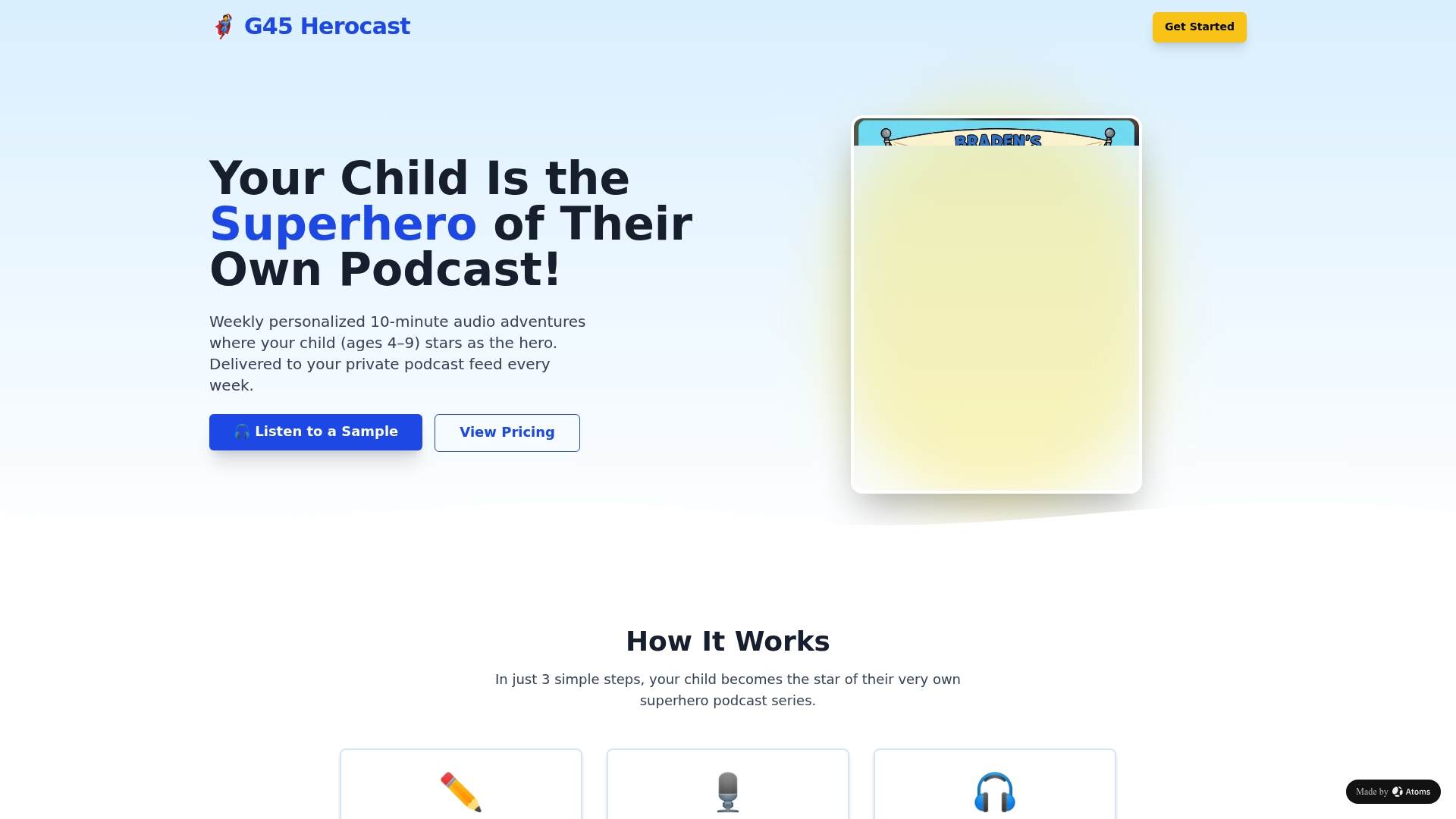
Our Bedtime Standard plan runs a premium monthly subscription and suits a family that wants one child's episodes delivered weekly without interruption. Our Grandparent Gift plan runs an annual subscription and works well for a grandparent who wants to give a grandchild a full year of stories at once, often as a standout holiday or birthday gift. Both plans deliver to a private feed format:
- Weekly delivery lands every Sunday, so families can build a consistent start-of-week ritual.
- Gift plans arrive as a redeemable subscription, letting a grandparent set up a full year in one purchase.
- Each episode is written around the individual child, not just their name but their interests and traits.
Ready to make your child the hero of their own week? Set up a plan at G45-hero-cast.
FAQ
What age range do personalized superhero podcasts suit best?
Most personalized audio-story subscriptions, including ours, target children roughly ages 4 to 9, since that range covers kids who can follow a multi-scene plot but still benefit from a narrated story rather than independent reading. Episode length and vocabulary typically adjust within that range based on the child's age.
Do audio stories really help with listening and language skills?
Audio stories expose children to vocabulary and sentence patterns beyond everyday speech and encourage active visualization, which The Conversation ties to stronger attention and imagination than video. The American Academy of Pediatrics adds that the benefit grows when a parent listens along and asks questions.
Does hearing their own name actually make a story more effective?
Yes. A randomized study of 96 students published in Springer found that personalizing a narrative with the reader's own name significantly improved how well they transferred what they learned from the story, an effect linked to stronger emotional connection with the material.
How does a weekly personalized podcast get delivered?
A personalized subscription typically sets up a private podcast feed tied to your email, with a new episode added automatically on a set day each week, commonly Sunday. You subscribe to that private feed once in a podcast app, and new episodes appear there without any further setup.
Can grandparents buy this as a gift?
Yes, annual gift plans are built for exactly this. Annual gift plans allow setting up a full year of weekly personalized episodes in a single purchase; current prices are on the pricing page.
Sources
- Personalizing text by using readers’ names – effects on reading comprehension and social agency
- Want to spur your child’s intellectual development? Use audiobooks instead of videos
- Audiobooks, Audio Players, and Child Development
- Literacy benefits of listening