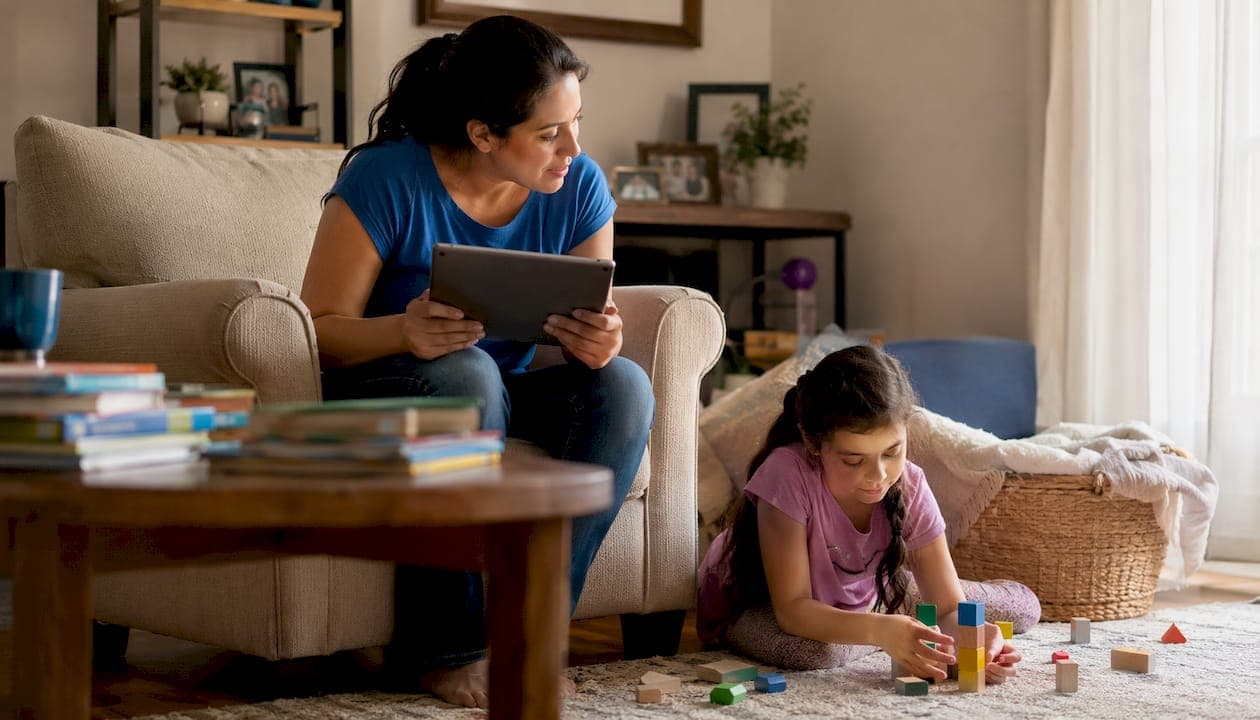
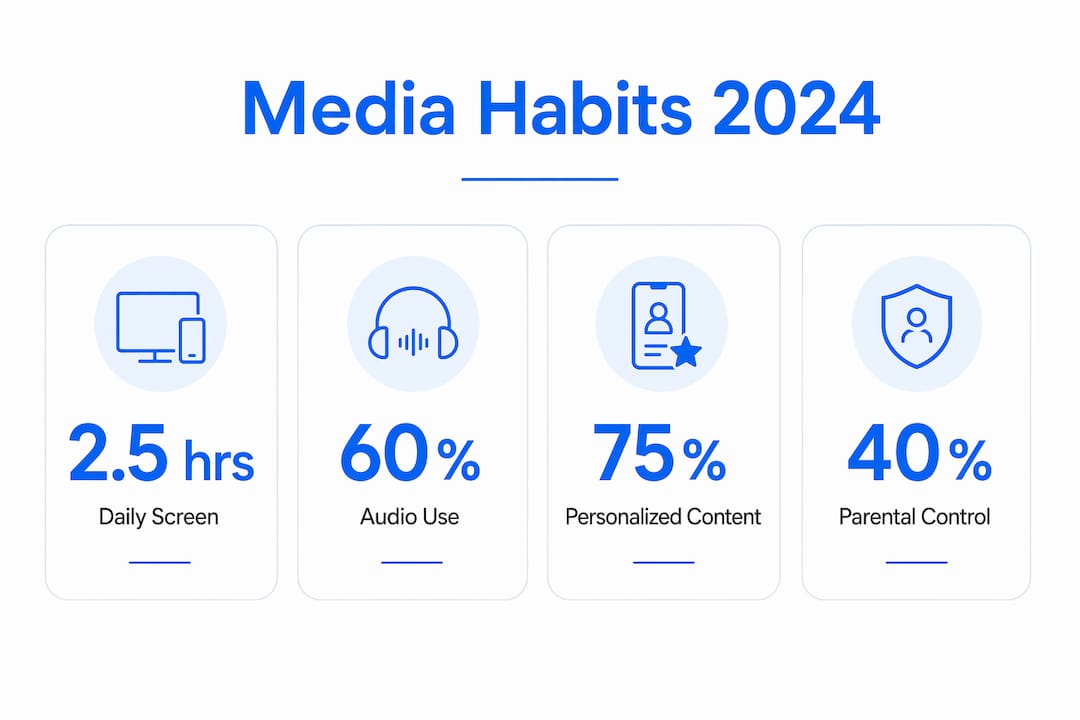
The biggest shift in children's media right now is the auditory turn; kids' media is moving from passive screens toward interactive and audio-first experiences. The 2025 Common Sense Census confirms total daily screentime for children under 8 has held steady at about 2.5 hours, but what fills those hours has changed dramatically. Gaming surged 65% over four years. Traditional TV is fading. And a growing number of parents are choosing curated audio over open algorithmic feeds. Services like G45-hero-cast, which delivers weekly personalized superhero podcast episodes to a private feed, sit squarely at the intersection of these trends.
What this means for you right now:
- Audio-first content sidesteps the safety concerns parents associate with open video platforms
- Personalized stories give children a sense of agency that passive viewing never could
- A weekly episode routine is easy to slot into car rides, bedtime, or morning wind-downs
Table of Contents
- What the data says about children's media habits in 2024–2026
- Why children's media use is shifting so fast
- What audio uniquely offers children ages 4–9
- What personalization in children's audio actually looks like
- How to choose safe, age-appropriate personalized audio for ages 4–9
- How G45-hero-cast maps to these trends and your checklist
- Practical ways to build audio into your family's daily routine
- What research says about developmental benefits and drawbacks
- Personalized audio podcasts versus traditional children's media formats
- Privacy and data security in personalized children's audio
- Near-future trends in children's audio media consumption
- Key Takeaways
- Why audio-first is the right call for this age group
- G45-hero-cast: weekly superhero adventures, delivered privately
- Useful sources
What the data says about children's media habits in 2024–2026
The numbers tell a clear story. Total screentime is not exploding, but its composition is shifting fast.
| Metric | Finding | Source |
|---|---|---|
| 2.5 hours daily | ~2.5 hours/day (steady) | Common Sense Census 2025 |
| Gaming time increase | +65% over four years | Common Sense Census 2025 |
| Interactive screentime proportion | About two-thirds of Gen Alpha screentime is interactive rather than passive | Lingokids 2026 |
| Parents preferring interactive media | 73% of parents report interactive screentime is more beneficial than passive viewing | Lingokids 2026 |
| Safety as a top priority | 87.7% of parents prioritize safety, above fun and education | Lingokids 2026 |
| Parents experiencing screentime guilt | 84.6% of parents report screentime guilt, up ~14% over one year | Lingokids 2026 |
87.7% of parents rank safety as their top priority in children's media — above fun, above education. That single figure explains why gated, private-feed audio is gaining ground so quickly.
The Lingokids 2026 research also found that the line between "educational" and "entertaining" is collapsing for most families. Parents no longer want to choose between the two.
Why children's media use is shifting so fast
Several forces are converging at once, and they hit the 4–9 age window especially hard.
- Earlier device access. Children are getting phones and tablets younger, which means algorithmic feeds reach them before parents have built media habits. Ofcom's research (UK data, illustrative for U.S. trends) shows younger phone ownership is reshaping how children first encounter content.
- Algorithmic feeds and discoverability problems. Industry analysts at TVKIDS/World Screen report that it now takes the average viewer 20 minutes to find something to watch on streaming. For a 5-year-old, that wait usually ends with whatever autoplay serves next.
- Gaming's gravitational pull. Gaming now dominates interactive time for this age group and influences what children want from video and audio too.
- Parental demand for curation. Parents are actively moving away from endless-scroll environments toward trusted, gated experiences. That behavioral shift is what's opening the door for private-feed audio.
For 4–9 year olds specifically, these forces compete for attention that is still developing. Short-form video trains fast-switching; audio, by contrast, asks children to hold a mental image and follow a narrative thread.
What audio uniquely offers children ages 4–9
Audio reduces visual overload, encourages active imagination, and fits almost any daily routine without a screen. Those three things matter a lot at this age.

Practically speaking, a well-produced podcast episode is attention-friendly in a way that video rarely is. There is no autoplay cliff, no thumbnail designed to hijack a click, no comment section. Children listen, picture the story, and engage their own creativity to fill the gaps. Research on early childhood literacy and audio consistently links regular listening to stronger comprehension and vocabulary growth.
Audio also travels. Car rides, bedtime, post-school decompression, even chore time — a podcast episode works in all of them. Sibling-friendly options mean two kids in the back seat can share the same story without fighting over a screen.
Pro Tip: Use the episode transition as a conversation starter. Ask your child what they would have done differently if they were the hero. That one question turns passive listening into active storytelling practice.
What personalization in children's audio actually looks like
Personalization ranges from simple name insertion to full narrative tailoring, and the gap between those two ends of the spectrum is enormous.
At the basic end, a service drops a child's first name into a pre-recorded script. At the quality end, the story is built around the child's name, age, interests, personality traits, and even siblings. Characters feel like they know the listener. Plot details reference things that matter to that specific child. That depth of tailoring is what creates the "they made this just for me" reaction that keeps kids asking for the next episode.
Parents evaluating a service should expect to see: a private podcast feed (not a public app), options for sibling profiles, weekly or bi-weekly episode delivery, human narration with editorial oversight, and clear subscription or gift plan options. Personalized audio stories delivered via private feed are the format that best combines safety, engagement, and routine-friendliness.
How to choose safe, age-appropriate personalized audio for ages 4–9
The one-line test: does it feel safe, spark imagination, and fit into your day without friction? Here is a numbered checklist to apply before subscribing.
- Check the privacy policy. Does the service collect only what it needs (name, age, interests) and keep it private? Look for explicit COPPA compliance language.
- Request a sample episode. Any reputable service offers one. Listen before your child does.
- Confirm the feed is private. A public app or open RSS feed means anyone can access the content. A private feed tied to your email is the safer standard.
- Evaluate episode length. For ages 4–6, 10–15 minutes is ideal. Ages 7–9 can handle 15–25 minutes. Longer is not better at this age.
- Assess narrator quality. Human narration with expressive delivery beats text-to-speech every time for this age group. Listen for warmth and pacing.
- Look for sibling support. Can the service personalize for two children at once, or offer a family bundle?
- Check gifting options. Grandparents are a major gifting audience for this category. A service without a gift plan is leaving a real use case unserved.
Red flags: autoplay into unrelated content, vague data practices, ad-supported episodes, or purely algorithmic voice generation with no human editorial layer. Industry leaders in 2026 are explicit that curated, gated environments are the way to rebuild parental trust — services that skip that step are cutting corners.
How G45-hero-cast maps to these trends and your checklist
G45-hero-cast delivers exactly what the data says parents want: a weekly personalized superhero podcast episode for each child aged 4–9, sent every Sunday to a private podcast feed tied to the parent's email. No open app. No algorithm. No ads.
Each episode is built around the child's name, age, and traits, so the story genuinely feels personal. Sibling profiles and gift plans are available, which makes it practical for families and grandparents alike. The production model includes human-led editorial oversight — not purely AI-generated audio — which addresses the curation concern directly.
Monthly and annual subscriptions are both available. For grandparents in Illinois looking for a gift that arrives every week and sparks a phone call ("Did you hear what happened to [child's name] this week?"), the gifting option is particularly well-suited. Learn more about audio adventures for kids ages 4–9 on the G45-hero-cast blog.
Practical ways to build audio into your family's daily routine
Consistency is what makes audio stick. Children aged 4–9 thrive on predictable rituals, and a weekly episode lands better when it has a regular home in the schedule.
Car ride story. Sunday delivery means the new episode is ready for the Monday school run. Press play as you pull out of the driveway. By the time you arrive, the episode is done and your child has something to talk about all day.
Pre-bedtime hero adventure. Swap one night of screen time for the podcast episode. Lights low, episode on, child in bed. The imaginative engagement actually helps wind-down rather than fighting it the way screens often do.
Chore reward. The episode plays only after a specific task is done. Simple, effective, and the child associates the reward with the routine rather than the screen.
Grandparent gifting ritual. A grandparent subscribes as a gift. The child knows Grandma or Grandpa picked this show. That connection adds emotional weight to every episode. For bedtime alternatives that grandparents can gift remotely, personalized audio is one of the most practical options available.
For device setup: download episodes over Wi-Fi when possible, use a parent-controlled device or speaker, and listen together at least occasionally. Co-listening is one of the strongest predictors of a child staying engaged with a series long-term.
What research says about developmental benefits and drawbacks
The developmental case for audio at ages 4–9 is solid, with a few honest caveats.
On the benefits side: regular listening builds vocabulary, strengthens narrative comprehension, and exercises the mental imagery skills that underpin reading. Audio without visual accompaniment requires children to construct the story in their own minds, which is cognitively demanding in a productive way. Personalization adds another layer — when a child hears their own name as the hero, engagement and recall both improve.
The drawbacks are real but manageable. Audio is not a substitute for conversation, physical play, or shared reading. Passive listening without any follow-up discussion produces fewer language gains than listening paired with a brief conversation. Episode length matters too: content designed for older children can frustrate a 4-year-old who loses the thread. Age-appropriate episode length and a quick post-episode chat are the two simplest ways to maximize the benefit.
Personalized audio podcasts versus traditional children's media formats
Traditional children's TV offers high production value and familiar characters, but it is designed for mass audiences. A show built for millions of children cannot feel personal to any one of them. Streaming platforms solve the volume problem but not the personalization problem — and they introduce the algorithmic feed problem on top of it.
Personalized audio sits in a different category. The engagement driver is not spectacle; it is identity. A child who hears their own name, their own traits, and their own choices reflected in the story is not a passive viewer. They are a participant. That distinction matters for attention, for recall, and for the emotional connection children form with the content.
Educational value follows a similar pattern. Mass-market content can teach concepts, but personalized audio can frame those concepts around a specific child's world. The entertainment vs. educational audio distinction is increasingly irrelevant when the format is designed well enough to do both at once.
Privacy and data security in personalized children's audio
Personalization requires data, and that creates a responsibility. Any service that personalizes for a child under 13 in the United States must comply with COPPA (Children's Online Privacy Protection Act), which limits what data can be collected, how it is stored, and who can access it.
For parents evaluating a service, the key questions are: What data is collected during signup? Is it stored securely and never sold? Is the podcast feed private and access-controlled? Does the service use the child's information only to produce the episode, or does it feed into broader analytics or advertising?
A private podcast feed delivered to a parent's email address is structurally safer than a public app, because access is controlled from the start. No public search, no open directory, no stranger can stumble onto the content. That architecture is not just a feature — it is a meaningful privacy decision.
Near-future trends in children's audio media consumption
The auditory turn is not a passing moment. Several converging forces suggest personalized audio for children will grow in relevance through 2026–2028.
AI-driven customization is becoming more sophisticated, which means the cost of producing genuinely personalized audio at scale is falling. That will bring more services into the market, which raises the importance of the quality checklist above. Not all personalization is equal, and parents who know what to look for will make better choices.
Voice recognition and adaptive storytelling are early-stage but developing. Within a few years, a child's verbal responses during an episode could influence the next one. That level of interactivity would make personalized audio competitive with gaming for engagement, while retaining the screen-free, imagination-first qualities that make it attractive to parents.
The broader trend toward gated, curated environments is structural. As open platforms accumulate more regulatory scrutiny and parental distrust, private-feed models gain a durable advantage. The families who build audio routines now will find those habits easy to maintain as the format matures.
Key Takeaways
Audio-first, personalized media is the highest-value option for children aged 4–9 in 2026, combining safety, imagination, and routine-friendliness in a format parents and grandparents can trust.
| Point | Details |
|---|---|
| Screentime is shifting, not growing | Total daily screentime holds at ~2.5 hours, but gaming and interactive formats now dominate. |
| Safety is the top parental priority | 87.7% of parents rank safety first; private-feed audio directly addresses this concern. |
| Personalization drives engagement | Children who star as the hero show stronger recall and emotional connection to the content. |
| Checklist before you subscribe | Verify COPPA compliance, private feed delivery, human narration, and age-appropriate episode length. |
| G45-hero-cast fits the criteria | Weekly private-feed superhero episodes, sibling profiles, gift plans, and human editorial oversight. |
Why audio-first is the right call for this age group
The conventional wisdom says screen time is the problem and cutting it is the solution. That framing misses the real issue, which is not quantity but quality and structure. A child watching algorithmically served short-form video for 30 minutes is in a fundamentally different cognitive state than a child listening to a 15-minute personalized superhero story.
What the data from Common Sense, Lingokids, and industry analysts actually shows is that parents are not looking to eliminate media. They are looking for media that earns its place in the day. Audio does that. It travels, it scales to siblings, it fits routines, and it leaves room for imagination in a way that screens rarely do. The 4–9 window is exactly when those habits form. A child who learns to love a story told in sound is building the same mental muscles that reading builds, and they are doing it in a format that fits modern family life.
The services worth trusting in this space are the ones that treat personalization as a craft, not a feature checkbox. Weekly delivery, human narration, private feeds, and genuine story tailoring are the markers of a service that takes the responsibility seriously.
G45-hero-cast: weekly superhero adventures, delivered privately
Every child aged 4–9 deserves a story where they are the hero. G45-hero-cast builds that story fresh each week, tailored to your child's name, age, and personality, and delivers it every Sunday to a private podcast feed — no open app, no ads, no algorithmic rabbit holes.
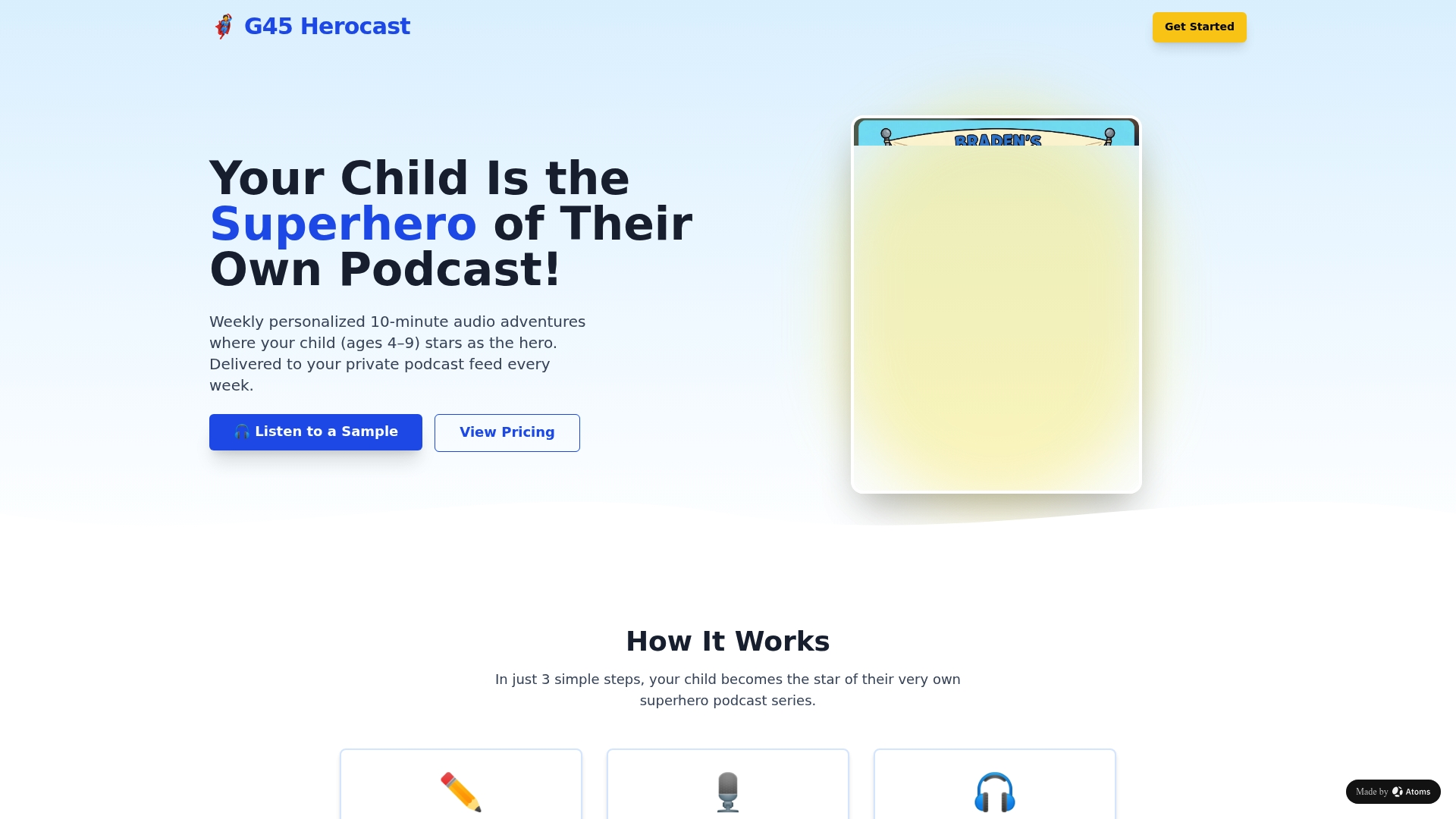
Monthly and annual subscriptions are available, and gift plans make it easy for grandparents to give something that arrives every single week. The private feed means only your family hears the episodes, and human editorial oversight means every story is produced with care, not just generated.
Start your child's superhero story today and see what arrives Sunday.
Useful sources
- The 2025 Common Sense Census: Media Use by Kids Zero to Eight — Primary data on screentime totals and activity shifts for children under 8.
- Kids Interactive Entertainment Report 2026, Lingokids Research — Primary survey data on Gen Alpha interactive screentime, parental attitudes, safety priorities, and screentime guilt.
- What's Next?: 2026 Trend Watch, TVKIDS/World Screen — Industry analysis on the auditory turn, discoverability challenges, AI-enabled personalization, and curated/gated environments.
- Younger phone owners, the rise of AI, and consumption over creation, Ofcom — UK data (illustrative for U.S. trends) on early device access and shifting consumption habits.
- Audiobooks and Early Childhood Literacy: A Parent's Guide, CoreForge Audio — Research-backed perspective on audio's role in early literacy development.
- Entertainment vs Educational Audio: What You Need to Know, CoreForge Audio — Practical comparison of audio formats and design choices for children.