
Yes, audio plays powerfully stimulate imagination while delivering real creative and therapeutic benefits. Research confirms that listeners actively construct mental imagery when they hear a well-crafted audio drama, a cognitive process that differs meaningfully from passive screen watching. Audio drama research shows that dramatized audio encourages stronger listener involvement and more image generation than purely narrative techniques or dense visual media. A separate study found that young listeners generate vivid, unique mental images from audio drama even on first exposure, with no prior experience required.
Three core benefits run through the evidence:
- Imaginative engagement: Audio plays require listeners to build scenes in their minds, turning every episode into an active creative exercise.
- Developmental gains: Language acquisition, narrative comprehension, and perspective-taking all improve with regular audio play exposure, especially in children ages 4–9.
- Therapeutic outcomes: From anxiety reduction to social skills workshops, audio plays are already used in inclusive-arts and expressive therapy settings.
Key Takeaways
Audio plays are one of the most research-supported tools available for building imagination, creative skill, and emotional resilience across childhood and beyond.
| Point | Details |
|---|---|
| Audio activates active imagery | Listeners construct mental scenes themselves, exercising imagination in ways passive visual media does not require. |
| Young children need no warm-up | Research confirms children generate vivid imagery from audio drama on first exposure, with no prior experience needed. |
| Listening conditions matter | Dimming lights and group listening measurably improve concentration and the vividness of mental imagery. |
| Personalization raises engagement | When a child is the named hero, identification is immediate and serial investment compounds week over week. |
| G45-hero-cast delivers this weekly | Weekly personalized superhero episodes, tailored by name and interests, arrive every Sunday via a private podcast feed for ages 4–9. |
For clinical or therapeutic applications of audio plays, consult a licensed mental health or expressive arts professional before designing structured interventions.
Table of Contents
- How does imagination and audio play actually work in the brain?
- Creative and developmental benefits across age groups
- Therapeutic and inclusive-arts use cases
- What design elements make an audio play spark imagination?
- Practical listening activities for parents, teachers, and therapists
- Why personalization deepens imaginative engagement
- Recommended audio play formats and tools for creators
- Why audio plays deserve a permanent place in family life
- A weekly superhero podcast built for your child's imagination
- Sources
How does imagination and audio play actually work in the brain?
When you listen to an audio play, your brain does not sit back and receive. It builds. Auditory scene construction pulls on semantic memory, spatial inference, and emotional association simultaneously, assembling a mental picture from sound cues alone. A creaking door, a distant train whistle, a character's breathless voice: each one narrows the imaginative field just enough to guide you without doing the work for you.
That distinction matters for understanding why audio outperforms video on this specific task. Dense visual media hands the viewer a finished scene. Audio hands the listener a blueprint and says, you finish it. Audio Theatre Central's practitioner commentary argues that audio theatre activates the thinking side of the brain in ways that visually saturated content simply does not require.
Sound researchers and AI practitioners working with curated soundscapes have found that auditory input often evokes stronger scene and memory creation than vision alone, precisely because hearing forces the mind into co-creation. A listener filling in what a character looks like, or imagining the layout of a haunted house from footstep echoes, is exercising the same mental muscle used in creative writing, problem-solving, and empathy.
Creative and developmental benefits across age groups
The benefits of audio plays are not uniform across the lifespan, and knowing what to expect at each stage helps parents, teachers, and therapists choose the right content and set realistic goals.
Core developmental benefits across all ages:
- Vocabulary growth through context-rich dialogue and narration
- Narrative comprehension: following plot arcs, tracking characters, predicting outcomes
- Perspective-taking and empathy, built by inhabiting a character's point of view through voice alone
- Sustained attention, since audio offers no visual shortcut to meaning
- Imagination as a practiced skill, not an innate gift
Ages 4–6: Young children respond most strongly to relatable characters, repetition, and short episode lengths. Rodero et al.'s findings confirm that children can follow auditory narratives and generate vivid images when characters feel familiar and stories carry a serial structure. At this age, the imaginative payoff is immediate: kids draw what they heard, act out scenes, and ask to replay favorite moments.
Ages 7–9: Story complexity can increase. Children at this stage begin tracking subplots, noticing foreshadowing, and forming opinions about characters' choices. Audio plays support a richer inner life because the child must supply the visual layer themselves.
Teens and adults: The benefits shift toward emotional regulation, critical listening, and creative inspiration. Adults who listen to audio dramas regularly report richer daydreaming, stronger narrative recall, and a measurable uptick in their own creative output. Researchers note there is no single perfect story formula, but high-imagery content, identifiable character arcs, and serial storytelling consistently perform well with listeners of all ages.

Therapeutic and inclusive-arts use cases
AliusArt's practitioner-oriented coverage documents how audio plays' sound design and narrative focus create immersive, therapeutic, and inclusive experiences that extend well beyond entertainment. The format's core advantage in therapeutic settings is structural: participation requires only listening and imagination, not physical performance, visual acuity, or social confidence.
Common clinical and community applications include:
- Anxiety reduction: Guided audio narratives with calming soundscapes lower physiological arousal in ways similar to guided imagery scripts, without requiring a therapist to be present in real time.
- Social skills workshops: Group listening sessions followed by character discussion build perspective-taking and conversational skills in children with social communication differences.
- Expressive therapies: Participants create short audio plays as part of drama therapy, using voice and sound to process emotions they struggle to articulate directly.
- Inclusive arts participation: Because the format is voice-based, people with limited mobility, visual impairments, or sensory sensitivities can participate fully.
One practical note for facilitators: group listening and listening in the dark both improve concentration and the vividness of reported mental imagery, according to Rodero et al.'s listening condition findings. A simple blackout curtain and a circle of chairs can meaningfully change the quality of a group session.
For clinical interventions, particularly those targeting trauma, anxiety disorders, or developmental conditions, involve a licensed clinician in the design. Parents and teachers can run informal listening activities freely; structured therapeutic programs benefit from professional oversight.
What design elements make an audio play spark imagination?
Production choices either open the listener's imagination or close it. The best audio play creators understand this and make deliberate decisions at every layer.
Layered soundscapes: Background ambience establishes where (spatial imagery), while foreground sounds establish what (object and character imagery). A forest scene works because wind, birdsong, and leaf crunch together place the listener in a specific geography before a single word of dialogue.
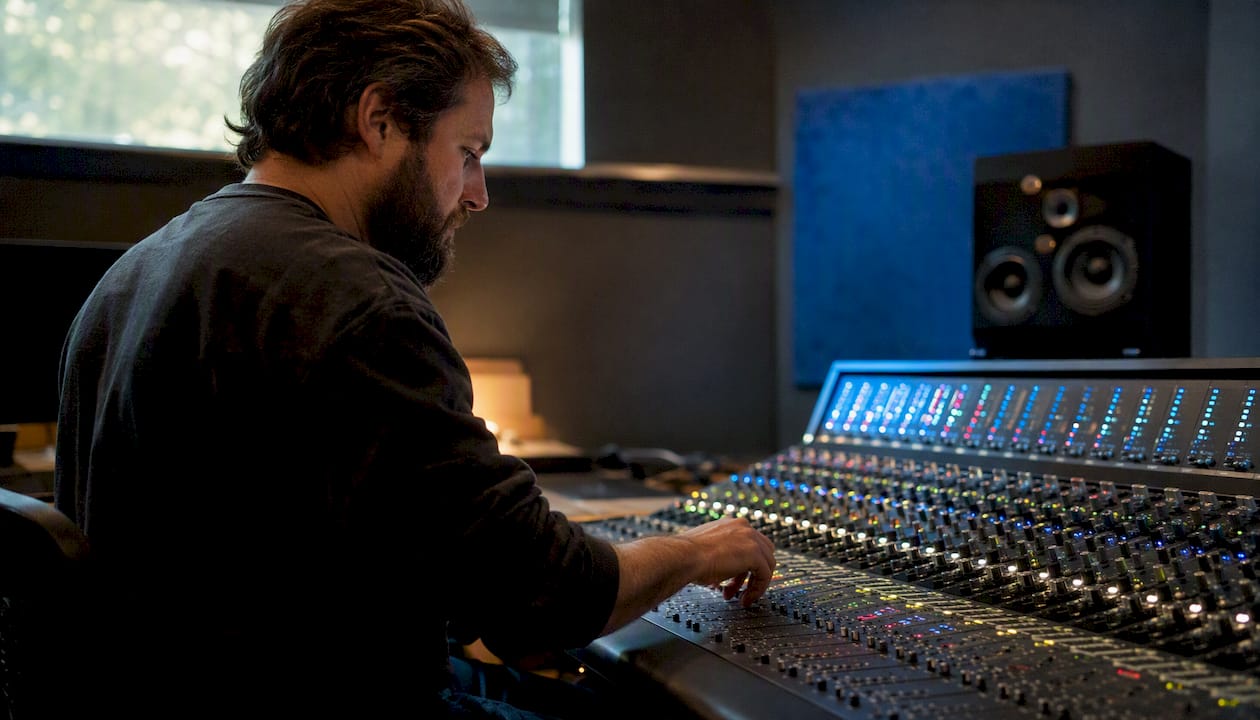
Vocal characterization: Distinct voices for each character reduce cognitive load and free the listener to imagine appearance, posture, and emotion rather than tracking who is speaking.
Music cues: Short, recurring musical motifs tied to specific characters or emotional beats act as memory anchors. They also signal tonal shifts without narration, which keeps pacing tight.
Pacing and silence: Silence is the most underused tool in audio production. A two-second pause after a revelation gives the listener's imagination room to react. Rushed pacing collapses that space.
Narration style: Suggestive rather than exhaustive description works best. "She stepped into a room that smelled like old paper and something she couldn't name" invites more imagery than a detailed inventory of furniture.
Pro Tip: Design each scene around one or two strong sensory anchors, a distinctive sound effect plus a vocal cue, and then leave the rest deliberately unspecified. Listeners fill gaps more vividly than any production team can fill them.
Pro Tip: When mixing, test your final audio in a completely dark room with headphones. If you can't picture the scene clearly, your audience won't either. Add one specific ambient detail and re-test.
Practical listening activities for parents, teachers, and therapists
These activities work across settings. Adjust duration and complexity by age band.
Ages 4–6 (15–20 minutes total):
- Before listening, ask one open question: "What do you think a superhero's hideout sounds like?"
- Play a short episode (8–12 minutes) with no screen in view.
- After listening, give the child paper and crayons. Ask them to draw one scene they pictured.
- Share drawings and compare: whose hideout had a waterfall? Whose had a robot guard?
Ages 7–9 (20–30 minutes total):
- Set the scene: dim the lights, sit in a circle if in a group.
- Play a full episode or a 15-minute excerpt with a clear narrative arc.
- Post-listening: ask each listener to write or tell the next scene. What happens after the cliffhanger?
- For groups, assign each child a character and have them argue that character's decision from inside the story.
Ages 10 and up (30–45 minutes total):
- Choose an audio play with moral complexity or an unreliable narrator.
- Listen together, then pause at a key decision point and discuss before finishing.
- Ask listeners to rewrite the ending from a different character's perspective.
- Optional creation step: record a 2-minute audio scene using a phone and one sound effect.
Alternatives to bedtime stories offer additional listening routine ideas that fit naturally into family schedules. For group settings, shared listening protocols, a no-talking rule during playback, a designated "image reporter" who describes their mental picture first, consistently improve the quality of post-listening discussion.
Why personalization deepens imaginative engagement
Personalization does something generic content cannot: it raises the listener's salience from the first line. When a child hears their own name, their hometown, or a detail about their pet woven into a story, the brain's attention systems treat the content as personally relevant. That relevance accelerates identification with the protagonist and sustains engagement across episodes.
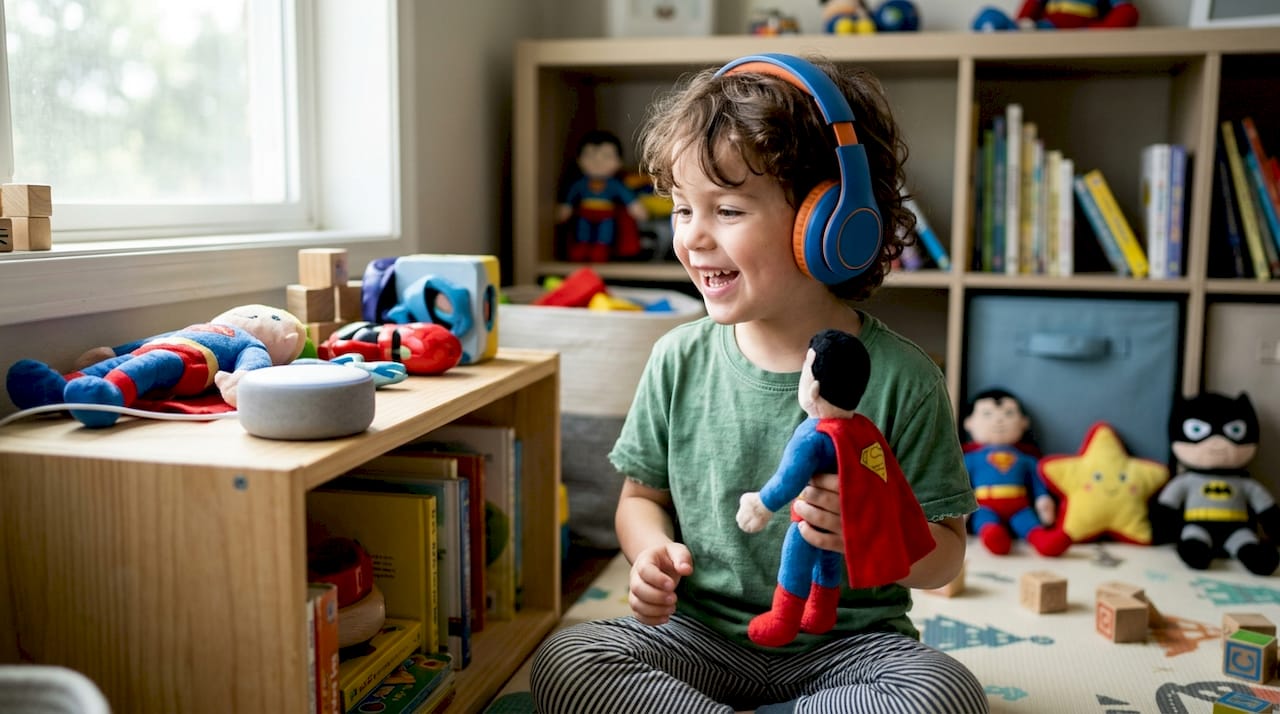
The mechanism is straightforward. A child who is the hero does not need to imagine themselves into the story. They are already there. Serial delivery, one new episode each week, reinforces this by building anticipation and narrative continuity. Each episode picks up where the last left off, and the child's investment compounds.
A practical workflow for a weekly personalized audio episode looks like this:
- Intake: Collect the child's name, age, interests, and any specific details (a best friend's name, a favorite animal).
- Scripting: Write a story that places the child as the central hero, weaving in their details at key emotional beats.
- Production: Record with distinct voice actors, layered sound design, and a recurring musical theme tied to the child's character.
- Delivery: Send to a private podcast feed on a fixed schedule so the child knows when to expect it.
Personalized audio stories for kids explores how this format maps onto the developmental benefits described earlier in this article.
Recommended audio play formats and tools for creators
Different formats serve different imaginative goals. Here is a practical breakdown by type, age range, and purpose:
| Format | Best age range | Imaginative strength | Where to start |
|---|---|---|---|
| Short serials (4–8 episodes) | 4–9 | Character identification, anticipation | Audio adventures for kids |
| Single-episode high-imagery plays | 8 and up | Scene construction, emotional depth | Public radio drama archives |
| Interactive audio (choose-your-path) | 7 and up | Agency, consequence thinking | Twine + audio export tools |
| Personalized weekly podcasts | 4–9 | Salience, serial engagement, identity | G45-hero-cast private feed |
Creation tools for educators and hobbyist creators:
- Audacity (free, cross-platform): solid for basic recording, editing, and layering sound effects.
- GarageBand (Mac/iOS): intuitive for beginners, includes a usable music loop library.
- Freesound.org: a Creative Commons sound library with thousands of ambient and effect files.
- Zencastr or Riverside.fm: remote recording with separate tracks per speaker, which simplifies post-production mixing.
- Twine: for interactive audio scripts where listener choices branch the narrative.
For accessibility and cultural inclusivity, choose content that reflects a range of names, family structures, and settings. Avoid sound design that relies on cultural references a global or diverse audience may not share. Best podcasts for preschoolers includes a curated 2026 list filtered for age-appropriateness and inclusive content.
Why audio plays deserve a permanent place in family life
The evidence is clear enough that I find the real question isn't whether audio plays work. It's why families aren't using them more deliberately.
Screen time debates tend to focus on what to remove. Audio plays offer something rarer: a format you can add without guilt, because it actively exercises the imaginative capacity that passive viewing tends to let idle. A child who spends twenty minutes building a mental world from sound cues is practicing the same cognitive skills that show up later in creative writing, reading comprehension, and social reasoning.
What strikes me most about the research is how low the barrier is. Young listeners generate vivid imagery from audio drama on first exposure, no training required. The format is forgiving for creators too. A distinctive voice, one strong sound anchor per scene, and a story the child cares about: that combination outperforms expensive production every time.
For families, the weekly ritual matters as much as the content. A child who knows a new episode arrives every Sunday has something to look forward to, a small but real anchor in the week. That anticipation is itself a form of imaginative engagement, the story continuing in the child's mind between episodes.
A weekly superhero podcast built for your child's imagination
Most audio content for children is generic by design. G45-hero-cast takes the opposite approach: every episode is built around your child specifically, their name, their interests, their age, and their unique traits, so the story feels like it was written for no one else. Because it was.
Each week, a new personalized superhero adventure lands in a private podcast feed, delivered every Sunday. The format is designed for children ages 4–9, and siblings can be included in the same subscription. Monthly and annual plans are available, and gift subscriptions make it a practical option for grandparents looking for something that lasts beyond a single occasion.
The production combines distinct voice acting, layered sound design, and a recurring musical theme tied to your child's hero identity, exactly the elements the research identifies as most effective for imaginative engagement and serial investment.
Start your child's superhero story and have the first episode ready before next Sunday.
Sources
The following sources informed this article's claims and are worth reading directly if you want to go deeper.
- Imagination and narrative: young people’s experiences
- The Magic of Audio Plays: Imagination, Creativity and Therapeutic Benefits. – AliusArt
- The Benefits of Audio Storytelling on Your Imagination | Audio Theatre Central
These sources represent a cross-section of academic research, practitioner experience, and sound-design practice. For a full academic bibliography, request the DOI list from the publisher or search the Rodero et al. (2017) citation trail on Google Scholar.