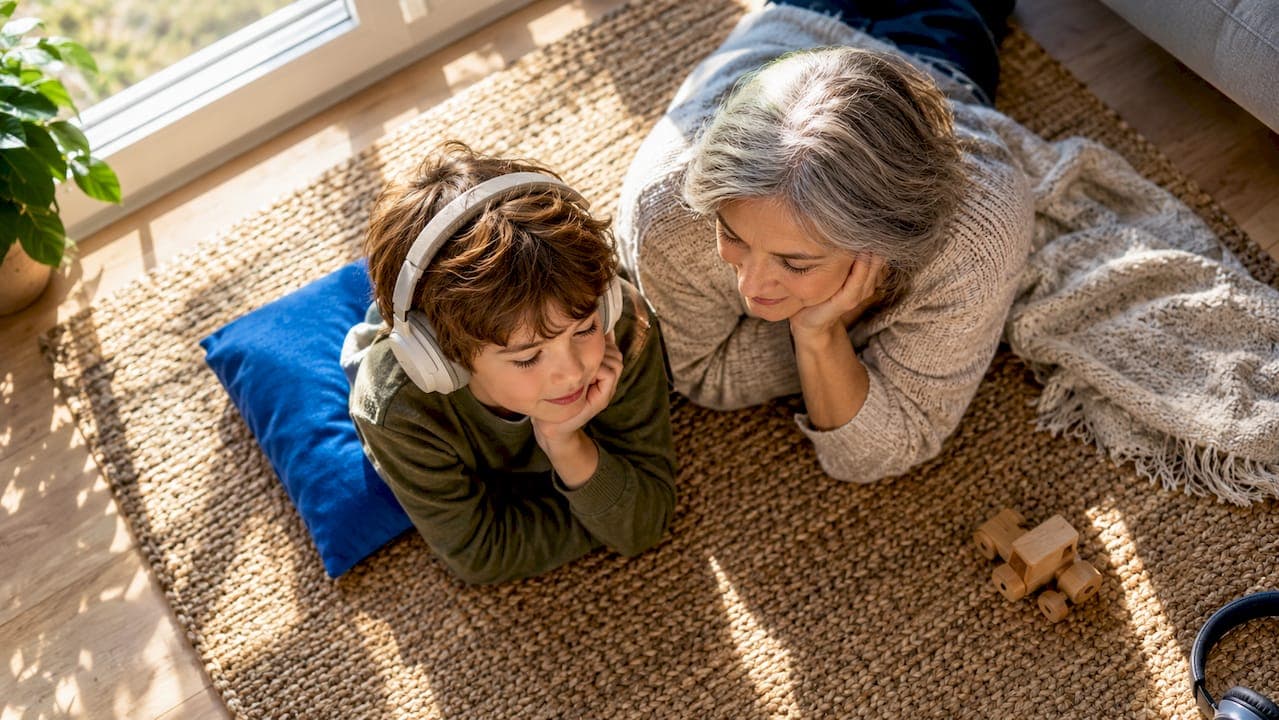
The easiest way to introduce podcasts to a 4 to 9 year old is to gift or subscribe to a weekly personalized superhero podcast delivered to a private feed. A show built around your own child's name, age, and interests grabs attention faster than a generic series, and it comes with a built in weekly listening habit. Services like this make this simple: one new episode every Sunday, no searching required.
TL;DR:
- Personalization with a child's name, age, and traits significantly enhances emotional engagement and is sufficient for effective storytelling.
- Weekly episodes around 10 to 15 minutes foster routine and anticipation, especially when introduced with a special ritual or in a quiet, screen-free setting.
- Private podcast feeds secured by email links ensure safe, non-searchable content tailored for individual children, suitable for gift plans or subscriptions.
- Engaging children through active follow-up conversations and family activities after episodes boosts vocabulary and comprehension more than passive listening alone.
- Starting with a relaxed, previewed first episode on weekends creates a positive habit, making subsequent episodes feel like a treat rather than a chore.
Table of Contents
- Why Personalized Audio Stories Work for Ages 4 to 9
- How to Introduce the First Episode and Build a Routine
- What to Look for in a Subscription or Gift Plan
- Setting Up Playback: Feeds, Apps, and the Car
- Turning Episodes Into Family Activities
- G45-hero-cast: A Direct Way to Start This Week
- A Quick Perspective on What Actually Matters Here
- Sources
Why Personalized Audio Stories Work for Ages 4 to 9
Kids this age respond to hearing their own name inside a story in a way that generic characters never quite match. A study on personalized children's fables found that even minimal personalization, just a name, age, and gender, produced a large jump in emotional engagement compared to the same story told with a stock character. Heavier customization added little on top of that. Parents chasing the "perfect" level of personalization can relax: name and age alone do most of the work.
Shared listening matters just as much as the content itself. Research from the Joan Ganz Cooney Center found that families report joint listening in roughly 92% of cases, most often at bedtime, during play, or in the car. Serial narratives with cliffhanger endings are especially good at pulling families back for the next episode together.
- Interactive prompts that invite a child to guess what happens next
- Relatable heroes facing problems a 6 year old actually understands
- A recurring structure kids can predict and look forward to
- Episodes short enough to finish in one sitting
A small, cautious note from a PMC-published RCT on audio interventions: vocabulary gains from audio stories tend to be strongest when a parent adds a little scaffolding, like a quick conversation afterward, rather than leaving the audio to do all the work alone.
How to Introduce the First Episode and Build a Routine
Getting the first listen right sets the tone for every episode after it. Rush it, and podcasts become just another background noise. Slow down for ten extra minutes, and you get a habit that sticks for months.
- Preview before you play it for your child. Check the episode length, the language level, and whether it includes interactive prompts or moments built for a young listener to react to.
- Pick a listening context on purpose. Bedtime, a car ride, or quiet playtime each work, but pairing audio with a screen-free setting tends to hold attention better than background listening.
- Build a small ritual around the first episode. Unwrap a gift subscription together, use a special speaker just for story time, or pair it with a favorite snack so the moment feels distinct from ordinary screen time.
- Listen together, more than once if your child asks. Repetition is normal at this age and it deepens comprehension rather than signaling boredom.
- Ask one or two simple follow-up questions. "What do you think happens next week?" does more for engagement than a quiz-style recap.
- Settle into a weekly cadence. One new episode a week is frequent enough to build anticipation without turning into another daily obligation competing with homework and screen limits.
Pro Tip: Save the very first episode for a weekend morning or a slow evening, not a rushed weeknight. First impressions with a new format stick, and a relaxed first listen makes every episode after it feel like a treat instead of a chore.
For families with a child closer to preschool age, shorter samplers work better as a starting point. Our guide to age-appropriate podcasts breaks down what length and complexity fits which age.
What to Look for in a Subscription or Gift Plan
Choosing a podcast subscription for a young child is different from picking a show off a public directory. Here's what actually matters before you buy or gift one:
- Personalization depth. Does the show use your child's name and basic traits, or does it just insert a name into a generic script?
- Episode length and cadence. A 10 to 15 minute weekly episode fits most family routines better than a longer show that competes with bedtime.
- Private feed versus public podcast. A private feed means the show isn't searchable by strangers, which matters for content built around your own child.
- Sibling and gift options. Families with more than one child benefit from plans that support multiple heroes without duplicate subscriptions.
- Preview policy and refunds. A provider that lets you preview a sample episode before committing removes most of the guesswork.
On safety, look for ad-free delivery, a private feed rather than an open public listing, and the ability to preview every episode before your child hears it. Common Sense Media's guide to podcasts recommends checking content ratings and age tags even on shows marketed for kids, and the same caution applies to personalized formats.
Some providers fit this checklist directly: weekly personalized superhero episodes delivered to a private podcast feed, with sibling and gift plan options built in. Gifting works the same way a subscription does. You choose the plan, add the child's details, and the recipient gets access to their own private feed starting the following Sunday, which makes it a natural birthday or holiday gift that keeps delivering long after the wrapping paper is gone.
Setting Up Playback: Feeds, Apps, and the Car
A private podcast feed typically arrives by email as a link you add to a podcast app like Apple Podcasts, Spotify, or a dedicated kids' player. Once added, new episodes show up automatically every week, no separate download required unless you want one.
- Download episodes ahead of road trips or flights where signal is unreliable.
- Play through your car's Bluetooth or an aux cable so the whole family hears it, not just whoever is holding the phone.
- If a feed stops updating, remove and re-add the link. It's usually a caching issue, not a lost subscription.
- Low volume on older Bluetooth speakers is often a phone-side setting, not a speaker problem. Check the device volume separately from the app's.
Pro Tip: Keep the child's own device off during listening and play episodes through a shared speaker instead. It turns podcast time into family time rather than another screen a kid stares at alone.
Turning Episodes Into Family Activities
The real payoff shows up after the episode ends, not during it. A brief conversation or a five minute activity does more for vocabulary and comprehension than a second replay ever will, according to audio intervention research on scaffolded listening.
- Pause before a cliffhanger resolves and ask your child to predict what happens next.
- Act out the episode's big moment, or have your child draw the hero mid adventure.
- Invent a new gadget or power for next week's story together.
- Repeat one new word from the episode a few times over the next day so it sticks.
- Rotate between a personalized podcast and a curated audio adventure list so the format stays fresh across the week.
Families using podcasts as part of a reading routine can find more structured ideas in this summer reading and podcast guide, which pairs audio listening with library reading lists.
G45-hero-cast: A Direct Way to Start This Week
Some personalized superhero podcast episodes are built around one child: their name, age, and interests, woven into a new superhero adventure that lands in a private podcast feed every Sunday. There's no browsing a crowded podcast directory hoping something age-appropriate turns up. The story is already built for the kid who's about to hear it.
Subscribers typically get a new episode weekly, delivered privately rather than through a public feed, with sibling plans for families with more than one hero in the house. Gifting often works the same way as subscribing: choosing the plan, entering the child's details, and the recipient's private feed goes live soon after, making it an option for birthdays, holidays, or a "just because" surprise that keeps delivering over time. Before committing to a longer plan, preview a sample episode so you know exactly what your child is about to hear. You can explore the full offering and get started on the G45-hero-cast landing page, or see specific formats for ages 4 to 9 on the tailored superhero adventures page.
A Quick Perspective on What Actually Matters Here
Parents overthink personalization. The research is clear that a name, an age, and one or two real traits do almost all the emotional heavy lifting, so there's no need to chase a show that customizes everything. What matters more is cadence. A short episode every week, not every day, builds anticipation without adding to screen fatigue or turning into one more thing to manage. If you're gifting a subscription, preview an episode first and consider a short trial before committing to a full year. The format sells itself once a kid hears their own name in the opening scene.
— JG
Sources
- “A Beautiful Interaction”: How Children’s Podcasts Support Joint Media Engagement – Joan Ganz Cooney Center
- Effect of Personalization in Children's Fables | F1000Research
- Remote text-supplemented audiobook intervention supports children's vocabulary learning (PMC)