
Yes, for most families, a weekly personalized superhero podcast is one of the more engaging audio formats available for children in a typical age range between early childhood and middle childhood. Hearing their own name at the center of the story taps into what researchers call the self-reference effect, and the audio format removes the reading barrier entirely. Below, you'll find the evidence behind that claim, what a typical subscription includes, and how to turn each episode into more than background noise.
TL;DR:
- Personalization using a child's name significantly boosts engagement and emotional connection within a superhero podcast, even with minimal details.
- Research indicates that personalized episodes improve shared reading, vocabulary transfer, and social agency, but long-term habitual listening effects are still unstudied.
- Most services deliver weekly episodes to private feeds, requiring only basic personal details like name and interests, with options for sibling and gift subscriptions.
- Key factors for choosing a provider include age range suitability, episode preview availability, privacy policies, and ease of cancellation or trial options.
- Building a post-episode family routine with discussion, role-play, or drawing can enhance vocabulary and social-emotional skills more than passive listening.
Table of Contents
- Why Science Podcasts for Kids Work Better When Your Child Is the Hero
- What the Research Actually Measured (and Where It Falls Short)
- What You Actually Get With a Weekly Personalized Podcast Subscription
- How to Choose the Right Fit: A Quick Checklist
- Turning One Episode Into a Family Ritual
- Why We Build Episodes This Way
- G45 Hero Cast: How to Start Your Child's Weekly Adventure
- Selected Research and Resources
- Sources
- FAQ
Why Science Podcasts for Kids Work Better When Your Child Is the Hero
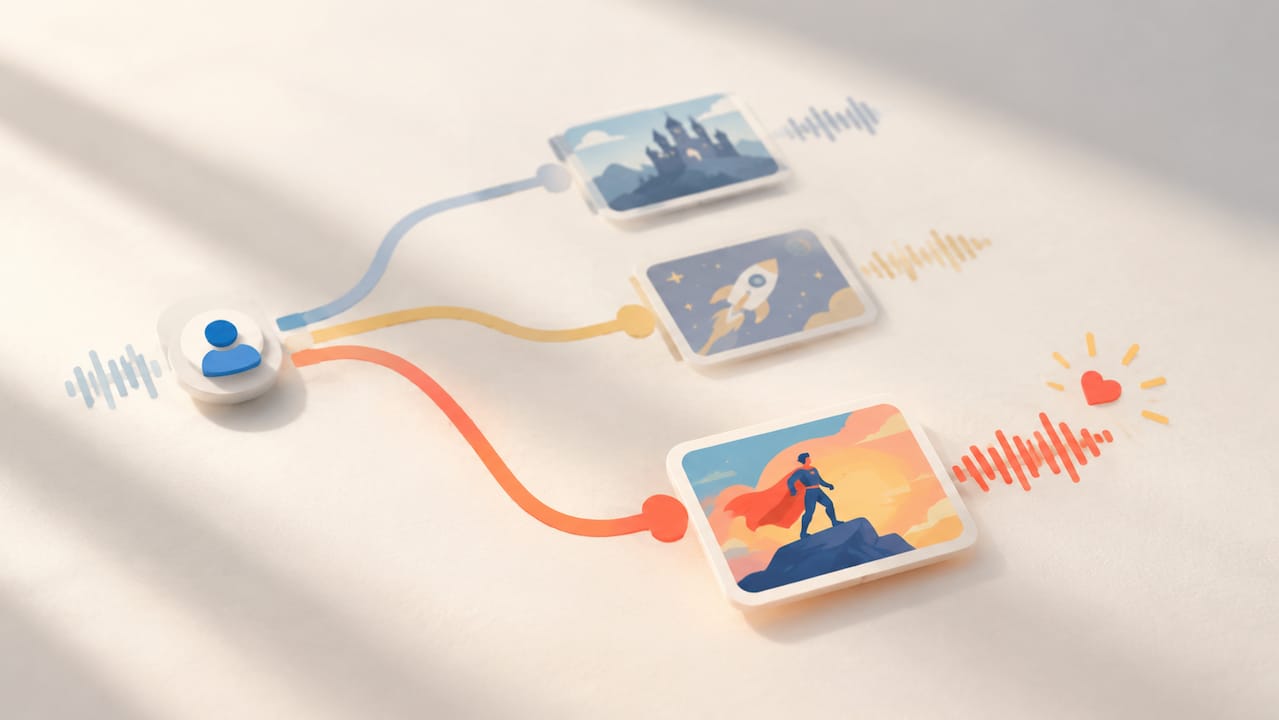
The strongest science podcasts for kids in this personalized category succeed for a simple reason: children pay closer attention to stories about themselves. Psychologists call this the self-reference effect, and it's the same reason you perk up when you hear your own name across a crowded room. Social agency is the related idea that a child feels like an active participant in the plot rather than a passive listener, and that shift changes how the brain engages with the material.
The practical payoffs show up in a few consistent ways:
- Stronger sustained attention through a full episode, even for kids who normally fidget through story time.
- Deeper emotional engagement, since the child hears their own choices and traits reflected in the adventure.
- Easier vocabulary transfer when new words are tied to a character the child already identifies with.
- Higher motivation to re-listen, which matters because repetition is how young children actually absorb language.
Audio has a built-in advantage here too. A 4 or 5 year old who can't decode text yet can still fully follow a personalized adventure, and the format forces internal visualization instead of handing a child a finished picture, which tends to fuel imaginative play afterward.
Statistic Callout: Research on personalized fables found that even minimal personalization, just using a child's name, produced a measurable jump in affective engagement, and that minimal version often captured most of the total benefit.
What the Research Actually Measured (and Where It Falls Short)
The evidence for personalization is real, but it's worth knowing exactly what was tested before you treat every marketing claim as settled science.
- A lab study of 26 mother-child pairs, ages 3 to 4, found that personalized digital books encouraged more shared reading behavior between parent and child, with signs of vocabulary benefit when target words were built into the personalized pages.
- A controlled study of 96 elementary-age students found that using a reader's first name improved narrative transfer, and that the boost was explained largely by increased social agency, not just novelty.
- A separate personalization study reported gains in both affective engagement and transfer performance, reinforcing that the effect isn't a fluke of one experiment design.
None of these studies tested a weekly audio subscription specifically. They tested personalized text and short narrative tasks in controlled settings, which is a meaningfully different product than a 7 minute superhero podcast delivered every Sunday. The sample sizes are modest, and long-term studies on habitual listening don't exist yet. That gap is exactly why it helps to choose a provider that points to real research rather than vague claims about "boosting brainpower."
What You Actually Get With a Weekly Personalized Podcast Subscription
Before you subscribe, it helps to know what's standard across this category and what varies by provider.
- A private podcast feed or emailed episode link. Most services deliver a new episode weekly, often on the same day, straight to a feed only your family can access.
- A personalization intake. Expect to submit your child's name, age, and a handful of interests or traits. Some providers build entire subplots around those details; others use them more lightly, dropping the name and one detail into an otherwise standard adventure. Both approaches work, since research shows even light personalization drives most of the engagement gain.
- Sibling and gift options. Many families run more than one subscription so each child gets their own hero arc, and gift plans let grandparents start a subscription without managing billing themselves.
- Privacy basics. Confirm where your child's name and details are stored, whether episodes are ever made public, and whether you can edit or delete personalization data later.
- Billing structure. Subscriptions typically run monthly or annually, with annual plans usually priced lower per episode. Look for a trial or gift option before committing to a year.
How to Choose the Right Fit: A Quick Checklist
Not every personalized podcast is built the same way, and a few minutes of checking now saves a frustrating cancellation later.
Run through this before you pay:
- Does the age range (4 to 9) match your child's attention span and vocabulary level?
- Can you hear a sample episode before subscribing?
- How deep is the personalization, name only, or name plus interests and traits?
- How is each episode delivered, and does it work with the podcast app your family already uses?
- What does the privacy policy say about where your child's data lives?
- How easy is cancellation, and is there a minimum commitment?
- Is there a free trial or a gift plan for grandparents?
- What do other parents say in reviews about episode quality and consistency?
Ask these eight questions directly if the website doesn't answer them:
- What personal details do you collect, and how are they stored?
- Can I hear a sample before I buy?
- How long is each episode?
- What day does the new episode arrive each week?
- Can I add a sibling or gift a subscription separately?
- What happens to my child's data if I cancel?
- Is there parental review of scripts before delivery?
- What's your refund or trial policy?
Pro Tip: Treat a missing sample episode as a red flag. A provider confident in its production quality will always let you preview before you commit.
Turning One Episode Into a Family Ritual
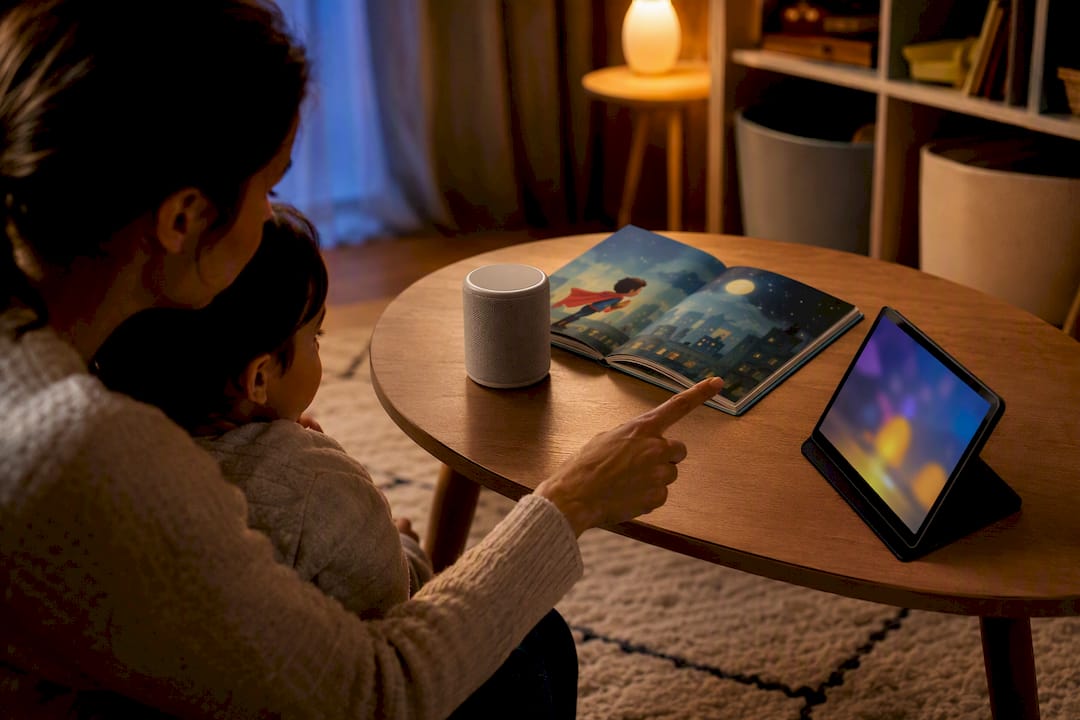
A single 7 minute episode can anchor a full 20 minute routine if you build a little structure around it.
- Run a 30 second pre-listen ritual. Say your child's hero name out loud and pick a "mission object," a toy or household item that stands in for something in the episode.
- Listen together, whether that's at bedtime, in the car, or during a weekend "hero hour." Sibling-inclusive plans work well here since everyone can listen to their own episode back to back.
- Extend it afterward with one of three quick activities: ask guided talk prompts about what the hero decided and why, act out a favorite scene, or draw the "hero gadget" your child imagines using next time.
Storytelling paired with role-play is linked to gains in self-esteem and social-emotional skills in young children, making events like the Athens Science Festival a great place to complement these audio adventures with interactive family science activities. Keep the follow-up short. Five minutes of guided talk does more for vocabulary than twenty minutes of passive replay.
For families weighing this format against printed books or interactive apps, it's worth comparing personalized podcasts against generic books for your child's specific routine.
Why We Build Episodes This Way
Personalization research keeps landing on the same finding: the self-reference effect is real, and it doesn't require heavy customization to work. That's why weekly name-based superhero episodes make sense as a format, not a gimmick. The research on shared listening backs up what we see anecdotally from families: a short, well-made episode paired with a few minutes of talk afterward does more for a child's attention and vocabulary than a longer, generic story ever will. We also lean on parental oversight in production, since trust signals like sample episodes matter more to parents than any feature list.
— JG
G45 Hero Cast: How to Start Your Child's Weekly Adventure
Some providers build a new personalized superhero episode for your child every week, delivered to a private podcast feed on a regular schedule, so it's ready for the next car ride, bedtime, or weekend hero hour.
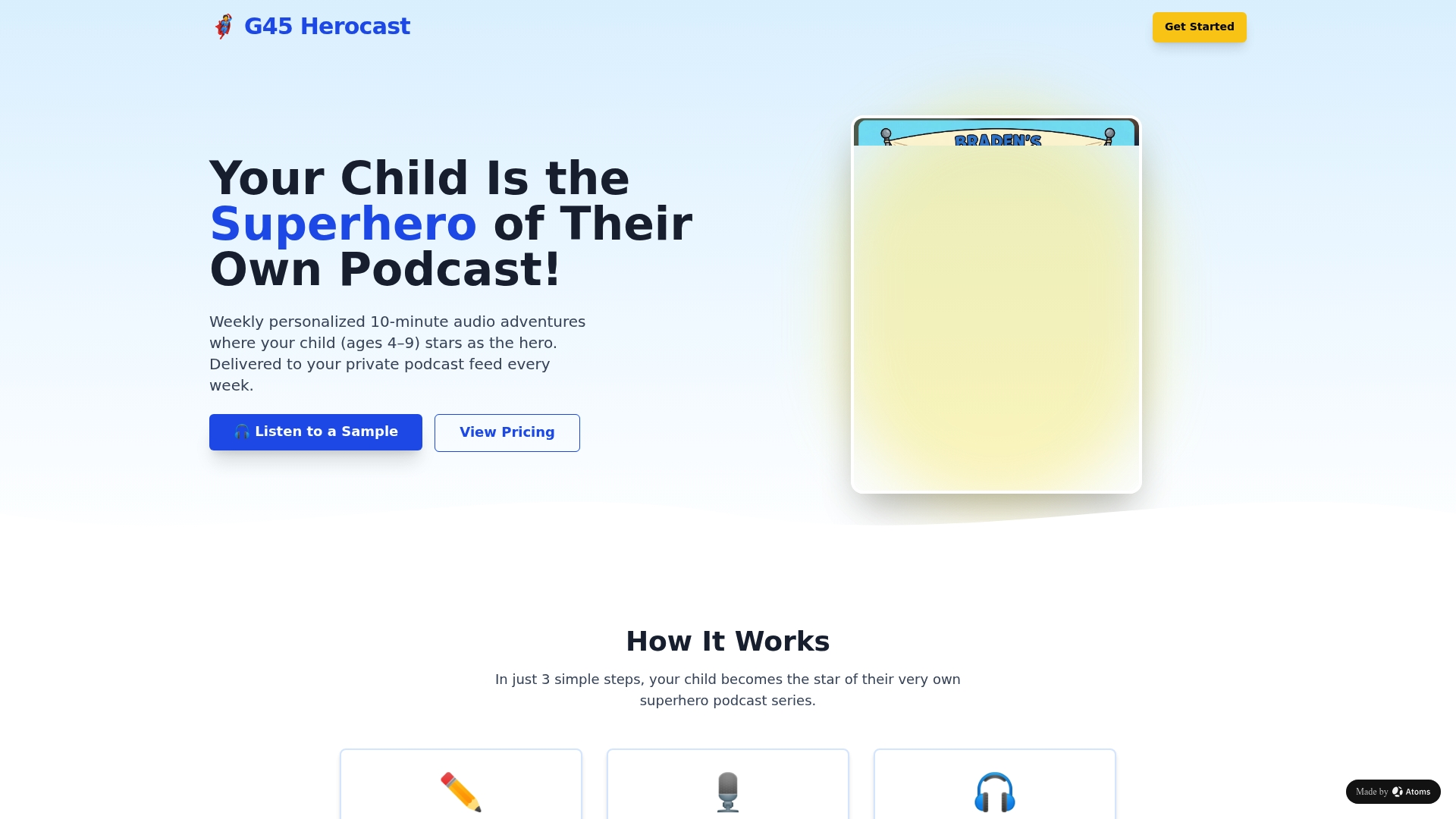
Each episode uses details like a child's name, age, and interests to put them at the center of the adventure, embodying the kind of personalization linked to stronger engagement and attention. Subscriptions often run monthly or annually, and some providers offer sibling plans so multiple kids can have their own stories. Gift plans may also allow others to start a subscription without managing billing.
Parents care about a few specific things, and some personalized podcast providers build their services around them:
- Personalization built from name, age, and a few chosen interests
- New episodes delivered regularly to a private feed, not a public one
- Options for sibling and gift subscriptions
- Straightforward cancellation and privacy controls
If your child is between 4 and 9 and you want an audio adventure that's actually about them, start a subscription at G45 Hero Cast and pick monthly or annual billing based on how long you want to try it out.
Selected Research and Resources
- Effect of personalization in children's fables: supports the self-reference and minimal-personalization findings above.
- Shared reading study with personalized digital books: backs the vocabulary and shared-reading benefits.
- Personalization and social agency study: supports the narrative transfer findings.
- AI-assisted personalized storytelling prototype: informs the parental oversight discussion.
Sources
- Effect of Personalization in Children's Fables | F1000Research
- An empirical investigation of parent-child shared reading of digital personalized books
- Personalization effects on narrative transfer and social agency (2025 study)
- High-fidelity prototype for AI personalized interactive stories (2024)
FAQ
Are science podcasts for kids the same as personalized superhero podcasts?
Not in this context. This article focuses specifically on weekly personalized "child-as-hero" superhero audio subscriptions for a typical age range between early childhood and middle childhood, not educational science-themed shows.
What age range works best for personalized superhero podcasts?
Most providers design episodes for children in a typical age range between early childhood and middle childhood, matching episode length and vocabulary to that developmental range.
Does personalization actually improve engagement, or is it just marketing?
Peer-reviewed research shows even minimal personalization increases affective engagement and can improve narrative transfer, so the effect is measurable, not just a sales claim.
How much of my child's personal information do these subscriptions need?
Most services need only a first name, age, and a few interests, and you should confirm in the privacy policy how that data is stored and whether you can delete it later.
Can siblings each get their own personalized episode?
Yes, most weekly subscription services offer sibling plans so each child stars in their own separate episode.