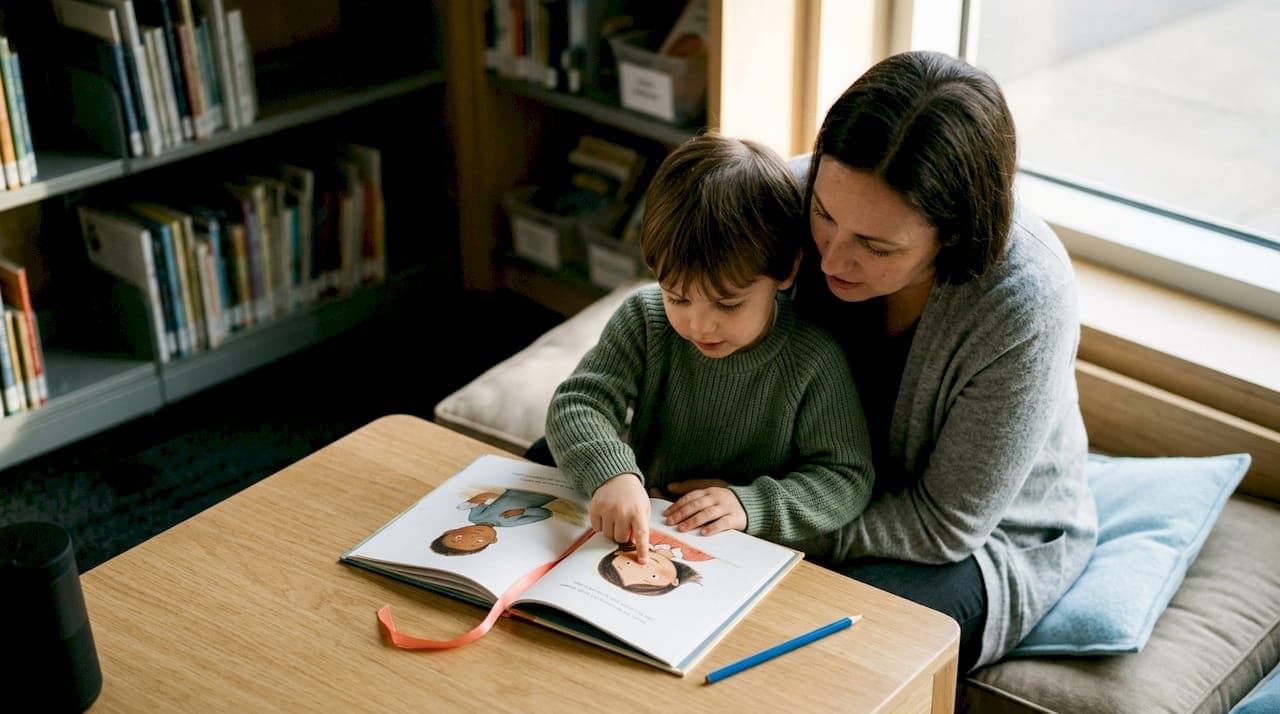
Stories are one of the fastest ways to teach children to understand and care about other people's feelings. Tonight, pick one story with a character who struggles or changes, read or listen to it together, and ask one question afterward: "How do you think they felt?" That single move, repeated a few times a week, builds a skill backed by decades of developmental research.
TL;DR:
- Stories with emotional weight and characters facing conflict or change are essential to generate genuine empathy in children.
- Deliberate storytelling techniques, such as slow reading and expressive delivery, enhance emotional transportation and perspective-taking.
- Active follow-up activities like role-playing and empathy journals reinforce learned empathy behaviors beyond just understanding feelings.
- Personalized audio stories that feature children as heroes create a powerful mirror effect, speeding emotional transport and connection.
- Merely describing characters' feelings is insufficient; bridging narrative understanding with actions, like helping or role-play, fosters real empathetic behavior.
Table of Contents
- Why Stories Build Empathy: Windows, Mirrors, and Sliding Doors
- How to Turn Any Story Into an Empathy Lesson
- Stories and Formats That Actually Work by Age
- Activities That Turn Listening Into Practice
- Where Personalized Audio Fits This Work
- A Screen-Free Way to Practice What You've Read Here
- What Adults Get Wrong About Teaching Empathy Through Stories
- Sources
- FAQ
Why Stories Build Empathy: Windows, Mirrors, and Sliding Doors
Empathy isn't fixed at birth. The Center on the Developing Child at Harvard University has documented that emotional capacities, including empathy, get built into brain architecture through early relationships and repeated experiences. That's the biological case for making stories a habit rather than a one-off lesson.
The mechanism is what researchers call emotional transportation. When a child gets absorbed into a character's world, their brain runs a kind of rehearsal for real social situations. Research from the University of Bath on fiction reading and empathy found that this immersion reliably improves perspective-taking, but only when the reader actually feels pulled into the narrative, not just decoding words on a page.
Making Caring Common at Harvard's Graduate School of Education frames this with three useful lenses:
A story can work as a window into someone else's life, a mirror reflecting the child's own experience, or a sliding door that opens into new action and behavior.
Choosing stories deliberately across all three modes, rather than defaulting to whatever's on the shelf, is what turns casual reading into empathy training.
How to Turn Any Story Into an Empathy Lesson
The method works the same whether you're a parent doing bedtime reading or a teacher running a classroom lesson. Four steps, repeated consistently, build the habit.
- Choose a story with emotional weight. Look for a character facing a hard choice, a mistake, or a change of heart. Flat plots with no internal conflict give kids nothing to practice on.
- Read or listen for immersion, not speed. Slow down at emotional beats, use voice changes for different characters, and pause after a big moment instead of rushing to the next page. Research on emotional transportation shows that a warm setting, close physical proximity, and expressive delivery make younger children far more likely to engage emotionally with a story.
- Discuss with open questions, not quizzes. Skip "what happened next" and ask things that require a guess about someone else's inner life.
- Follow up with a small action. Empathy that stays in conversation fades fast. Move it into practice with a helping task, a short role-play, or a drawing.
Good discussion prompts to keep in your back pocket:
- "How do you think [character] felt right then, and why?"
- "Have you ever felt like that? What happened?"
- "What could [character] have done differently?"
- "What would you do if you were them?"
Pro Tip: Save your best "why" question for after the story ends, not during. Interrupting the plot to quiz a child breaks the emotional transport you just spent ten minutes building.
Adjust for age. Four to six-year-olds do best with short, single-conflict stories and one or two feeling words per session. Seven to nine-year-olds can handle multi-character conflicts and "what would you do" hypotheticals. Ten to twelve-year-olds are ready for morally ambiguous stories where no one is simply right or wrong.

Stories and Formats That Actually Work by Age
You don't need a curated library, just a few reliable picks and formats that hold a child's attention long enough for the emotional payoff to land.
- Ages 4 to 6: Simple picture books about sharing, fear, or feeling left out work as mirrors, since young children are still mostly processing their own emotions rather than others'.
- Ages 7 to 9: Stories with a character who misjudges someone else and later corrects course work well as windows into a peer's experience.
- Ages 10 to 12: Stories dealing with fairness, loyalty, or difficult family situations work as sliding doors, since kids this age can connect a character's dilemma to a choice in their own life.
- Audio and read-alouds: A read-aloud with expressive voices, a short podcast episode, or a brief film clip all create the same transportation effect as a printed book, and audio in particular removes the distraction of illustrations pulling focus away from tone and voice.
- Diverse and morally complex texts: Stories featuring characters from different backgrounds, family structures, or life circumstances stretch empathy further than stories about characters who look and live like the child does. The STEM storytelling examples for parents and educators collection is a solid source for stories that pair emotional depth with a different subject angle, useful if you want variety beyond typical fiction picks.
Activities That Turn Listening Into Practice
Reading alone gets a child to notice feelings. Active response is what makes it stick, since combining storytelling with role-play and creative follow-up produces measurably larger gains in empathy than storytelling alone.
- Hotseating. One child plays the character. Give them three background facts about the character's situation. The group asks five in-character questions. Then the child steps out of the role and answers: "What did that feel like to answer those questions?"
- Role-play with a twist. Act out the story's central conflict, then swap roles so each child plays both sides of the disagreement.
- Empathy journals or two-voice dialogues. After a story, have the child write or draw one sentence from each of two characters' points of view about the same event.
- Track small signals. Watch for an increase in feeling words used spontaneously, and notice whether a child starts offering comfort or help without being prompted. Both are real markers of empathy taking root.
Pro Tip: Hotseating works even with reluctant talkers if you let them answer in character as an animal or object first. The distance makes tough questions feel safer to answer honestly.
Where Personalized Audio Fits This Work
Personalized audio stories add something the windows and mirrors framework rarely gets in a book: the child becomes the character. That's about as strong a mirror effect as storytelling can produce, and it tends to pull kids into emotional transport faster because they're not imagining someone else's shoes, they're already wearing them.
Some personalized audio story services offer weekly custom superhero podcasts where a child stars as the hero in an episode shaped around their name, interests, and personality. Pair an episode with one follow-up question, "What would you have done in that moment?", and you've got a sliding door moment built right into a bedtime routine. A short role-play or reflection activity after listening extends the effect well past the episode's runtime.
A Screen-Free Way to Practice What You've Read Here
Everything in this guide works with a library book, a classroom read-aloud, or a bedtime story you already own. Some services turn the mirror effect up a notch by making your child the actual hero of a weekly, custom-written audio adventure delivered straight to a private podcast feed.
It's a fully screen-free option, which matters if your family is trying to cut down on device time without cutting out story time. Pair each new episode with one prompt from this article, "What did the hero feel when things got hard, and what would you have done?", and you've turned a fun weekly treat into a repeatable empathy practice. The Bedtime Standard plan costs a monthly subscription fee for weekly personalized episodes, and the Grandparent Gift plan is available as an annual option, a solid choice if a grandparent wants to stay part of a grandchild's story time from a distance. If reading together already feels like a stretch some nights, an episode that's already written, produced, and waiting in the feed removes one more barrier between your family and that nightly connection. Visit G45-hero-cast to see current episode samples and start a subscription.
What Adults Get Wrong About Teaching Empathy Through Stories
Most advice on this topic treats empathy like a vocabulary lesson: read the story, name the feeling, move on. That's not wrong, exactly, but it's incomplete, and it's why so many well-meaning bedtime routines produce kids who can label an emotion on command without actually acting more considerate toward a sibling five minutes later.

The piece everyone skips is the sliding door. Windows and mirrors get plenty of attention because they're easy: pick a story, ask how the character felt, done. Turning a story into a changed behavior, even something as small as helping a sibling without being asked, requires a deliberate bridge from "I understood how that character felt" to "I did something because of it." Skip that step and you get emotional literacy without emotional practice, which is a bit like teaching someone the rules of a sport and never letting them play.
Personalized stories have a real advantage here, but not the one people expect. It's not the novelty of hearing your own name. It's that when a child is the hero facing the dilemma, the sliding door and the mirror collapse into the same moment. There's no gap between "how did the character feel" and "how did I feel," because the character is the child. That's worth building into any weekly story routine, not as a replacement for library books and classroom read-alouds, but as one more tool in a habit that, done consistently, genuinely changes how kids treat each other.
— JG
Sources
- Center on the Developing Child at Harvard University — Brain architecture key concept
- Making Caring Common (Harvard GSE) — How to use stories to help kids develop empathy
- University of Bath research on how fiction reading influences empathy
FAQ
What are some stories that can help teach empathy?
Stories with a character who faces a hard choice, makes a mistake, or changes their mind work best, since they give a child real emotional material to discuss. Picture books about sharing or feeling left out work well for ages 4 to 6, while morally complex stories about fairness or loyalty suit ages 10 to 12 better.
What is the best way to teach empathy?
The most reliable method combines a story with a discussion and a follow-up action, rather than reading alone. Ask open questions like "How do you think they felt?", then move the lesson into practice with a small helping task or a short role-play, an approach supported by research on storytelling combined with active follow-up.
How does storytelling build empathy?
Storytelling works through emotional transportation, where a child becomes absorbed in a character's experience and essentially rehearses that perspective. The University of Bath's research found this immersion reliably improves perspective-taking when the story genuinely pulls the listener in.
What type of stories promote empathy the most?
Stories that work as windows, mirrors, or sliding doors according to the Making Caring Common framework tend to do the most work, especially ones featuring characters from different backgrounds or family situations. Personalized stories where a child plays the hero, like the weekly episodes from G45-hero-cast, create an especially strong mirror effect since the child and the character are one and the same.