
This page gives you ten age-labeled confidence-building stories your child can read or listen to tonight, plus simple follow-up questions and activities that turn each one into real practice. The picks lean on approaches used by resources like Mini Meditations for Kids and The Kids Tales, and every entry works as a read-aloud, a short audio track, or a jumping-off point for your own version.
TL;DR:
- Short, age-appropriate stories such as The Little Engine That Could and Giraffes Can't Dance help build effort, resilience, and self-belief in children across different developmental stages.
- Pairing stories with a brief, focused routine involving reflection questions and active reinforcement boosts their impact into lasting confidence habits.
- Using personalized stories featuring a child's name and interests increases the likelihood that children will relate to and internalize the confidence lessons.
- Audio tracks of three to seven minutes with calming narration support emotional regulation, especially for tired or anxious children, while longer stories deepen understanding of effort and failure.
- Consistent, weekly exposure to confidence-building stories, supported by active follow-up activities, creates the foundation for sustained self-esteem growth.
Table of Contents
- Confidence Building Stories by Age Group
- How to Turn a Story Into a Confidence Habit
- Picking the Right Format for the Moment
- Why Personalized Stories Make Confidence Stick
- Make Confidence Stories a Weekly Habit, Not a One-Off
- Trusted Places to Keep Exploring
- Sources
- FAQ
Confidence Building Stories by Age Group
Stories work best when they match where your child actually is developmentally, not just their age on paper. A 3 year old needs simple stakes and a happy, obvious ending. A 7 year old can handle a character who fails twice before figuring it out. Here are ten stories grouped into three age bands, with a note on why each one builds confidence and how to deliver it.
Ages 3 to 5
- The Little Engine That Could. A small train convinces herself she can pull a load bigger than she's ever handled, repeating "I think I can" until she does. It teaches that effort, not size, decides outcomes. Best as a slow read-aloud with a sing-song voice on the repeated line.
- Leo the Late Bloomer. Leo can't read, write, or draw like his friends until, quietly, he can. The story rewards patience over comparison, which matters for preschoolers who measure themselves against older siblings. Works well as a short audio track before nap time.
- The Original Tortoise and the Hare. Slow and steady wins, and losing your temper doesn't help you win faster. Keep the read-aloud short and ask your child to act out the tortoise's plodding walk afterward.
- A Bravery Prompt You Build Together. Invent a two-minute story where your child's stuffed animal is scared of something small (the dark, a loud dog, a new slide) and figures out one brave step. Let your child supply the brave step out loud. This is the fastest way to make a story feel personal without any prep.
Ages 5 to 7
- Giraffes Can't Dance. Gerald the giraffe is mocked for his clumsy dancing until he finds his own rhythm with help from an unexpected friend. It's one of the clearest read-alouds for kids who feel like they don't fit in. Ten minutes, best read slowly with room for questions.
- Josie the Jaguar. This audio story follows a jaguar who has to face a specific fear and talk herself through it, using humor to keep young listeners engaged while still modeling self-belief and resilience. Good for car rides or quiet play, not just bedtime.
- The Dot. A teacher tells a girl who insists she can't draw to just make a dot on the page and sign it. That one dot becomes the start of real confidence in her own creative voice. Pair this one with paper and crayons right after.
Ages 7 to 9
- Salt in His Shoes. Based on Michael Jordan's childhood, this story shows a kid getting cut from a team and working, quietly and consistently, until he's good enough. It's a strong pick for kids who've just faced a real disappointment, like not making a team or losing a spelling bee.
- Rosie Revere, Engineer. Rosie's inventions fail publicly, more than once, before one finally works. The story explicitly reframes failure as data, not verdict, which is the exact mindset shift that separates a confident problem-solver from a perfectionist. Best read together with a pause after each failed invention to ask what Rosie learned.
- A Personal "Bravery Log" Story. Have your child narrate, out loud or into a phone recording, one true moment this week when they did something hard. Play it back a week later. Nothing manufactured beats a real memory told in your child's own words.
How to Turn a Story Into a Confidence Habit
A story alone rarely changes behavior. What builds actual self-belief is the small routine wrapped around it, the part most parents skip because it feels like extra work. It isn't. A four-step loop, run in under ten minutes, is what makes the difference between a story that entertains and one that sticks.
The routine:
- Set intention. Before you start, say one line: "Let's see what this character does when things get hard."
- Read or listen with a purpose. Don't narrate for background noise. Sit down, make eye contact during key moments, and pause once at the hardest point in the story.
- Ask two or three reflection questions. Save the full list for after the story ends, not mid-scene.
- Run a short reinforcement activity. Three to ten minutes, tied directly to what just happened in the story.
Six questions that build agency, not just comprehension:
- What would you try again if it didn't work the first time?
- What's one brave thing this character did that you've also done?
- What do you think they were scared of before they tried?
- If you were the character, what would you have done differently?
- What's something hard you're working on right now?
- Who helped the character, and who helps you when things are hard?
Two age-adapted activities:
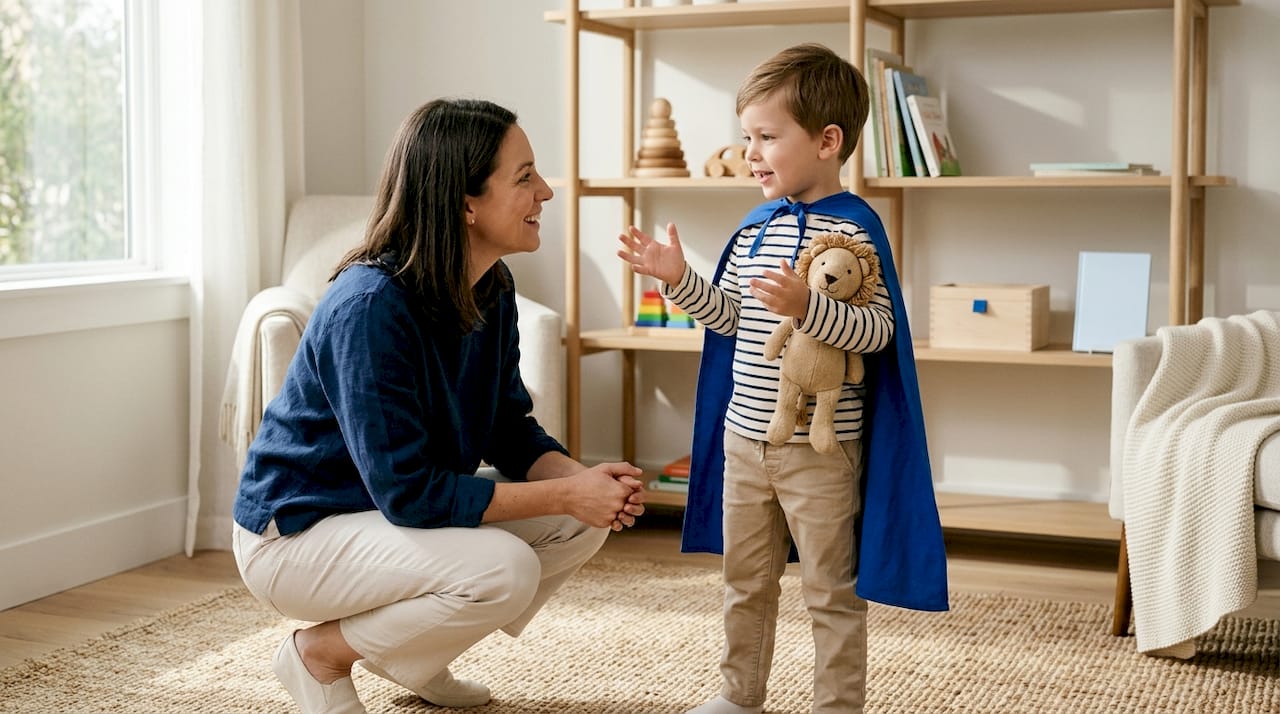
Role-play a brave moment (ages 3 to 6). Pick one scene where the character faced something scary and act it out together, switching roles halfway through. Keep it under five minutes so it stays a game, not a lesson.
The bravery jar (ages 6 to 9). Grab any jar and a stack of small paper slips. After each story, have your child write or draw one "brave thing I'll try this week," drop it in, and revisit the jar every Sunday to talk about what happened. It turns a single story into a running record your child can actually see grow.

Pro Tip: Keep the whole loop to three to seven minutes most days rather than a big production once a week. Teachers and child educators who work with these methods consistently point to short, repeated practice beating rare, long sessions for building emotional skills.
Picking the Right Format for the Moment
Not every night calls for the same kind of story. A wired, overtired five-year-old at 8 p.m. needs something different than a curious seven-year-old on a Saturday afternoon.
Short guided audio, in the three to seven minute range, works best for a quick emotional reset. These tracks typically use breathing, visualization, and simple affirmations, and Mini Meditations for Kids built its whole format around exactly that combination for ages 5 to 10. Longer narrative stories, in the fifteen to thirty minute range, do something different: they let a child sit inside a fuller arc of failure, effort, and payoff, which is why platforms like Moshi lean on hundreds of longer tracks for deeper social-emotional work.
Before you pick either one, run through a quick checklist:
- Length. Tired child, short track. Alert and curious child, longer story is fine.
- Language simplicity. Match vocabulary to age, not to what impresses you.
- Narrator tone. A calm, unhurried voice matters more than production polish.
- Child's current state. Anxious kids do better with breathing first, then story.
- Safety basics. Keep volume moderate, use screen-free audio where possible, and check headphone volume limits for young ears.
Pairing a short breathing exercise before the story itself, a trick some audio story creators build directly into their tracks, helps kids settle enough to actually absorb the message instead of just hearing words.
Why Personalized Stories Make Confidence Stick
Kids don't just listen to stories, they map themselves onto the hero. When a character shares your child's name, hobby, or hometown, the story's brave choices start to feel like their own choices. That's the whole premise behind G45-hero-cast, which builds weekly personalized superhero episodes around a real child's traits. A story where the hero loves dinosaurs and lives on the same street your child does turns "what would the character try again?" into "what did I try again?", and that small shift is what makes a follow-up question actually land.
— JG
Make Confidence Stories a Weekly Habit, Not a One-Off
Reading one great story tonight helps. A new one showing up every week, without you having to hunt for it, is what actually builds the habit. G45-hero-cast turns your child into the hero of their own weekly superhero podcast, using their name, interests, and real details, and drops each new episode into a private podcast feed every Sunday.
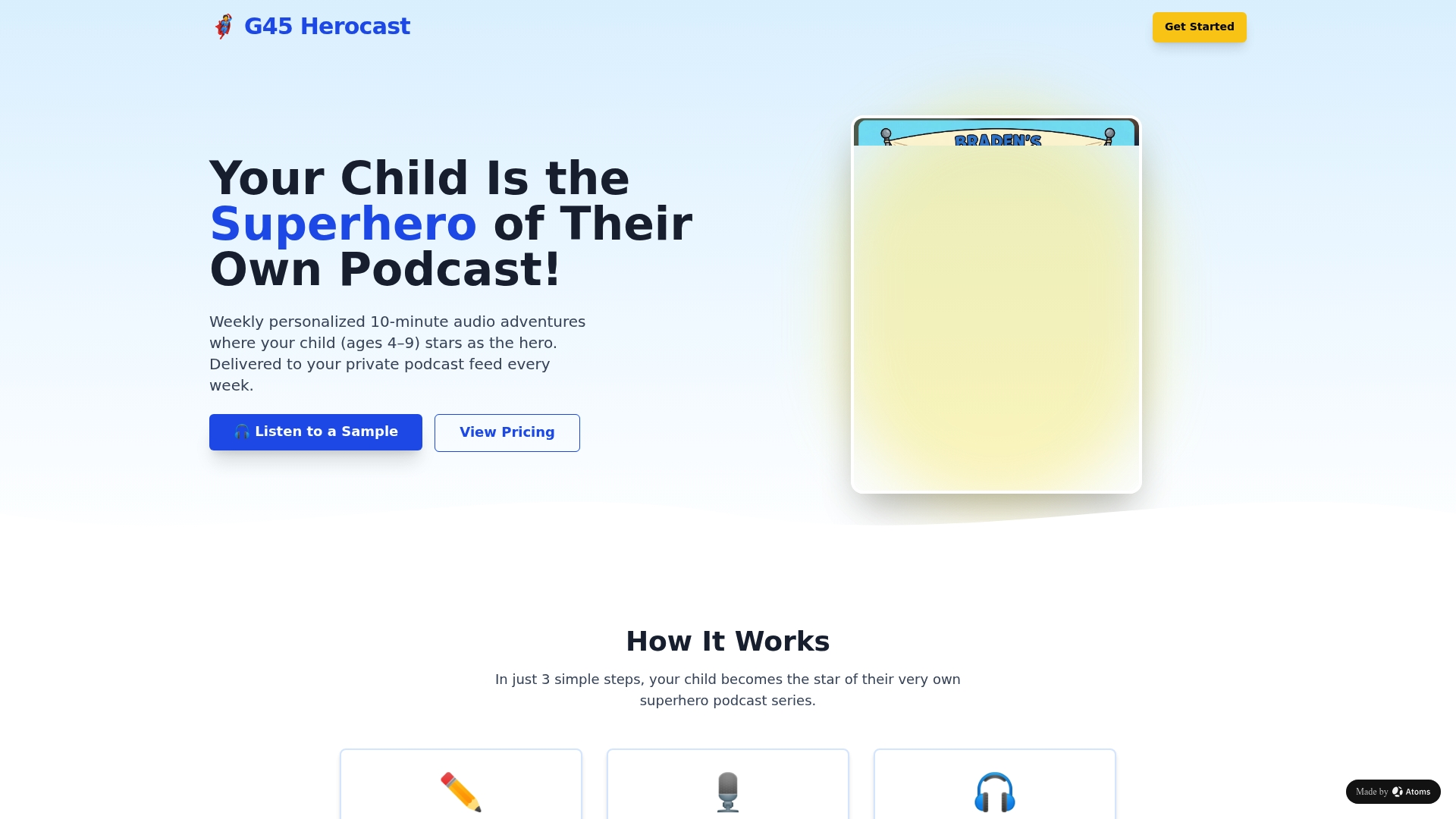
Parents choose it for qualities like being screen-free and consistent, with episodes providing moments to discuss bravery similar to the questions in this guide. The Bedtime Standard plan runs $99 per month, and the Grandparent Gift plan runs $999 per year for families who want to gift a full year of episodes. Head to G45-hero-cast to pick a plan and get your child's first episode into their feed this week.
Trusted Places to Keep Exploring
- Mini Meditations for Kids: short, evidence-informed audio for emotional regulation.
- Moshi: hundreds of longer audio stories and meditations for sleep and social-emotional learning.
- The Kids Tales: free, curated confidence stories for ages 3 to 8.
- Best Podcasts for Preschoolers: further audio picks for younger listeners.
- Age-Appropriate Podcasts for Kids: guidance on matching audio length to age.
Sources
- Mini Meditations for Kids | Apple Podcasts
- Moshi: Award-Winning Kids' Sleep & Learning App
- Stories That Build Confidence - The Kids Tales
FAQ
What are the 5 C's of confidence?
The 5 C's commonly referenced in child development conversations are competence, confidence, connection, character, and caring, a framework used to describe well-rounded youth development rather than a strict formula. Stories that let a child practice trying, failing, and trying again mainly build the competence and confidence pieces of that set.
What are some of the best confidence-building stories for kids?
Strong picks include The Little Engine That Could, Giraffes Can't Dance, and Rosie Revere, Engineer, all of which model a character facing doubt and pushing through anyway. Personalized options, like the weekly episodes from G45-hero-cast, work well too since the child hears themselves as the one overcoming the challenge.
What are some confidence-building activities to pair with a story?
Two reliable ones are role-playing a brave moment from the story right after you finish it, and keeping a "bravery jar" where your child drops in a weekly written or drawn goal. Both take under ten minutes and turn a passive listen into active practice.
What are the different types of self-confidence kids can build?
Child development research generally points to areas like physical confidence (trying new physical tasks), social confidence (speaking up, making friends), academic confidence (tackling schoolwork), and emotional confidence (naming and managing feelings). A well-rounded rotation of stories, some about trying a new sport, some about speaking up, tends to cover more ground than repeating the same theme every night.
How much does G45-hero-cast cost?
The Bedtime Standard plan is $99 per month, and the Grandparent Gift plan is $999 per year, both available directly at G45-hero-cast.