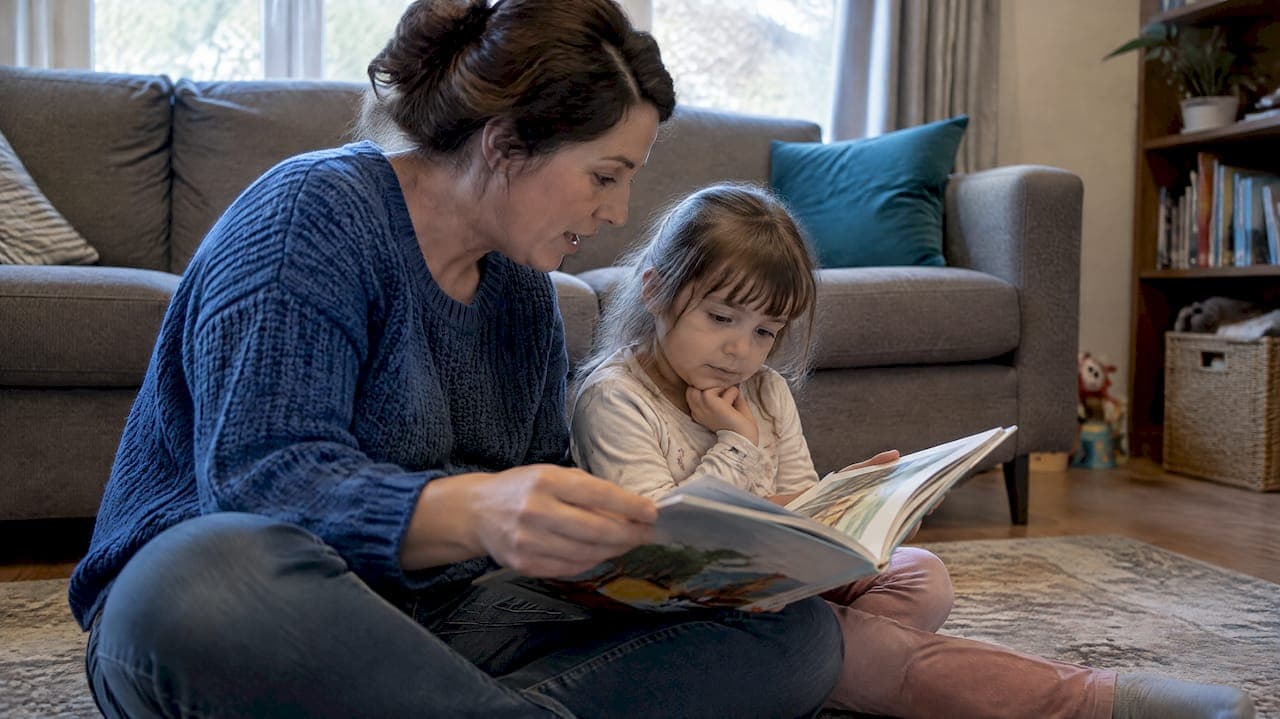
Use this rule of thumb: board books carry single words and phrases, picture books often have up to about 500 words, and lengths vary widely for early readers and chapter books. Scholastic cites a common middle-grade range of 30,000 to 50,000 words. Interaction, complexity and your child's response matter more than any fixed count. The guidance below draws on Reading Rockets, RIF and Scholastic.
TL;DR:
- For preschoolers, keep read alouds near 10 minutes; general sessions can run 15 to 20 minutes, but stop or switch when attention fades.
- Picture books usually top out around 500 words, while middle grade novels commonly run 30,000 to 50,000 words; these ranges are guides, not requirements.
- For children ages 6 to 8, offer illustrated early chapter books and series, alternating quick finishes with longer reads to build confidence and stamina.
- Choose by interest and developmental stage, then adjust to body language; leaning in and requesting rereads signal a fit, while looking away suggests a change.
- Repeating a favorite book with questions on the second reading can strengthen preschoolers' vocabulary, story recall, and comprehension more than rushing through new titles.
Table of Contents
- Ages 0–2: board books and what to read aloud
- Ages 2–4: toddlers and early picture-book listening
- Ages 4–6: picture books to early readers
- Ages 6–8: transitioning to chapter books and independent reading
- Ages 8–11 (middle grade): length, themes and reading stamina
- Ages 12+: YA overview
- How long should a read-aloud session last?
- How to choose age-appropriate books and adjust complexity
- Why this guidance is trustworthy
- Bedtime stories versus daytime reading
- Pacing and storytelling style for different age groups
- Customizing story length for individual children
- Author perspective: why short, tailored audio stories can help in real family routines
- G45 Hero Cast: a screen-free audio option for ages 4 to 9
- FAQ
- Sources
Ages 0–2: board books and what to read aloud
For babies and young children, a "story" is mostly a shared experience with pictures, textures and sounds. Board and fabric books are built for this stage because small hands can grab, chew and flip them. Many have very few words, and some have no full narrative at all, just words paired with pictures. That is fine. At this age the book works as a manipulative as much as a text.
What matters more than word count is the sound of your voice. Rhythm, repetition and sensory features do the heavy lifting, and plot can wait. Reading Rockets notes that reading aloud gives children access to richer vocabulary and ideas long before they can decode text themselves, and that benefit starts with these earliest sessions.
- Choose board or fabric books with one word or a short phrase per page.
- Point at pictures and name them, then pause so your child can babble back.
- Sing, rhyme and repeat favorite pages instead of pushing to the last page.
- Stop when your child turns away, even if that happens after only a few pages.
Pro Tip: Let your baby hold, mouth and flip the book. A session where the book gets chewed and you only read three pages still counts as a good read-aloud.
Ages 2–4: toddlers and early picture-book listening
Young children are ready for simple stories, and picture books are the natural format. Look for a small amount of text per page, which can make the story easier to follow. The illustrations should carry a good share of the meaning, so a child who cannot yet follow every word can still follow the story.
Predictable language is your friend here. Repeated phrases, familiar routines and refrains let toddlers anticipate what comes next and join in. Reading Rockets advises choosing vivid pictures, predictable language and engaging patterns for very young listeners and staying alert to their body language and attention signals. A wriggling toddler is giving you data, not misbehaving.
Engagement beats completion. Pointing, asking "What's that?" and pausing for a child to fill in a repeated line turns a passive listen into a conversation. We cover that technique in more depth in the session guidance below.
- Pick books with a small amount of text per page.
- Favor repetition, rhyme and strong, clear illustrations.
- Ask simple questions: "Where's the dog?" or "What does the cow say?"
- Let your toddler turn pages, and reread favorites as often as they ask.
Ages 4–6: picture books to early readers
At this stage, length options widen. Picture books usually run up to about 500 words. A bookseller's overview in Publishers Weekly notes that picture-book word counts have trended downward, with editors often treating 500 words as a practical upper limit, though exceptional writing can earn more room.
Early readers are a different animal. They typically use controlled vocabulary and short chapters or chapter-like breaks. Children at this stage often want both: a picture book read aloud at bedtime and an early reader they can start sounding out themselves.
Keep read-aloud value high even as independent reading begins. Reading Rockets summarizes research showing that repeated interactive read-alouds improve vocabulary, story recall and comprehension for preschool and kindergarten children. Reading the same book twice, with questions the second time, often teaches more than racing through two new ones.
Research finding: Repeated interactive read-alouds and second reads enhance vocabulary, story reconstruction and comprehension for preschool and kindergarten children.
- Use picture books up to about 500 words for shared bedtime reading.
- Offer accessible early readers for short independent sessions.
- Reread a favorite and ask "What happened first?" the second time through.
- Let your child "read" the repeated lines to you.
Ages 6–8: transitioning to chapter books and independent reading
Chapter-book lengths vary widely, as do the lengths of books in a series. That variation is why a first chapter book can feel easy to one seven-year-old and daunting to another. Pacing and characters matter as much as length. A short book with a slow start can lose a child faster than a longer book with a lively one.
Keep some illustration support for emerging readers. Pictures break up the page, confirm meaning and make a long text feel manageable. Meanwhile, you can keep reading aloud books slightly above your child's independent level, since listening comprehension runs ahead of decoding for years.
A mix of shorter and longer reads can build both confidence and stamina. A quick, funny book finished in one sitting feeds the sense of "I can do this," while a longer one stretches endurance.
- Start with illustrated chapter books near the shorter end of the range.
- Choose series so a child who loves one book has an easy next step.
- Alternate quick finishes with longer, more demanding reads.
- Keep reading a chapter aloud at bedtime, even after your child reads alone.
- Praise effort and stamina, not speed.
Ages 8–11 (middle grade): length, themes and reading stamina
Middle grade is typically pitched at ages 8 to 11. Scholastic's primer on middle grade versus young adult novels distinguishes the two by protagonist age, themes and content limits, and cites a common middle-grade range of 30,000 to 50,000 words. Protagonists tend to be close in age to the readers, and content stays free of explicit sex or graphic violence.
Length is shifting, though. Publishers Weekly reports a trend toward shorter middle-grade books to match readers' stamina and busy schedules, while noting that well-written longer books still succeed. Illustration-driven pacing and brisk chapters are part of how shorter titles hold attention.
For parents, the practical takeaway is not to equate a thick book with a better one. A child who finishes a novel and asks for another is building the habit that matters.
- Match the protagonist's concerns to your child's, not to the book's page count.
- Try shorter or illustrated middle-grade titles for reluctant readers.
- Use chapter breaks as natural stopping points for reading sessions.
- Read a longer book aloud together while your child reads shorter ones alone.
Ages 12+: YA overview
Young adult fiction typically runs about 50,000 to 75,000 words, according to Scholastic's middle grade and YA primer. Protagonists are usually teenagers, themes are more mature, and first-person narration is common.
This band sits mostly beyond the bedtime read-aloud window. A teenager is unlikely to want a parent reading chapters aloud, and the length no longer maps neatly to a single session. Still, knowing where YA begins helps writers position a manuscript. A younger protagonist and gentle themes may point toward middle grade. An older teen protagonist and more mature themes may point toward YA, and the shelf, the editor and the reader will treat it that way.
How long should a read-aloud session last?
The most consistent guidance comes from RIF, whose read-aloud guide recommends sessions of about 15 to 20 minutes for general read-alouds and around 10 minutes for preschoolers. Choose books that can be finished in one sitting, and prepare a few open-ended questions before you start.
Treat those numbers as starting points. If your child is leaning in and asking questions, keep going. If they are bored or confused, Reading Rockets recommends stopping or shifting activities rather than forcing completion, and using dialogic prompts to re-engage interest.
Here is a simple dialogic routine:
- Read a short passage, then pause on a picture.
- Ask a completion prompt ("The caterpillar ate through an apple, and then...?") or an open-ended question ("What do you think will happen?").
- Add a WH- question: who, what, where, why.
- Praise the answer and expand it with a detail.
- Reread the book another day and ask different questions.
Short books suit a reconstruction exercise, where your child retells the story in their own words, which deepens comprehension.
Pro Tip: Ask your questions after a story's dramatic moments, not before. Children answer more naturally when they have just felt the surprise.
How to choose age-appropriate books and adjust complexity
Parents and writers both need a quick filter. Here is one for each.
For parents:
- Interest comes first: a topic your child loves beats a "perfect" level.
- Pick a book you can finish in one sitting at your usual session length.
- Check that illustrations support the meaning for younger listeners.
- Skim a page for sentence length and vocabulary: a few new words are good, a wall of them is not.
- Harvard's Graduate School of Education also stresses matching books to a child's developmental level.
For writers:
- Pick one age band and write for it, rather than for "kids" in general.
- Test the draft with children in that band and watch when they drift.
- Trim any words that do not move the story or the feeling.
- For younger bands, let the illustration carry meaning the text does not need to repeat.
- Earn longer lengths with pacing and character investment, never padding.
Why this guidance is trustworthy
The recommendations here rest on published, named sources rather than hunches. Reading Rockets' summaries of read-aloud and dialogic reading research support the interactive techniques above. RIF's read-aloud guide and Scholastic's short-storytime advice shape the session-length rules, and Publishers Weekly's reporting informs the word-count trends.
We frame all of it as research-informed best practice, not clinical advice. Children differ, and no study turns a word count into a guarantee. Our own work on weekly personalized audio stories for ages 4 to 9 informs how we apply this guidance to real routines, but the figures and claims you read in this article come from the sources linked in it.
Bedtime stories versus daytime reading
Bedtime and daytime reading do different jobs, so they deserve different lengths. Daytime reading is often active: a child is alert, curious and ready to answer questions, so longer sessions with plenty of dialogic prompts work well. Within the 15 to 20 minute range RIF suggests for general read-alouds, daytime is where you can use the longer end and try slightly more complex books.
Bedtime is about winding down. The goal is calm, connection and a predictable ending, not coverage. A tired child has less stamina, so the same book that worked at 10 a.m. may need trimming at 7:30 p.m. Choose one picture book instead of three, favor familiar stories with soothing rhythm, and keep questions soft or skip them. For preschoolers, RIF's roughly 10-minute guideline is a sensible ceiling for a bedtime session.
Scholastic's five-minute storytime guidance supports the idea that short daily reading sessions are an effective way to increase reading frequency and vocabulary. A consistent short story can do more than an occasional long one.
A practical approach is to keep two tiers on hand. Keep a "short and sleepy" shelf for bedtime and a "long and lively" shelf for weekend afternoons. If your child asks for "just one more," another short book may be better than stretching the first. If you are looking for short audio options that fit a bedtime window, our roundup of audio adventures for kids is a good place to start.

Pacing and storytelling style for different age groups
Pacing is the hidden half of story length. Two stories of 400 words can feel completely different: one races, one drags. Matching pace to the age band keeps children engaged without lengthening the text.
For very young children, slow down and lean on rhythm. Linger on pictures, repeat phrases, and let silence do some work. A sing-song cadence and exaggerated sound effects hold attention better than plot twists.
For ages 4 to 6, vary the pace within a story: slow for setup, faster for action, slower again for the resolution. Use character voices. Phonological play helps too, since Oregon State University materials explain how devices such as alliteration support early language development, and young listeners love a tongue-twisting phrase they can repeat.
For children beginning chapter books, short chapters with a small hook at the end work well. A cliffhanger of even a sentence gives a child a reason to say "one more chapter." Keep scenes brisk and give characters a clear want early.
For middle-grade readers, pacing can stretch to include subplots and humor, but momentum still matters. This is where Publishers Weekly's observation about shorter middle-grade books applies: tight pacing helps readers with limited time and stamina.
Across all ages, watch your listener, not the clock. If eyes glaze, speed up, add a question or skip ahead. If eyes widen, slow down and savor.
Customizing story length for individual children
Age bands are averages, and no child is average. A child who has loved books for a long time may happily sit through a longer story, while another child on a high-energy day may lose interest quickly. Treat the ranges in this guide as a starting point, then adjust to the child in front of you.
Watch for signals. Leaning in, asking questions, requesting rereads and finishing sentences for you all say the length is right. Fidgeting, looking away, interrupting with unrelated topics or sudden silence say it is too long, too hard or ill-timed. Reading Rockets' advice to stay responsive to body language and attention signals applies at every age.
Developmental stage matters as much as birthday. A child who is newly learning to decode may need shorter texts for independent reading while still enjoying long stories read aloud. A child with a language delay may benefit from shorter, more repetitive books and extra dialogic prompting. Interests change attention too: a dinosaur-obsessed child will outlast any story about dinosaurs.
Reading Rockets' guidance on choosing read-aloud books from babies to third graders points toward rich language and a progression from picture books to chapter books, but it does not set a clock. Neither should you. Keep a short list of what works for your child and revisit it from time to time.
Short audio can fill gaps too. Our guide to interactive audio scripts shows how brief, active listening fits into a day when a full book does not.

Author perspective: why short, tailored audio stories can help in real family routines
Most advice about story length treats the book as the unit, but embracing local storytelling in comedy and live events reveals new ways to engage audiences. I think the routine is the better unit. Children ages 4 to 9 rarely fail at stories because they lack ability. They fail at the moment: a rushed evening, a tired parent, a long day behind them. A story that fits inside that moment tends to get used, and a story that gets used beats the perfect one that stays on the shelf. Short audio episodes, especially ones built around a child's own name and interests, can sit beside book reading instead of replacing it. They give the child a story to anticipate, and they give the parent a calm moment.
— JG
G45 Hero Cast: a screen-free audio option for ages 4 to 9
Everything above points to the same conclusion: short, engaging, age-matched stories work. That is exactly how we built our weekly superhero podcasts. Each episode is written around your child's name, age and interests, so they become the hero of their own audio adventure, and it arrives every Sunday in a private podcast feed. It is fully screen-free, and every episode is individually written rather than a generic script with a name swapped in.
- Bedtime Standard: $99 per month for weekly personalized episodes.
- Grandparent Gift: $999 per year, a way for grandparents to give a child a full year of adventures.
You can start either plan today at G45 Hero Cast, and we will take it from there.
FAQ
How long should a story be for a child?
It depends on age. Board books can be a few words, picture books usually stay up to about 500 words, and early readers typically use controlled vocabulary with short chapters or chapter-like breaks. Chapter book lengths vary widely. For read-aloud time, RIF suggests about 15 to 20 minutes generally, and about 10 minutes for preschoolers.
What is the average length of a children's picture book?
Most picture books run up to about 500 words, and editors often treat that as a practical upper limit. Toddler-oriented picture books are usually shorter, often with very few words per page, sometimes only a word or a short phrase per page, or one to three sentences per page. Exceptional writing can justify going longer.
When do children start reading chapter books?
Many children move toward early chapter books around ages 6 to 8, with lengths varying widely. Readiness varies, so look for illustrations, short chapters and a series your child likes. Reading chapters aloud at bedtime can bridge the gap.
Is a 7-year-old supposed to know how to read?
Most 7-year-olds are building independent reading skills, but the pace varies widely from child to child. Continuing to read aloud, using interactive questions and mixing short and longer books all support growth. If you have concerns, ask your child's teacher for guidance.
Sources
- Reading Aloud to Build Comprehension | Reading Rockets
- Reading with a child is a critical part of developing reading skills.