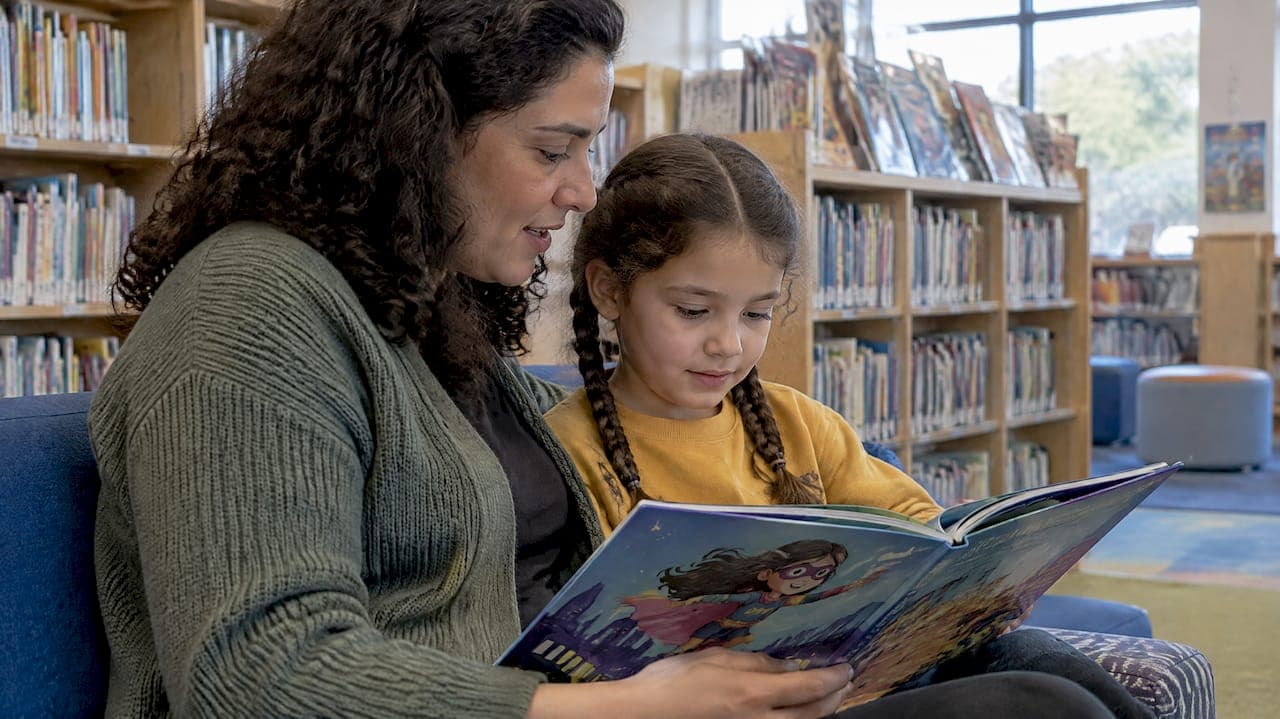
Yes, there are plenty of age-appropriate superhero stories built around brave, capable girls, and we have gathered the best of them here. This guide covers picture books through middle-grade graphic novels, sorted by age and reading level, plus practical tips for matching a story to your child's temperament and turning reading time into real bonding.
TL;DR:
- Choose On Super Goat Girl for preschoolers, The Princess in Black for ages 5 to 7, and Coven for older readers ready for higher stakes.
- For sensitive readers, preview a chapter of Coven and check its action, romance, and horror elements before deciding whether the story fits.
- The Women’s Media Center reports that 58% of girls feel female superhero characters make achievement seem possible, with stronger agreement among girls of color.
- Personalized audio episodes suit children ages 4 to 9 who are not confident independent readers, and families can use them at bedtime without screens.
Table of Contents
- 1. Empowering superhero books with girls at the center
- 2. How do you match a superhero story to your child's age?
- 3. Representing girls of every background in superhero stories
- 4. Girl-led superhero stories beyond the bookshelf
- 5. Why superhero stories spark imagination in young girls
- 6. Making superhero stories part of your bedtime routine
- 7. Why representation matters: a caregiver's take
- 8. Read-aloud prompts and activities that make stories stick
- 9. Weekly personalized superhero audio as a screen-free option
- 10. A screen-free gift idea: weekly personalized superhero audio
- FAQ
- Sources
1. Empowering superhero books with girls at the center
A handful of titles consistently earn praise from parents and reviewers for giving girls the lead role without leaning on violence or romance to carry the plot. Here is where to start, organized loosely from youngest readers to tweens.
The Princess in Black by Shannon Hale and Dean Hale is a chapter-book series about a princess who secretly fights monsters while keeping up her royal appearances. Common Sense Media recommends it for age 5+ and calls out its positive messages about defying convention and showing bravery, making it a strong pick for a shared read-aloud or an early independent reader.
Diana: Princess of the Amazons by Shannon Hale and Dean Hale gives young readers an entry point into the Wonder Woman mythology years before the more intense comics. Common Sense Media recommends it for readers age 8 and up, noting gentle action and strong role modeling, so it works well as a bridge from picture books to graphic novels.
Supergirl: Being Super by Mariko Tamaki and Joëlle Jones reimagines a teenage Kara Danvers discovering her powers while navigating ordinary high school friendships. Review and publisher listings mark titles like this one as a reliable gateway for kids moving from middle-grade fiction into more complex graphic novels, with the emotional stakes of growing up woven into the superhero plot.
On Super Goat Girl by Dapo Adeola is a picture book about a girl who feels ordinary until she learns her quirks are her superpower. Review notes highlight it as a preschool-friendly pick that reinforces the idea that unique traits are worth celebrating, which makes it a gentle introduction to the superhero genre for the youngest listeners.
Coven by Soman Chainani follows three girls training at a witch academy who uncover a conspiracy threatening their world. It fits older middle-grade and early teen readers who want higher stakes and a longer arc, and reviewers note the intensity level alongside content guidance so caregivers can decide if a child is ready for it.
Secrets and Sidekicks (Katie the Catsitter) rounds out the graphic novel shelf with diverse representation and a plot built on friendship and problem-solving rather than combat, which reviewers flag as helpful for parents weighing intensity against age.
A few quick notes on fit:
- Best for read-aloud: The Princess in Black and On Super Goat Girl, both short enough for a single bedtime sitting.
- Best for beginning independent readers: The Princess in Black chapter books and Diana: Princess of the Amazons.
- Best for tween graphic novel fans: Supergirl: Being Super and Secrets and Sidekicks.
- Best for readers wanting a longer series arc: Coven, for kids already comfortable with fantasy stakes.
If your child gravitates toward stories that skip the pink-and-sparkle packaging entirely, our gender-neutral superhero story picks offer another angle on the same age bands.
2. How do you match a superhero story to your child's age?
The right pick depends less on the superhero theme itself and more on format, pacing, and how much peril the story can handle.
Ages 0 to 4 do best with picture books built around a single clear lesson, like On Super Goat Girl. Expect simple vocabulary, bright illustrations, and conflicts resolved in a page or two.
Ages 5 to 7 are ready for early chapter books such as The Princess in Black, where a recurring structure (secret identity, monster, resolution) makes each chapter satisfying on its own.
Ages 8 to 10 can usually handle graphic novels like Diana: Princess of the Amazons or Supergirl: Being Super, where the visual format carries some of the reading load while the plots introduce real consequences.
Ages 11 and up are generally ready for longer middle-grade fiction like Coven, which includes more complex relationships and higher narrative stakes.
A few content checks worth running before you commit to a title:
- Action level: Does violence happen off-page, or is it drawn out in detail?
- Romantic subplots: Is there a crush woven in, and does it fit your child's maturity?
- Horror elements: Are there monsters or scares that might cause nightmares?
- Pacing: Is each chapter a complete unit, or does it demand sustained attention?
If your child is sensitive to intense scenes, our guide to gentle superhero content walks through how to preview a book before reading it together.
3. Representing girls of every background in superhero stories
The best superhero shelves for girls do not stop at gender. Characters like Supergirl and Wonder Woman's Diana sit alongside a growing number of heroes written with specific cultural and racial backgrounds front and center rather than treated as an afterthought. Katie the Catsitter's ensemble cast, for instance, reflects a mix of backgrounds within an ordinary urban setting, which gives kids from different communities someone to recognize themselves in.
Representation matters most when it shapes how the story treats the character, not just how she looks. A hero whose background informs her family relationships, her neighborhood, or the obstacles she faces reads as more real than one whose race or ethnicity is cosmetic. When you are previewing a title, look for whether side characters and settings reflect a range of backgrounds too, since a diverse cast around the lead does more to normalize difference than one diverse lead in an otherwise uniform world.
This matters for boys reading these books as well. A shelf full of varied heroes teaches every child that courage and cleverness are not limited to one kind of face, which is a lesson that tends to stick longer than any single plot.

4. Girl-led superhero stories beyond the bookshelf
Books and graphic novels are the easiest starting point, but girls encountering brave female heroes are not limited to print. Audio formats have become a natural extension of the genre, especially for families who want story time without a screen in the room.
Several publishers now release audiobook versions of middle-grade and graphic novel titles, which format listings confirm are widely available across paperback, audiobook, and e-reader formats, making it simple to switch a bedtime graphic novel into a car-ride listen. Podcasts built specifically around original superhero narratives are another growing category, often designed for the exact age range that picture books and early chapter books serve.
For families who want the audio format but crave a story built from scratch around their own child rather than an existing character, weekly personalized superhero podcasts offer a version of the same girl-led adventure with the child herself as the hero. It is worth treating audio as a genuine complement to the book list above rather than a lesser substitute, since the format reaches kids who are not yet confident independent readers but still want a hero story that is theirs.

5. Why superhero stories spark imagination in young girls
A good superhero story hands a child a blueprint for pretend play: a costume idea, a catchphrase, a problem to solve with cleverness instead of force. Girls who read about Diana negotiating Amazon customs or a Catsitter solving a neighborhood mystery often carry those scenarios straight into their own imaginative play, inventing their own missions and giving their stuffed animals sidekick roles.
The open-endedness of superhero logic, ordinary kid by day, extraordinary hero by circumstance, gives children a framework flexible enough to apply to their own lives. A child who imagines herself as a hero with a specific, nameable power (super speed, super kindness, super problem-solving) is practicing a kind of narrative thinking that shows up later in creative writing, art, and even how she talks through her own challenges.
Encouraging this kind of play costs nothing beyond a little attention: asking a child what her superpower would be, or what her hero name is, turns a passive reading session into an active one. The goal is not to turn every bedtime story into a lesson, but to notice when a child's imagination runs with a theme and give it room to keep going.
6. Making superhero stories part of your bedtime routine
Slotting a superhero story into bedtime gives a chaotic day a calm, predictable close, and the genre lends itself well to ritual. A short chapter of The Princess in Black or a single On Super Goat Girl read-through fits neatly into a ten-minute window before lights out, and the clear story structure (problem, hero, resolution) gives kids a sense of closure right before sleep.
Consistency matters more than length. Picking one or two nights a week to read the same series in order builds anticipation, the same way kids look forward to a favorite show's next episode, and it gives caregivers an easy way to track which themes a child responds to.
For nights when reading aloud is not practical, personalized audio episodes can slot into the same ritual without losing the family-bonding element: a parent can still sit with the child, listen together, and talk about the story afterward. Our guide to building a screen-free bedtime routine covers how to structure that kind of listening session so it still feels like shared time rather than background noise.
7. Why representation matters: a caregiver's take
Picking a superhero story for a girl is not just about finding something age-appropriate. It is about choosing a hero who shows her what she is capable of.
58% of girls surveyed strongly agree that female sci-fi and superhero characters make them feel they can achieve anything, according to the Women's Media Center SuperPowering Girls report. That number is even higher among girls of color, which suggests representation carries even more weight for kids who see themselves less often in mainstream media.
The practical takeaway for caregivers is simple: choose books where girls lead the action themselves rather than support someone else's story, where they visibly grow across the plot instead of staying static, and where problem-solving matters more than appearance. A separate case study on children's identification with superheroes found that kids use hero stories to rehearse an ideal version of themselves, blending fantasy and reality in ways that shape real-world behavior. A thoughtfully chosen hero is not just entertainment. She becomes a rehearsal space for the child reading about her.
— JG
8. Read-aloud prompts and activities that make stories stick
A few light-touch questions turn a bedtime story into a conversation your child remembers past the last page.
- For ages 0 to 4, ask "What made her brave just now?" right after the hero's big moment.
- For ages 5 to 7, ask "What would you do if you had her power?" to invite the child into the plot.
- For ages 8 and up, ask "What problem did she solve without fighting?" to highlight non-violent cleverness.
Two quick follow-ups extend the story past the book itself: a short role-play where your child acts out the hero's choice, or a "hero trait" map where she names one trait the character used and one moment she could use it herself tomorrow.
Pro Tip: Pick one hero trait from that night's story (bravery, kindness, persistence) and use it as a one-word cue the next time your child faces something hard, "remember your Princess in Black bravery."
For a few ready-made scripts, our kindness-themed superhero prompts give you lines to use tonight without extra prep.
9. Weekly personalized superhero audio as a screen-free option
We create weekly customized superhero podcasts for children delivered by email every Sunday to a private podcast feed, available as a subscription. Each episode places the listening child at the center of her own adventure rather than asking her to imagine herself into someone else's story.
Our goal is to build better family quality time and give each child something to look forward to every week as the hero of their own audio episode. We tailor these superhero adventures to a child's name, interests, and age, which supports a screen-free bedtime routine built entirely around their own imagination rather than a screen. Families using personalized audio for kids ages 4 to 9 often fold it into the same nightly ritual described above, just with a hero who shares the listener's own name.
10. A screen-free gift idea: weekly personalized superhero audio
For families who want the empowerment of a girl-led hero story without adding another screen to bedtime, subscription plans deliver new personalized superhero episodes every week, with options to gift those episodes as ongoing presents.
| Plan | What it includes | Price |
|---|---|---|
| Bedtime Standard | Weekly personalized superhero episode delivered to a private podcast feed | Current prices are available on our subscription page |
| Grandparent Gift | A year of weekly personalized superhero episodes, gifted | Current prices are available on our subscription page |
Both plans work well alongside the book list above, giving a child a hero from the page and a hero who shares her own name. Explore plans and gift options on our subscription page.
FAQ
What age group are superhero stories for girls best suited for?
Picture books like On Super Goat Girl suit children as young as 4, while chapter books such as The Princess in Black work well from age 5 and up. Graphic novels and middle-grade titles like Coven generally fit readers age 8 and older, depending on a child's comfort with higher stakes.
How much violence or intensity should I expect in these stories?
Most recommended titles keep action non-graphic and resolve conflict through cleverness rather than prolonged fighting, which reviewers typically note alongside their age guidance. Titles aimed at older middle-grade readers, like Coven, carry more intensity, so it is worth previewing a chapter before handing it to a sensitive reader.
How can I help my daughter identify with a superhero character?
Choose stories where the girl leads the action and grows across the plot, then ask simple questions after reading, like what power she would want or what she would do in the hero's place. Research on children's identification with superheroes shows kids naturally use these characters to rehearse an ideal version of themselves, so leaving room for that kind of imaginative talk helps the story stick.
Is personalized superhero audio appropriate for young girls?
Yes, personalized audio episodes built around a child's own name and interests work well for ages 4 to 9 and fit easily into a screen-free bedtime routine. Our weekly subscription places each child at the center of her own story, which gives the same empowerment focus as a girl-led book without requiring independent reading skills.
Where can I find diverse superhero stories for girls?
Titles like Secrets and Sidekicks (Katie the Catsitter) feature diverse casts within an everyday setting, and many graphic novels now write cultural background into a hero's family life rather than treating it as decoration. Checking a review source such as Common Sense Media before buying helps confirm how a specific title handles representation.
Sources
- SuperPowering Girls: Female Representation in the Sci‑Fi/Superhero Genre (Women’s Media Center / BBC America)
- The Princess in Black - Parents' Guide & Book Review | Common Sense Media
- Children’s identification with superheroes: a multiple case study (dissertation)