
The strongest approach to family podcast listening is picking shows matched to the moment, bedtime, car rides, curiosity hours, and to your child's age, then treating each episode as a conversation starter, not background noise. Common Sense Media and PBS KIDS both curate age-appropriate shows for exactly this reason, and personalized options like G45 Hero Cast add a layer kids respond to immediately: hearing themselves as the hero. Co-listening built around short episodes and simple questions turns screen-free time into real connection.
TL;DR:
- Choosing podcasts aligned with the activity and child's age increases engagement, with specific formats suited for car rides, bedtime, and learning moments.
- Short, repetitive shows work best for preschoolers during travel or wind-down, while serialized stories suit older kids during longer drives or weekend listening.
- Interactive and tiered-question podcasts foster participation across different ages, turning passive listening into active family moments.
- Personalized private feeds featuring stories with the child's name and interests promote routine, predictability, and a sense of ownership in listening habits.
- Consistent routines, matching show tone to the occasion, and incorporating simple post-episode questions help develop long-term family podcast listening traditions.
Table of Contents
- Family Podcast Listening Picks Organized by Occasion and Age
- How to Choose the Right Family Podcast for Your Household
- Turning Listening Time Into a Shared Activity
- Why a Personalized Podcast Subscription Can Fit Better Than a General Feed
- What Twelve Years of Bedtime Stories Taught Me About Listening Together
- Getting Started With Weekly Personalized Superhero Podcasts
- Sources
- FAQ
Family Podcast Listening Picks Organized by Occasion and Age
Picking a podcast at random rarely works. What works is matching the show to the moment, the length of the car ride, the wind-down before bed, the twenty minutes after dinner when curiosity is high, and to where your child sits developmentally. Below are picks organized by occasion first, then age, because a five-year-old and a ten-year-old need different things even during the same drive.
Road trip and car ride listening
Long drives call for shows that hold attention without visuals and that survive interruptions from gas stations and snack negotiations.
- Preschool (3–5): Short, musical, repetitive-format shows work best here since young kids lose the thread if an episode runs past 12 to 15 minutes. Our preschool podcast picks lean into that format.
- Early elementary (5–8): Trivia and game-style shows shine in the car because they invite everyone to play instead of just listen. Kids vs Parents: Your Ultimate Family Trivia Battle is built specifically for this, with a "kid tier" and "adult tier" of questions in the same episode, so nobody feels left out and nobody feels bored. Runtime typically matches a typical school-run or errand loop, suitable for family listening sessions.
- Older kids (8–12): Longer narrative arcs work once attention spans stretch, especially serialized mystery or adventure formats kids can pick back up across multiple drives. See our guide for 8 to 10 year olds for specific picks.
Our own roundup of car ride podcasts breaks these down further by trip length, which matters more than most parents expect. A 15-minute school run and a 3-hour highway stretch call for genuinely different shows.
Bedtime and wind-down listening
Bedtime is the one occasion where energy should go down, not up. Calming tone matters more than educational content here.
- Preschool (3–5): Soft narration, slow pacing, and predictable structure help kids settle. Episodes under 12 minutes work well because cognitive load research suggests younger children process short, repetitive segments more easily than open-ended stories.
- Early elementary and up: Serialized bedtime stories with a gentle cliffhanger give kids a reason to want tomorrow's episode, which builds a nightly ritual instead of a one-off. Our bedtime podcast picks cover several of these.
Quick listening tip: Keep the volume lower than daytime listening and skip any post-episode discussion. Save the questions for the drive to school the next morning.
Learning and curiosity time (STEM and history)
The after-school or weekend-morning window is when kids are most receptive to shows that teach something.
- Preschool: Simple "why" and "how" formats work, tied to things kids already notice, like why the sky changes color.
- Early elementary: History and science shows that use a mystery-solving format tend to hold attention better than straight lecture-style episodes. PBS KIDS has leaned into this with several podcast adaptations of its television shows, which parents already trust for screen-free learning.
- Older kids: Deeper-dive STEM and history shows with 20 to 30 minute runtimes work once kids can track a multi-part explanation without losing the plot.
Storytelling and serialized adventures
Ongoing story arcs build the kind of anticipation that turns a podcast into a family habit rather than a one-time listen.
- Preschool: Shorter, standalone episodes are safer bets since serialized plots can confuse kids who miss an episode.
- Early elementary through older kids: Multi-episode arcs work well for weekend listening sessions, especially if the family treats it like a shared "chapter book" and only listens together.
Family game night and trivia
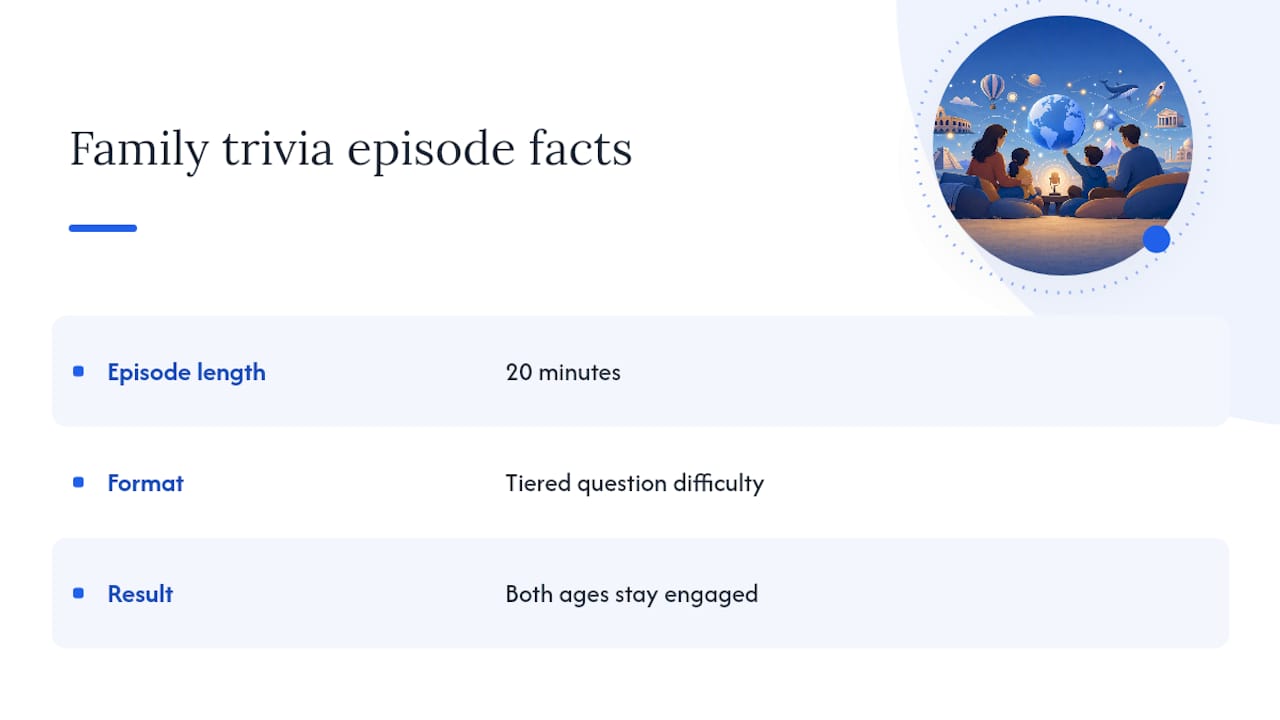
Trivia formats with tiered difficulty are one of the more effective ways to keep a five-year-old and a ten-year-old engaged in the same 20-minute episode, since each gets questions pitched at their level. Industry coverage of intergenerational podcast formats points to this tiered structure as the reason these shows outperform single-difficulty trivia for mixed-age households.
How to Choose the Right Family Podcast for Your Household
Instead of scrolling endlessly through a podcast app, run new shows through a short checklist. It takes less time than reading five reviews, and it filters out anything mismatched to your household in about two minutes.
- Check the age recommendation first. Editorial guides like Common Sense Media list this up front for a reason. A show built for eight-year-olds often bores a four-year-old and confuses them at the same time.
- Match episode length to the moment. A 12-minute episode fits a school pickup; a 30-minute serial fits a weekend drive. Don't force a long episode into a short window, since kids disengage the moment you have to pause it.
- Look for interactive or co-listening segments. Shows with built-in questions, guessing games, or pause points do more of the work for you. Kids Listen specifically promotes formats designed around this kind of engagement rather than passive narration.
- Set the tone to the occasion. Calming for bedtime, energetic for car rides. Mismatched tone is the single most common reason a "good" podcast flops at home, according to parenting outlets that track family podcast recommendations.
- Decide between series and standalone episodes. Series build anticipation but require consistency. Standalone episodes are more forgiving if your schedule is unpredictable.
- Scan for representation and diversity signals. Kids notice when characters sound and look like them, or don't. Editorial lists usually flag this in their show descriptions.
Pro Tip: Keep a running note (in your phone, in a shared list, anywhere) of which shows your kids replayed on their own. That's a stronger signal than any star rating, and it tells you exactly what to look for next time.
Turning Listening Time Into a Shared Activity
A podcast episode becomes a family memory the moment you add a small activity around it. None of these need prep time.
- Pause-and-guess: Stop right before a reveal and have everyone guess what happens next.
- One-line drawing: After the episode, each kid draws their favorite moment in under two minutes.
- Quick role-play: Act out the last scene using different voices for thirty seconds.
- Trivia scorekeeping: For shows like Kids vs Parents, keep a running family scoreboard across weeks, which turns single episodes into a season-long game.
- Guess the sound: On car rides, pause and ask everyone to guess what sound effect just played.
- "What would you do?": Ask how a family member would have handled the character's situation.
- Bedtime whisper question: One quiet, low-stakes question right before lights out, nothing that requires a real answer.
For younger kids, keep every prompt to one short question. For older kids, you can stretch into a real back-and-forth. Car-specific versions of these games are collected in our car ride activity guide, and the format itself draws on play-based learning research showing that short, structured interaction builds listening and social skills more effectively than passive consumption.
Pro Tip: Use the exact same question after every episode, something as simple as "what was your favorite part?" Kids build a listening habit faster when the follow-up ritual stays consistent instead of changing every week.
Why a Personalized Podcast Subscription Can Fit Better Than a General Feed
Curated lists solve the discovery problem. They don't solve the "my kid wants to hear their own name in the story" problem, which is where a private podcast feed comes in. A private feed delivers episodes only to the subscribing family, usually through a private link sent by email, rather than through a public app anyone can browse.
G45 Hero Cast builds on that idea for kids by generating a weekly personalized superhero episode where the child stars as the hero, using their name, interests, and specific traits. New episodes land in a private feed weekly, which gives families a predictable, repeatable moment. That predictability matters just as much as the personalization. Kids ages 4 to 9 respond strongly to hearing themselves in a story, and weekly delivery turns listening into a standing ritual instead of a random pick.
Practical points worth knowing:
- Tailored themes: Episodes reflect the child's actual interests.
- Predictable runtime and delivery: New episodes arrive on a fixed weekly schedule, so families can build it into an existing routine.
- Sibling and gift options: Subscription paths offer options for families with more than one child or for gift purposes.
If you're weighing a private feed against a public app, our breakdown of private versus public podcasts walks through the practical differences in more detail.
What Twelve Years of Bedtime Stories Taught Me About Listening Together
The families who stick with podcast listening long term aren't the ones who found the "best" show. They're the ones who built a ritual around it, same time, same question afterward, same low-pressure format. That consistency does more for a kid's listening habits than any single episode ever could.
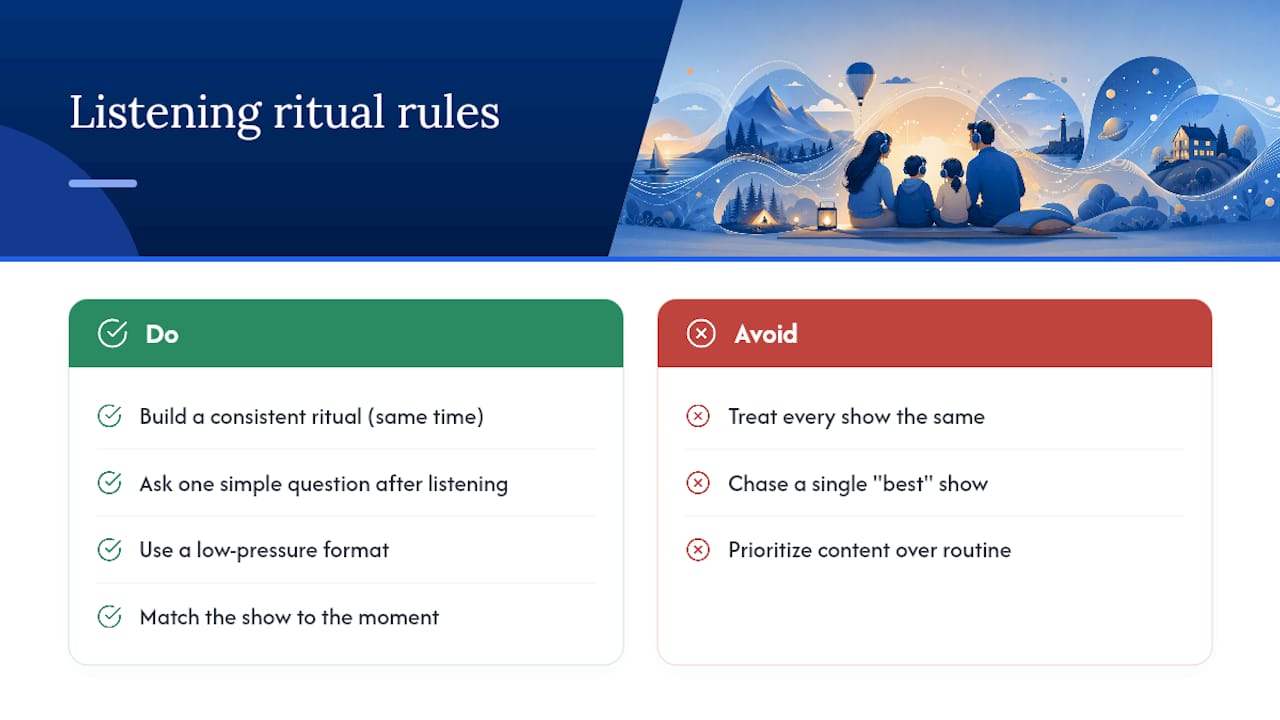
What surprises most parents is how little the content itself matters compared to the routine wrapped around it. A calming bedtime serial and a chaotic car-ride trivia show serve completely different purposes, and treating them the same is the most common mistake I see. Match the show to the moment, ask one simple question afterward, and let the ritual do the rest.
If there's one thing worth doing differently, it's choosing shows that make your kid feel present in the story, not just a listener to it. That's part of why personalized formats have gained ground: they turn a passive activity into something a child actually looks forward to owning.
— JG
Getting Started With Weekly Personalized Superhero Podcasts
If your family has already worked through the curated lists and wants something built specifically around your child, G45 Hero Cast delivers a new personalized superhero episode every Sunday, with your child cast as the hero based on their name, interests, and age. It's the option for families who've noticed their kid asking to replay the same story over and over, because they want an entire feed of stories where that's the point.
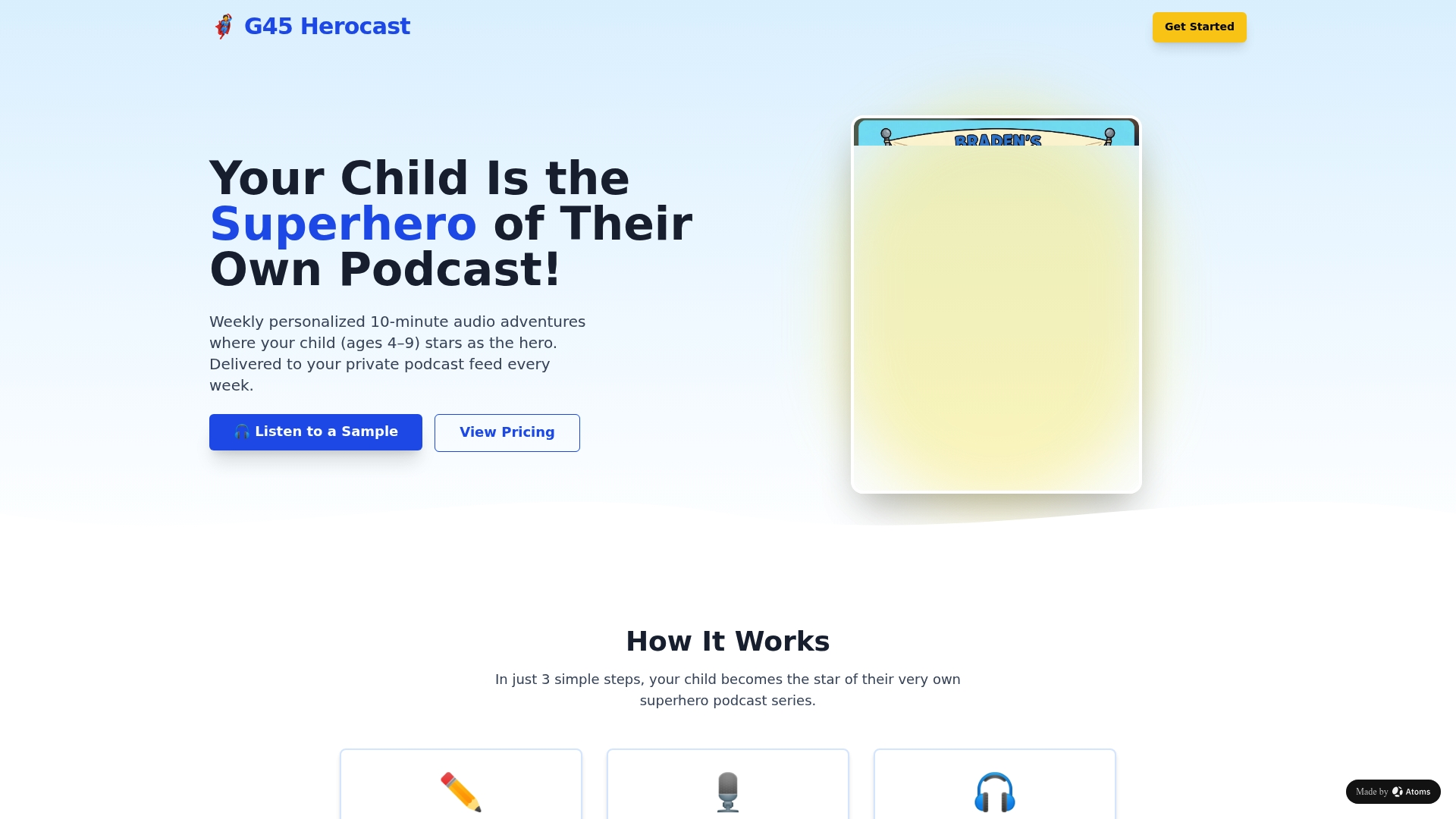
Episodes arrive through a private podcast feed rather than a public app, so the story stays just for your family (or extends to siblings and gift subscriptions when you want it to). Getting set up takes three steps:
- Visit the G45 Hero Cast landing page to review available subscription options.
- Choose the subscription plan that fits your household, including options for siblings and gifts if needed.
- Enter your child's name, age, and a few interests so the first Sunday episode can be built around them.
If your family already loves the trivia-night or bedtime-serial format covered above, this is a natural next layer, one where the story is built around your own kid instead of a generic character.
Sources
- Great Podcasts to Listen to as a Family | Common Sense Media
- PBS Parents podcasts listing
- Kids Listen
FAQ
What is the best podcast to listen to with family?
There isn't one universal best pick since the right show depends on occasion and age, but trivia formats like Kids vs Parents work well for car rides, while calmer serials fit bedtime better. Match the show to the moment rather than chasing a single "best" title.
What are the most popular family podcasts right now?
Popularity shifts, but editorially curated lists from Common Sense Media and PBS KIDS consistently surface the same reliable names because they vet shows for age-appropriateness and tone rather than just download counts.
Why do kids sometimes tune out during family listening time?
Mismatched tone or length is usually the cause. An energetic trivia show at bedtime or a 30-minute episode during a 10-minute drive tends to lose kids fast, and the fix is almost always matching the show to the actual occasion rather than swapping podcasts entirely.
What makes a good podcast about family?
A strong family podcast pairs age-appropriate content with moments built for interaction, pauses for guessing, tiered trivia questions, or gentle discussion prompts. Personalized formats like G45 Hero Cast take this further by making the child the actual subject of the story, which tends to hold attention longer than generic characters.