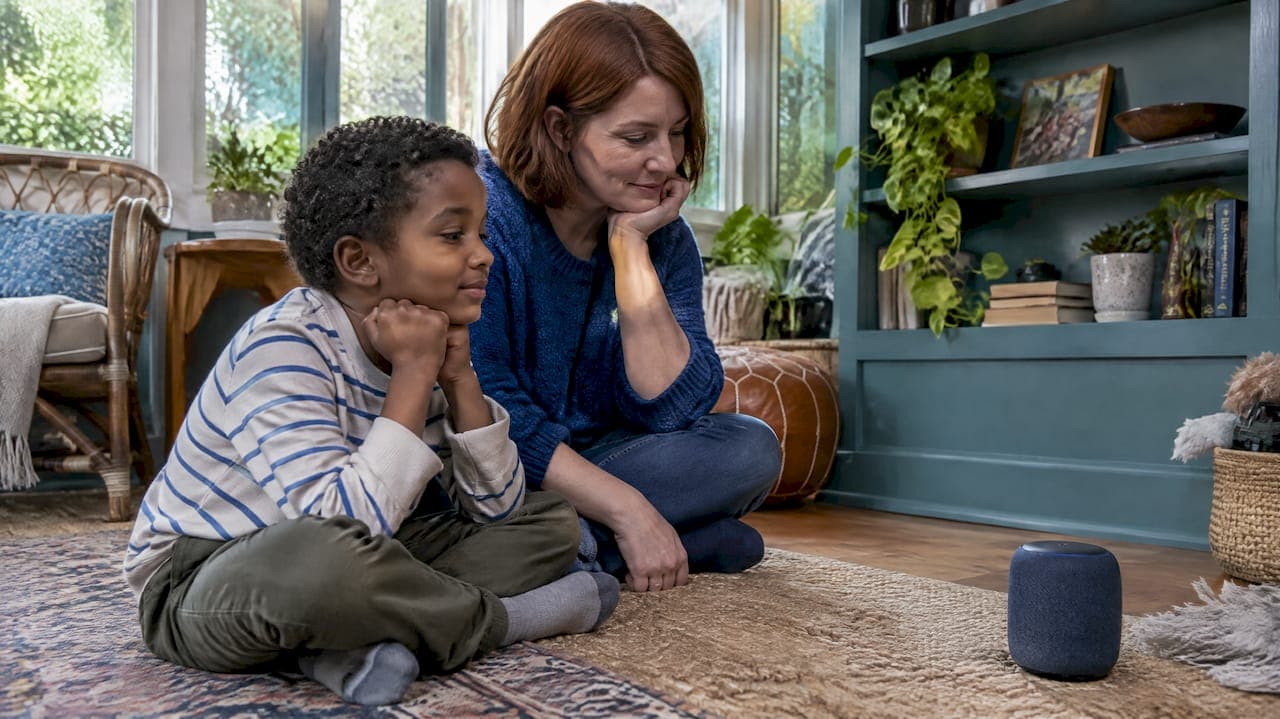
The best age to start children on podcasts is around 4, as long as a parent or grandparent listens with them. At 4 most kids can follow a simple story with their ears alone, and by 9 they can handle longer, more complex shows. Before 4 it depends on the child, and the format matters more than the birthday.
This guide covers what each age from 4 to 9 can handle, how long episodes should be, and how to set up listening so it supports your child instead of just filling time.
TL;DR
- Age 4 is a good starting point for story-based podcasts. Ages 5 to 7 are the sweet spot for building a weekly habit. Ages 8 to 9 can move to longer, more complex shows.
- Aim for episodes of roughly 11 to 20 minutes, which matches how many children aged 3 to 12 listen.
- Co-listening matters more than the age. Talking about the story is where much of the learning happens.
- Use a speaker rather than headphones when you can, and cap the volume at 50% if headphones are needed.
- Personalized audio, where your child is the hero, is a strong way to ease a 4-to-9-year-old into the habit.
Table of Contents
- What the numbers say about kids and podcasts
- Age by age: what works from 4 to 9
- Episode length: 11 to 20 minutes
- Listening together beats listening alone
- Setting up listening safely
- Our perspective: why we make the child the hero
- A weekly adventure starring your child
- A simple plan for starting
- FAQ
- Sources
What the numbers say about kids and podcasts
Podcasts are no longer just an adult habit. A 2023 report by UTA found that 48% of U.S. children aged 3 to 12 listen to or watch podcasts at least weekly, and 93% of surveyed parents said their child's interest had grown over the previous year. Seven in ten children start listening on their own initiative instead of waiting for a parent to suggest it.
An April 2025 study from Education Development Center puts the figure a little differently: nearly half of children ages 6 to 12 have listened to a podcast. The numbers differ by survey, but the direction is the same.
There is also a long-term angle. Edison Research reports that people who grew up listening to podcasts spend about three more hours a week with the medium as adults. Starting early builds a lasting taste for audio stories. That is a nice side effect, but it should not be the reason you start.
One caution about those figures. The UTA report found that 82% of kids in that group consume podcasts through YouTube. A podcast watched on a screen is not the screen-free experience many parents are looking for. If your goal is less device time, check how your child actually listens.

Age by age: what works from 4 to 9
There is no official minimum age for podcasts, and no pediatric body sets a podcast-specific cutoff. What you can do is match the format to what a child's attention and language skills can handle. These are practical guidelines, not rules.
| Age | What they can handle | Best format |
|---|---|---|
| 4 | Simple plots, one main character, repetition | Short, story-led episodes with a parent nearby |
| 5 to 6 | Following a beginning, middle and end; answering questions | Adventure stories with prompts and sound effects |
| 7 to 8 | Longer plots, humor, mild suspense | Serialized stories and early educational shows |
| 9 | Complex storylines, facts, some independence | Longer episodes, mixed genres, discussion afterward |
Age 4: the gentle start
Four-year-olds love familiar things and being addressed directly. Keep episodes short and the plot simple. Pick a time that is already part of the routine, such as the car ride home, quiet time after lunch or the wind-down before bed.
Many parents wonder whether younger preschoolers can listen too. Some can, especially with songs and very short stories. We cover that in our guides to podcasts for preschoolers and podcasts for kids age 4.
Ages 5 to 7: the sweet spot
This is when a weekly listening habit sticks best. Children at this age can hold a storyline across 15 minutes or so, remember characters, and talk about what happened. They also love being asked questions. Our roundup of podcasts for 5 to 7 year olds goes through what to look for.
Ages 8 and 9: more independence
Older kids can follow longer shows and sometimes prefer to listen alone. That is fine, but a quick check-in afterward keeps the conversation going. By 9 and 10 many children are ready for broader catalogs, covered in our guide to podcasts for 8 to 10 year olds.
For a full list by age bracket, see our age-appropriate podcasts guide.
Episode length: 11 to 20 minutes
The UTA research found children aged 3 to 12 stay most engaged with episodes of 11 to 20 minutes. That fits a bedtime routine, a drive to school or a short break between activities.
A few rules of thumb:
- At 4, stay near the short end of that range, or split a longer story across two sittings.
- At 5 to 7, aim for the middle of the range and finish on a clear ending.
- At 8 and 9, the top of the range or a bit more works if the story is gripping.
- If your child asks for "one more," that is a good sign. Decide in advance whether you will say yes.
We go deeper in how long kids podcast episodes should be.
Listening together beats listening alone
If you take one idea from this article, take this one. Research on children's podcasts keeps pointing to joint listening. In the UTA data, 48% of children who listen do so with a parent always or most of the time, and 71% listen with a parent at least half the time. Shared listening sparks discussion in nearly three-quarters of families.
This matters for 4-to-9-year-olds because the EDC report describes the main learning benefits, such as vocabulary and imagination, as strongest when an adult is engaged alongside the child. Business Insider's coverage of the research reaches a similar conclusion: podcasts work best for young children as a complement to family interaction, not a replacement for it.
PBS KIDS for Parents describes a simple version of this: family podcast nights where everyone builds with blocks or colors while a story plays.
How to talk about what you hear
You do not need a script. Try these:
- Pause and ask, "What do you think happens next?"
- Ask how a character felt, and whether your child has felt that way.
- Afterward, ask them to retell their favorite part.
- Draw the scene together. If you like that idea, these tips on how to talk with children about art carry over well to drawing a story you just heard.
Setting up listening safely
The University of Arizona Cooperative Extension has a parent guide to listening with young children. Its advice is practical:
- Use a speaker where possible. Speaker listening keeps conversation flowing.
- Cap headphone volume at 50% of the device's maximum, and make sure your child can still hear you.
- Look for interactive shows. Direct questions and prompts to act out scenes tend to hold 4-to-9-year-olds better than a straight narration.
- Start with the familiar. Children engage more readily with characters they already know from books or TV.
Podcasts are generally safer than open social platforms, but the Children's Commissioner for England stresses that parents still need to set boundaries and curate what children consume, even in audio-only formats. That is a UK perspective, yet the point holds for any family. If you are choosing shows, our six-step checklist for picking a kids podcast is a good place to start. Choosing suitable entertainment is a skill you can apply to everything from shows to age-appropriate events near you.
Audio also helps families who want to cut back on screens. The American Academy of Pediatrics suggests, as summarized by Zero to Three, limiting screen use for ages 2 to 5 to one hour a day of high-quality programming, watched together. A podcast played through a speaker is a simple way to fill other parts of the day. If you are weighing audio against video, read podcasts vs. YouTube Kids.
For more on what children gain, see our overview of podcast benefits for kids.
Our perspective: why we make the child the hero
We make weekly superhero podcasts for children aged 4 to 9, and the age range is not an accident. It is the window where a child can follow a story by ear, loves being the center of it, and still wants a parent or grandparent close by.
Here is what we have learned about that window.
First, familiarity drives engagement. The research says children lean into characters they already know. The most familiar character a child has is themselves. So in our episodes the child is the hero, and the story draws on their name, age, interests and traits instead of dropping a name into a generic script.
Second, a story should invite conversation. We want the Sunday episode to give a family something to talk about on Monday. That is why we care about quality time as much as the story.
Third, screens are not the only answer. Many parents tell us they want something exciting that does not need a device in front of their child's face. Audio delivered to a private podcast feed gives them that.
Fourth, age shapes everything: the length, the pace and the kind of adventure. A 4-year-old and a 9-year-old need different stories, and we write with that in mind.
We do not think any podcast, ours included, replaces time together. We want ours to start it.
— JG
A weekly adventure starring your child
If your child is between 4 and 9, a personalized podcast is an easy way to try this out. Every Sunday we deliver a new episode, written for your child, to a private podcast feed through the email you give us. Siblings are supported, and so are gift plans.
- Bedtime Standard: $99 per month.
- Grandparent Gift: $999 per year, made for grandparents who want to give a grandchild something to look forward to every week.
See both plans at g45-hero-cast.com. If you have safety questions first, read whether a weekly superhero podcast is safe for your child.
A simple plan for starting
- Pick a regular slot. Bedtime, a car ride or Sunday afternoon all work.
- Start short. Ten to fifteen minutes is plenty for the first week.
- Use a speaker. Sit nearby and listen.
- Ask two questions. One during, one after.
- Watch your child. Fidgeting, wandering off or asking to stop means the show, length or time of day needs adjusting, not that podcasts are wrong for your child.
- Repeat weekly. A routine is what makes the habit stick.
FAQ
Is 3 too young for podcasts?
Not necessarily. Many 3-year-olds enjoy short songs and very simple stories. Keep sessions brief, listen together and follow your child's interest. If they lose focus quickly, wait a few months and try again around age 4.
Can my 8-year-old still enjoy podcasts made for younger kids?
Yes, especially if the content is funny or adventurous. Most 8- and 9-year-olds are ready for longer, more complex stories, so let them guide you. If they say a show feels babyish, move up to the next age group.
Should my child listen with headphones?
A speaker is better for younger children because you can talk during the story. If you use headphones, keep the volume at or below 50% of the device's maximum, as the University of Arizona guide advises. Check that your child can still hear you. If you have concerns about hearing, ask your pediatrician.
Are podcasts better than screens for kids?
They are a different experience. Audio needs no screen, so it can fit into times when you want less device use. But they work best with a parent involved and as one part of a healthy mix of play, reading and time together.
Sources
- Interest In Kids Podcasts Nearly Doubles According To New Report (Deadline)
- Listen to This! Podcast Study Report (Education Development Center)
- Sound Data: The State of Audio in 50 Charts (Edison Research)
- How Listening to Podcasts Affects Kids (Business Insider)
- Listening to Podcasts Together Helps Children Learn (PBS KIDS for Parents)
- Listening to Podcasts with Young Children: A Guide for Parents (University of Arizona)
- The Big Conversation: Dame Melanie Dawes (Children's Commissioner for England)
- Screen-Time Recommendations for Children Under Six (Zero to Three)