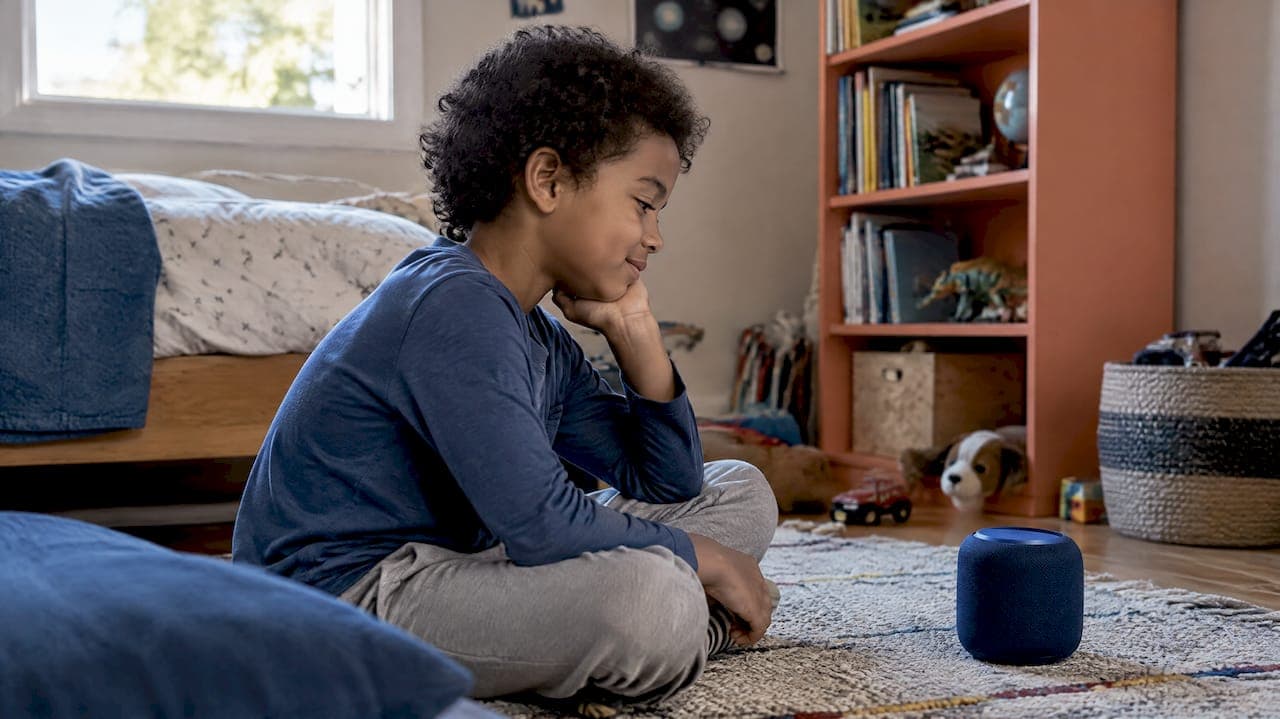
Neither format wins every time. Audio tends to do more for imagination and keeps screens out of the evening. Video can help with certain kinds of recall and with less confident readers. For kids ages 4 to 9, the best routine uses both and gives each a clear job. Audio is for winding down, car rides and quiet time. Video is for shows you pick on purpose, ideally watched together.
Below is what the studies found, where they disagree, and how to turn that into a week that works for a real family.
TL;DR
- Audio asks a child to build the pictures in their own head. In one study, radio stories prompted more novel responses than TV stories in grades 3–4, but not in grades 1–2.
- In a study of preschoolers, comprehension was 81% for audio and 50% for animation.
- Video is not the villain. Some studies show children retell plots in more detail after watching, and less-skilled readers can benefit from video.
- Choosing audio is the simplest way to keep a screen out of bedtime. The American Academy of Pediatrics advises no screens for at least an hour before bed.
- Use a simple rule: audio for imagination and wind-down, video for chosen shows and shared viewing.
Table of Contents
- How a child experiences a story in audio and in video
- Imagination: where audio has the clearest edge
- Comprehension and learning: a more mixed picture
- Does audio actually help language and vocabulary?
- Screen time: the practical case for audio
- Where video earns its place
- A simple weekly routine that uses both
- Our perspective: why we chose audio
- A screen-free story that stars your child
- Choosing audio content that is worth the time
- FAQ
- Sources
How a child experiences a story in audio and in video
With video, the pictures arrive finished. A character already has a face, a house has a color, a monster has a size. The child absorbs them. With audio, the child has to supply all of that.
Researchers at University level have described this difference in plain terms. A 2020 paper by Richardson and colleagues suggests that listening to audio is a more active process of co-creation, while watching video is more passive and leaves less room for personal interpretation. A 2019 review by Jajdelska and Schwan reached a similar view: verbal narratives produce more diverse personal responses than moving images, which hand over ready-made visuals.
The same review points to a difference in mental load. Listening relies on a child's own memory and imagery, while watching is dominated by visual processing. That is why two children can hear the same story and picture two different dragons, and why a child will often say a story "looked" a certain way even though nothing was shown.
A note on how these studies work: much of the research on adults and on older children cannot be applied directly to a six-year-old. Where a finding comes from a particular age group, we say so.

Imagination: where audio has the clearest edge
The best-known evidence is a 2006 study comparing radio and television stories. Among children in grades 3–4, radio stories elicited more novel responses than television stories. Among children in grades 1–2, no difference between media appeared. The authors proposed that older children found it hard to separate themselves from the ready-made television images.
Two things follow for parents:
- The imagination advantage of audio may grow as children get older and better at building mental images. For a 4 or 5 year old, do not expect audio alone to work miracles.
- The format matters most when the story leaves gaps for the child to fill. A story that describes every detail leaves less room than one that names a setting and lets the child decorate it.
This is also why sound design matters. Footsteps on gravel, a door creaking, a cape snapping in the wind: these are cues the listener turns into a scene. If you are curious how sound carries story in film, these diegetic sound examples show how much a soundtrack can say without a single image, which is the same craft audio stories lean on.
Comprehension and learning: a more mixed picture
Here the research is less one-sided, and it is worth being honest about that.
Audio did well with preschoolers. In a 2019 study of preschool children, comprehension scores were 81% for audio, 70% for illustrated stories and 50% for animation. Audio scored significantly higher than animation, and the illustrated version was marginally higher. The authors suggest that animation may pull attention toward visual perception, while illustrated storybooks may encourage attention, visual and language networks to work together.

Video did well on retelling. In a 2020 study of 4–5 year olds, children who watched a story video gave significantly more elaborated retellings, especially of the who, what and where of the plot, than children who experienced the same story in a book with an adult. The authors argue that different formats place different processing demands on a child and so produce different kinds of memories.
Older kids showed little difference. In a 2024 study of children in grades 4–6, recall was similar across video, text and audio. Video helped less-skilled readers answer comprehension questions, and the way children thought aloud while processing was similar for video and text.
Design matters as much as format. A meta-analysis by Takacs and colleagues found that music and sound effects helped children's literacy, while interactive games and hotspots were often distracting. Story apps full of tap-here features are a different thing from a clean story.
Put together:
| Question | Audio | Video |
|---|---|---|
| Imagination and novel ideas | Stronger evidence, especially in grades 3–4 | Ready-made images leave less to invent |
| Preschool comprehension | Scored higher than animation in one study | Animation scored lowest in that study |
| Retelling plot details | Not the strongest in the 4–5 year old study | Stronger in that study |
| Struggling readers (grades 4–6) | Similar recall | Helped with comprehension questions |
| Screens at bedtime | None | Conflicts with advice to avoid screens an hour before bed |
Does audio actually help language and vocabulary?
Listening to a story read aloud is among the most studied early literacy activities. A synthesis of read-aloud interventions for at-risk children ages 3 to 8 found significant positive effects on language, phonological awareness, comprehension and vocabulary, and the interventions included computer-assisted story reading.
A caution: those studies looked at structured read-aloud programs, not at podcasts in general. A 2014 meta-analysis found no significant difference in comprehension or vocabulary between multimedia stories and sharing a story with an adult, so the format of delivery matters less than whether the story is well made and whether the child is engaged.
The takeaway is not that audio makes children smarter. It is that listening to well-told stories is good practice for language, and it costs nothing in screen time. For a closer look at what storytelling does at this age, see our guide to the benefits of storytelling for kids ages 4 to 9.
Screen time: the practical case for audio
This is where audio's advantage is simplest and least disputed. It is not a screen.
The American Academy of Pediatrics policy for ages 5 to 18 asks families to build a Family Media Plan. According to the AAP's summary, children should not sleep with media devices in their rooms and should avoid screens for at least an hour before bed. It also suggests screen-free places such as the bedroom and screen-free times such as dinner or car rides.
Audio fits those moments easily:
- Bedtime. A story with no glowing screen, in a dim room.
- Car rides. Kids stay occupied without a tablet in the back seat.
- Quiet time. Afternoon downtime while a child draws, builds or lies on the floor.
- Meals and chores. Background listening that a family can discuss afterward.
One caveat: audio is only screen-free if the playback device is. A phone propped on the nightstand can pull a child back into a screen. A speaker, or a parent-controlled device placed out of reach, solves this. We cover the options in alternatives to bedtime stories for kids ages 4–9.
Where video earns its place
Video is good at things audio cannot do. It shows a child what a volcano looks like, how a bridge is built, or what a sign-language word looks like. It can hold the attention of a child who is not yet ready to follow a story by ear.
It also keeps families connected. A 2020 study by Gaudreau and colleagues showed that 4-year-olds comprehended and learned from a story similarly whether it was read by video chat, live, or as a prerecorded video. For a grandparent who lives three states away, a video call story time is a real option, not a poor substitute.
Video works best when:
- you choose the show rather than letting autoplay choose,
- an adult watches or talks about it afterward,
- it is kept away from the hour before sleep,
- the content is calm and story-driven rather than flashy.
A simple weekly routine that uses both
You do not have to choose. Here is a pattern that many families can adopt:
- Weeknights: audio. One 10 to 15 minute story before lights out. Our piece on story length by age explains why short stories can be enough.
- Car rides and quiet time: audio. Pick a series or an adventure the child can follow across several days.
- One or two family viewing slots a week: video. Pick the film together and talk about it.
- Video calls with grandparents: video. Read a book together or let the grandparent tell a story.
- Talk back to the story. After either format, ask: "What did the cave look like to you?" or "What would you have done?"
That last step is where the formats converge. Whichever one a child uses, the learning comes from thinking and talking about the story afterward.
If you are comparing audio against books and apps instead, we break those down in podcasts vs audiobooks and podcasts vs story apps.
Our perspective: why we chose audio
We built G45-hero-cast around audio on purpose. We have seen what happens when a child hears their own name and their own favorite things woven into a story: they lean in, they ask for it again, and they tell us what the hero looked like. They are not told. They imagined it.
We do not claim video is bad. We claim that most families already have plenty of it, and that few have a story made for their child alone that asks nothing of a screen. That is why every episode is written and produced individually, using a child's real-life details and interests rather than dropping a name into a generic script. It is also why we deliver episodes to a private podcast feed every Sunday: the family listens on a device of their choice, at the time of their choice, and the screen can stay off.
Our honest advice is the same one we gave above. Use video where it is strong, and protect a few daily moments for listening. If you want more on how we think about it, see why imagination podcasts help screen-free play last.
— JG
A screen-free story that stars your child
If you would like to try the audio side of this routine, G45-hero-cast creates a weekly superhero podcast for children ages 4 to 9, with your child as the hero. Each episode is tailored to their name, interests, age and traits, and arrives in a private podcast feed every Sunday.
The Bedtime Standard plan is $99 per month. The Grandparent Gift plan is $999 per year, made for grandparents who want to give a grandchild a weekly adventure. You can see both on the G45-hero-cast plans page.
Choosing audio content that is worth the time
Not every audio story is equal. When you pick one, check for:
- Room to imagine. Does the story describe enough to follow but leave space for the child's own pictures?
- Good sound, not noise. Music and effects that support the story help. Constant clutter does not.
- Right length. Short enough to finish before sleep, long enough to build a plot.
- Relevance to the child. Stories that reflect a child's own interests tend to hold attention. We compare personalized and generic options in weekly personalized podcasts vs generic books.
- A calm ending. Especially for bedtime.
For ready-made shows, our lists of audio adventures for kids and podcasts for preschoolers are a good place to start.
FAQ
Is audio better than video for young children?
Not across the board, but it has clear strengths. Studies point to more imaginative responses and strong comprehension with audio, especially for preschoolers and children in grades 3–4. Video does better on some retelling tasks and can help less-skilled readers, so most families benefit from both.
Does audio count as screen time?
Not if the playback device has no screen in use. A speaker or a parent-controlled device out of the child's reach keeps it screen-free. A phone or tablet on the bed can bring the screen back, so place it away from the child.
At what age do kids start to benefit from audio stories?
Children can enjoy them early, but the imagination advantage showed up in grades 3–4 in the 2006 radio study and not in grades 1–2. Younger children still gain language practice from stories. Keep episodes short and talk about them afterward.
Can grandparents use video and audio together with grandkids?
Yes. A 2020 study found that 4-year-olds learned from a story similarly over video chat, live, or prerecorded. A grandparent can read live by video call during the week, then give a gift of audio that the child can enjoy anytime.
Sources
- Children's Creative Imagination in Response to Radio and Television Stories (2006)
- Engagement in video and audio narratives: contrasting self-report and physiological measures (2020)
- Picture This: A Review of Research Relating to Narrative Processing by Moving Image Versus Language (2019)
- Functional Connectivity of Attention, Visual, and Language Networks During Audio, Illustrated, and Animated Stories (2019)
- Children's Narrative Elaboration After Reading a Storybook, Watching a Video or Listening (2020)
- Understanding narratives in different media formats (2024)
- Benefits and Pitfalls of Multimedia and Interactive Features in Technology-Enhanced Storybooks (2015)
- A Synthesis of Read-Aloud Interventions on Early Reading Outcomes (2011)
- Can the computer replace the adult for storybook reading? (2014)
- Preschoolers Benefit Equally From Video Chat, Pseudo-Video Chat, and Live Book Reading (2020)
- Media use for 5- to 18-year-olds should reflect personalization, balance (AAP News)
- Diegetic sound examples with timestamps