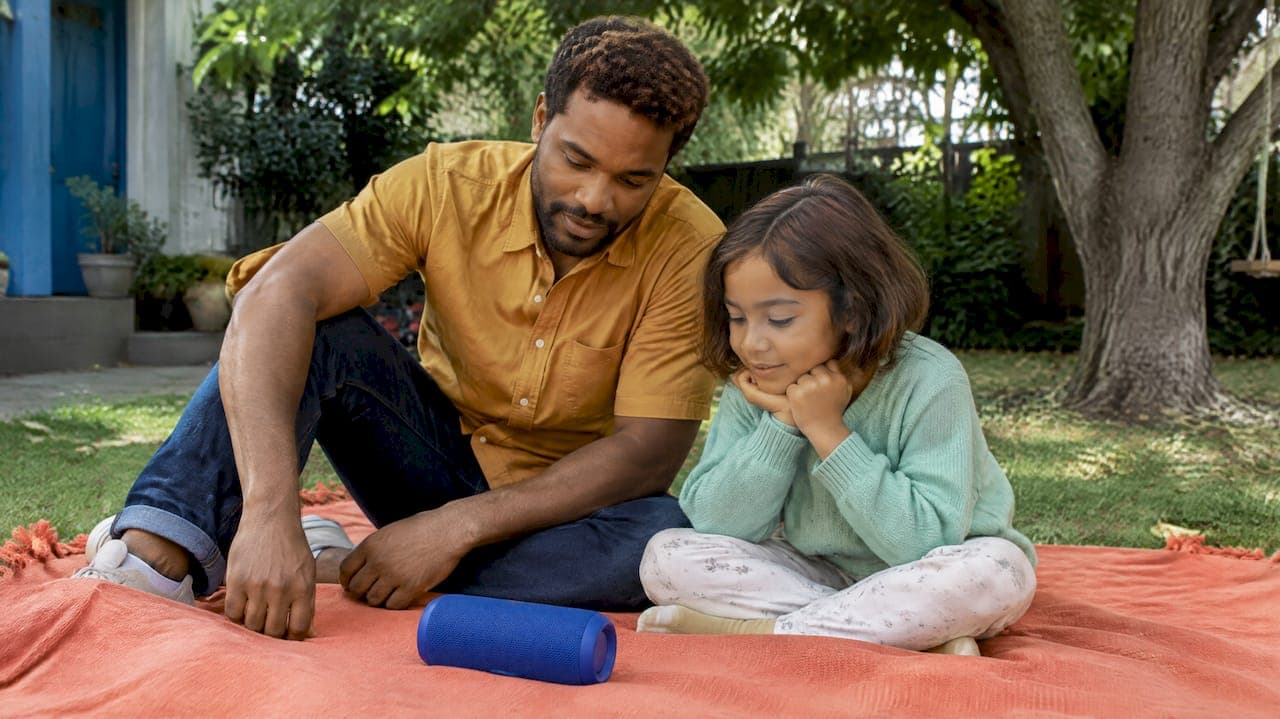
A personalized podcast is an audio show built around one listener instead of a mass audience. Someone gathers details about that listener, such as interests, habits or a child's name, and uses them to shape the script, the content or the order of the audio. The finished episode then reaches the listener through a podcast feed. For children ages 4 to 9, the result is a story in which the child is the hero. Below we explain each step, what is different from a standard show, and what parents should check before they hit play.
TL;DR
- A personalized podcast adapts its content to one listener's details, rather than sending the same fixed file to everyone.
- Tailoring can come from device data, followed topics and listening history, or from details a parent supplies directly.
- Delivery usually works like any podcast: a feed, a subscription and a new episode that lands automatically.
- For kids, the details that matter most are the child's name, age, interests and traits, plus privacy and adult oversight.
- Our weekly superhero podcasts for ages 4 to 9 arrive every Sunday in a private feed.
Table of Contents
- What makes a podcast personalized
- What information tailors an episode
- How the script and audio get made
- How an episode reaches the listener
- How personalization works for kids' stories
- Our perspective
- Privacy and oversight: what parents should check
- Try a weekly personalized superhero podcast
- Choosing a personalized podcast that fits your child
- FAQ
- Sources
What makes a podcast personalized
A standard podcast is recorded once and every listener gets the identical file. A personalized podcast changes something for each listener. That might be the topics covered, the order of segments, the voices used or the story itself.
The BBC's research team has described one version of this idea, which it calls adaptive podcasting. It uses data from a listener's device to make parts of the audio flexible and personal to that person. The same research group points to a design principle behind flexible media: the audio pieces stay separate until the point of listening, so metadata can rearrange them dynamically instead of baking everything into one fixed file.
That is the technical end of the spectrum. At the other end is something simpler and more familiar to parents: a story written for one child, with that child's real details inside it. Both count as personalization. They differ in how much of the work is automated and how deep the tailoring goes.
Three levels of personalization
- Selection. The service picks from existing content based on what you follow or have listened to. News digests work this way.
- Insertion. A generic script has a name or a detail dropped in. Many personalized books use this approach.
- Custom writing. The episode is written around the listener from the start, so the plot, the challenges and the tone reflect who they are.
When you compare services for a child, it helps to know which level you are buying. The first suits adults catching up on headlines. The second is a novelty. The third is what makes a child sit up and say, "That's me."
What information tailors an episode
Personalization runs on inputs. The more relevant the input, the more the episode feels made for the listener.
In news and media, the inputs are mostly behavioral. The Washington Post, for example, has experimented with AI-generated podcasts that choose stories based on a user's reading and listening history and the topics they follow in the app. The listener never fills out a form. The system infers preferences from what they do.
For children, behavioral data is the wrong tool, and it raises privacy questions we cover below. A better approach is to ask the adult who knows the child best. Useful inputs include:
- Name and nickname. What the child answers to at home.
- Age. A 4-year-old and a 9-year-old need different sentence length, pacing and plot complexity.
- Interests. Dinosaurs, soccer, baking, space, a stuffed animal, a favorite color.
- Personality traits. Shy, curious, silly, determined, careful.
- Family details. A sibling, a pet, a grandparent who lives far away.
- Current moments. A first day at a new school, a lost tooth, a big game on Saturday.
The last item is where weekly delivery pays off. A one-time book can only capture the child as they were when you ordered it. A weekly show can follow them as they change.
How the script and audio get made
Once the inputs are in, an episode has to be written and turned into sound. There are a few common routes.
Automated pipelines
Many automated services use a language model to write the script and text-to-speech to voice it. One open-source feed tool documents this pattern clearly: it uses an LLM to adapt article content into a dialogue script for multiple virtual hosts, and then a text-to-speech step converts each line into speech. Some tools add extras on top, such as voice cloning, subtitles and waveform videos.
This route is fast and cheap per episode. It is well suited to summarizing documents or news. It is less suited to a story a six-year-old will ask to hear again, because a story for a young child depends on rhythm, repetition, humor and emotional safety that a summarizing pipeline was not built for.
Individually written episodes
The other route is to have each episode written and produced for the specific child. This is our approach. Each episode is individually written and produced to weave in the child's real-life details and interests, going well beyond inserting a name into a generic script. The child's name is just the starting point. The villain, the setting, the superpower and the lesson at the end all come from what we know about that child.
We will say plainly what this means for you as a buyer: you give us details once, and the show reflects them. You do not need to learn software, record anything or build a prompt.
How an episode reaches the listener
Delivery is the part that surprises people most, because it is so ordinary. A personalized podcast does not need a special player. It needs a feed.
A podcast feed is a web address that lists episodes. When a new one is published, any podcast app subscribed to that address downloads it. The technical documentation for one open-source tool describes the generic mechanics: the finished audio file is uploaded to storage and its public URL is saved so the feed can point to it. Podcasting itself, as academic work on the medium notes, moves listening from scheduled tuning-in to subscription, gives listeners more control and supports niche audiences. A show for one child is the narrowest niche possible.
The key difference between a public and a private feed is access. A public feed is listed in directories. A private feed has an address only the subscriber holds, so only your household can add it.
How it works with us
- You subscribe to a monthly or annual plan and tell us about your child.
- We write and produce the week's episode around that child.
- Every Sunday, the episode is delivered to the email address you provided, linked to a private podcast feed.
- You add the feed to the podcast app you already use, on a phone, tablet or smart speaker.
- Your child listens in the car, at bedtime or on a quiet Sunday afternoon.
Because the episodes arrive in a normal podcast app, there is no new screen to hand a child. For families trying to cut device time, that is the point: audio only, nothing to swipe. If you are weighing this against other formats, our guide to podcasts versus story apps and the comparison of apps and private podcast feeds go into detail.
How personalization works for kids' stories
Why does a story starring the listener land so well with a child ages 4 to 9? Children in this range are building their sense of who they are. Hearing their own name attached to brave, funny, capable choices gives them a feeling that is hard to get from a story about a stranger.

In practice, here is what a personalized superhero episode can look like. Say a 6-year-old named Maya loves octopuses and is nervous about the dark. The episode can make her the hero of an ocean rescue. Her superpower can be her curiosity. The scary moment can be a dark cave, and she can solve it with a calm plan rather than by being fearless. That is an illustration of the approach, not a sample of a real customer's episode.
A few things separate a strong personalized episode from a thin one:
- The hero acts. The child makes the decisions that solve the problem.
- The details are real. A named pet or favorite food shows the child the story is theirs.
- The age fits. Vocabulary and plot length match what the child can follow.
- The ending is calm. Especially at bedtime, the story should wind down.
For how this connects to listening skills, see our piece on name-based superhero podcasts and reading comprehension. To see how it differs from print, read about weekly personalized podcasts versus generic books.
Our perspective
We started G45-hero-cast because we think a child's attention is best earned by showing them they matter. Not by handing them another screen.
Personalization is often sold as a trick: swap a name, call it custom. We don't think that is what children respond to. A child can tell when a story has only borrowed their name. They light up when it knows their dog is afraid of the vacuum, or that they love building towers and never give up on the tall ones.
That is why every episode is individually written and produced around the child's real details. It is also why we deliver weekly. A single story is a gift. A weekly one becomes a ritual: Sunday arrives, the new episode is waiting and the child knows the hero is them.
We also built it to be screen-free, because we hear the same thing from parents and grandparents: they want time together that doesn't revolve around a device. Pressing play and listening side by side gives them that.
JG
Privacy and oversight: what parents should check
Any service that collects information about a child should explain what it takes, why and how long it keeps it. In the United States, the Children's Online Privacy Protection Act (COPPA) sets the baseline for services directed to children under 13.
Two points from the Federal Trade Commission are worth knowing. First, the FTC has stated that an audio file containing a child's voice counts as personal information, which requires verifiable parental consent before it is collected, used or disclosed. Second, the FTC's compliance guidance says covered operators must post a privacy policy, give parents direct notice, keep data secure and retain a child's personal information only as long as necessary, then delete it with reasonable protective measures.
Use those points as a checklist when you evaluate any personalized children's service:
- Is there a clear privacy policy you can read before paying?
- Does the service ask the parent, not the child, for the details?
- Is the feed private, so only your household can reach the episodes?
- Can you say what details you gave and ask for changes?
- Do you know who to contact about your child's information?
Our step-by-step guide to kids' audio privacy walks through these, and we explain our own approach in the piece on a privacy-first private family podcast. If safety is your main question, read whether a weekly superhero podcast is safe for your child.
Adult oversight matters as much as policy. Listen to the first few episodes with your child. It tells you whether the tone and content suit them, and it makes the show a shared activity, which is the whole idea.
Try a weekly personalized superhero podcast
If you want to see how this works with your own child, our Bedtime Standard plan is $99 per month. It delivers a personalized superhero episode to a private podcast feed every Sunday. For a grandparent who wants to give a grandchild something to look forward to every week, the Grandparent Gift plan is $999 per year. Both are on our subscription page, and we also offer options for siblings.
We have written about how to pick the right moment for family listening in our guide to age and moment picks for family podcasts, and about gifting a weekly podcast if the listener is a grandchild.
Choosing a personalized podcast that fits your child
Whether you choose us or look elsewhere, a few criteria will tell you whether a personalized podcast is worth it.
| Question to ask | What a good answer looks like |
|---|---|
| How deep is the personalization? | The plot and challenges reflect your child, not just the name. |
| How often do new episodes arrive? | A predictable schedule your child can anticipate. |
| Where does the audio live? | A private feed that only your household can reach. |
| What does the service collect? | A readable privacy policy and parent-provided details only. |
| Does it need a screen? | Audio in the app you already use, with no extra device. |
| Is it age-appropriate? | Language and story length matched to ages 4 to 9. |
A useful habit is to treat the first month as a trial. Note whether your child asks for the episode, repeats lines from it or talks about the hero afterward. Those are the signs the personalization is working.
If you are also considering print, our research-backed comparison of personalized podcasts and name books lays out the differences.
FAQ
How do personalized podcasts work?
Someone supplies details about the listener, and an episode is written or assembled around them. It is then published to a podcast feed that the listener's app downloads automatically. For kids, the details usually come from a parent: name, age, interests and traits.
Is a personalized podcast the same as an AI podcast?
Not necessarily. Some personalized podcasts use automated scripts and synthetic voices, and others are written individually. Personalization describes what the episode is built around, not how it is made. Ask any service how its episodes are produced.
Do I need a special app to listen?
No. A private feed works in the podcast app you already use. You add the feed once, and new episodes appear on their own. With our service, the weekly episode arrives by email every Sunday with the link to your private feed.
Is a personalized podcast safe for young children?
It can be, if the service is transparent about the data it collects and keeps the feed private. In the U.S., COPPA sets rules for services directed to children under 13, including parental consent and a posted privacy policy. Listening together at first is a good habit.
What ages is it for?
Our weekly superhero podcasts are made for children ages 4 to 9. Vocabulary, length and plot are matched to the child's age, which is one of the details we ask for.
Sources
- Adaptive podcasting: the future of personalised podcasts (BBC R&D)
- BBC R&D adaptive podcasting research, October 2023
- The Washington Post debuts AI-personalized podcasts (Digiday)
- PodcastorAI features and pricing
- Zenfeed podcast documentation
- How audio podcasters adopt podcasting (academic study)
- FTC letter on images and sound under COPPA
- FTC: Complying with COPPA FAQ